
Journal of Early Childhood Research
Scope & Guideline
Bridging gaps in early childhood understanding.
Introduction
Aims and Scopes
- Play-Based Learning:
The journal emphasizes the significance of play in early childhood education, exploring how different types of play (e.g., dramatic play, constructive play) contribute to children's learning and development. - Diversity and Inclusion:
A core focus is on fostering inclusive practices that acknowledge and celebrate diversity in early childhood settings, including the needs of children from various cultural backgrounds and those with disabilities. - Parent and Community Engagement:
The journal explores the role of parents and communities in supporting early childhood education, highlighting practices that encourage family involvement and community resources. - Educational Leadership and Policy:
Research on early childhood educational leadership and policy is a critical area, examining how systemic changes affect educational practices and the experiences of educators and children. - Digital Media and Technology:
The journal investigates the impact of digital media and technology on young children's learning, including how educators can effectively integrate these tools into their teaching. - Social-Emotional Development:
It addresses the social-emotional aspects of early childhood development, looking at how relationships, peer interactions, and emotional well-being influence learning outcomes.
Trending and Emerging
- Anti-Racist Education:
A significant trend is the increasing focus on anti-racist practices and social justice in early childhood education, as educators seek to dismantle systemic inequalities and promote equity. - Digital Literacy and Technology Integration:
There is a growing emphasis on understanding how digital literacy affects young children’s learning and development, particularly in the context of the COVID-19 pandemic and remote learning. - Mental Health and Well-Being:
Research addressing the mental health and emotional well-being of children and educators has gained traction, highlighting the importance of supportive environments during challenging times. - Parent and Family Engagement Strategies:
The journal is increasingly focused on innovative strategies for engaging parents and families in the educational process, recognizing their critical role in supporting children’s learning. - STEM Education in Early Childhood:
The integration of STEM (Science, Technology, Engineering, and Mathematics) into early childhood education is emerging as a key area of interest, with research exploring how to foster these skills from a young age. - Cultural Competency and Responsive Practices:
There is a marked increase in studies exploring culturally responsive teaching practices, emphasizing the importance of understanding and valuing the diverse backgrounds of children and families.
Declining or Waning
- Traditional Pedagogical Approaches:
There seems to be a diminishing focus on conventional teaching methods that do not incorporate play or child-led learning, as contemporary research increasingly emphasizes the importance of these progressive methodologies. - Standardized Assessment Practices:
The journal has moved away from a strong emphasis on standardized testing and assessment practices in early childhood education, favoring more holistic and formative assessment approaches. - Single-Dimensional Studies on Child Development:
Research that only examines child development in isolation without considering the broader context of family, community, and socio-cultural factors appears to be less prevalent. - Neglect of Socioeconomic Factors:
There is a noticeable decline in studies that solely focus on socioeconomic factors without integrating discussions on equity and social justice, as the journal increasingly prioritizes these interconnected themes.
Similar Journals
New Directions for Child and Adolescent Development
Exploring innovative pathways for youth growth and learning.New Directions for Child and Adolescent Development, published by Wiley-Hindawi, is a leading journal dedicated to advancing knowledge in the fields of child and adolescent psychology, educational development, and social psychology. With an impressive Q1 ranking in multiple categories—including Developmental and Educational Psychology and Social Psychology—this journal stands at the forefront of research innovation, making significant contributions to understanding developmental processes and challenges faced by children and adolescents. The journal spans a comprehensive publishing history from 1978 to 2023, allowing for a rich dialogue among researchers, practitioners, and students eager to explore emerging trends and methodologies. Researchers can access a wealth of studies and theoretical frameworks, enhancing the journal's stature within the academic community. New Directions for Child and Adolescent Development remains an invaluable resource for anyone committed to improving the lives of younger populations through evidenced-based practices and policies.
CHILD DEVELOPMENT
Navigating the complexities of child growth and education.CHILD DEVELOPMENT, published by WILEY, stands as a premier journal in the fields of developmental and educational psychology, education, pediatrics, perinatology, child health, and social work. Established in 1945, it has consistently maintained a strong impact, underscored by its 2023 Q1 ranking in multiple relevant categories, as well as its esteemed positions within Scopus rankings, including a remarkable 14th place in Pediatrics. The journal serves as a vital resource for researchers and professionals, offering rigorous peer-reviewed articles that explore pivotal aspects of child development through a multidisciplinary lens. Although it does not currently offer open access options, CHILD DEVELOPMENT remains influential, addressing critical topics in child psychology, policy implications, and educational practices. Researchers and students alike will find the journal’s comprehensive scope instrumental in advancing their understanding and fostering an evidence-based approach to contemporary child development issues.
Language Teaching for Young Learners
Shaping the future of language teaching for young learners.Language Teaching for Young Learners, published by John Benjamins Publishing Co, is a premier journal dedicated to enhancing the pedagogy of language acquisition in early childhood education. Since its inception in 2019, it has rapidly established itself within the research community, reflected by its high Scopus rankings—placing it in the 85th percentile for Language and Linguistics and the 84th percentile for Education. The journal aims to provide a platform for innovative research, practical insights, and theoretical discussions surrounding the teaching of languages to young learners, thus contributing significantly to the fields of Education and Linguistics. With an open access model currently unavailable, it caters to a diverse global audience, including researchers, educators, and policy-makers, keen on improving pedagogical practices. Located in the Netherlands, the journal's commitment to academic excellence is evident through its Q1 and Q2 rankings in Linguistics and Language and Education respectively, encouraging continual discourse in cultivating effective language education practices.
EARLY CHILDHOOD RESEARCH QUARTERLY
Innovating Educational Practices for Future GenerationsEARLY CHILDHOOD RESEARCH QUARTERLY, published by Elsevier Science Inc, stands as a pivotal journal in the fields of Developmental and Educational Psychology, Education, and Sociology and Political Science. With an impressive ranking in the 2023 Q1 category and notable Scopus standings (e.g., 84th percentile in Sociology and Political Science), the journal is recognized for its rigorous and impactful research contributions spanning the years from 1986 to 2024. Although it does not offer open access, the journal ensures a widespread influence by providing essential insights into early childhood development, educational practices, and sociopolitical dynamics affecting young learners. The importance of this journal cannot be overstated; it serves as a critical resource for researchers, educators, and policy-makers dedicated to enhancing the quality of early childhood education and understanding the complexities of development in these formative years. Its curated content not only drives academic discourse but also informs practical applications in the field, making it an essential read for those committed to advancing knowledge and practice in early childhood education.
Frontiers of Education in China
Unveiling insights into China's educational evolution.Frontiers of Education in China is a prominent academic journal dedicated to advancing the field of education through rigorous research and scholarly dialogue. Published by HIGHER EDUCATION PRESS, this journal provides an essential platform for researchers, educators, and policymakers to share innovative ideas and empirical studies related to educational practices and policies in China, contributing significantly to the global discourse on education. With an ISSN of 1673-341X and an E-ISSN of 1673-3533, the journal has established its academic credibility since its inception in 2006, reflected in its 2023 Scopus rank of #716 out of 1543 journals in the category of Social Sciences - Education, placing it in the 53rd percentile. As a Q3 journal in Education according to the latest quartile rankings, it serves as a vital resource for those seeking to understand the evolving landscape of education in China and beyond, making significant contributions to both theoretical and practical perspectives in the field.

Educational Research for Social Change
Transforming Education, Inspiring ChangeEducational Research for Social Change is an esteemed open-access journal published by the NELSON MANDELA METROPOLITAN UNIVERSITY's Faculty of Education, fostering impactful discourse in the fields of Education, Sociology, and Political Science. Since its inception in 2012, the journal has committed to promoting research that champions social transformation through education, ensuring accessibility for diverse audiences. With a strong focus on empirical studies, theoretical advancements, and policy implications, it operates within a converged timeline from 2018 to 2024, aspiring to elevate educational practices and socio-political understandings in South Africa and beyond. Currently holding a Q3 quartile ranking in both Education and Sociology as per the 2023 metrics, it ranks within the 48th and 32nd percentiles of their respective fields on Scopus, a testament to its growing influence and relevance. By providing a platform for innovative ideas and critical analyses, the journal serves as a vital resource for scholars, practitioners, and students eager to engage in meaningful dialogue about educational reform and social change.

PSYCHOLOGIE IN ERZIEHUNG UND UNTERRICHT
Transforming education with innovative psychological research.PSYCHOLOGIE IN ERZIEHUNG UND UNTERRICHT, published by ERNST REINHARDT GMBH CO VERLAG, serves as a pivotal platform for research in the fields of Developmental and Educational Psychology. Since its inception, this esteemed journal has focused on disseminating groundbreaking insights and innovative practices from 1996 to the present, with expectations to continue through 2024. Despite its current ranking of Q4 in category quartiles and a Scopus rank of #309 out of 360, the journal remains a crucial resource for scholars, educators, and practitioners seeking to enhance their understanding of psychological principles within educational contexts. Situated in the vibrant academic landscape of Germany, the journal emphasizes both theoretical and practical perspectives, motivating interdisciplinary discussions that are vital in addressing contemporary challenges in education and human development. As the journal continues to evolve, it invites contributions that explore emerging trends, providing a rich source of information for both researchers and professionals dedicated to improving educational outcomes through psychological insights.
Infants & Young Children
Innovating Insights in Child Health and EducationInfants & Young Children is a pioneering journal established in 1988 and published by Lippincott Williams & Wilkins, focusing on the critical developmental phases of infancy and early childhood. With a commitment to advancing research in Developmental and Educational Psychology, Pediatrics, Perinatology and Child Health, as well as Psychiatry and Mental Health, this journal serves as an essential resource for professionals and scholars dedicated to understanding and enhancing the early years of life. As a member of the Q3 category in multiple relevant fields, it informs and stimulates discourse with its impactful scholarly articles, meeting the diverse needs of researchers, practitioners, and policymakers alike. Though access is not currently open, subscribers can expect high-quality, peer-reviewed research that underscores the importance of early experiences in shaping lifelong outcomes. Located in Philadelphia, this journal continues to make significant contributions to child health and education, aiming to bridge gaps in knowledge and ensure a foundation for thriving, healthy futures.
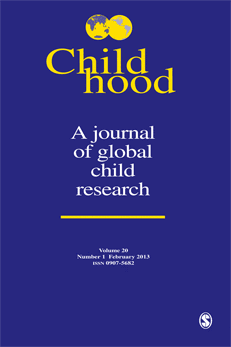
CHILDHOOD-A GLOBAL JOURNAL OF CHILD RESEARCH
Bridging Disciplines to Understand ChildhoodCHILDHOOD: A Global Journal of Child Research is a leading peer-reviewed publication dedicated to advancing the field of child research, published by SAGE Publications Ltd in the United Kingdom. With an ISSN of 0907-5682 and an E-ISSN of 1461-7013, the journal has earned a prestigious reputation, securing a Q1 ranking in both Anthropology and Cultural Studies, along with commendable rankings in other social science categories. Spanning a convergence of impactful years from 1993 to 2024, CHILDHOOD aims to provide a multidisciplinary platform for researchers, educators, and practitioners to explore diverse perspectives on childhood and the experiences of children across the globe. Although it is not an open-access journal, it remains accessible to a wide audience through various institutional subscriptions and databases. As an influential resource in the social sciences, particularly within developmental and educational psychology, CHILDHOOD continues to shape discourse and inspire scholarship that critically engages with children's lives, cultures, and rights.
Early Childhood Education Journal
Bridging Research and Practice for Young Learners.Early Childhood Education Journal is a premier scholarly publication dedicated to advancing the field of early childhood education through cutting-edge research and innovative practices. Published by Springer, this journal serves as a pivotal platform for educators, researchers, and policymakers interested in the developmental and educational psychology of young children. With an esteemed impact factor reflecting its significant influence, the journal ranks in the top quartile (Q1) for Education and in Q2 for Developmental and Educational Psychology, positioning it among the most respected avenues for scholarly exchange in these disciplines. The journal has been consistently publishing impactful research since its inception in 1995, fostering discussions that shape educational policies and practices globally. Although it maintains a subscription model, the accessibility of its research through esteemed databases ensures that vital knowledge reaches a broad audience, empowering practitioners and researchers alike to enhance educational outcomes for children. For those invested in the future of education, the Early Childhood Education Journal is an indispensable resource that bridges theory and practice.