JOURNAL OF ELECTRONIC MATERIALS
metrics 2024
Exploring Innovations in Materials Science Since 1972
Introduction
Welcome to the Journal of Electronic Materials, a premier publication in the field of materials science. Published by Springer, this esteemed journal has been a beacon for groundbreaking research in electronic, optical, and magnetic materials since its inception in 1972. As an established resource, it boasts a commendable impact factor and categorically ranks in the second quartile (Q2) in key areas such as Condensed Matter Physics and Electrical and Electronic Engineering, as well as holding a respectable third quartile ranking in fields related to Electronic, Optical, and Magnetic Materials and Materials Chemistry. Researchers, professionals, and students can access a wealth of knowledge as we publish original articles, reviews, and cutting-edge research that push the boundaries of science and technology in these critical fields. Stay informed and engaged as we explore advancements that shape the future of electronic materials.
Metrics 2024
 0.442.201.90112
Metrics History
Rank 2024
Scopus
IF (Web Of Science)
JCI (Web Of Science)
Quartile History
Similar Journals
ECS Journal of Solid State Science and Technology
Illuminating the Path of Solid State ScienceECS Journal of Solid State Science and Technology, published by the Electrochemical Society, is a prominent journal dedicated to the advancement of research in the field of electronic, optical, and magnetic materials. With an ISSN of 2162-8769 and an E-ISSN of 2162-8777, this journal has established a significant presence since its inception in 2012, spanning critical developments in solid-state science that are essential for innovative technologies. Operating within the United States and recognized for its global outreach, it holds a respectable Q3 category ranking in the materials science category as of 2023, reflecting its commitment to high-quality research and its role in bridging theoretical and applied aspects of materials science. Researchers, professionals, and students alike will find vital information and cutting-edge studies that further the understanding and applications of solid-state technologies. The journal is accessible to an extensive audience, making it an invaluable resource for those engaged in the ever-evolving landscape of materials science.
Advances in Condensed Matter Physics
Connecting Researchers with the Latest DiscoveriesAdvances in Condensed Matter Physics is a distinguished journal published by HINDAWI LTD, dedicated to the rapid dissemination of high-quality research in the field of condensed matter physics. Since its inception in 2008, this Open Access journal has facilitated wide accessibility to cutting-edge findings and theoretical advancements, with aims to foster collaboration and innovation within the scientific community. With an ISSN of 1687-8108 and an E-ISSN of 1687-8124, the journal covers an extensive range of topics, from quantum materials to nanotechnology, ensuring relevance and engagement across various sub-disciplines. As a testament to its impact in the field, it is ranked in the Q3 category for 2023 within Scopus and holds a position in the 34th percentile for physics and astronomy. The journal's continuous commitment to publishing significant exploratory research until 2024 makes it a pivotal resource for researchers, professionals, and students eager to stay on the leading edge of condensed matter physics advancements.
JOURNAL OF PHYSICS AND CHEMISTRY OF SOLIDS
Illuminating the Science of SolidsJOURNAL OF PHYSICS AND CHEMISTRY OF SOLIDS, published by Pergamon-Elsevier Science Ltd, is a distinguished international journal that has been at the forefront of disseminating cutting-edge research in the fields of physics, chemistry, and materials science since its inception in 1956. This journal, which is recognized for its high impact in the Q2 category across multiple subjects—including Chemistry (miscellaneous), Condensed Matter Physics, and Materials Science—serves as a vital platform for researchers, professionals, and students to engage with significant advances in solid-state physics and chemistry. With Scopus rankings placing it in the top 15% of its field across various domains, the journal plays a crucial role in shaping the scientific dialogue surrounding materials properties, synthesis, and applications. Although it does not currently offer open access options, the presented research is widely recognized for its quality and relevance, ensuring that published works contribute meaningfully to ongoing scholarly discussions.
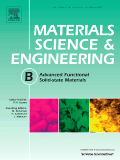
Materials Science and Engineering B-Advanced Functional Solid-State Materials
Transforming Ideas into Innovative Materials SolutionsMaterials Science and Engineering B: Advanced Functional Solid-State Materials, published by Elsevier, stands as a pivotal platform in the realm of materials science, focusing on the development and characterization of advanced solid-state materials. With an ISSN of 0921-5107 and E-ISSN of 1873-4944, this journal operates out of the United Kingdom and addresses critical issues in condensed matter physics, mechanical engineering, and mechanics of materials. Its consistent recognition, evident in its Q2 quartile rankings across multiple engineering and physics categories and a respectable scope of convergence from 1988 to 2024, signifies its substantial contribution to the field. Researchers and professionals seeking a venue for cutting-edge work will appreciate the journal's commitment to advancing knowledge in functional materials, with its open access features ensuring that innovative findings are readily accessible. Join a community of leading scholars engaging with the latest advancements, shaping the future of materials science.
SEMICONDUCTORS
Fostering breakthroughs in semiconductor technology.SEMICONDUCTORS, published by PLEIADES PUBLISHING INC, is a prominent journal that provides a platform for researchers and professionals in the fields of Atomic and Molecular Physics, Condensed Matter Physics, and Electronic, Optical and Magnetic Materials. With an ISSN of 1063-7826 and an E-ISSN of 1090-6479, the journal has been diligently disseminating knowledge since its inception in 1996 and continues to pave the way for innovative research until 2024. Although currently unclassified in the Open Access model, its influence is underscored by its rankings in Scopus, where it ranks in the 21st-22nd percentile across critical scientific categories. SEMICONDUCTORS serves as an essential resource for cutting-edge research, fostering a greater understanding of semiconductor materials and their applications, thereby assisting the scientific community in pushing the boundaries of technology and innovation.

Physics and Chemistry of Solid State
Advancing Solid-State Science Through Collaborative ResearchPhysics and Chemistry of Solid State is a distinguished open access journal published by Vasyl Stefanyk Precarpathian National University in Ukraine, dedicated to advancing research in the fields of condensed matter physics, materials science, and physical and theoretical chemistry. Since its inception in 2000, the journal has provided a platform for the dissemination of innovative ideas and original research findings, contributing significantly to the global scientific community. With a variety of access options, it facilitates the sharing of knowledge and collaboration among researchers worldwide. The journal has garnered recognition with respectable rankings in Scopus, positioning itself among the significant publications in its domain, particularly noted for its contributions to materials science and condensed matter physics. As it moves through its converged years from 2018 to 2024, Physics and Chemistry of Solid State aims to foster interdisciplinary dialogue and prepare the next generation of scientists to tackle complex challenges in solid-state research.
Journal of Science-Advanced Materials and Devices
Leading the Charge in Cutting-Edge Materials ResearchJournal of Science-Advanced Materials and Devices is a leading open-access journal published by Vietnam National University, dedicated to advancing the field of materials science through cutting-edge research and innovative developments. Since its inception in 2016, this journal has become a pivotal platform for sharing insights and discoveries in various subfields, including biomaterials, ceramics and composites, and electronic, optical, and magnetic materials. With impressive quartile rankings, including Q1 across multiple categories in 2023, and a notable Scopus ranking placing it in the top 15th percentile for ceramics and composites, it highlights the journal’s influence and prestige within the global academic community. Open Access since its launch, the journal aims to facilitate unrestricted dissemination of scholarly work, empowering researchers, professionals, and students to engage with the latest advancements. The Journal of Science-Advanced Materials and Devices is vital for those seeking high-quality contributions that influence both theoretical understanding and practical applications in the ever-evolving landscape of materials science.
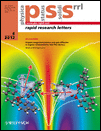
Physica Status Solidi-Rapid Research Letters
Pioneering Rapid Discoveries in Materials SciencePhysica Status Solidi-Rapid Research Letters is a distinguished peer-reviewed journal published by WILEY-V C H VERLAG GMBH that serves as a critical platform for the rapid dissemination of research in the domains of Condensed Matter Physics and Materials Science. Since its inception in 2007, the journal has maintained an impressive Q2 ranking in both relevant categories, underscoring its significant impact within the scientific community. With an E-ISSN of 1862-6270, it offers insightful contributions to the understanding of advanced materials and their applications, attracting a global audience of researchers, professionals, and students. Although not an open-access journal, it is recognized for its rigorous review process and high-quality publications that push the boundaries of knowledge. By encouraging the exchange of innovative ideas and findings, Physica Status Solidi-Rapid Research Letters continues to solidify its role as an essential resource in fostering scientific advancements.

Journal of Advanced Dielectrics
Advancing the Frontiers of Dielectric ResearchThe Journal of Advanced Dielectrics, published by World Scientific Publishing Co Pte Ltd, is a pivotal open-access platform since 2014 dedicated to advancing research in the fields of dielectrics, ceramics, and composites. Based in Singapore, this journal aims to bridge the gap between theoretical developments and practical applications in Electrical and Electronic Engineering, Condensed Matter Physics, and Electronic, Optical, and Magnetic Materials. With an impressive classification in the 2023 Quartile Rankings indicating its significance within its categories, and notable Scopus Rankings that highlight its impact and relevance, this journal serves as a vital resource for scholars and professionals committed to cutting-edge research and innovation. As it continues to flourish through the converging years from 2015 to 2024, the Journal of Advanced Dielectrics stands as an essential conduit for the dissemination of knowledge in advanced material sciences, making it an indispensable asset for today's research community.

ACTA PHYSICA POLONICA A
Connecting Scholars with Cutting-Edge DiscoveriesACTA PHYSICA POLONICA A is a distinguished peer-reviewed journal published by the Polish Academy of Sciences Institute of Physics, offering a platform for disseminating cutting-edge research in the field of physics and astronomy. With an ISSN of 0587-4246 and an E-ISSN of 1898-794X, this journal has been a staple for scholars since its inception, converging its publication years from 1996 to 2024. Despite its current Q4 classification in the Physics and Astronomy (miscellaneous) category, ACTA PHYSICA POLONICA A provides valuable insights and breakthroughs addressing various aspects of general physics. Researchers, professionals, and students will find a wealth of knowledge within its pages, even as it operates in an evolving academic landscape. While subscription options exist, the journal aims to foster collaboration and knowledge exchange in the physics community, making it a vital resource for those seeking to stay at the forefront of research advancements.