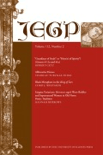
JOURNAL OF ENGLISH AND GERMANIC PHILOLOGY
metrics 2024
Advancing Scholarship in English and Germanic Studies
Introduction
Journal of English and Germanic Philology, published by University of Illinois Press, stands as a prestigious forum for scholarly discourse in the fields of linguistics and literary studies. With its ISSN 0363-6941 and an impressive impact factor aligning it within the Q1 and Q2 quartiles in key academic categories, this journal delves into nuanced explorations of both the English and Germanic languages, enriching the understanding of language and its literary frameworks. The journal aims to foster interdisciplinary dialogue, offering cutting-edge research that appeals not only to linguists and literary theorists but also to educators and cultural historians alike. Although the journal is not open access, its contributions are essential for anyone keen on enhancing their knowledge of linguistic phenomena and literary narratives from these influential linguistic traditions. With a commitment to publishing innovative and rigorous scholarship, the Journal of English and Germanic Philology is a vital resource for academics seeking to advance their work in language and literature.
Metrics 2024
 0.170.300.4015
Metrics History
Rank 2024
Scopus
JCI (Web Of Science)
Quartile History
Similar Journals
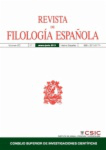
REVISTA DE FILOLOGIA ESPANOLA
Fostering Academic Dialogue in Spanish PhilologyREVISTA DE FILOLOGIA ESPANOLA is a distinguished academic journal dedicated to the fields of linguistics and literature, published by the CONSEJO SUPERIOR INVESTIGACIONES CIENTIFICAS (CSIC) since 1954, and has been an Open Access journal since its inception. Situated in Madrid, Spain, this journal has emerged as a crucial platform for the dissemination of scholarly research, with notable rankings including Q2 in Linguistics and Language and Q1 in Literature and Literary Theory as of 2023. The journal's commitment to fostering academic dialogue is reflected in its impressive Scopus rankings, including a 79th percentile in the Arts and Humanities for Literature and Literary Theory. Covering a wide range of topics from linguistic theory to literary critique, REVISTA DE FILOLOGIA ESPANOLA is essential reading for researchers, professionals, and students alike, providing valuable insights and cutting-edge research in the ever-evolving landscape of Spanish philology.

Materiali e Discussioni per l Analisi dei Testi Classici
Engaging Minds in the Study of the ClassicsMateriali e Discussioni per l'Analisi dei Testi Classici is a distinguished academic journal published by Fabrizio Serra Editore that focuses on the rich field of Classics and Literature, serving as a vital platform for scholarly discourse and research. Featuring ISSN 0392-6338 and E-ISSN 1724-1693, this journal has been actively publishing since 2009, with a dedicated effort to analyze classical texts and foster critical discussions among academics and students alike. Although the journal operates without an open access model, it is recognized for its significant contributions, evidenced by its ranking in the third quartile (Q3) in both the Classics and Literature categories as of 2023. This places it among the notable outlets for literary and classical scholarship, with Scopus ranks highlighting its ongoing influence in these fields. Based in the heart of Italy, in Pisa, the journal not only enriches the academic community but also provides an essential resource for those engaged in the profound study of classical literature, inviting contributions that challenge and expand current knowledge and methodologies.

Novyi Filologicheskii Vestnik-New Philological Bulletin
Unveiling the Depths of Language and LiteratureNovyi Filologicheskii Vestnik-New Philological Bulletin is a distinguished academic journal published by the Russian State University for the Humanities, devoted to the interdisciplinary study of linguistics, literature, and philology. With its ISSN 2072-9316, this journal serves as an essential platform for scholars, researchers, and students aiming to explore the depths of philological research and its applications. Although currently operating under a traditional access model, the journal emphasizes accessibility and engagement with advancements in linguistic theory and literary analysis, reflecting the evolving landscape of philological studies. The bulletin is dedicated to fostering academic discourse by publishing original research, critical essays, and comprehensive reviews, thereby contributing significantly to the advancement of knowledge and understanding in the field. Set in the heart of Moscow, the journal aims to bridge local and global scholarship, inviting contributions that showcase innovative methodologies and theoretical frameworks. Overall, Novyi Filologicheskii Vestnik-New Philological Bulletin stands as a vital resource for anyone interested in contemporary developments in philology and related disciplines.
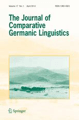
Journal of Comparative Germanic Linguistics
Elevating Understanding of Germanic Language StructuresThe Journal of Comparative Germanic Linguistics, published by SPRINGER, is a leading peer-reviewed academic journal that has significantly contributed to the fields of linguistics and arts and humanities since its inception. With an impressive impact factor and consistently ranked in the Q1 category in both Arts and Humanities (miscellaneous) and Linguistics and Language, this journal serves as a vital platform for scholars to disseminate their research on comparative studies in Germanic languages. The journal's scope encompasses a broad range of topics, fostering an interdisciplinary dialogue that enhances our understanding of language development, structure, and evolution. Although currently not an open-access journal, the Journal of Comparative Germanic Linguistics ensures that its high-quality articles reach a global audience, appealing to researchers, professionals, and students who are keen to explore the nuances of Germanic linguistics. With its strategic address in the Netherlands, the journal stands at the forefront of linguistic research, providing valuable insights that contribute to the academic community's knowledge base.

Alicante Journal of English Studies-Revista Alicantina de Estudios Ingleses
Connecting Scholars through Open Access ResearchAlicante Journal of English Studies - Revista Alicantina de Estudios Ingleses, published by the esteemed University of Alicante since 2003, is a vital platform for researchers and scholars in the fields of Cultural Studies, Linguistics and Language, and Literature and Literary Theory. With an impressive impact factor reflected by its Q1 and Q2 rankings across various categories in 2023, the journal consistently delivers high-quality peer-reviewed articles that push the boundaries of knowledge and discourse in English studies. Operating under an Open Access model, it ensures that research is freely accessible to a global audience, thereby fostering collaboration and advancement within the academic community. The journal's commitment to excellence is further underscored by its Scopus rankings, which place it in the top percentiles of literature and cultural studies. Its scope for the converged years from 2019 to 2024 promises continued relevance and innovation, making it an essential resource for professionals, researchers, and students alike who seek to deepen their understanding of English studies.

AEVUM-RASSEGNA DI SCIENZE STORICHE LINGUISTICHE E FILOLOGICHE
Connecting Language, Culture, and Historical Narratives.AEVUM-RASSEGNA DI SCIENZE STORICHE LINGUISTICHE E FILOLOGICHE is a distinguished academic journal published by VITA PENSIERO, based in Italy, focusing on the intricate fields of historical linguistics, philology, and cultural studies. With ISSN 0001-9593 and E-ISSN 1827-787X, it has been a significant contributor to scholarly discourse since its inception in 1979, with publications dating from 2001 to 2020 and from 2022 to 2023. Although it is categorized in Quartile Q4 across various disciplines including History, Linguistics, Literature, and Philosophy for the year 2023, AEVUM serves as a vital platform for nurturing discourse and advancing research in its fields, particularly appealing to scholars and professionals seeking to explore the intersections of language and culture. While the journal is not open access, it continues to maintain academic rigor and relevance, encouraging contributions that reflect current trends and theoretical developments. Researchers and students alike can benefit from its rich repository of language and historical research, drawing connections that contribute to a profound understanding of human society through the lens of language.
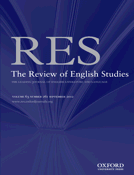
REVIEW OF ENGLISH STUDIES
Connecting Scholars to the Heart of English StudiesREVIEW OF ENGLISH STUDIES, published by Oxford University Press, is a prestigious journal that has been advancing the fields of Literature and Literary Theory as well as Linguistics and Language since its inception in 1925. With an impressive impact factor and a commendable ranking, placing it in the Q1 and Q2 categories across relevant disciplines, the journal serves as a vital platform for researchers, scholars, and students alike. Covering a wide range of topics from classical literature to contemporary linguistic analysis, REVIEW OF ENGLISH STUDIES is committed to fostering scholarly discourse and promoting innovative research methodologies. Although it does not offer open access, the journal is highly regarded for its rigorous peer-review process and high-quality publications, making it an essential resource for anyone engaged in English studies. For researchers seeking to keep abreast of the latest developments in the field, this journal stands as an indispensable guide and repository of knowledge.
ZEITSCHRIFT FUR ROMANISCHE PHILOLOGIE
Cultivating Knowledge in the Humanities Through Rigorous ResearchZEITSCHRIFT FUR ROMANISCHE PHILOLOGIE, published by Walter de Gruyter GmbH, stands as a prominent peer-reviewed journal dedicated to the fields of Linguistics, Literature, and Literary Theory. Established in 1877 and continuing its legacy to the present day, this esteemed journal offers a platform for comprehensive scholarship that explores the intricacies of Romance languages and their literary heritage. With a notable Q1 ranking in Literature and Literary Theory and a Q2 ranking in Linguistics and Language, it has secured its place among leading resources in the humanities. Researchers, educators, and students benefit from its rich historical context and current contributions to the understanding of Romance languages and literature. Though currently not available as Open Access, the journal prioritizes the dissemination of high-quality research, making significant strides in fostering academic dialogue and advancement. Its address at Genthiner Straße 13, Berlin, Germany, situates it in a hub of scholarly activity, bridging the past with contemporary literary discourse.
AL-QANTARA
Connecting Past and Present Through Scholarly Excellence.AL-QANTARA, published by the Consejo Superior Investigaciones Cientificas (CSIC), is a prestigious academic journal that has been at the forefront of interdisciplinary research in the fields of Cultural Studies, History, and Literature and Literary Theory since its inception in 1984. Renowned for its commitment to open access since 1996, the journal promotes a comprehensive understanding of the interconnectedness of cultural narratives and historical discourse, making it an invaluable resource for researchers and students alike. With impressive rankings in Scopus—including a top placement in the Q1 category for Literature and Literary Theory and Q2 in both Cultural Studies and History—AL-QANTARA effectively bridges theoretical insights with empirical research, contributing to robust academic dialogue and innovation. Operating out of Madrid, Spain, it stands as a pillar of scholarly excellence, offering a platform for diverse voices in the humanities to share their findings and engage with critical contemporary issues.
ZEITSCHRIFT FUR DEUTSCHES ALTERTUM UND DEUTSCHE LITERATUR
Advancing Knowledge in German Literature and LinguisticsZeitschrift für deutsches Altertum und deutsche Literatur is a pivotal academic journal dedicated to the exploration and analysis of German-language antiquity and literature. Published by S Hirzel Verlag, this esteemed journal is based in Germany and has been contributing to the fields of Linguistics, Language, and Literary Theory since its inception. With a history spanning from 1979 to the present, the journal showcases rigorous research and critical studies that enhance our understanding of both historical and contemporary literary landscapes. Although currently not an open-access publication, Zeitschrift für deutsches Altertum und deutsche Literatur operates within the Q4 quartile in its respective categories, reflecting a unique niche within the academic community. As a valuable resource for researchers, professionals, and students alike, it fosters a deeper appreciation for the intricacies of German literature and its evolution, serving as an essential platform for scholarly discourse.