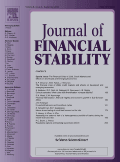
Journal of Financial Stability
metrics 2024
Empowering insights into contemporary financial challenges.
Introduction
The Journal of Financial Stability, published by Elsevier Science Inc., is a renowned academic journal that serves as a premier platform for the dissemination of innovative research in the fields of finance, economics, and econometrics. With an ISSN of 1572-3089 and an E-ISSN of 1878-0962, this journal has established itself as a leader in its category, ranking Q1 for both Economics and Finance in the 2023 category quartiles. This positions it amongst the top 13% of journals in Economics and the top 35% in Finance, according to Scopus rankings. Covering a wide range of topics related to financial stability, the journal aims to fulfill its objective of advancing scholarly communication and providing researchers, professionals, and students with valuable insights into contemporary financial challenges and innovations. Operating from the Netherlands and converging from 2004 to 2024, the Journal of Financial Stability continues to contribute significantly to the academic landscape, inviting submissions that push the boundaries of knowledge and understanding in financial systems.
Metrics 2024
 1.846.105.4073
Metrics History
Rank 2024
Scopus
IF (Web Of Science)
JCI (Web Of Science)
Quartile History
Similar Journals
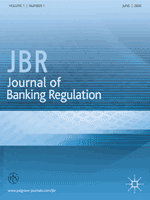
Journal of Banking Regulation
Empowering Scholars with Cutting-Edge Research.Journal of Banking Regulation is a premier academic journal published by Palgrave Macmillan Ltd. based in the United Kingdom, contributing significantly to the fields of Economics and Finance. With an ISSN of 1745-6452 and an E-ISSN of 1750-2071, this journal serves as a vital platform for the dissemination of cutting-edge research that addresses the complexities of banking regulations in a rapidly evolving financial landscape. As a Q3 ranked journal in both Economics and Econometrics and Finance categories, it holds a respectable position among its peers, with Scopus ranks highlighting its impact within the research community (Rank #246/716 and #115/317, respectively). The journal has been converging contemporary studies and analyses since its inception in 2008, and actively invites scholars, professionals, and students to explore its insightful articles. Though primarily subscription-based, readers can benefit from its rigorous content, which aims to inform regulatory practices and foster a deeper understanding of the banking sector's intersection with global economic trends.
Annals of Finance
Championing Excellence in Financial ResearchThe Annals of Finance, published by Springer Heidelberg in Germany, stands as a pivotal journal within the realms of Economics, Econometrics, and Finance. With a dedicated convergence of research from 2005 to 2024, this esteemed publication features thought-provoking articles that address both theoretical and practical aspects of finance, earning it a commendable Q2 category ranking in the 2023 metrics for both Economics, Econometrics and Finance as well as Finance. The journal serves an essential role in disseminating knowledge and fostering advancements in the field, appealing to researchers, professionals, and students alike. Its rigorous peer-review process ensures the integrity and quality of published works, making it a reliable source for cutting-edge findings and discussions within the finance community. For those looking to navigate the complexities of modern finance through rigorous research, the Annals of Finance is an invaluable resource.

European Journal of Finance
Elevating the discourse in finance and econometrics.European Journal of Finance is a prestigious publication specializing in the domains of finance, economics, and econometrics, published by Routledge Journals, Taylor & Francis Ltd. Established in 1995, this journal has become a vital resource for researchers, practitioners, and students, contributing significantly to the understanding of financial systems and markets. With its Q1 ranking in the Economics, Econometrics and Finance category, it stands out for its rigorous peer-reviewed articles that explore innovative theories, models, and empirical studies. The journal's impressive Scopus ranking of 35 out of 242 highlights its impact and relevance within the field, with an 85th percentile standing that underscores its importance to current financial research. Although it does not offer open access, the European Journal of Finance remains a cornerstone for those seeking to delve deeper into the complexities of finance, equipped with insights that drive both academic inquiry and practical application.
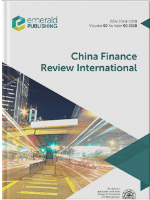
China Finance Review International
Navigating the Future of Finance in China and BeyondChina Finance Review International (ISSN: 2044-1398; E-ISSN: 2044-1401) is an esteemed journal published by Emerald Group Publishing Ltd, located in the United Kingdom. With a commendable Q1 ranking in the field of finance according to 2023 category quartiles, this journal has established itself as a leading platform for disseminating significant research in the realms of economics, econometrics, and finance, boasting a remarkable Scopus rank of #13 out of 317, placing it in the 96th percentile. The journal focuses on advancing the discourse surrounding financial issues related to China, making it essential reading for academics, professionals, and students eager to explore the dynamic shifts in this critical area of global finance. As it continues to bridge theoretical insights with practical applications, the China Finance Review International aims to foster a comprehensive understanding of financial mechanisms at play within one of the world's most impactful economies.
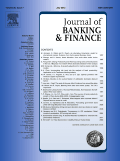
JOURNAL OF BANKING & FINANCE
Driving Real-World Impact with Financial InsightsWelcome to the Journal of Banking & Finance, a premier publication in the fields of finance and economics, expertly published by Elsevier. With its esteemed Q1 ranking in both the Economics and Econometrics and Finance categories for 2023, this journal frequently garners significant attention from researchers, professionals, and academics alike. Established in 1977, it has become a crucial resource for the latest research and advancements in banking and financial services, influencing policies and practices on a global scale. The journal's commitment to high-quality, peer-reviewed content ensures that it not only contributes to academic discourse but also drives real-world financial innovation. As part of the respected Elsevier publishing collection, the journal's rigorous standards and comprehensive analysis serve as indispensable tools for those seeking to understand and navigate the complexities of the financial landscape. Located in the Netherlands, the Journal of Banking & Finance continues to play a vital role in shaping the future of financial research through its impactful insights and research contributions.
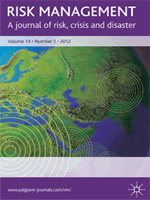
Risk Management-An International Journal
Charting the Course for Future Risk SolutionsRisk Management - An International Journal is a premier publication dedicated to advancing the understanding and methodologies of risk management across various sectors, including business, finance, and economics. Published by Palgrave Macmillan Ltd in the United Kingdom, this journal not only maintains a robust presence in the scholarly community but also ranks in the Q2 category for Business and International Management and Finance, as well as Q3 for Economics and Econometrics and Strategy and Management. With its diverse scope and commitment to high-quality research, the journal provides essential insights for academics, practitioners, and students alike, helping to shape the future of risk management practices globally. While not an open-access journal, its rigorous peer-review process ensures that only the most impactful and relevant studies are featured. Covering topics that converge the years from 2006 to 2024, Risk Management represents a vital resource for those looking to deepen their knowledge in this critical field.
JOURNAL OF FINANCIAL RESEARCH
Advancing Knowledge in Finance and AccountingThe JOURNAL OF FINANCIAL RESEARCH, published by WILEY, stands as a pivotal platform for disseminating innovative research in the fields of finance and accounting since its inception in 1978. With an ISSN of 0270-2592 and an E-ISSN of 1475-6803, this journal aims to address contemporary challenges and trends within the financial research landscape. It has achieved notable recognition, being placed in the Q2 category for both Finance and Accounting in the 2023 rankings, signifying its relevance and impact within the academic community. Although it does not currently offer open access, the journal is accessible through various academic databases, catering to a diverse audience of researchers, professionals, and students keen on advancing their knowledge and understanding of financial systems and methodologies. With an evolving scope that encompasses empirical studies, theoretical frameworks, and practical applications, the JOURNAL OF FINANCIAL RESEARCH is committed to contributing valuable insights into the complexities of financial practices and policies.

Journal of Central Banking Theory and Practice
Elevating Understanding of Central Banking DynamicsThe Journal of Central Banking Theory and Practice, published by SCIENDO, is a leading open-access journal that has been providing valuable insights into the realms of central banking, monetary policy, and financial stability since its inception in 2012. With its ISSN 1800-9581 and E-ISSN 2336-9205, this journal emphasizes rigorous scholarly research, catering to a wide audience of economists, finance professionals, and academic researchers. Based in Germany, the journal has established a strong reputation, evident from its improved category quartiles - moving from Q3 in Economics, Econometrics, and Finance to a commendable Q2 in 2023. With an impressive Scopus rank of #83/288 in General Economics and a 71st percentile ranking, it stands as a pivotal resource for understanding current trends and practices in central banking. Authors are encouraged to submit high-quality, original research that fosters knowledge and advances the field. This journal not only disseminates significant findings but also promotes discussions that are critical for policymakers and stakeholders in the financial sector.
JOURNAL OF FINANCE
Connecting theory to practice in the world of finance.JOURNAL OF FINANCE, published by Wiley, stands as a premier academic journal in the fields of finance, economics, and accounting. With a history dating back to 1946, the journal has consistently delivered impactful research that shapes financial theory and practice, boasting an impressive impact factor reflective of its high citation rate. Its Quartile 1 ranking in Accounting, Economics and Econometrics, and Finance illustrates its leading position within these disciplines. Although not an open access publication, the journal continues to be indispensable for researchers, professionals, and students seeking to advance their understanding and knowledge through rigorous empirical analysis and comprehensive reviews. With an esteemed global readership, the JOURNAL OF FINANCE remains committed to fostering the dissemination of innovative financial research well into 2024 and beyond.
Journal of International Financial Markets Institutions & Money
Innovating Research in International FinanceThe Journal of International Financial Markets, Institutions & Money, published by Elsevier, serves as a leading platform for the dissemination of high-quality research in the fields of finance, economics, and econometrics. With an impressive impact factor reflected in its status as a Q1 journal in both categories for 2023, it ranks among the top journals, positioned at #47 out of 317 in Finance and #111 out of 716 in Economics. This journal offers a unique focus on the interplay between financial markets and institutions on a global scale, making it an essential resource for scholars, practitioners, and students alike. The journal welcomes innovative theoretical, empirical, and applied research, contributing to an exciting dialogue that shapes the future of international finance. For researchers looking to publish their findings, this journal is committed to rigorously engaging with contemporary financial phenomena, positioning itself as a vital cornerstone of academic and professional discourse.