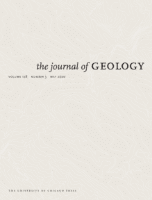
JOURNAL OF GEOLOGY
metrics 2024
Unveiling Geological Insights for a Sustainable Future.
Introduction
The JOURNAL OF GEOLOGY, published by University of Chicago Press, serves as a premier platform for disseminating groundbreaking research in the field of geology. Established in 1973, this esteemed journal has consistently ranked in the Q2 category in geology, further solidified by its Scopus ranking, where it is positioned at 99 out of 321 in Earth and Planetary Sciences, marking it in the 69th percentile of its category. With an emphasis on innovative and interdisciplinary studies, the journal features peer-reviewed articles that contribute to the understanding of geological processes, earth materials, and environmental interactions. Although it does not currently offer open access, it facilitates broad access through academic institutions to reach a global audience of researchers, professionals, and students striving to advance the knowledge of Earth's history and dynamics. As a vital resource for the geology community, the JOURNAL OF GEOLOGY plays an essential role in fostering scholarly dialogue and advancing both academic inquiry and practical applications in geology.
Metrics 2024
 0.451.501.80114
Metrics History
Rank 2024
Scopus
IF (Web Of Science)
JCI (Web Of Science)
Quartile History
Similar Journals

Andean Geology
Pioneering Research in Andean Earth SciencesAndean Geology is a prominent open-access journal, published by the SERVICIO NACIONAL GEOLOGIA MINERVA in Chile, dedicated to advancing the fields of geology, geochemistry, petrology, paleontology, and stratigraphy. Since its inception in 2009, the journal has provided a vital platform for the dissemination of research pertaining to the Andean region and beyond, featuring high-quality articles that contribute to our understanding of earth sciences. With an impressive ranking in the Q2 and Q3 quartiles across multiple categories, it reflects a growing impact in the geological community, evidenced by its status within Scopus rankings. Andean Geology not only supports the academic pursuit of knowledge with its open-access policy but also aims to foster collaboration among researchers and professionals worldwide, ensuring wide accessibility of groundbreaking research and promoting academic engagement. By covering a diverse array of topics relevant to the dynamic field of geology, this journal serves as an essential resource for students, professionals, and scholars dedicated to earth and planetary sciences.

JOURNAL OF IBERIAN GEOLOGY
Exploring the depths of Iberian geology and stratigraphy.JOURNAL OF IBERIAN GEOLOGY, published by Springer International Publishing AG, is a pivotal platform dedicated to advancing the field of geology and stratigraphy. With an ISSN of 1698-6180 and E-ISSN of 1886-7995, this journal has earned its reputation in the academic community, holding a commendable Q2 ranking in both Geology and Stratigraphy for 2023, reflecting its contributions to contemporary geological research. Spanning from 2007 to 2024, it provides a comprehensive forum for scholars and practitioners from around the globe to disseminate their findings pertaining to the Iberian Peninsula, enhancing the understanding of regional geological phenomena. The journal has carved out a significant niche within the Earth and Planetary Sciences, ranking #137 out of 321 in Geology and #24 out of 55 in Stratigraphy, indicating its wide-reaching impact and scholarly engagement. The Journal of Iberian Geology serves as an indispensable resource for those interested in the complexities of geological structures, stratigraphic sequences, and the broader implications of geological research, making it a vital reference for researchers, professionals, and students alike.
ACTA GEOLOGICA POLONICA
Exploring the depths of Earth and planetary sciences.ACTA GEOLOGICA POLONICA is a distinguished journal published by the Polska Akademia Nauk, in collaboration with the University of Warsaw's Geology Department. Since its inception, it has served as a vital platform for disseminating innovative research in the field of Geology, reflecting a commitment to advancing scientific knowledge in Earth and planetary sciences. With an ISSN of 0001-5709 and an E-ISSN of 2300-1887, this journal provides a rigorous review process and is classified in the Q3 quartile for Geology as of 2023, indicating its growing influence in the discipline. Despite not being open access, the journal facilitates meaningful contributions that span a range of geological topics from fundamental research to applied sciences, thereby enriching the academic landscape. Researchers, professionals, and students alike are encouraged to engage with the valuable findings and discussions contained within its pages, which continue to shape the future of geological inquiry.
Brazilian Journal of Geology
Pioneering Interdisciplinary Geoscientific InquiryBrazilian Journal of Geology, the flagship publication of the SOC BRASILEIRA GEOLOGIA, has been a beacon of geoscientific research since its inception in 2013. With an ISSN of 2317-4889 and an E-ISSN of 2317-4692, this open-access journal has facilitated the dissemination of high-quality research across various branches of geosciences, making it freely accessible to a global audience since 2014. Hailing from Brazil, the journal proudly holds a Q2 ranking in Earth and Planetary Sciences as of 2023, and ranks #73 out of 195 in Scopus, indicating its growing impact and relevance in the field. The Brazilian Journal of Geology aims to bridge diverse geological studies with interdisciplinary approaches, promoting the understanding and application of geology in addressing contemporary scientific challenges. As it converges research from 2013 to 2024, the journal not only enriches the academic landscape but also serves as a vital resource for researchers, professionals, and students eager to explore the complexities of the Earth and its processes.

China Geology
Connecting Geoscientists for a Sustainable FutureChina Geology, published by KEAI PUBLISHING LTD, is a leading open-access journal that serves as a pivotal platform for disseminating high-quality research across a wide spectrum of Earth sciences. Since its inception in 2018, the journal has rapidly established itself with an impressive Q1 ranking in multiple critical categories, including Geology, Economic Geology, and Oceanography, among others, reflecting its significant contribution to the academic community. Positioned as a top-tier journal in the Earth Planetary Sciences domain, it ranks #22 out of 321 in Geology and exhibits an admirable impact in sub-fields such as Earth-Surface Processes and Geochemistry and Petrology. China Geology is committed to promoting rigorous scientific inquiry and facilitating the open exchange of knowledge in the geosciences, making it an essential resource for researchers, professionals, and students eager to explore innovative developments and fundamental advances in geology. The journal’s accessibility ensures that critical findings reach a broad audience, thereby enhancing collaboration and driving forward scientific discourse in the global community.
JOURNAL OF SOUTH AMERICAN EARTH SCIENCES
Charting the Course of South American Geological PhenomenaJOURNAL OF SOUTH AMERICAN EARTH SCIENCES is a premier interdisciplinary journal dedicated to publishing high-quality research in the fields of Earth-Surface Processes, Geology, and Paleontology, making it an essential resource for scientists and researchers focused on South American geology and its diverse geological phenomena. Published by Pergamon-Elsevier Science Ltd in the United Kingdom, this journal has been instrumental in disseminating groundbreaking studies since 1988, showcasing contributions that push the boundaries of knowledge in Earth and Planetary Sciences. With an impressive Scopus ranking—positioning it in the 74th percentile for Paleontology and 71st for Geology—this journal not only reflects robust academic quality but also its commitment to addressing critical geological challenges in South America. Researchers will appreciate its objective of advancing understanding of geological processes while providing insights into past, present, and future Earth environments. Although available through traditional subscription models, the journal's vast repository of articles enriches the academic landscape, facilitating the sharing of vital research among professionals, students, and geological practitioners.
AMERICAN JOURNAL OF SCIENCE
Connecting Scholars Through Groundbreaking DiscoveriesThe American Journal of Science, published by the esteemed Amer Journal Science, stands as a leading platform for groundbreaking research in the field of Earth and Planetary Sciences. With an impressive impact factor and distinguished Scopus rank 34/195 in its category, the journal occupies a prestigious position in the academic community, reflecting its high-quality and influential contributions to scientific knowledge. The journal’s objective is to disseminate original research, comprehensive reviews, and critical discussions that advance our understanding of geological processes and planetary phenomena, supporting scholars and practitioners in their pursuit of knowledge. Despite its traditional publication structure, viewers can explore its rich repository of works dating from 1945 to present, offering a wealth of insights into the dynamic Earth sciences. The journal remains a vital resource for researchers, professionals, and students eager to engage with the latest scientific findings and foster further innovation in the field.
JOURNAL OF THE GEOLOGICAL SOCIETY OF INDIA
Exploring the depths of Earth's mysteries.JOURNAL OF THE GEOLOGICAL SOCIETY OF INDIA, published by Springer India, serves as a pivotal platform for researchers and practitioners in the field of geology. Established in 1979, this journal has been instrumental in advancing geological research throughout India, showcasing both regional studies and cutting-edge global research. With its Category Quartile ranking of Q3 in the geology category for 2023, and a significant Scopus rank of 171 among 321 journals in Earth and Planetary Sciences, it remains a respected source of scholarly activity. The journal is dedicated to the dissemination of original research articles, reviews, and case studies that encapsulate the dynamic scope of geological science, thus contributing to the understanding of geological phenomena. Although currently not offering open access, the journal maintains a commitment to high-quality scholarship and aims to engage a diverse readership, enhancing the knowledge and practice of geology across various disciplines.

Geopersia
Innovating Insights into Geological Phenomena.Geopersia is a prominent academic journal published by UNIV TEHRAN, focusing on the interdisciplinary fields of Earth-Surface Processes, Geology, and Geochemistry and Petrology. With an ISSN of 2228-7817, this journal aims to disseminate high-quality research from 2017 to 2024, showcasing innovative studies that contribute to the understanding of geological phenomena. Despite the absence of an open access model, Geopersia maintains a significant scholarly presence, reflected in its categorization within the Q3 and Q4 quartiles in several related fields for 2023. The journal has garnered attention in the academic community, currently ranked in the 43rd percentile for Earth-Surface Processes and 41st percentile for Geology according to Scopus rankings. Researchers, professionals, and students are encouraged to engage with this valuable resource, which not only promotes comprehensive exploration of geological sciences but also fosters collaboration and discussion among experts across the globe.

GEOLOGICA BELGICA
Empowering Research in Earth and Planetary SciencesGEOLOGICA BELGICA is a distinguished open access journal dedicated to advancing the field of Earth and Planetary Sciences, published by Geologica Belgica Luxemburga Scientia & Professionis. With an ISSN of 1374-8505 and E-ISSN of 2034-1954, the journal has been a beacon of knowledge since its establishment in 1998, ensuring the broad accessibility of crucial research findings. Based in Brussels, Belgium, the journal is recognized for its impactful contributions and has achieved a commendable Q2 ranking in the Earth and Planetary Sciences category for 2023. This makes it a vital resource for researchers, professionals, and students alike, encouraging the dissemination of cutting-edge research. Spanning a diverse range of topics within its scope and converging from 2007 to 2024, GEOLOGICA BELGICA remains committed to fostering dialogue and collaboration among earth scientists globally, further enhancing its relevance and influence in this essential field of study.