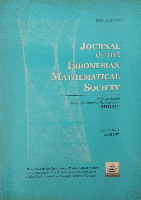
Journal of the Indonesian Mathematical Society
metrics 2024
Advancing Mathematical Knowledge, One Paper at a Time.
Introduction
Journal of the Indonesian Mathematical Society is an esteemed platform that serves as a vital conduit for the dissemination of research in various domains of mathematics. Published by the Indonesian Mathematical Society, this journal prioritizes fostering mathematical knowledge and innovation among scholars both regionally and globally. While it currently holds a Q4 ranking in the field of Mathematics (miscellaneous) and ranks within the lower percentile on Scopus, it actively encourages contributions from mathematicians that push the boundaries of current research trends. The journal, accessible at imsi.org/journal, emphasizes open access to ensure that findings reach a wider audience, thereby enhancing their impact. Located in Bandung, Indonesia, and set to converge its publication years from 2019 to 2024, it stands as an important venue for researchers, professionals, and students engaged in mathematical inquiry and advancement.
Metrics 2024
 0.200.300.505
Metrics History
Rank 2024
Scopus
IF (Web Of Science)
JCI (Web Of Science)
Quartile History
Similar Journals

European Journal of Pure and Applied Mathematics
Elevating Understanding through Groundbreaking Mathematical ResearchThe European Journal of Pure and Applied Mathematics, published by NEW YORK BUSINESS GLOBAL LLC, stands as a pivotal platform in the mathematical sciences, fostering the dissemination of significant research across various domains including algebra, applied mathematics, geometry, and theoretical computer science. Since embracing Open Access publishing in 2011, the journal enables unparalleled access to innovative findings and methodologies, making it an invaluable resource for researchers, professionals, and students alike. With a commendable Scopus ranking and a demonstrated impact within its categories—holding a Q3 position in several mathematical disciplines—the journal reflects a commitment to advancing knowledge and facilitating scholarly dialogue.
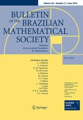
BULLETIN OF THE BRAZILIAN MATHEMATICAL SOCIETY
Advancing Mathematical Frontiers with Every IssueBulletin of the Brazilian Mathematical Society is a distinguished journal published by Springer Heidelberg, aimed at advancing the field of mathematics through the dissemination of research findings and scholarly discourse. With an ISSN of 1678-7544 and an E-ISSN of 1678-7714, this journal is indexed within the Q2 quartile in the field of mathematics (miscellaneous), reflecting its impact and relevance in the academic community. The journal has been recognized for its commitment to quality, as evidenced by its Scopus ranking within the 58th percentile among general mathematics publications. Since its inception in 1996, the Bulletin has served as a vital platform for mathematicians to share innovative ideas, theoretical advancements, and practical applications, making it essential reading for researchers, professionals, and students alike. Open access options are available, ensuring that the latest research is accessible to a wide audience, thereby fostering collaboration and growth within the mathematics community.
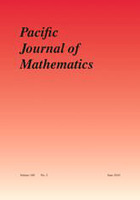
PACIFIC JOURNAL OF MATHEMATICS
Elevating Understanding Through Diverse Mathematical DisciplinesThe PACIFIC JOURNAL OF MATHEMATICS, established in 1951 and published by Mathematical Sciences Publishers, is a premier peer-reviewed journal in the field of mathematics, renowned for its rigorous scholarship and impactful research contributions. With an HIndex that reflects its sustained academic influence, this journal has been categorized within the Q1 quartile in the field of mathematics (miscellaneous) as of 2023, showcasing its position among the top-tier mathematics journals globally. Although the journal operates under a traditional subscription model rather than an Open Access format, it remains dedicated to disseminating original research that spans various domains within mathematics. Researchers, professionals, and students alike will find the journal's breadth of topics and commitment to quality work instrumental in advancing their understanding and exploration of mathematical concepts. This esteemed journal continues to thrive as a vital resource for the mathematical community through its comprehensive collection of articles from a diverse range of mathematical disciplines, thus maintaining a significant role in shaping the future of mathematical inquiry.
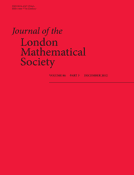
JOURNAL OF THE LONDON MATHEMATICAL SOCIETY-SECOND SERIES
Connecting Scholars Through Groundbreaking Mathematical ResearchJOURNAL OF THE LONDON MATHEMATICAL SOCIETY-SECOND SERIES, published by Wiley, stands as a premier publication in the field of mathematics, particularly recognized for its contributions to general mathematics and its ability to shape contemporary mathematical discourse. With an impact factor that reflects its high citation rate and academic influence, this journal has secured a prestigious Q1 ranking in the Mathematics (miscellaneous) category as of 2023. Encompassing a rich history from its inception in 1926 through various publication phases until 2024, it continues to attract and disseminate innovative research, serving as a vital resource for scholars, practitioners, and students alike. Although it does not currently offer open access options, the journal's commitment to advancing mathematical knowledge makes it an essential source for the latest developments in the discipline. For those engaged in mathematical research, insights from the JOURNAL OF THE LONDON MATHEMATICAL SOCIETY-SECOND SERIES are invaluable in fostering a deeper understanding and sparking new ideas within the mathematical community.

PUBLICATIONES MATHEMATICAE DEBRECEN
Unveiling New Perspectives in MathematicsPublicationes Mathematicae Debrecen is a renowned international journal published by the University of Debrecen, Institute of Mathematics, situated in Hungary. This journal, with both ISSN 0033-3883 and E-ISSN 2064-2849, has established itself in the field of mathematics since its inception, with coverage extending from 1997 to 2024. Recognized for its rigorous academic standards, it currently holds a Q3 ranking in the mathematics (miscellaneous) category for 2023 and ranks at the 42nd percentile among general mathematics journals in Scopus. Publicationes Mathematicae Debrecen aims to disseminate high-quality research across various areas of mathematics, contributing to the advancement of knowledge and practice in this dynamic field. Although it is not an open-access journal, its readers can access a wealth of scholarly work that addresses both theoretical and applied mathematical issues, making it an invaluable resource for researchers, professionals, and students alike.

European Journal of Mathematics
Bridging Theory and Practice in MathematicsWelcome to the European Journal of Mathematics, a prominent publication that serves as a vital platform for disseminating high-quality research in the field of mathematics. Published by Springer International Publishing AG, this journal has witnessed significant growth since its inception in 2015 and is recognized for its contributions within the Q2 category of Mathematics (miscellaneous) as per the 2023 rankings. With an ISSN of 2199-675X and an E-ISSN of 2199-6768, the journal aims to foster innovation and collaboration among researchers, professionals, and students alike. Although it operates under a traditional access model, the journal's commitment to advancing mathematical knowledge and applications cannot be overstated. Positioned among the top-tier publications, the European Journal of Mathematics is an essential resource that encourages the exploration of emerging trends and theories in mathematics, making it indispensable for anyone striving to stay at the forefront of this dynamic field.
Periodica Mathematica Hungarica
Fostering Excellence in Mathematical Research and Applications.Periodica Mathematica Hungarica is a prestigious academic journal published by Springer, focusing on the field of mathematics, with a particular emphasis on miscellaneous mathematical studies. Established in 1971, this journal has maintained its commitment to advancing mathematical research and its applications, making significant contributions over its converged years through 2024. With a Q2 ranking in the mathematics category as of 2023, it establishes itself as a vital resource within the mathematical community. Researchers and academics will find its inclusion in the Scopus database, ranking #189 out of 399 in general mathematics, indicative of its impact and relevance. Although it does not feature open access, the journal provides a wealth of high-quality peer-reviewed articles, thereby serving as an essential platform for the dissemination of innovative mathematical theories, methodologies, and findings. Engaging with the content of Periodica Mathematica Hungarica is crucial for anyone looking to stay at the forefront of mathematical research and development.
NAGOYA MATHEMATICAL JOURNAL
Elevating Mathematical Discourse Through Quality ResearchNAGOA MATHEMATICAL JOURNAL, published by Cambridge University Press, is a prestigious journal that has been at the forefront of advancing mathematical scholarship since its inception in 1950. With an ISSN of 0027-7630 and an E-ISSN of 2152-6842, this journal has gained recognition for its high-quality research contributions in the field of mathematics, achieving a Q1 classification in Mathematics (miscellaneous) as of 2023. The journal’s impact is further reflected in its Scopus rank of #164 out of 399 in the General Mathematics category, positioning it within the 59th percentile of its peers. Scholars, researchers, and students can access a range of innovative mathematical studies that explore diverse topics, fostering a vibrant dialogue within the mathematical community. By catering to a global audience, the NAGOYA MATHEMATICAL JOURNAL continues to play a critical role in shaping contemporary mathematical discourse and research.
JOURNAL OF THE AUSTRALIAN MATHEMATICAL SOCIETY
Empowering mathematicians with innovative research insights.JOURNAL OF THE AUSTRALIAN MATHEMATICAL SOCIETY, published by Cambridge University Press, is a prestigious journal dedicated to advancing research and scholarship in the field of mathematics. With a long-standing history since its inception in 1959, the journal has established itself as a vital resource for mathematicians, researchers, and students worldwide. Operating under an Open Access model, it ensures that high-quality research is accessible to all, enhancing the dissemination of knowledge and fostering collaboration in the mathematical community. The journal holds a commendable Q2 ranking in the 2023 Mathematics (miscellaneous) category and is ranked #145 in Scopus among general mathematics journals, placing it in the 63rd percentile, which reflects its significant influence and reputation in the discipline. The JOURNAL OF THE AUSTRALIAN MATHEMATICAL SOCIETY continues to provide a platform for innovative mathematical research and critical discourse within the field, making it an invaluable asset for professionals and aspiring mathematicians alike.
PROCEEDINGS OF THE INDIAN ACADEMY OF SCIENCES-MATHEMATICAL SCIENCES
Catalyzing Growth in the Mathematical CommunityPROCEEDINGS OF THE INDIAN ACADEMY OF SCIENCES-MATHEMATICAL SCIENCES is a premier journal published by Springer India, dedicated to advancing the field of mathematics through the dissemination of high-quality research. With its foundation dating back to 1978, the journal serves as a pivotal platform for researchers, professionals, and students alike, fostering a vibrant academic community focused on the latest developments in mathematical sciences. Although currently positioned in the Q3 category for Mathematics (miscellaneous) with a Scopus rank of #340/399, the journal holds immense potential for growth and wider recognition within the academic sphere. It features articles that span various mathematical disciplines, encouraging innovative ideas and methodologies that contribute significantly to the field. The journal's contributions are especially relevant in the context of expanding mathematical applications in science and technology. Though it operates without an Open Access option, the journal remains an invaluable resource for anyone engaged in mathematical research, offering insights that inspire future studies and collaborations.