
Journal of Information Processing Systems
Scope & Guideline
Empowering Research in Software and Information Systems
Introduction
Aims and Scopes
- Data Privacy and Security:
Research related to data protection, privacy-preserving mechanisms, and secure data handling techniques, especially in cloud computing and IoT environments. - Machine Learning and AI Applications:
Exploration of machine learning methodologies and their applications in various domains, including image recognition, sentiment analysis, and recommendation systems. - Big Data and Analytics:
Studies focusing on big data management, analytics techniques, and the integration of big data with IoT for improved decision-making processes. - Human-Computer Interaction (HCI):
Innovative approaches to enhance user experience in technology through the study of user interfaces, interaction design, and usability. - Distributed and Edge Computing:
Research emphasizing the performance and efficiency of computing systems across distributed networks and edge computing environments. - Blockchain and Cryptography:
Investigations into blockchain technology applications, cryptographic methods, and their implications for security in digital systems. - Healthcare Informatics:
Utilization of information systems to improve healthcare delivery, including medical imaging, disease diagnosis, and healthcare data management. - Internet of Things (IoT):
Exploration of IoT frameworks, applications, and the impact of IoT devices on various sectors, including agriculture, healthcare, and smart cities.
Trending and Emerging
- Explainable AI and Interpretable Machine Learning:
A growing emphasis on developing models that not only provide predictions but also explain their reasoning, ensuring transparency and trust in AI systems. - Privacy-Preserving Technologies:
An increasing focus on methodologies that secure user privacy while allowing data analytics, particularly in the context of GDPR and similar regulations. - Healthcare Data Processing and Analysis:
Emerging research on leveraging information systems for healthcare applications, particularly in the context of disease diagnosis and patient management. - Integration of Blockchain in Various Applications:
Exploration of blockchain technology's potential across different sectors, particularly in enhancing security and transparency in transactions. - Edge Computing Solutions:
Rising interest in edge computing solutions that optimize processing power closer to data sources, thereby improving response times and reducing bandwidth use. - Cybersecurity in IoT Environments:
Increased research on securing IoT devices and networks against cyber threats, reflecting the growing concerns over vulnerabilities in connected systems.
Declining or Waning
- Traditional Software Development Methods:
Research focusing on conventional software engineering practices has decreased, possibly due to the rise of agile methodologies and DevOps practices that prioritize rapid development and deployment. - Basic Algorithmic Studies:
There has been a noticeable reduction in publications centered around fundamental algorithmic research, as the focus has shifted towards more applied and interdisciplinary approaches. - Static Data Analysis:
Research on static analysis techniques for data processing has waned in favor of dynamic and real-time data processing methods that align better with current technological trends.
Similar Journals

International Journal of Grid and Utility Computing
Transforming Ideas into Practical Computing SolutionsInternational Journal of Grid and Utility Computing is a pioneering publication dedicated to advancing research in the domains of grid computing, utility computing, and their applications across various sectors. Initiated in 2005 and continuing through 2024, the journal is published by INDERSCIENCE ENTERPRISES LTD, a respected publisher known for its commitment to facilitating scholarly communication. With an ISSN of 1741-847X and an E-ISSN of 1741-8488, this journal, based in the United Kingdom, serves a global audience of researchers, professionals, and students. Although classified in the Q4 category across Applied Mathematics, Computer Science Applications, and Management Information Systems, the journal aims to bridge theoretical research with practical implementation, fostering interdisciplinary collaborations. Researchers looking for a platform to disseminate their work on grid technology and its utility in modern computing environments will find this journal an invaluable resource. The focus on innovative computing methodologies places it at the forefront of emerging trends and technology applications, despite the need for increased visibility in competitive metrics like Scopus rankings.

International Journal on Information Technologies and Security
Bridging Disciplines in Tech and SecurityInternational Journal on Information Technologies and Security, published by UNION SCIENTISTS BULGARIA, is a pivotal interdisciplinary journal that explores the rapidly evolving fields of information technology and security. With a robust ISSN of 1313-8251, this journal serves as a platform for researchers, professionals, and students to disseminate their findings and innovations in cybersecurity, data protection, and IT system integrity. The journal's commitment to open access enhances accessibility, ensuring that pivotal research reaches a broader audience, encouraging collaboration and advancement in these critical areas. As an invaluable resource for those engaged in the study and application of information security measures, the International Journal on Information Technologies and Security plays an essential role in shaping the discourse and driving forward the knowledge necessary to tackle today’s technological challenges.
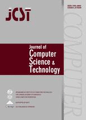
JOURNAL OF COMPUTER SCIENCE AND TECHNOLOGY
Empowering Research in the Digital AgeJOURNAL OF COMPUTER SCIENCE AND TECHNOLOGY, published by Springer Singapore Pte Ltd, is a pivotal platform in the rapidly evolving realms of computer science and technology. With an ISSN of 1000-9000 and an E-ISSN of 1860-4749, this journal encompasses a diverse array of topics including computational theory, hardware and architecture, software engineering, and applications of computer science. Spanning over three decades from 1986 to 2024, it boasts an impressive standing within academic circles, ranking in the Q2 quartile across several key categories and achieving notable placement in Scopus metrics. Although this journal operates under a subscription-based model, it remains a crucial resource for researchers, professionals, and students seeking to advance their knowledge and contribute to discussions in computer science. The JOURNAL OF COMPUTER SCIENCE AND TECHNOLOGY is committed to fostering innovation and scholarly communication in the field, encouraging submissions that contribute substantive advancements in theory and application.

International Journal of Web Services Research
Elevating Standards in Web Services ResearchThe International Journal of Web Services Research, published by IGI Global, is a premier forum dedicated to advancing research and innovation in the field of web services. With an ISSN of 1545-7362 and an E-ISSN of 1546-5004, this journal has steadily contributed to the discourse on computer networks, information systems, and software development since its inception in 2004. Based in the United States, the journal publishes high-quality research articles that delve into cutting-edge web service technologies and methodologies, making it an invaluable resource for researchers, professionals, and students alike. Although categorized in the Q4 quartile in 2023 across several classifications, its growing impact and relevance are reflected in its ongoing engagement with contemporary issues in the web services landscape. As an academic platform, it aims to provide a comprehensive understanding of the dynamics of web services and their implications for future technological advancements. Researchers are encouraged to contribute their findings to foster knowledge sharing and collaboration within this vital domain.

International Journal of Networked and Distributed Computing
Driving Insights in Computer Networks and BeyondWelcome to the International Journal of Networked and Distributed Computing, published by SpringerNature, a premier outlet for cutting-edge research in the realms of computer networks and distributed computing systems. Established as an Open Access journal since 2013 and based in the Netherlands, this publication strives to disseminate high-quality, peer-reviewed studies that address the complexities of contemporary computing challenges. With an impact factor that reflects its growing influence—positioned in the Q3 category for both Computer Networks and Communications and Computer Science Applications—this journal serves as a pivotal resource for scholars and practitioners aiming to advance knowledge and innovation in this rapidly evolving field. The journal encompasses diverse topics, from network protocols to distributed algorithms, ensuring that researchers, professionals, and students can find relevant insights and methodologies to inform their work. Join us in exploring the depths of networked and distributed computing, contributing to a collaborative academic environment that shapes the future of technology.

Computers
Shaping the Future of Digital InteractionsComputers is a leading journal published by MDPI, dedicated to advancing research in the fields of computer networks and communications, as well as human-computer interaction. Since its inception in 2012, it has established itself as a vital resource for scholars and practitioners, achieving an impressive Q2 ranking in Computer Networks and Communications and a Q3 ranking in Human-Computer Interaction as of 2023. The journal is indexed in Scopus, highlighting its relevance with a rank of #135/395 and #72/145 in their respective categories. Published in Switzerland, this open-access journal ensures widespread dissemination of research findings, supporting the global academic community in enhancing technologies relevant to computer science. Access options are available, fostering an environment where knowledge is shared freely. With an emphasis on innovation, redesign, and collaboration between humans and technology, Computers plays a crucial role in shaping the future of digital interactions.

CONNECTION SCIENCE
Empowering Scholars to Shape the Future of TechnologyCONNECTION SCIENCE, published by Taylor & Francis Ltd, is a premier open-access journal in the fields of Artificial Intelligence, Human-Computer Interaction, and Software Engineering, with an impressive history dating back to 1989. With an aim to foster innovative research and breakthroughs, this journal serves as a vital platform for scholars and practitioners seeking to publish and disseminate their findings. As of 2023, CONNECTION SCIENCE proudly holds a Q2 ranking in all three categories, reflecting its significance and influence within the academic community, supported further by robust Scopus rankings placing it in top percentiles across the disciplines. In addition to its extensive service to the global research community, it has transitioned to open access since 2022, enhancing the accessibility of high-impact research to a wider audience. For anyone involved in these dynamic fields, CONNECTION SCIENCE is crucial for keeping up with trends, theories, and practical applications that drive the future of technology and artificial intelligence.
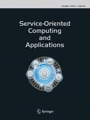
Service Oriented Computing and Applications
Unveiling Trends in Computing and ApplicationsService Oriented Computing and Applications is an esteemed journal published by SPRINGERNATURE, focusing on the rapidly evolving domains of service-oriented computing and its myriad applications. With an ISSN of 1863-2386 and an E-ISSN of 1863-2394, this journal has an impressive track record since its inception in 2007, converging with significant contributions from researchers and professionals through 2024. This journal stands out in the academic landscape, evidenced by its categorization in Q2 across multiple fields, including Hardware and Architecture, Information Systems, Management Information Systems, and Software, as per the latest 2023 metrics. Although it does not currently offer Open Access options, its relevance in Computer Science, Business Management, and integrated technology makes it a valuable resource for scholars and practitioners alike, aiming to explore the intersection of computing technologies and their application in real-world scenarios. The journal's rankings in Scopus provide further testament to its impact and importance, making it a key publication for anyone looking to stay at the forefront of advancements in service-oriented computing.
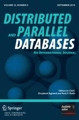
DISTRIBUTED AND PARALLEL DATABASES
Transforming Data Management through Collaborative ResearchDistributed and Parallel Databases is a prestigious journal published by Springer, dedicated to advancing the field of database systems and distributed computing. With an ISSN of 0926-8782 and an E-ISSN of 1573-7578, this journal has been a prominent platform for disseminating significant research findings since its inception in 1993. The journal is recognized for its contributions across various dimensions of database technology, notably reflecting in its 2023 Quartile Rankings where it stands at Q3 in Hardware and Architecture and Software, while achieving a commendable Q2 in Information Systems and Management. With Scopus Ranking positioning it within the top half of key categories, the journal plays a crucial role in bridging theoretical and practical aspects of distributed database solutions. Although it does not currently offer open access options, it is widely accessible to institutions, making it an essential resource for researchers, professionals, and students keen on exploring the latest trends and innovations in the realm of distributed and parallel computing.

International Journal of Web and Grid Services
Catalyzing breakthroughs in web services and grid solutions.International Journal of Web and Grid Services, published by INDERSCIENCE ENTERPRISES LTD, is a distinguished platform for innovative research in the realms of Web Services, Grid Computing, and Distributed Systems. Established in 2005, the journal has consistently provided a forum for groundbreaking studies, catering to the evolving needs of academia and industry professionals alike. As of 2023, it is positioned in the Q3 quartile in both Computer Networks and Communications and Software, showcasing a notable impact within the field. Researchers will find this journal instrumental in disseminating knowledge, driving advancements, and fostering collaboration in the rapidly changing technological landscape. Although it currently does not offer open access options, its commitment to high-quality peer-reviewed content ensures that it remains a vital resource for those seeking to stay at the forefront of web and grid services research. With an audience comprising both seasoned scholars and emerging professionals, the International Journal of Web and Grid Services continues to be pivotal in shaping ongoing discourse and innovation.