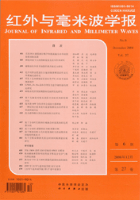
JOURNAL OF INFRARED AND MILLIMETER WAVES
metrics 2024
Fostering Global Collaboration in Optical Studies
Introduction
JOURNAL OF INFRARED AND MILLIMETER WAVES is a pivotal peer-reviewed journal published by SCIENCE PRESS, dedicated to advancing research in the fields of atomic and molecular physics as well as optics. With an ISSN of 1001-9014, this journal has established itself as an open-access platform since 2001, facilitating the dissemination of high-quality research findings to a global audience. The journal serves as a crucial resource for researchers, professionals, and students alike, spanning a converged period from 1991 to 2024. While currently positioned in Quartile 4 within its respective category, and ranked #184 out of 224 in Scopus for its impact in atomic and molecular physics, the journal remains committed to promoting innovative studies and methodologies in the underrepresented yet vital area of infrared and millimeter wave technologies. Based in Beijing, China, the journal seeks to attract cutting-edge research that explores new horizons in both theoretical and experimental domains, thereby contributing to the broader scientific community and fostering collaboration among scholars worldwide.
Metrics 2024
 0.200.600.5029
Metrics History
Rank 2024
Scopus
IF (Web Of Science)
JCI (Web Of Science)
Quartile History
Similar Journals
INFRARED PHYSICS & TECHNOLOGY
Shaping the Future of Infrared TechnologyINFRARED PHYSICS & TECHNOLOGY, published by Elsevier, stands at the forefront of research in the fields of atomic and molecular physics, materials science, and condensed matter physics. With an impressive impact factor reflected in its Q2 quartile ranking across multiple categories, this journal serves as a key platform for disseminating high-quality peer-reviewed articles that advance understanding of infrared phenomena and their applications. As an essential resource from 1994 to 2024, it contributes significantly to the ongoing dialogue within the scientific community, providing researchers, professionals, and students with cutting-edge insights into electronic, optical, and magnetic materials. Although not an open access journal, its articles are widely disseminated and recounted in major databases, ensuring its pivotal role in the advancement of both theoretical and applied physics. Located in the vibrant academic hub of Amsterdam, the journal encourages innovative research that drives multi-disciplinary studies and fosters collaboration among scientists globally.
JOURNAL OF THE OPTICAL SOCIETY OF AMERICA B-OPTICAL PHYSICS
Illuminating the Future of Optical ScienceJOURNAL OF THE OPTICAL SOCIETY OF AMERICA B-OPTICAL PHYSICS, published by Optica Publishing Group, serves as a leading platform for groundbreaking research in the fields of optical physics, atomic and molecular physics, and statistical and nonlinear physics. With an ISSN of 0740-3224 and an E-ISSN of 1520-8540, this esteemed journal has been in circulation since 1984 and is dedicated to advancing the understanding of optical phenomena and related technologies. It holds a commendable position in the academic community, with a 2023 Scopus ranking reflecting its significance—placing it in the top quartile for both Atomic and Molecular Physics and Statistical and Nonlinear Physics. Although it is not an open-access publication, it provides extensive access options to ensure that research is disseminated effectively within the scientific community. This journal is instrumental for researchers, professionals, and students alike, aiming to keep them informed of the latest advancements and trends in optical science. With a convergence of expertise and innovation, JOSA B continues to play a pivotal role in shaping the future of optical research.
OPTICAL AND QUANTUM ELECTRONICS
Pioneering Research in Atomic and Molecular FrontiersOPTICAL AND QUANTUM ELECTRONICS, published by SPRINGER, is a premier journal dedicated to advancing the fields of atomic and molecular physics, optics, and electronic engineering. With an ISSN of 0306-8919 and an E-ISSN of 1572-817X, this journal has established itself as a vital resource for researchers, professionals, and students alike, contributing to the discourse from its inception in 1969 to its continued publications through 2024. It holds impressive rankings in Scopus, placing within the top percentiles for its categories, specifically in the 64th for Electrical and Electronic Engineering and 63rd for Atomic and Molecular Physics. Though it does not currently offer open access options, the journal's robust impact factor reflects its importance within its field, making it an essential reference point for cutting-edge research and developments in materials science and optics. Through its rigorous peer-review process, OPTICAL AND QUANTUM ELECTRONICS remains committed to publishing high-quality, influential studies that push the boundaries of innovation and understanding in these dynamic areas of science.

Nonlinear Optics Quantum Optics-Concepts in Modern Optics
Advancing Knowledge in Nonlinear and Quantum OpticsNonlinear Optics Quantum Optics-Concepts in Modern Optics is a specialized journal published by OLD CITY PUBLISHING INC, focusing on the forefront of research in nonlinear optics and quantum optics. With an ISSN of 1543-0537 and an E-ISSN of 1944-8325, this journal serves as a pivotal platform for the dissemination of innovative concepts and findings in modern optics, significant for both theoretical exploration and practical applications. Established in 2003, the journal's scope encompasses critical areas such as atomic and molecular physics, optical materials, and instrumentation, attracting submissions from a diverse range of interdisciplinary fields. While the journal currently maintains a Q4 ranking in several categories, it continues to strive for higher visibility and impact in the academic community. Researchers and students alike will find valuable insights and contributions that foster advancements in optical science and engineering. With an emphasis on rigorous peer-review, Nonlinear Optics Quantum Optics-Concepts in Modern Optics is committed to enhancing the understanding and application of nonlinear optical phenomena in various technological domains.
OPTICAL REVIEW
Innovating Insights in the World of LightOPTICAL REVIEW is a distinguished journal published by the Optical Society of Japan that serves as a critical platform for researchers, professionals, and students within the diverse fields of atomic and molecular physics and optics. With its ISSN 1340-6000 and E-ISSN 1349-9432, the journal has had a significant impact on the dissemination of knowledge since its inception in 1994, with a planned coverage until 2024. Although it currently holds a Q4 ranking in the 2023 category quartiles and is positioned at rank #152 out of 224 in the Scopus database, its contributions are vital for advancing optical science. This journal provides a venue for innovative research, review articles, and significant developments that drive the optical sciences forward. Although not categorized as Open Access, it remains an important resource for those seeking to deepen their knowledge and engage with leading-edge research in optics. With its base located at the Kudan-Kita Building in the heart of Tokyo, Germany, OPTICAL REVIEW is poised to continue fostering scholarly communication and collaboration on a global scale.
OPTICS AND SPECTROSCOPY
Transforming Insights into Light-Matter DynamicsOptics and Spectroscopy is a pivotal peer-reviewed journal published by Pleiades Publishing Inc, focusing on the intricate fields of atomic and molecular physics, as well as optics. Established in 1972, and enjoying a legacy of convergence periods that reinforce its commitment to the evolving landscape of these scientific domains, the journal aims to disseminate high-quality research that advances our understanding of light-matter interactions, electronic materials, and spectroscopic techniques. Despite its current Q4 categorization in both the Atomic and Molecular Physics and Electronic, Optical and Magnetic Materials fields, with corresponding Scopus rankings reflecting its developing influence, the journal remains a valuable resource for researchers and professionals seeking to publish their findings, explore new methodologies, and connect with a community dedicated to innovation in optics. Although there is currently no open access option, the journal's expansive readership and its stability in publication over the decades make it an important platform for both established and emerging researchers in the field.
Journal of Physics-Photonics
Shaping Tomorrow's Innovations in Physics and EngineeringJournal of Physics-Photonics, published by IOP Publishing Ltd in the United Kingdom, is an esteemed Open Access journal that has been at the forefront of research in the field of photonics since its inception in 2018. With an impressive portfolio, the journal has achieved Q1 ranking in 2023 across multiple disciplines, including Atomic and Molecular Physics, Electrical and Electronic Engineering, and Electronic, Optical, and Magnetic Materials. This positions it among the leading journals in these areas, reflecting its significant influence and contribution to advancing knowledge and innovation. The journal aims to disseminate high-quality research findings that encompass a wide range of topics in photonics, promoting interdisciplinary approach that fosters collaboration among researchers, professionals, and students. With its commitment to open access, Journal of Physics-Photonics ensures that groundbreaking research is accessible to all, empowering a global audience to engage with and benefit from the latest advancements in photonic technologies.

Opto-Electronic Advances
Fostering Breakthroughs in Opto-Electronic EngineeringOpto-Electronic Advances is a premier open-access journal published by the Chinese Academy of Sciences' Institute of Optics & Electronics, dedicated to advancing the fields of optics and electronic engineering. Established in 2018, this journal quickly ascended to a Q1 ranking across multiple categories including Atomic and Molecular Physics, Electrical and Electronic Engineering, and Electronic, Optical and Magnetic Materials, showcasing its impact and relevance in the scientific community. With an impressive Scopus ranking placing it in the top percentiles for critical fields such as Engineering, Materials Science, and Physics, Opto-Electronic Advances provides a platform for researchers to publish their cutting-edge findings and foster dialogue in an increasingly interdisciplinary area of study. The journal emphasizes innovative research that contributes to practical applications and theoretical frameworks in its domain, making it an invaluable resource for academicians, industry practitioners, and students alike. Embrace the future of opto-electronic research with Opto-Electronic Advances, which has been fully open access since 2021, ensuring that knowledge is widely disseminated without barriers.

Advanced Photonics
Shaping Tomorrow's Technologies with PhotonicsAdvanced Photonics, published by SPIE-SOC PHOTO-OPTICAL INSTRUMENTATION ENGINEERS, is a prestigious open-access journal dedicated to cutting-edge research in the fields of photonics, optics, biomedical engineering, and material science. Since its inception in 2019, this journal has successfully established itself in the top quartile (Q1) of various categories, including Atomic and Molecular Physics, Biomedical Engineering, and Electronic, Optical and Magnetic Materials, showcasing its critical role in advancing knowledge and innovation within these disciplines. With impressive Scopus rankings—#8 in Biomedical Engineering, #7 in Atomic and Molecular Physics, and #10 in Materials Science—Advanced Photonics serves as an essential platform for researchers, professionals, and students alike, offering a wealth of accessible scholarly content to keep pace with rapid technological developments. The journal not only fosters collaboration and knowledge dissemination within the global scientific community but also emphasizes the importance of open access to ensure that groundbreaking research benefits society as a whole.
OSA Continuum
Bridging Theory and Application in Optical SciencesOSA Continuum, published by the Optica Publishing Group, is a distinguished open access journal dedicated to advancing research in the realms of Atomic and Molecular Physics, Optics, and Electronic and Electrical Engineering. Since its inception in 2018, this journal has rapidly positioned itself as a significant platform for disseminating cutting-edge findings, achieving impressive Scopus rankings with a 61st percentile in Electrical and Electronic Engineering and 57th in Atomic and Molecular Physics. Based in the United States, the journal not only promotes scholarly dialogue among researchers and professionals but also plays a crucial role in bridging theoretical advances with practical applications in optical and material sciences. Its open access format ensures broader visibility and accessibility of research outputs, fostering innovation and collaboration across disciplines. With its ongoing commitment to excellence, OSA Continuum is crucial for anyone involved in these dynamic fields.