JOURNAL OF INSECT CONSERVATION
metrics 2024
Championing the Study of Insect Biodiversity
Introduction
JOURNAL OF INSECT CONSERVATION, published by SPRINGER in Switzerland, is a leading peer-reviewed journal that focuses on the preservation and study of insect biodiversity and ecology. With an ISSN of 1366-638X and E-ISSN 1572-9753, this journal represents a vital resource for researchers and practitioners in the fields of Animal Science, Ecology, and Insect Science. The journal consistently ranks among the top quartiles, achieving Q1 status in Animal Science and Zoology and Q2 in other pertinent categories in 2023, according to Scopus rankings. This reflects its significant influence in the academic community, with a solid impact factor that highlights its importance in advancing the discourse on insect conservation. Though not an open access journal, it provides critical insights and innovative research findings from 1997 to 2024, making it an essential platform for those involved in the conservation of insect species and their habitats. As a scholarly resource, the JOURNAL OF INSECT CONSERVATION is dedicated to fostering knowledge dissemination and inspiring future research in pressing environmental issues.
Metrics 2024
 0.581.902.0071
Metrics History
Rank 2024
Scopus
IF (Web Of Science)
JCI (Web Of Science)
Quartile History
Similar Journals

REVISTA DE LA SOCIEDAD ENTOMOLOGICA ARGENTINA
Advancing Insect Science Through Open Access ResearchREVISTA DE LA SOCIEDAD ENTOMOLOGICA ARGENTINA is an esteemed open-access journal dedicated to the field of entomology, published by the SOCIEDAD ENTOMOLOGICA ARGENTINA. Since its transition to open access in 2013, the journal has sought to promote research in insect science, ecology, and related disciplines, facilitating global dissemination of knowledge and encouraging collaborative studies across borders. Located in the vibrant scientific landscape of La Plata, Argentina, the journal is indexed in Scopus and categorized in the fourth quartile of ecology and insect science, reflecting its commitment to enhancing the discourse within these critical fields. Aiming to bridge the gap between researchers, students, and professionals, REVISTA DE LA SOCIEDAD ENTOMOLOGICA ARGENTINA serves as a platform for innovative research, reviews, and reports on ecological interactions, behavior, and systematic entomology, ultimately driving forward our understanding of insect biodiversity and its broader environmental impacts.
Insect Science
Unveiling the secrets of insect biology and behavior.Insect Science, published by WILEY, stands as a prestigious journal in the realms of Agronomy, Biochemistry, Genetics, and Insect Ecology. The journal, with ISSN 1672-9609 and E-ISSN 1744-7917, has firmly established itself as a significant resource for researchers and professionals seeking to explore the intricate dynamics of insects and their crucial roles in ecosystems. With a remarkable impact factor placing it in the Q1 quartile across multiple categories, including Ecology and Evolution and Agronomy and Crop Science, Insect Science ranks impressively at #8 out of 181 in the realm of Insect Science on Scopus, showcasing its influence and relevance in the field. Spanning its coverage from 1994 to 2024, this journal invites contributions that advance our understanding of insect biology, behavior, and their interactions within agricultural contexts. The commitment to high-quality research and its role in fostering interdisciplinary dialogue make Insect Science an essential platform for scholars and practitioners at the forefront of insect-related studies.
AFRICAN ENTOMOLOGY
Unveiling the Secrets of Insects Across Southern AfricaAFRICAN ENTOMOLOGY, published by the Entomological Society of Southern Africa, is a pivotal journal dedicated to the vibrant field of entomology and its related disciplines. With an ISSN of 1021-3589 and an E-ISSN of 2254-8854, it serves as an essential resource for researchers, professionals, and students interested in the intricacies of insect science across diverse ecological and agricultural landscapes. This journal, with a convergence of publications from 1994 to 2024, holds notable rankings, notably placing in Q2 for Agronomy and Crop Science and Q3 for both Ecology, Evolution, Behavior and Systematics and Insect Science as of 2023. The journal has made significant contributions to the knowledge and understanding of insect populations, their behaviors, and interactions within ecosystems, making it highly relevant for those engaged in agricultural practices and biodiversity conservation. AFRICAN ENTOMOLOGY welcomes original research articles, reviews, and special issues that broaden the dialogue surrounding entomological studies, and while it operates under conventional access policies, it remains an influential platform for scholarly discourse in Southern Africa and beyond.

JOURNAL OF INSECT SCIENCE
Fostering Innovation in Insect ResearchJOURNAL OF INSECT SCIENCE, published by OXFORD UNIV PRESS INC, stands as a pivotal platform in the field of insect science, offering open-access research since 2001. With an impactful presence in the academic community, this journal spans the convergence of entomology and various interdisciplinary studies, establishing itself in the Q2 quartile for both Insect Science and Medicine (miscellaneous) categories as of 2023. This esteemed journal is recognized for its contributions to the understanding and management of insect biology, ecology, and their implications for agriculture and human health, garnering a Scopus rank of 44 out of 181 in Agricultural and Biological Sciences. The Open Access model encourages wide dissemination of knowledge, making the rich repository of research accessible to a global audience. With ongoing publications until 2024, JOURNAL OF INSECT SCIENCE serves as an essential resource for researchers, professionals, and students seeking to deepen their understanding of the crucial role insects play in our ecosystem.
ANNALS OF THE ENTOMOLOGICAL SOCIETY OF AMERICA
Elevating Knowledge in Agricultural and Biological SciencesANNALS OF THE ENTOMOLOGICAL SOCIETY OF AMERICA is a premier journal dedicated to advancing the field of insect science, published by Oxford University Press. With an impressive impact factor and classified in the Q1 quartile for its category, this journal ranks among the top publications in agricultural and biological sciences, specifically within insect science, positioned at #28 out of 181, indicating its significant influence and high-quality research contributions. The journal aims to disseminate original research, comprehensive reviews, and groundbreaking findings that enhance our understanding of entomology, spanning across ecological, evolutionary, and applied segments. With a consistent publication history since 1938, researchers, professionals, and students will benefit from the wealth of knowledge presented in its pages. Although the journal does not currently offer open access, it remains a vital resource for those seeking to stay at the forefront of entomological research and innovation.

FRAGMENTA ENTOMOLOGICA
Connecting research and practice in entomology.FRAGMENTA ENTOMOLOGICA is a prominent peer-reviewed academic journal published by UNIV DEGLI STUDI DI ROMA LA SAPIENZA, focusing on various dimensions of entomology and insect science. With an ISSN of 0429-288X and an E-ISSN of 2284-4880, this journal has embraced an Open Access model since 2006, ensuring that valuable research is widely accessible to the global scientific community. Based in Italy, at the DIPARTIMENTO DI BIOLOGIA ANIMALE E DELL'UOMO in Rome, FRAGMENTA ENTOMOLOGICA is recognized for its commitment to high-quality research, ranking in the Q3 category across multiple categories, including Ecology and Insect Science, in 2023. Its Scopus rankings further underscore its relevance, showcasing its role in advancing knowledge in the fields of Ecology, Evolution, and Insect Behavior. This journal serves as an essential resource for researchers, professionals, and students interested in the intricate world of insects and their ecological roles, fostering academic discourse that bridges theoretical and practical entomological studies.
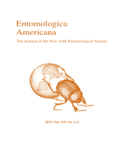
Entomologica Americana
Bridging Science and Conservation in EntomologyEntomologica Americana is a pivotal journal in the field of Insect Science, published by the esteemed New York Entomological Society Inc. With its ISSN (1947-5136) and E-ISSN (1947-5144), this journal serves as a critical resource for researchers, professionals, and students dedicated to the study of entomology. Although it is categorized in the Q4 quartile for Insect Science as per the 2023 Scopus Rankings, where it ranks 179 out of 181, it continues to provide valuable insights into various aspects of insect biology, ecology, and conservation. The journal has been actively publishing since its convergence years from 2009 to 2017, and in selected years thereafter, including 2019, 2021, and 2023. Located at the iconic American Museum of Natural History in New York City, Entomologica Americana is a testament to the ongoing exploration and understanding of the insect world that underpins biodiversity and ecosystem health. Although it does not operate under an Open Access model, it offers a vital platform for scholarly communication and the dissemination of research findings, making it indispensable for anyone involved in or entering the fascinating field of entomology.

Conservation Letters
Shaping Effective Strategies for Global Biodiversity PreservationConservation Letters, published by Wiley, is a premier peer-reviewed journal dedicated to advancing the field of conservation science. As an Open Access journal since 2015, it provides researchers, practitioners, and policymakers with immediate access to cutting-edge research and insights that shape effective conservation strategies globally. With an impressive impact factor and a distinguished standing in the academic community—ranking in the Q1 category in disciplines such as Ecology, Evolution, and Nature Conservation—the journal plays a vital role in disseminating high-quality research that informs environmental practices. Based in the United States, it encompasses a broad scope of topics aimed at bridging scientific findings with real-world applications, effectively contributing to the understanding and preservation of biodiversity. Researchers looking to publish innovative work in an influential platform will find Conservation Letters an essential venue for ensuring their research reaches an engaged international audience.
Frontiers in Insect Science
Bridging the Gap Between Research and Application in Insect ScienceFrontiers in Insect Science is a pioneering open-access journal dedicated to the advancement of knowledge in the field of insect science. Published by FRONTIERS MEDIA SA in Switzerland, this journal serves as a vital platform for researchers, professionals, and students to disseminate high-quality, peer-reviewed research spanning diverse topics within insect biology, ecology, and pest management. Since its establishment in 2021, the journal has gained recognition, ranking in the Q2 category of Insect Science with a Scopus ranking of #92 out of 181 in the field. With a commitment to promoting open access and collaboration, Frontiers in Insect Science is instrumental in fostering innovative research and practical applications essential for combating biodiversity loss and enhancing agricultural sustainability. As a freely accessible resource, it invites contributions that impact both fundamental and applied insect research, connecting a global network of scholars eager to explore the fascinating world of insects.

CANADIAN ENTOMOLOGIST
Illuminating the Path of Entomological DiscoveryCanadian Entomologist, published by Cambridge University Press, is a prominent journal dedicated to the field of entomology, covering key areas such as insect science, ecology, and evolutionary biology. With its origins dating back to 1868, this esteemed journal has continuously contributed to the understanding of insect behavior, systematics, and physiology, engaging researchers and professionals alike. Although currently not an Open Access journal, it offers valuable insights through its rigorously peer-reviewed articles, reflecting its commitment to scientific excellence. The journal has garnered a respectable Q3 ranking in various categories, including Ecology, Evolution, Behavior, and Systematics, making it a critical resource for scholars and students who seek to explore the complex interactions within insect populations and their environments. Researchers can trust Canadian Entomologist to provide relevant and impactful research that shapes contemporary understanding in the realm of entomological studies, fostering the growth of this vital scientific discipline.