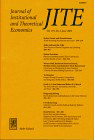
JOURNAL OF INSTITUTIONAL AND THEORETICAL ECONOMICS-ZEITSCHRIFT FUR DIE GESAMTE STAATSWISSENSCHAFT
metrics 2024
Advancing economic thought through rigorous scholarship.
Introduction
JOURNAL OF INSTITUTIONAL AND THEORETICAL ECONOMICS-ZEITSCHRIFT FUR DIE GESAMTE STAATSWISSENSCHAFT is a distinguished publication dedicated to advancing the fields of institutional and theoretical economics. Published by J C B MOHR in Germany, this journal serves as a critical platform for scholarly discourse and research dissemination, encouraging contributions that delve into economic theory and its practical implications in institutional contexts. With an ISSN of 0932-4569 and an E-ISSN of 1614-0559, it enjoys a respectable position, having achieved a Q3 ranking in Economics and Econometrics according to the 2023 categorization. This journal, which bridges theoretical frameworks with real-world applications, is vital for researchers, practitioners, and students seeking to deepen their understanding of economic systems and institutions. Although not an open-access journal, it provides insights valuable for both academia and policy-making. Operating since 1992, with a commitment to rigorous peer-reviewed scholarship, the JOURNAL OF INSTITUTIONAL AND THEORETICAL ECONOMICS remains a pivotal resource in the evolving landscape of economic research.
Metrics 2024
 0.230.200.3040
Metrics History
Rank 2024
Scopus
IF (Web Of Science)
JCI (Web Of Science)
Quartile History
Similar Journals

B E Journal of Economic Analysis & Policy
Driving Discussions in Economics and Policy AnalysisB E Journal of Economic Analysis & Policy, published by Walter de Gruyter GmbH in Germany, stands as a pivotal resource in the field of economics and econometrics since its establishment in 2001. Boasting an ISSN of 2194-6108 and an E-ISSN of 1935-1682, this journal is committed to advancing the understanding of economic policies and their analysis through rigorous, peer-reviewed research. With an impressive categorization that includes a Q2 ranking in the Economics, Econometrics and Finance (miscellaneous) category and a Q3 ranking in other economics niches as of 2023, it emphasizes the importance of empirical research and robust theoretical frameworks. The journal is indexed in Scopus, reaffirming its credibility, with ranks in the 49th and 32nd percentiles for its respective categories. Researchers, professionals, and students alike will find valuable insights and innovative perspectives within its pages, as it continues to shape discussions around economic policy in an ever-evolving global landscape.
International Journal of Economic Theory
Navigating the forefront of theoretical economic analysis.International Journal of Economic Theory, published by Wiley, serves as a vital platform for scholars and researchers in the fields of economics and econometrics. With its ISSN 1742-7355 and E-ISSN 1742-7363, this journal focuses on advancing theoretical understandings in economics, providing a comprehensive analysis of contemporary economic issues. The journal has been converging knowledge and innovation since its inception in 2009 and continues to sustain a commitment to high-quality research until 2024. As a Q3 journal in the 2023 category rankings, it ranks in the 21st percentile in Scopus for Economics and Econometrics, reflecting its established presence amidst competitive scholarly discourse. Although it is not open access, the journal is widely accessible through institutional subscriptions, facilitating learning and research for professionals, graduate students, and academic leaders. The International Journal of Economic Theory is pivotal for those looking to contribute to economic thought, ensuring that emerging theories find a respected outlet in the global academic landscape.

ECONOMIST-NETHERLANDS
Connecting Economists Through High-Quality ResearchThe Economist-Netherlands, published by Springer, is a prestigious journal that has been a cornerstone in the field of economics since its inception in 1852. With a strong focus on disseminating high-quality research and insights, this journal serves as an essential resource for economists, researchers, and practitioners interested in the dynamic landscape of economic theory and applications. Currently ranked in the Q3 category in Economics and Econometrics, this journal demonstrates a commitment to scholarly rigor, as reflected in its Scopus ranking within the 55th percentile. The journal features an extensive scope that encompasses key topics relevant to both historical and contemporary economic challenges, fostering a vibrant academic discourse. While access is not open, the journal remains a vital publication for anyone seeking to advance their knowledge in the economic sector. With an enduring legacy, the Economist-Netherlands continues to contribute significantly to the evolution of economic scholarship.
Journal of Public Economic Theory
Pioneering Research in Fiscal and Welfare EconomicsJournal of Public Economic Theory, published by WILEY, is an esteemed journal that focuses on the rigorous analysis and exploration of the theories and applications of public economics. With an ISSN of 1097-3923 and E-ISSN 1467-9779, this journal serves as a pivotal platform for researchers, professionals, and students engaged in economics, finance, sociology, and political science. Ranking in the prestigious Q1 and Q2 quartiles across various categories, including Economics and Econometrics as well as Sociology and Political Science, the journal is recognized for its significant contribution to the field. Its broad scope encompasses critical issues related to public policy, welfare economics, and fiscal policy, catering to an international audience. While the journal is not open access, its articles undergo a stringent peer-review process to ensure high-quality research dissemination. With a commitment to fostering scholarly dialogue and understanding, the Journal of Public Economic Theory remains an essential resource for those seeking to delve into the complexities of public economic issues, with a historical record of publication from 1999 to 2024.
RAND JOURNAL OF ECONOMICS
Advancing Economic Understanding Through Rigorous AnalysisRAND JOURNAL OF ECONOMICS, published by Wiley, is a prestigious peer-reviewed journal that has been a cornerstone in the field of economics since its inception in 1984. With a focus on empirical and theoretical research, it aims to bridge the gap between economic theory and real-world application, providing insights that are both rigorous and relevant. The journal holds an impressive Q1 ranking in Economics and Econometrics, reflecting its significant impact and influence in the field, evidenced by its Scopus rank of #199 out of 716 in related categories. Although it does not offer open access, the journal remains accessible to a broad audience through institutional subscriptions. Researchers, professionals, and students will find RAND JOURNAL OF ECONOMICS an invaluable resource for cutting-edge economic analyses and a vital platform for scholarly dialogue about contemporary economic issues.
Economic Theory Bulletin
Empowering scholars with cutting-edge insights in economics.Welcome to the Economic Theory Bulletin, a premier journal dedicated to advancing the field of economic theory. Published by SPRINGER HEIDELBERG, this journal serves as a critical platform for researchers and professionals to disseminate innovative ideas and research findings that shape economic discourse. With an ISSN of 2196-1085 and an E-ISSN of 2196-1093, the Economic Theory Bulletin invites contributions that address theoretical advancements and empirical applications in economics, fostering insightful dialogue among scholars. Although the journal operates under a traditional access model, it remains committed to high-quality, peer-reviewed scholarship that meets the rigorous standards of the academic community. The diverse range of articles published here not only contributes to the theoretical foundations of economics but also emphasizes real-world applications, making it an essential resource for students and professionals alike. The journal’s impact on the evolving landscape of economic theory ensures that it remains a vital reference point for the latest research and trends in the field.
Homo Oeconomicus-Journal of Behavioral and Institutional Economics
Unpacking the Complexities of Economic BehaviorHomo Oeconomicus - Journal of Behavioral and Institutional Economics is a reputable academic journal published by Springer Heidelberg, dedicated to exploring the intersection of behavioral science and institutional economics. With its ISSN 0943-0180 and E-ISSN 2366-6161, the journal aims to disseminate high-quality research articles that bridge theoretical constructs and practical applications in economic behavior and institutional frameworks. It offers a vital platform for researchers, professionals, and students to engage with cutting-edge debates, innovative methodologies, and empirical analyses that inform our understanding of economic decision-making processes. Although currently not an open-access journal, Homo Oeconomicus remains influential in shaping the academic discourse within its field, making it essential reading for those passionate about economics, social science, and related studies. For further insights and contributions, subscribe to this pivotal journal, and join the conversations that are redefining economic principles in contemporary society.
JOURNAL OF MATHEMATICAL ECONOMICS
Shaping Policy with Cutting-Edge Mathematical Research.JOURNAL OF MATHEMATICAL ECONOMICS, published by Elsevier Science SA, is a premier journal that bridges the gap between mathematics and economics, making significant contributions to both fields since its inception in 1974. This journal is dedicated to publishing high-quality research that applies mathematical methods to solve complex economic problems, thus nurturing an interdisciplinary dialogue essential for advancing both theoretical and practical applications in economics. With an impact factor that reflects its esteemed position (Q2 in Applied Mathematics and Economics and Econometrics as of 2023), the journal ranks prominently within its categories, promoting rigorous analysis and innovative methodologies. The Journal of Mathematical Economics invites contributions from researchers, professionals, and students alike, providing a platform for the dissemination of cutting-edge research that shapes economic thought and policy. Operating without open access, it remains a crucial resource for anyone keen to delve deeper into the mathematical foundations of economic theory, while it continues to evolve and maintain relevance through 2024 and beyond.
Theoretical Economics
Transforming Ideas into Economic InsightsTheoretical Economics, published by the Econometric Society, is a premier open-access journal dedicated to advancing the field of economics through rigorous theoretical analysis. With an ISSN of 1933-6837 and an E-ISSN of 1555-7561, this journal has been at the forefront of economic scholarship since its inception. Operating out of New York University, it holds a prestigious Q1 ranking in the category of Economics, Econometrics, and Finance, reflecting its influential contributions to the discipline. By making research freely accessible since 2006, Theoretical Economics not only fosters a broader dissemination of knowledge but also promotes collaborative dialogue among economists worldwide. The journal's convergence years span from 2007 to 2024, ensuring ongoing relevance in a rapidly evolving field. Researchers, professionals, and students alike will find Theoretical Economics an essential resource for staying informed about cutting-edge theoretical advancements in economics.
Journal of Institutional Economics
Bridging Economics and Institutional TheoryJournal of Institutional Economics, published by Cambridge University Press, stands as a premier forum for the dissemination of research at the intersection of economics, institutions, and governance. With an ISSN of 1744-1374 and E-ISSN 1744-1382, this journal has established itself as a vital resource within the academic community, achieving an impressive Q1 ranking in the field of Economics, Econometrics and Finance as of 2023. The journal's focus on institutional analysis not only enhances our understanding of economic phenomena but also fosters interdisciplinary dialogue among scholars and practitioners alike. With a commendable rank of 39 out of 288 in Scopus rankings, placing it in the 86th percentile, the Journal of Institutional Economics provides access to groundbreaking research that holds significant implications for policy and decision-making. Researchers, professionals, and students engaged in the study of economic systems will find this journal an invaluable addition to their academic resources.