Journal of the Iranian Chemical Society
Scope & Guideline
Exploring New Frontiers in Chemical Science
Introduction
Aims and Scopes
- Chemical Synthesis and Catalysis:
The journal frequently publishes studies on novel synthesis methods, including green chemistry approaches, and the development of catalysts for various chemical reactions. - Materials Science and Nanotechnology:
Research on nanomaterials, their synthesis, characterization, and applications in diverse fields such as catalysis, drug delivery, and environmental remediation is prevalent. - Analytical Chemistry and Sensor Technology:
Papers often explore new analytical techniques and sensor designs, particularly those utilizing nanotechnology for detecting environmental pollutants or biological markers. - Biochemistry and Pharmaceutical Chemistry:
The journal features research on the synthesis and evaluation of bioactive compounds, including drug design and interactions, emphasizing their therapeutic potential. - Environmental Chemistry:
There is a strong focus on studies that address environmental issues through chemical methods, including pollution detection, waste treatment, and sustainable practices.
Trending and Emerging
- Green Chemistry and Sustainable Practices:
There is an increasing emphasis on research that promotes environmentally friendly synthesis methods and sustainable practices in chemical processes. - Nanomaterials and Their Applications:
The development and application of nanomaterials are trending, particularly in catalysis, drug delivery systems, and environmental remediation. - Electrochemical Sensors and Biosensors:
Research focused on the design and application of electrochemical and biosensors for detecting various analytes in environmental, pharmaceutical, and food samples is on the rise. - Computational Chemistry and Molecular Modeling:
There is a growing trend towards integrating computational methods with experimental research for predicting molecular behavior and interactions, particularly in drug design. - Multicomponent Reactions and One-Pot Synthesis:
Studies involving multicomponent reactions and one-pot synthesis methods are gaining popularity due to their efficiency and simplicity in organic synthesis.
Declining or Waning
- Traditional Organic Synthesis Methods:
Conventional synthetic methods are becoming less prominent as researchers increasingly favor greener, more efficient techniques that reduce waste and energy consumption. - Inorganic Chemistry Studies:
Research specifically focused on traditional inorganic compounds appears to be decreasing, likely due to a growing interest in hybrid and organometallic compounds. - Classical Analytical Techniques:
There seems to be a waning interest in classical analytical methods in favor of more advanced techniques, such as those involving nanotechnology and automation.
Similar Journals
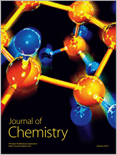
Journal of Chemistry
Shaping the Future of Chemical ScienceJournal of Chemistry, published by Hindawi Ltd, serves as a critical platform for advancing knowledge in the field of chemistry, particularly in its miscellaneous sub-disciplines. With an impressive 2023 Scopus Rank of #123 out of 408 and positioned in the Q2 quartile, this journal exemplifies a robust academic rigor that appeals to researchers, professionals, and students alike. It features articles related to innovative chemical research and developments, catering to a diverse audience eager to contribute to the growing body of literature in the chemical sciences. The journal has been operational from 2013 to 2024, and its Open Access model ensures that findings are easily accessible to a global audience, fostering collaboration and knowledge sharing. With a commitment to quality and relevance, the Journal of Chemistry continues to play a significant role in shaping contemporary chemical research and education.
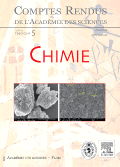
COMPTES RENDUS CHIMIE
Advancing Chemical Knowledge, One Article at a Time.COMPTES RENDUS CHIMIE, published by the prestigious Académie des Sciences in France, stands as a significant journal in the fields of chemistry and chemical engineering. With an ISSN of 1631-0748 and an E-ISSN of 1878-1543, this open-access journal has been committed to disseminating high-quality research since its transition to open access in 2020. Featuring a diverse array of studies, the journal covers innovative research trends and applications, while maintaining a Q3 category ranking in both Chemical Engineering (miscellaneous) and Chemistry (miscellaneous) as of 2023. Its Scopus rankings, positioning at #251 out of 408 in general chemistry and #169 out of 273 in general chemical engineering, highlight its growing impact within the scientific community. Authored by a global cohort of scientists and researchers, COMPTES RENDUS CHIMIE is dedicated to the advancement of knowledge and sharing insights that are vital for ongoing research and development in the chemical sciences. Located in the heart of Paris at 23 Quai de Conti, 75006, France, the journal is an essential resource for those passionate about chemistry and engineering disciplines, fostering collaboration and innovation across the world.
Revista Virtual de Quimica
Exploring Innovative Frontiers in Chemical SciencesRevista Virtual de Quimica, published by the SOC BRASILEIRA QUIMICA, is a dynamic online journal based in Brazil, dedicated to promoting innovative research in the field of chemistry and related disciplines. Established in 2011, the journal has made significant strides in contributing to the academic landscape, receiving an impact factor that highlights its relevance, although it currently holds a Q4 quartile ranking in the miscellaneous category of Chemistry and Mathematics as of 2023. The journal is committed to open access, ensuring that scholarly articles are readily available to researchers, professionals, and students worldwide. Its focus encompasses diverse areas within general chemistry, aiming to foster knowledge sharing and collaboration among the scientific community. By providing a platform for high-quality research publications, Revista Virtual de Quimica stands as an essential resource for advancing chemical sciences and encouraging interdisciplinary studies.
REVIEWS IN INORGANIC CHEMISTRY
Pioneering Knowledge in Inorganic ChemistryREVIEWS IN INORGANIC CHEMISTRY, published by Walter de Gruyter GmbH, is a distinguished academic journal that serves as a vital resource for researchers, professionals, and students within the field of inorganic chemistry. With its ISSN 0193-4929 and E-ISSN 2191-0227, this journal has made a significant impact on the discipline, holding a commendable Q2 ranking in the 2023 category of Inorganic Chemistry, placing it in the 81st percentile among its peers according to Scopus rankings. Continuously published since its inception, with converged years spanning from 1985 to 1990 and 1992 to 2024, it features comprehensive reviews encompassing the latest advancements, methodologies, and theoretical frameworks in the subject. Researchers will find IDEAL insights and valuable discussions that keep them abreast of trends and challenges in the domain, essential for driving innovation and collaboration. The journal’s commitment to quality and rigorous peer review highlights its importance in advancing inorganic chemistry research, making it an indispensable tool for academic excellence.
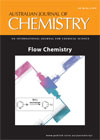
AUSTRALIAN JOURNAL OF CHEMISTRY
Bridging theory and practice for a sustainable future.The Australian Journal of Chemistry, with an ISSN of 0004-9425 and an E-ISSN of 1445-0038, is a distinguished publication from CSIRO PUBLISHING, dedicated to advancing the field of chemistry since its inception in 1948. Based in Australia, this journal serves as a platform for original research articles, reviews, and innovative studies that encompass a wide spectrum of chemical disciplines, aiming to foster communication and collaboration among researchers globally. Despite its Q3 ranking in the Chemistry (Miscellaneous) category and standing at rank #236 in Scopus’ general chemistry classification, it remains an essential resource for professionals and students seeking to stay informed about emerging trends and discoveries in chemistry. The journal does not offer open access, emphasizing the premium quality of peer-reviewed content that adheres to rigorous academic standards. By bridging theory and practice, the Australian Journal of Chemistry continues to play a crucial role in shaping the future of chemical sciences.
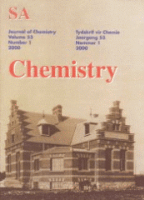
SOUTH AFRICAN JOURNAL OF CHEMISTRY-SUID-AFRIKAANSE TYDSKRIF VIR CHEMIE
Advancing Chemistry Through Open Access InnovationSouth African Journal of Chemistry (Suid-Afrikaanse Tydskrif vir Chemie), published by Bureau Scientific Publications, is a pivotal open-access journal that has been disseminating groundbreaking research in the field of chemistry since its inception in 1996. With an ISSN of 0379-4350 and an E-ISSN of 1996-840X, this journal serves as a vital platform for researchers and professionals seeking to share their work and engage with the global chemistry community. Recognized for its significant contributions, the journal holds a Q3 quartile ranking in the miscellaneous chemistry category as of 2023 and ranks #216 out of 408 in General Chemistry according to Scopus. The South African Journal of Chemistry is dedicated to advancing knowledge in the discipline by publishing a wide array of articles, reviews, and studies that address pertinent chemical research and applications. With open access options available since 2000, it fosters a collaborative environment, ensuring that research is accessible to all, thereby enhancing the visibility and impact of chemists' work across South Africa and beyond.
CHEMICAL PAPERS
Fostering Academic Excellence in Chemical DisciplinesChemical Papers is a distinguished scientific journal published by Springer International Publishing AG, catering to the fields of Biochemistry, Chemical Engineering, and Materials Chemistry. With an ISSN of 0366-6352 and an E-ISSN of 2585-7290, this journal has been a pivotal platform for the dissemination of research findings since its inception in 1973. Over the years, it has maintained a strong academic presence, as evidenced by its Q2 and Q3 rankings in several pertinent categories as of 2023, including Chemical Engineering and Industrial and Manufacturing Engineering. Although the journal is not currently Open Access, it remains an invaluable resource for researchers and professionals across its scope, promoting the advancement of knowledge in chemical sciences and fostering innovation within the industry. The publication is headquartered in Cham, Switzerland, contributing to a global dialogue on chemical research and its applications.
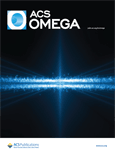
ACS Omega
Unlocking Knowledge, Fueling Innovation in Chemistry.ACS Omega is a prominent open-access journal published by the American Chemical Society that has been serving the global research community since its inception in 2016. With ISSN 2470-1343, it focuses on a wide array of topics within the realm of Chemistry and Chemical Engineering, making it a crucial platform for researchers and practitioners aiming to disseminate significant findings across these disciplines. The journal maintains an impressive standing, ranking in the Q2 quartile for both Chemical Engineering and Chemistry categories, highlighting its impact and relevance in contemporary research. Additionally, with its Scopus ranks placing it within the top 24% and 27% of General Chemistry and General Chemical Engineering respectively, ACS Omega continues to foster innovation and facilitate collaboration among scientists. As an Open Access journal, it ensures that research outputs are freely available to all, enhancing the accessibility and visibility of contributors’ work, thus playing a critical role in advancing scientific knowledge globally from its headquarters in Washington, D.C.

Frontiers in Chemistry
Advancing the Boundaries of Chemical Knowledge.Frontiers in Chemistry is an esteemed and innovative Open Access journal published by FRONTIERS MEDIA SA, based in Lausanne, Switzerland. Since its inception in 2013, the journal has established itself as a leading platform for the dissemination of high-quality research across a broad spectrum of chemistry disciplines, achieving a notable Q1 classification in the miscellaneous chemistry category as of 2023. With an impressive Scopus rank, placing it at 72nd out of 408 in General Chemistry and falling within the 82nd percentile, Frontiers in Chemistry is committed to publishing significant findings that contribute to the advancement of the field. The journal's Open Access model ensures that research is freely accessible to all, fostering a greater exchange of knowledge and collaboration among researchers, professionals, and students globally. It covers a range of topics, from organic and inorganic chemistry to materials science and biochemistry, making it an essential resource for anyone seeking to stay at the forefront of chemical research.
Chemija
Publishing Excellence in Chemistry Research.Chemija is a prominent journal in the field of chemistry, published by LIETUVOS MOKSLU AKAD LEIDYKLA in Lithuania. With a focus on diverse topics within the realm of chemistry, this journal aims to disseminate original research articles, reviews, and discussions that advance the understanding and application of chemical science. Although it currently holds a Q4 ranking in the miscellaneous category of chemistry, Chemija is committed to elevating its impact through the publication of high-quality research, making significant contributions to the discipline. The journal operates under a non-open access model, ensuring that articles undergo rigorous peer review to uphold academic standards. Researchers, professionals, and students are encouraged to explore the wealth of knowledge within its pages as it endeavors to bridge gaps across various subfields of chemistry from 2008 to 2024. With a dedicated readership and a growing database of insightful publications, Chemija serves as an essential resource in the ever-evolving landscape of chemical research.