JOURNAL OF JEWISH STUDIES
metrics 2024
Advancing Scholarship in Jewish Studies
Introduction
JOURNAL OF JEWISH STUDIES, published by the Oxford Centre for Hebrew and Jewish Studies, stands as a distinguished platform for scholarly discourse in the fields of Jewish history, culture, literature, and religious studies. With its ISSN 0022-2097, this journal is recognized for its significant contributions to understanding Jewish heritage and thought, achieving commendable rankings in various categories, including Q1 in Literature and Literary Theory and Q2 in History and Cultural Studies, as of 2023. The journal fosters rigorous academic engagement and encourages researchers and scholars worldwide to explore the complexities of Jewish identity and its interconnections with broader historical narratives. Operating without an open access model, it nonetheless ensures a wide reach through its well-regarded reputation, making it an essential resource for anyone invested in Jewish studies. With a publication history spanning from 2002 to 2024, the journal continues to serve as an invaluable repository of knowledge and insight for students, researchers, and professionals alike.
Metrics 2024
 0.160.400.4017
Metrics History
Rank 2024
Scopus
JCI (Web Of Science)
Quartile History
Similar Journals

Jewish Film & New Media-An International Journal
Bridging Cultures: A Scholarly Journey Through Jewish CinemaJewish Film & New Media: An International Journal, published by Wayne State University Press, serves as a crucial platform for scholars and practitioners within the realms of Film Studies, Jewish Studies, and Media Studies. Since its inception, the journal has explored the intersection between Jewish culture and cinematic representation while also addressing contemporary media narratives. With an ISSN of 2169-0324 and E-ISSN 2169-0332, it is indexed in major databases, showcasing solid rankings in various disciplines, including a commendable Q2 rank in Visual Arts and Performing Arts. Despite its current Q4 categorizations in Anthropology and Communication, the journal is noted for its engaging contributions that sow rich discussions about Jewish identity, filmic expression, and media representation. Researchers and students alike benefit from the journal’s wealth of interdisciplinary scholarship, which spans converged years from 2013 to 2017 and 2019 to 2022, ensuring a robust timeline of critical inquiry. As an essential resource for understanding the nuances of Jewish film and new media, this journal occupies a unique niche, inviting contributions that push the boundaries of current academic dialogue.
Jewish Studies Quarterly
Deepening Understanding of Jewish Cultures and PracticesJewish Studies Quarterly, published by MOHR SIEBECK, is a leading academic journal dedicated to advancing scholarship in the field of Jewish studies. With its ISSN 0944-5706 and E-ISSN 1868-6788, this journal provides a platform for rigorous research that explores various dimensions of Jewish history, culture, religious practices, and contemporary issues. Although it does not currently offer open access options, it remains an essential resource for researchers, professionals, and students seeking insightful analysis and academic discourse. The journal is widely recognized for its commitment to excellence and contribution to understanding Jewish identities within global contexts. Located in Tübingen, Germany, Jewish Studies Quarterly is integral to the dialogue and scholarship surrounding Jewish thought and heritage, making it a vital reference point in the academic community.
East European Jewish Affairs
Unveiling the Complexities of Jewish Life in Eastern EuropeEast European Jewish Affairs is a prominent scholarly journal published by Routledge Journals, Taylor & Francis Ltd, dedicated to exploring the intricate historical, cultural, and political dynamics of Jewish communities in Eastern Europe. With ISSN 1350-1674 and E-ISSN 1743-971X, this journal has been a critical platform for academic discourse since its inception in 1992, resuming publication after a hiatus in 2005. Although it is not an open-access journal, it provides vital insights into Jewish studies, engaging researchers, professionals, and students alike with in-depth analyses and discussions. The journal currently holds a Q4 ranking in multiple categories, including Cultural Studies, History, and Political Science and International Relations, reflecting its niche yet significant contribution to these fields. The 2023 Scopus rankings position it within the 34th percentile in History and the 10th percentile in Political Science, evidencing its specialized focus and the evolving nature of Jewish studies. For those investigating the unique social and cultural trajectories of East European Jewish communities, East European Jewish Affairs serves as an essential resource.
Journal of Ancient Judaism
Uncovering the Historical Depths of Judaism's LegacyThe Journal of Ancient Judaism is an esteemed academic publication focusing on the dynamic field of religious studies, particularly the historical and cultural contexts of ancient Judaism. Published by BRILL, a reputable international publisher known for its scholarly contributions, this journal is dedicated to advancing the study of ancient Jewish texts, traditions, and their socio-political environments. With an ISSN of 1869-3296 and an E-ISSN of 2196-7954, the journal has established its footprint in the scholarly community, supported by its ranking in the Q3 quartile for Religious Studies in 2023 and a Scopus rank of #371 out of 644 in its category. The content showcased in this journal is vital for researchers, professionals, and students alike, offering peer-reviewed articles that contribute to the broader understanding and appreciation of ancient Jewish heritage and its influence on contemporary religious thought. With a timeline spanning from 2015 to 2024, the journal aims to facilitate rigorous academic discourse and provide open access to vital research findings, fostering a deeper engagement with the complexities of ancient Judaism.
European Journal of Jewish Studies
Connecting Disciplines for a Deeper Understanding of Jewish StudiesEuropean Journal of Jewish Studies is a distinguished academic publication that offers a comprehensive platform for scholarly inquiry into Jewish studies, addressing critical intersections with cultural studies, history, literature, and religious studies. Published by BRILL, a leading academic publisher based in the Netherlands, this journal boasts a robust reputation supported by its impressive rankings and quartile classifications—Q3 in Cultural Studies, Q3 in History, Q2 in Literature and Literary Theory, and Q3 in Religious Studies as of 2023. With its convergence years spanning from 2007 to 2024, the journal serves as a vital repository of research that navigates the complexities of Jewish identity and culture through interdisciplinary lenses. Although it does not operate under an open access model, the journal's rigorous peer-review process ensures the publication of high-quality research essential for students, professionals, and academics alike. Engaging with this journal opens up pathways for critical dialogue and innovative contributions to the field, making it an essential resource for those invested in the rich tapestry of Jewish studies.
AJS Review-The Journal of the Association for Jewish Studies
Cultivating a Global Dialogue on Jewish Heritage and ScholarshipAJS Review - The Journal of the Association for Jewish Studies is a leading academic journal published by the University of Pennsylvania Press, dedicated to advancing scholarship in Jewish studies. With its ISSN 0364-0094 and E-ISSN 1475-4541, the journal offers a rich compendium of research from various disciplines, including cultural studies, history, literature and literary theory, and religious studies. Recognized within the Q2 and Q3 quartiles across multiple categories in 2023, AJS Review provides an esteemed platform for academics to disseminate innovative ideas and engage with critical issues relevant to Jewish history and culture from 1976 to 2024. Although not an open-access journal, it ensures that high-quality, peer-reviewed articles are available to a global audience, enabling researchers, professionals, and students to foster deeper insights into Jewish narratives and heritage. By promoting interdisciplinary dialogue, AJS Review is integral to the academic community, offering valuable contributions to our understanding of Jewish studies and its broader implications.

Jewish Historical Studies-Transactions of the Jewish Historical Society of England
Unlocking the Secrets of Jewish Cultural HeritageJewish Historical Studies - Transactions of the Jewish Historical Society of England is a premier scholarly journal dedicated to advancing the understanding of Jewish history in its diverse contexts. Published by UCL PRESS, this open access journal has been freely accessible since 2015, providing an invaluable resource for researchers, educators, and students alike. With an ISSN of 0962-9696 and E-ISSN 2397-1290, it features a wide variety of articles that delve into topics related to the historical, cultural, and societal aspects of Jewish communities. Located at University College London, the journal is committed to fostering interdisciplinary insights and encouraging critical discourse within Jewish studies. Its dedication to open access amplifies the visibility and dissemination of high-quality research, ensuring that vital scholarship reaches a global audience. As a vital platform for sharing cutting-edge research, Jewish Historical Studies plays a crucial role in the ongoing dialogue regarding Jewish history, heritage, and identity.
JEWISH SOCIAL STUDIES
Connecting scholars to deepen the understanding of Jewish heritage.Jewish Social Studies is a prominent peer-reviewed journal published by Indiana University Press, dedicated to advancing the field of Jewish scholarship through interdisciplinary exploration and critical inquiry. With an ISSN of 0021-6704 and an E-ISSN of 1527-2028, this journal has become a vital resource for researchers and scholars, achieving Q2 rankings in both History and Religious Studies, as well as strong standings in Anthropology and Cultural Studies. The journal bridges the gaps between diverse academic disciplines, focusing on the multifaceted dimensions of Jewish life, culture, and history, making it essential reading for anyone engaged in the study of Judaism. Although it does not currently offer Open Access options, the journal promotes a wealth of rigorous research, critical perspectives, and in-depth analyses that contribute significantly to the understanding of Jewish Studies from 1975 to the present day, with ongoing issues scheduled until 2024. With an established audience of scholars, professionals, and students, Jewish Social Studies remains a leading platform for intellectual discourse and scholarly exchange in the humanities.
Zutot
Exploring the Intersection of Arts, Culture, and ReligionZutot is a distinguished academic journal published by BRILL, focusing on the multifaceted realms of Arts and Humanities, Cultural Studies, and Religious Studies. With ISSN 1571-7283 and E-ISSN 1875-0214, Zutot presents an invaluable platform for scholars seeking to explore innovative ideas and interdisciplinary approaches within these fields. Recognized within the Q4 category for its contributions to contemporary discourse, the journal ranks at the 44th percentile in Religious Studies and the 39th percentile in General Arts and Humanities, underscoring its relevance and the quality of research it publishes. Since its inception, Zutot has continued to facilitate critical dialogue and scholarship, thus acting as a crucial resource for researchers, professionals, and students alike. Its converged publication years from 2001 to 2004 and 2008 to 2024 further demonstrate its ongoing commitment to supporting rigorous academic inquiry.
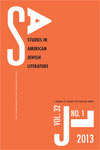
Studies in American Jewish Literature
Navigating the Depths of American Jewish Literary StudiesStudies in American Jewish Literature, published by Penn State University Press, is a premier academic journal that delves into the rich tapestry of Jewish literary expression in America. With an ISSN of 0271-9274 and an E-ISSN of 1948-5077, this journal serves a vital role in the fields of Literature and Literary Theory, Cultural Studies, and Anthropology, as evidenced by its placement in the Q1 to Q3 quartiles across various categories in 2023. The journal is a key platform for researchers, professionals, and students interested in exploring the intersection of Jewish identity and American literature, contributing to a deeper understanding of cultural narratives and societal impacts. The publisher's commitment to scholarly excellence ensures that each issue is meticulously curated, showcasing innovative research and critical analysis. While not open access, the journal provides essential insights for anyone engaged in the study of Jewish literature or the broader cultural dynamics at play in American society. Stay informed on contemporary themes and historical contexts that shape literary discourse through this commendable publication.