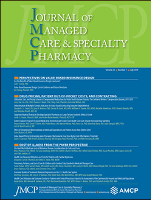
Journal of Managed Care & Specialty Pharmacy
Scope & Guideline
Exploring Cutting-Edge Research in Managed Care
Introduction
Aims and Scopes
- Health Economics and Cost-Effectiveness Analysis:
Research in this area examines the economic implications of pharmaceutical therapies, focusing on cost-effectiveness, budget impact, and health care resource utilization. It aims to provide evidence that supports decision-making in managed care and formulary management. - Managed Care Pharmacy Practices:
This focuses on the roles and impacts of pharmacists in managed care settings, including medication therapy management, adherence strategies, and the integration of pharmacists into healthcare teams to optimize patient outcomes. - Specialty Pharmacy Management:
The journal emphasizes research on the management of specialty medications, including their utilization patterns, adherence, and economic impact on health care systems. - Health Disparities and Equity:
Research addressing racial, ethnic, and socioeconomic disparities in medication access, utilization, and outcomes is a significant focus, with the aim of promoting equitable health care practices. - Real-World Evidence and Outcomes:
The journal publishes studies that utilize real-world data to assess the effectiveness and safety of medications in diverse populations, enhancing the understanding of treatment outcomes beyond clinical trials. - Policy and Regulatory Implications:
Research that explores the impact of health care policies, insurance coverage dynamics, and regulatory frameworks on medication access and cost management is central to the journal's scope.
Trending and Emerging
- Digital Health and Telehealth Solutions:
There is an increasing emphasis on the evaluation of digital health technologies and telehealth interventions, particularly in the context of medication management and adherence, reflecting the shift towards remote care and digital solutions. - Health Equity and Social Determinants of Health:
Research addressing health disparities and the impact of social determinants of health on medication access and outcomes is on the rise, highlighting the need for equitable health care practices. - Value-Based Care Models:
Emerging studies focus on value-based care frameworks that assess the effectiveness and economic impact of treatments in relation to patient outcomes, aligning with broader health care reforms. - Patient-Centered Outcomes and Experiences:
There is a growing trend in research that prioritizes patient-reported outcomes and experiences, emphasizing the importance of incorporating patient perspectives in medication management and treatment evaluations. - Integrated Care Approaches:
Research that explores integrated care models, particularly in managing chronic diseases with multiple comorbidities, is gaining attention, reflecting an overarching shift towards holistic patient care. - Biosimilars and Specialty Drug Management:
The journal is seeing an increased focus on the evaluation and management of biosimilars within specialty pharmacy contexts, driven by the need for cost-effective alternatives to high-priced biologics.
Declining or Waning
- Traditional Pharmacoeconomics:
Research focusing solely on traditional pharmacoeconomic evaluations without incorporating real-world evidence or patient-centered outcomes appears to be declining, as the field increasingly values comprehensive approaches that include patient perspectives. - Generalized Drug Utilization Studies:
Broad studies examining drug utilization trends without specific focus on therapeutic areas or patient populations are becoming less frequent, as more targeted investigations into specialty medications and specific disease states gain traction. - Single-Disease Focus:
Studies that address treatment patterns or economic outcomes exclusively within a single disease area are waning, as there is a growing trend towards integrated care models that consider comorbidities and multi-condition management. - Historical Comparisons of Drug Prices:
Research that solely compares historical drug prices without contextualizing these findings within current health care policies or economic frameworks is becoming less common, as discussions around drug pricing now emphasize value and outcomes.
Similar Journals
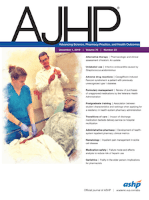
AMERICAN JOURNAL OF HEALTH-SYSTEM PHARMACY
Shaping the future of pharmaceutical care and policy.American Journal of Health-System Pharmacy, published by Oxford University Press Inc., stands as a vital resource in the domains of pharmacy and health policy. With an ISSN of 1079-2082 and E-ISSN 1535-2900, this esteemed journal provides a platform for disseminating high-quality research and insights that influence the practice of pharmacy and health management. The journal boasts a Q1 ranking in Pharmacy and ranks within the top quartiles in Health Policy and Medicine, reflecting its substantial impact on the field. With a comprehensive focus extending from 1995 to 2024, it caters to a diverse audience, including health professionals, researchers, and students interested in the ever-evolving dynamics of health-system pharmacy. Although it does not offer Open Access, the journal ensures that subscribers gain access to cutting-edge research essential for advancing health implications in pharmacy practice. By prioritizing innovative studies and reviews, the American Journal of Health-System Pharmacy plays a crucial role in shaping effective pharmaceutical care strategies and policies.
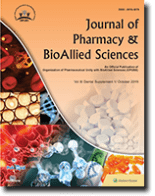
Journal of Pharmacy and Bioallied Sciences
Pioneering Discoveries in Pharmacy and Bioallied FieldsThe Journal of Pharmacy and Bioallied Sciences is a premier open access publication that has been contributing to the fields of Pharmacy, Bioengineering, and Biochemistry since its establishment in India, under the esteemed Wolters Kluwer Medknow Publications. With the ISSN 0976-4879 and E-ISSN 0975-7406, this journal provides a platform for high-quality research articles, reviews, and clinical studies aimed at advancing knowledge and practice in the pharmaceutical and allied sciences. As a reflection of its academic stature, the journal holds a respectable categorization within the third and fourth quartiles in pertinent fields according to the latest metrics, with rankings that place it among prominent emerging research in pharmacology and biochemistry. Researchers and professionals are encouraged to access a wealth of knowledge freely, as the journal has been open access since 2010. The journal not only aims to foster innovative research but also strives to bridge the gap between pharmaceutical sciences and real-world applications, making it an essential resource for students, academics, and industry experts alike.

Journal of Pharmaceutical Policy and Practice
Empowering researchers to shape the future of pharmacy policy.Journal of Pharmaceutical Policy and Practice, published by Taylor & Francis Ltd, is a premier open access journal dedicated to advancing the field of pharmaceutical policy and practice. Launched in 2013, this esteemed journal has rapidly become a vital resource for researchers, practitioners, and policymakers alike, offering a critical examination of health policies and their implementation in pharmaceutical contexts. With an impressive impact factor reflecting its significance, it ranks in the Q2 category for Health Policy and Q1 in both Pharmacology, Toxicology and Pharmaceutics and Pharmacy, showcasing its high-quality contributions to the field. Accessible to a global audience since 2014, the journal disseminates innovative research findings that inform best practices, foster policy development, and enhance patient outcomes in the pharmaceutical landscape. Positioned in the UK and with strong Scopus rankings, specifically ranked #3 in Health Professions (Pharmacy), the journal serves as an essential platform for those striving to navigate the ever-evolving intersection of healthcare and pharmaceutical sciences.

BJUI Compass
Elevating Research, Enhancing Lives.BJUI Compass, published by Wiley, is an esteemed Open Access journal in the field of medicine, specifically concentrating on urology, nephrology, surgery, and oncology. Since its inception in 2020, BJUI Compass has emerged as a vital resource for researchers and professionals, facilitating the dissemination of high-quality research that is accessible to a global audience. With an ISSN of 2688-4526, this journal offers a platform for innovative studies and clinical advancements, contributing to the discourse in these critical medical fields. Its current impact, as reflected in Scopus rankings, positions it at a respectable percentile in various categories, including 56th for Medicine _ Surgery and 45th for Medicine _ Urology. The journal's committed aim is to propel knowledge and improve patient outcomes through pioneering research and comprehensive reviews. As we look towards the future, BJUI Compass continues to align its objectives with the evolving needs of the medical community, ensuring that emerging insights are readily available to those who seek to advance their fields.
European Journal of Hospital Pharmacy
Navigating the Future of Pharmacy in Hospital SettingsThe European Journal of Hospital Pharmacy, published by the prestigious BMJ PUBLISHING GROUP, stands as a vital resource in the field of pharmacy, specifically focused on practices within hospital settings. With its ISSN 2047-9956 and E-ISSN 2047-9964, this journal provides an essential platform for researchers, practitioners, and students to disseminate and access high-quality research that influences clinical practice. Recognized for its significant impact, the journal has achieved a commendable Q2 ranking in both the Pharmacology, Toxicology and Pharmaceutics (miscellaneous) and Pharmacy categories according to Scopus, highlighting its status within the academic community. The journal is indexed among the top 18% in its category, showcasing innovative research and advancements in the field. While the European Journal of Hospital Pharmacy does not operate under an open-access model, its deep commitment to enhancing pharmaceutical care within European hospital settings remains undeterred. The journal also covers a converged period from 2010 to 2024, providing comprehensive insights into evolving practices and challenges. As a premier publication, it plays an essential role in education and professional development, making it indispensable for those involved in pharmacy and healthcare.

American Health and Drug Benefits
Advancing health policy through innovative research.American Health and Drug Benefits, published by ENGAGE HEALTHCARE COMMUNICATIONS INC, is a pivotal journal dedicated to advancing the understanding of health policy and management in the pharmaceutical sector. Launched in 2009, this journal serves as a vital resource for researchers, practitioners, and policymakers engaged in the dynamic interplay between health care quality, drug accessibility, and effective management strategies. With its ISSN 1942-2962 and E-ISSN 1942-2970, the journal has established itself within the community, evidenced by its 2023 Scopus rankings, including Q4 in Health Policy and Q3 in Strategy and Management. Although currently lacking an open-access model, American Health and Drug Benefits remains a crucial platform for disseminating high-quality research that informs health care delivery and policy decisions in the United States. Its commitment to rigorous scholarship contributes to better health outcomes and fosters innovation in drug benefits management.
Farmaceuticos Comunitarios
Exploring innovative practices in community pharmacy.Farmaceuticos Comunitarios, an esteemed open-access journal published by the SOC ESPANOLA FARMACIA FAMILIAR & COMUNITARIA-SEFAC, focuses on advancing the field of community pharmacy and pharmaceutical care. With its inception in 2014 as an open-access journal, it aims to disseminate crucial research findings, case studies, and reviews that contribute to enhancing pharmaceutical services in the community. Based in Madrid, Spain, this journal serves as a platform for researchers, practitioners, and students to explore current trends and best practices within the sphere of pharmacy. Although it currently holds respectable rankings within Scopus, including its position in nursing and pharmacy disciplines, the journal continuously aspires to elevate its impact and relevance in the domain of pharmaceutical sciences. By providing unfettered access to quality research, Farmaceuticos Comunitarios plays a pivotal role in promoting knowledge sharing and improving healthcare outcomes within the community pharmacy sector.
Pharmacy
Connecting researchers and practitioners in the dynamic world of pharmaceuticals.Pharmacy is a premier open-access journal published by MDPI, dedicated to advancing research in the dynamic field of pharmaceutical sciences. Since its inception in 2013, this journal has become a vital platform for disseminating novel findings, reviews, and insights related to drug development, pharmacokinetics, pharmaceutical technology, and clinical applications. With an E-ISSN of 2226-4787, Pharmacy prioritizes accessibility and visibility, allowing researchers, professionals, and students from around the globe to engage with cutting-edge research without barriers. The journal plays a crucial role in shaping pharmaceutical education and practice, fostering innovative ideas and collaborative approaches aimed at improving health outcomes. As part of the MDPI family, Pharmacy is committed to maintaining high-quality standards, ensuring that all published articles undergo rigorous peer review.
JOURNAL OF THE AMERICAN PHARMACISTS ASSOCIATION
Driving progress in pharmacy with trusted knowledge and expertise.The JOURNAL OF THE AMERICAN PHARMACISTS ASSOCIATION, published by Elsevier, serves as a pivotal resource for professionals and researchers in the field of pharmacology and pharmacy. With an impressive 2023 impact factor and classification in the top quartiles (Q1 and Q2) of pharmacology and nursing, this journal is recognized for its high-quality research and contributions that shape contemporary pharmaceutical practices. This journal addresses a broad spectrum of topics within the pharmaceutical sciences, offering insights into the latest advancements in medication management, patient care, and health policy. As a trusted platform for disseminating knowledge, it aims to enhance the professional development of pharmacists and pharmacy practitioners. By maintaining rigorous peer-review standards and a commitment to the dissemination of innovative research, the journal plays a crucial role in advancing the field of pharmacy and improving health outcomes on a global scale.
Journal of Pharmaceutical Health Care and Sciences
Exploring the nexus of pharmacy and healthcare excellence.The Journal of Pharmaceutical Health Care and Sciences is a premier open access journal published by BMC that aims to advance the field of pharmaceutical sciences by providing high-quality research and comprehensive reviews across various domains including pharmacology, nursing, and healthcare. With an impact factor reflecting its relevance and rigor, the journal has established itself as a significant platform for disseminating knowledge since its inception in 2015. The journal is indexed in Scopus, currently holding a position in the Q3 quartile for medical pharmacology and Q2 quartile for nursing pharmacology, indicating its growing influence and reach in the scientific community. Based in the United Kingdom with a commitment to open access, the Journal of Pharmaceutical Health Care and Sciences ensures that all researchers, professionals, and students have free access to vital research that fosters innovation and improves healthcare outcomes worldwide. With a focus on collaborative and multidisciplinary approaches, the journal invites contributions that align with its objectives of enhancing health care delivery and pharmaceutical practices.