Journal of Mathematics in Industry
Scope & Guideline
Bridging Theory and Practice in Mathematics
Introduction
Aims and Scopes
- Mathematical Modeling:
The journal consistently publishes research that involves the development and application of mathematical models to represent complex industrial processes, such as manufacturing, supply chain management, and bioengineering. - Numerical Analysis and Methods:
There is a strong emphasis on numerical techniques for solving differential equations, optimization problems, and other mathematical computations relevant to industry, showcasing methods like fractional calculus and variational methods. - Graph Theory Applications:
Research frequently explores applications of graph theory in industrial contexts, including network design, resource allocation, and optimization problems, highlighting the relevance of combinatorial structures in real-world scenarios. - Interdisciplinary Approaches:
The journal encourages interdisciplinary research that integrates mathematics with fields such as engineering, economics, and biology, reflecting the diverse applications of mathematical principles in solving industry-related challenges. - Statistical and Probabilistic Models:
The inclusion of statistical methods for risk assessment and management, particularly in fields like finance and insurance, indicates the journal's commitment to addressing uncertainties inherent in industrial operations.
Trending and Emerging
- Fractional Calculus Applications:
Recent publications show a significant increase in the application of fractional calculus, which provides more accurate models for complex phenomena in various fields, including bioengineering and materials science. - Optimization Techniques:
There is a growing trend towards optimization research, particularly in manufacturing processes and resource management, as industries strive for efficiency and productivity. - Interdisciplinary Research with Health Applications:
Emerging themes include the use of mathematical models in health-related fields, such as epidemiology and bio-heat transfer, highlighting the journal's responsiveness to global health challenges like the COVID-19 pandemic. - Advanced Numerical Methods:
The rise in publications focusing on advanced numerical methods, such as those involving new iterative techniques and hybrid approaches, indicates a trend towards more complex problem-solving strategies in industrial applications. - Dynamic Systems and Control Models:
Research on dynamic systems and control models is becoming more prominent, reflecting the increasing complexity of industrial processes and the need for effective management strategies.
Declining or Waning
- Traditional Graph Theory:
There has been a noticeable decrease in papers focused solely on classical graph theory without industrial applications, indicating a shift towards more applied and interdisciplinary research. - Basic Statistical Methods:
The frequency of publications solely addressing basic statistical methods has diminished, as more complex and integrated statistical models are favored, reflecting the need for advanced analytics in industry. - Elementary Algebraic Techniques:
Research that focuses exclusively on elementary algebraic methods has declined, showcasing a trend towards more sophisticated mathematical frameworks and applications. - Deterministic Models without Fractional Calculus:
There appears to be a waning interest in purely deterministic models, as the journal increasingly features fractional calculus and stochastic models that offer more realistic representations of industrial processes.
Similar Journals

AIMS Mathematics
Elevating mathematical discourse with cutting-edge research.AIMS Mathematics, published by the American Institute of Mathematical Sciences (AIMS), is a premier open-access journal that has been providing a platform for innovative research since its inception in 2016. With a keen focus on diverse areas within the field of mathematics, this journal aims to disseminate high-quality studies that cater to both theoretical and applied aspects of mathematics. As evidenced by its impressive Scopus rank of 52 out of 399 in the category of General Mathematics, placing it in the 87th percentile, AIMS Mathematics stands as a significant contributor to the academic discourse in this discipline. The journal operates under Q2 in Mathematics (miscellaneous) for its 2023 category quartiles, reflecting its rigorous peer-reviewed process and substantial impact on current mathematical research. Accessible since its launch, the journal's open-access model ensures that researchers, professionals, and students alike can easily retrieve insights and advancements in mathematics, fostering collaboration and the advancement of knowledge globally.
IMA JOURNAL OF NUMERICAL ANALYSIS
Catalyzing Collaboration in Numerical InnovationIMA Journal of Numerical Analysis, published by Oxford University Press, stands as a premier platform for cutting-edge research in the field of numerical analysis, exemplifying the latest advancements and methodologies in applied, computational, and general mathematics. Since its inception in 1981, this esteemed journal has continually contributed to the academic community by publishing high-quality, peer-reviewed articles that foster innovation and collaboration among researchers. With an impressive Q1 ranking across multiple categories, including Applied Mathematics and Computational Mathematics, it plays a crucial role in disseminating knowledge, as indicated by its Scopus rankings which place it in the top 25% of journals within its field. Although the journal is not open access, it remains a vital resource for academics, professionals, and students eager to engage with the ongoing evolution of numerical methods. By serving as a conduit for novel ideas and rigorous research, the IMA Journal of Numerical Analysis ensures that its contributors and readers are at the forefront of this dynamic discipline.
JAPAN JOURNAL OF INDUSTRIAL AND APPLIED MATHEMATICS
Challenging Norms, Inspiring Change in Mathematical PracticesThe Japan Journal of Industrial and Applied Mathematics, published by Springer Japan KK, is a pivotal platform for disseminating cutting-edge research in the fields of applied mathematics and engineering. With an ISSN of 0916-7005 and an E-ISSN of 1868-937X, this journal has been a cornerstone in the academic community since its inception in 1991 and will continue to contribute pivotal insights through 2024. Positioned in the Q3 category for both Applied Mathematics and Miscellaneous Engineering according to 2023 rankings, it is recognized for its diverse range of topics and interdisciplinary approaches. Despite its competitive ranking, the journal fosters valuable contributions that challenge conventional methodologies and inspire innovation. Researchers, professionals, and students alike will find the journal’s contents invaluable for advancing knowledge and exploring new methodologies in industrial and applied mathematics.
PUBLICACIONS MATEMATIQUES
Fostering Global Dialogue in MathematicsPUBLICACIONS MATEMATIQUES is a prestigious academic journal published by Universitat Autònoma de Barcelona, specializing in the diverse field of mathematics and its applications. With an esteemed Q1 ranking in Mathematics (miscellaneous) for 2023, this journal holds a significant position in the mathematical community, reflecting a commitment to high-quality research that spans both theoretical and practical aspects of mathematics. Although it operates without an Open Access model, it remains accessible to a global audience, featuring contributions that range from pure mathematical theories to interdisciplinary applications. Based in Spain, its influence and reach extend internationally, making it a vital resource for researchers, professionals, and students alike who seek to stay informed and engaged with cutting-edge developments in mathematics. The journal's continuous publication since 2002 further underscores its role in advancing mathematical research and fostering scholarly dialogue.
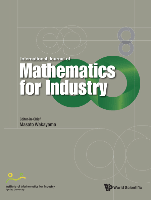
International Journal of Mathematics for Industry
Bridging Theory and Practice in Mathematics.International Journal of Mathematics for Industry, published by World Scientific Publishing Co Pte Ltd, is a premier platform dedicated to fostering the intersection of mathematical theory and industrial application. Established in 2019, this Open Access journal is positioned in Singapore and serves as a crucial resource for researchers and professionals looking to bridge gaps between academic mathematics and practical industry challenges. With a broad scope including Applied Mathematics, Computational Mechanics, Modeling and Simulation, and Numerical Analysis, the journal aims to advance methodological innovations and problem-solving strategies in these fields. As evidenced by its Scopus rankings in the Q4 category for 2023, the journal is steadily carving out its niche within the academic landscape, addressing critical issues through collaborative research efforts. The open access model ensures that findings are readily available to a global audience, making it an invaluable tool for students and practitioners alike who are committed to the integration of mathematical insights into real-world applications.
Hiroshima Mathematical Journal
Exploring the Depths of Algebra, Analysis, and BeyondThe Hiroshima Mathematical Journal, published by Hiroshima University, Graduate School of Science, serves as a prominent platform for disseminating high-quality research in the field of mathematics. Established in 1959, the journal has been an integral part of the mathematical community, focusing on areas such as Algebra, Number Theory, Analysis, and Geometry and Topology. Although currently classified in Q4 quartile rankings within its categories, the journal is committed to advancing mathematical knowledge and fostering scholarly dialogue. Its accessibility, combined with its long-standing history, makes it an essential resource for researchers, professionals, and students dedicated to exploring and enhancing the mathematical sciences. For those interested in contributing or accessing cutting-edge research, the Hiroshima Mathematical Journal continues to uphold its mission of excellence in mathematical scholarship.
Applied Mathematics E-Notes
Bridging Theory and Practice in Applied MathematicsApplied Mathematics E-Notes, a prominent publication within the field of Applied Mathematics, is produced by the Department of Mathematics at Tsing Hua University in Taiwan. With its inception in 2001, the journal continues to serve as a vital resource for disseminating research findings, methodologies, and applications that advance the understanding of mathematical theories and their practical implications. Though currently categorized in Q4 within its field, the journal remains dedicated to fostering innovation and collaborative research, reflecting its growth potential in the coming years. The journal is accessible online, catering to a global audience of researchers, professionals, and students seeking to enrich their knowledge and engage with contemporary topics in applied mathematics. Through its commitment to open dialogue in mathematical sciences, Applied Mathematics E-Notes plays an essential role in bridging theoretical research with real-world applications.
Transactions of A Razmadze Mathematical Institute
Illuminating the Path of Emerging Mathematical IdeasTransactions of A Razmadze Mathematical Institute is a prominent Open Access journal dedicated to advancing the field of mathematics and fostering research in various mathematical disciplines. Published by the Ivane Javakhishvili Tbilisi State University, this journal has been actively disseminating groundbreaking mathematical research since its establishment in 2016, allowing for unrestricted access to cutting-edge findings that promote collaboration and innovation within the mathematical community. While currently categorized in the Q4 quartile for miscellaneous mathematics and holding a Scopus rank of #370 out of 399, the journal is steadily establishing its presence and significance as a platform for emerging mathematical ideas and developments. With a commitment to quality and accessibility, it seeks to publish high-caliber research that engages not only mathematicians but also professionals and students interested in the blossoming landscapes of mathematical inquiry. Each issue strives to reflect the diversity and richness of contemporary mathematics, making it an essential resource for all stakeholders in the field.

CSIAM Transactions on Applied Mathematics
Advancing the Frontiers of Applied MathematicsCSIAM Transactions on Applied Mathematics is a prestigious academic journal published by GLOBAL SCIENCE PRESS, specializing in the rapidly evolving field of applied mathematics. Established in 2020 and operating in Hong Kong, this journal has quickly gained recognition for its rigorous peer-reviewed articles and contributions that integrate theoretical frameworks with practical applications. With an impressive ranking of #261 out of 635 in the Scopus database, and a 2023 quartile ranking of Q2 in Applied Mathematics, it is positioned to be a vital resource for researchers, professionals, and students alike. The journal offers a platform for innovative research that is essential for addressing contemporary challenges in science and engineering, promoting interdisciplinary collaboration and knowledge exchange. Although currently not Open Access, it provides invaluable insights through its curated content, truly reinforcing its role as a cornerstone in the field of applied mathematics.

Kragujevac Journal of Mathematics
Advancing Mathematical Frontiers, One Paper at a Time.The Kragujevac Journal of Mathematics, an esteemed publication since its inception in 2000, is a premier open access journal dedicated to advancing the field of mathematics. Published by the University of Kragujevac, Faculty of Science in Serbia, this journal has garnered recognition for its rigorous academic standards and substantial contributions to mathematical research, achieving a 2023 category quartile ranking of Q2 in Mathematics (miscellaneous). With a commendable Scopus rank of #81 out of 399 in general mathematics, it consistently features innovative and original research papers that explore a broad spectrum of mathematical disciplines. The journal’s commitment to open access ensures that its research is readily available to the global community, fostering collaboration and knowledge sharing among scholars, professionals, and students. By providing a platform for high-quality research, the Kragujevac Journal of Mathematics plays a vital role in shaping contemporary mathematical discourse and inspiring new generations of mathematicians.