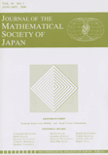
JOURNAL OF THE MATHEMATICAL SOCIETY OF JAPAN
metrics 2024
Connecting Ideas and Researchers in Mathematics
Introduction
Journal of the Mathematical Society of Japan, established in 1948, is a premier scholarly journal dedicated to advancing mathematical research and discourse. Published by the esteemed Mathematical Society of Japan, this journal has consistently achieved recognition for its rigorous and innovative contributions to the field, achieving a prestigious Q1 category ranking in miscellaneous mathematics as of 2023. Although it maintains a subscription-based access model, the journal remains an invaluable resource for researchers, professionals, and students alike, fostering a deeper understanding and exploration of mathematics across various disciplines. With a focus on disseminating high-quality original research, reviews, and comprehensive articles, the Journal of the Mathematical Society of Japan plays a crucial role in the global mathematical community and continues to influence new generations of mathematicians through its commitment to excellence.
Metrics 2024
 0.720.700.6038
Metrics History
Rank 2024
Scopus
IF (Web Of Science)
JCI (Web Of Science)
Quartile History
Similar Journals
NAGOYA MATHEMATICAL JOURNAL
Connecting Scholars to Cutting-Edge Mathematical InsightsNAGOA MATHEMATICAL JOURNAL, published by Cambridge University Press, is a prestigious journal that has been at the forefront of advancing mathematical scholarship since its inception in 1950. With an ISSN of 0027-7630 and an E-ISSN of 2152-6842, this journal has gained recognition for its high-quality research contributions in the field of mathematics, achieving a Q1 classification in Mathematics (miscellaneous) as of 2023. The journal’s impact is further reflected in its Scopus rank of #164 out of 399 in the General Mathematics category, positioning it within the 59th percentile of its peers. Scholars, researchers, and students can access a range of innovative mathematical studies that explore diverse topics, fostering a vibrant dialogue within the mathematical community. By catering to a global audience, the NAGOYA MATHEMATICAL JOURNAL continues to play a critical role in shaping contemporary mathematical discourse and research.

RENDICONTI DEL SEMINARIO MATEMATICO DELLA UNIVERSITA DI PADOVA
Exploring the frontiers of mathematics with open access insights.RENDICONTI DEL SEMINARIO MATEMATICO DELLA UNIVERSITA DI PADOVA, published by the European Mathematical Society, stands as a notable open-access journal with a rich history in disseminating research across various domains of mathematics. With an ISSN of 0041-8994 and E-ISSN 2240-2926, this journal has embraced open access since 2023, significantly enhancing its visibility and accessibility to a global audience. Situated in Germany, its publishing house is based at Technical University Berlin, which emphasizes its academic roots and dedication to fostering mathematical research. The journal features a quartile ranking of Q3 across multiple categories including Algebra and Number Theory, Analysis, Geometry and Topology, and Mathematical Physics as of 2023, indicating a vibrant contribution to the field, despite its challenge in specific rankings. Researchers, professionals, and students alike will find in this journal a platform for innovative ideas and significant findings that are crucial to the evolution of modern mathematics.
PACIFIC JOURNAL OF MATHEMATICS
Exploring the Depths of Mathematics with Rigorous ScholarshipThe PACIFIC JOURNAL OF MATHEMATICS, established in 1951 and published by Mathematical Sciences Publishers, is a premier peer-reviewed journal in the field of mathematics, renowned for its rigorous scholarship and impactful research contributions. With an HIndex that reflects its sustained academic influence, this journal has been categorized within the Q1 quartile in the field of mathematics (miscellaneous) as of 2023, showcasing its position among the top-tier mathematics journals globally. Although the journal operates under a traditional subscription model rather than an Open Access format, it remains dedicated to disseminating original research that spans various domains within mathematics. Researchers, professionals, and students alike will find the journal's breadth of topics and commitment to quality work instrumental in advancing their understanding and exploration of mathematical concepts. This esteemed journal continues to thrive as a vital resource for the mathematical community through its comprehensive collection of articles from a diverse range of mathematical disciplines, thus maintaining a significant role in shaping the future of mathematical inquiry.

ANNALES DE L INSTITUT FOURIER
Pioneering Research in Algebra and GeometryANNALES DE L INSTITUT FOURIER is a premier academic journal published by ANNALES INST FOURIER, specializing in the fields of Algebra and Number Theory as well as Geometry and Topology. Since its establishment, the journal has garnered a distinguished reputation, evidenced by its Q1 quartile ranking in the 2023 category assessments and its Scopus Rank of #37 out of 119 in Algebra and Number Theory, and #34 out of 106 in Geometry and Topology, placing it within the top percentile of its field. The journal serves as a vital platform for disseminating groundbreaking research and innovative methodologies, catering to a global audience of researchers, professionals, and students. With a commitment to the advancement of mathematical sciences, ANNALES DE L INSTITUT FOURIER invites contributions that push the boundaries of knowledge and foster collaboration across disciplines. Although it does not offer open access, the rigorous peer-review process ensures that published papers meet the highest academic standards, making it a critical resource for anyone engaged in advanced mathematical research.
JOURNAL OF THE AMERICAN MATHEMATICAL SOCIETY
Pioneering Innovations in Mathematics and BeyondThe Journal of the American Mathematical Society (ISSN: 0894-0347; E-ISSN: 1088-6834), published by the American Mathematical Society, stands as a pillar in the fields of mathematics and applied mathematics. This prestigious journal, with a remarkable impact factor and ranking in the top tier (*Q1*) within both the Applied Mathematics and general Mathematics categories, is recognized for its contribution to advancing mathematical research and theory. With data reflecting it as the 8th ranked journal in General Mathematics (top 2%) and the 34th in Applied Mathematics (top 6%), the journal consistently showcases groundbreaking studies and innovative methods that greatly influence academia and industry alike. Though not an open-access journal, it offers a wealth of resources and intellectual discourse for researchers, professionals, and students alike. Specializing in comprehensive and theoretical aspects of mathematics, the Journal remains dedicated to publishing articles that promote understanding and propel the field forward, highlighting its significance as an essential tool for those engaged in mathematical research.

European Journal of Mathematics
Exploring the Depths of Mathematical KnowledgeWelcome to the European Journal of Mathematics, a prominent publication that serves as a vital platform for disseminating high-quality research in the field of mathematics. Published by Springer International Publishing AG, this journal has witnessed significant growth since its inception in 2015 and is recognized for its contributions within the Q2 category of Mathematics (miscellaneous) as per the 2023 rankings. With an ISSN of 2199-675X and an E-ISSN of 2199-6768, the journal aims to foster innovation and collaboration among researchers, professionals, and students alike. Although it operates under a traditional access model, the journal's commitment to advancing mathematical knowledge and applications cannot be overstated. Positioned among the top-tier publications, the European Journal of Mathematics is an essential resource that encourages the exploration of emerging trends and theories in mathematics, making it indispensable for anyone striving to stay at the forefront of this dynamic field.
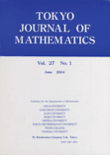
Tokyo Journal of Mathematics
Pioneering Insights in the World of MathematicsTokyo Journal of Mathematics is a prestigious journal dedicated to the dissemination of high-quality research in the field of mathematics. Founded in 1978, this journal serves as a platform for researchers to publish their findings, providing cutting-edge insights into various mathematical theories and applications. Published by the TOKYO JOURNAL MATHEMATICS EDITORIAL OFFICE ACAD CENTER, the journal is based in Japan and forms an integral part of the global mathematical community. Although listed in the Q4 quartile of Mathematics (Miscellaneous) category for 2023, its inclusion in Scopus rankings highlights its ongoing commitment to scholarly excellence. The journal does not currently offer Open Access options, thus providing readers with insightful access to critical advancements in mathematics. With an ISSN of 0387-3870 and a publication history spanning over four decades, the Tokyo Journal of Mathematics remains an essential resource for researchers, professionals, and students alike, fostering the advancement of mathematical knowledge and collaboration across borders.
TRANSACTIONS OF THE AMERICAN MATHEMATICAL SOCIETY
Pioneering Research in Applied and Theoretical MathematicsTRANSACTIONS OF THE AMERICAN MATHEMATICAL SOCIETY, published by the American Mathematical Society, is a premier journal in the field of mathematics that has been contributing to the advancement of mathematical knowledge since 1900. With an ISSN of 0002-9947 and an E-ISSN of 1088-6850, this journal holds a prestigious position in the academic landscape, evidenced by its Q1 rankings in both Applied Mathematics and Miscellaneous Mathematics categories as of 2023. With a Scopus ranking of #97 in General Mathematics and a percentile standing of 75th, the journal is recognized for its rigorous peer-review process and the quality of the research it publishes. Though it does not currently offer open access options, it essentially serves as a vital resource for researchers, professionals, and students seeking critical insights and developments in mathematical theory and applications. The Transactions aim to publish high-quality research articles that foster the exchange and dissemination of ideas, supporting the growth of both theoretical and applied mathematics within the global scholarly community.

Forum of Mathematics Sigma
Connecting scholars through open access to cutting-edge research.Forum of Mathematics Sigma is a premier open access journal published by Cambridge University Press that has been at the forefront of mathematical research since its inception in 2013. With a strong emphasis on advancing the fields of mathematics, the journal consistently achieves Q1 rankings across multiple categories, including Algebra and Number Theory, Analysis, and Computational Mathematics. This distinction highlights its impact and relevance within the scholarly community. The journal prides itself on providing a platform for innovative research, fostering collaboration among researchers and practitioners across various mathematical disciplines. Open access publication ensures that cutting-edge findings are widely available to readers globally, enhancing the dissemination of knowledge. With an address in the heart of Cambridge, England, Forum of Mathematics Sigma is dedicated to promoting high-quality research and making significant contributions to the development of mathematics.
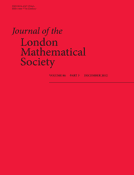
JOURNAL OF THE LONDON MATHEMATICAL SOCIETY-SECOND SERIES
Cultivating Knowledge and Sparking Ideas in MathematicsJOURNAL OF THE LONDON MATHEMATICAL SOCIETY-SECOND SERIES, published by Wiley, stands as a premier publication in the field of mathematics, particularly recognized for its contributions to general mathematics and its ability to shape contemporary mathematical discourse. With an impact factor that reflects its high citation rate and academic influence, this journal has secured a prestigious Q1 ranking in the Mathematics (miscellaneous) category as of 2023. Encompassing a rich history from its inception in 1926 through various publication phases until 2024, it continues to attract and disseminate innovative research, serving as a vital resource for scholars, practitioners, and students alike. Although it does not currently offer open access options, the journal's commitment to advancing mathematical knowledge makes it an essential source for the latest developments in the discipline. For those engaged in mathematical research, insights from the JOURNAL OF THE LONDON MATHEMATICAL SOCIETY-SECOND SERIES are invaluable in fostering a deeper understanding and sparking new ideas within the mathematical community.