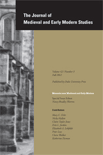
JOURNAL OF MEDIEVAL AND EARLY MODERN STUDIES
Scope & Guideline
Connecting the Threads of Time and Thought
Introduction
Aims and Scopes
- Interdisciplinary Research:
The journal encourages studies that bridge various fields, including literature, history, philosophy, and the arts, reflecting the multifaceted nature of medieval and early modern studies. - Cultural and Intellectual History:
A core focus is on the exploration of cultural and intellectual movements, examining how these influenced societal structures and individual thought during the medieval and early modern periods. - Material Culture and Object Studies:
The journal highlights the significance of material culture, exploring how physical objects and artistic expressions shape and reflect historical narratives and cultural identities. - Religious and Spiritual Dynamics:
Research on religious practices, beliefs, and their transformations during these eras is a prominent theme, addressing how spirituality intersects with daily life and governance. - Performance and Representation:
The journal emphasizes the role of performance, both theatrical and ritualistic, in shaping societal norms and cultural expressions, assessing how these performances communicate complex ideas.
Trending and Emerging
- Materiality and Agency:
There is a growing focus on the material aspects of culture, exploring how objects and their physicality influence human agency and societal structures. - Intersections of Law and Morality:
Recent publications emphasize the relationship between legal thought and moral theology, indicating an interest in how these domains intersected during the medieval and early modern periods. - Visual Culture and Representation:
An increasing number of studies are examining visual culture, such as physiognomy and portraiture, to understand how images shaped perceptions of identity and authority. - Religious Practices and Performance:
Research on the performative aspects of religious practices is on the rise, highlighting how rituals and performances contribute to faith and community dynamics. - Emotional and Psychological Dimensions:
There is an emerging trend exploring the emotional and psychological experiences of individuals in historical contexts, particularly in relation to witch trials and societal expectations.
Declining or Waning
- Classical Reception Studies:
There has been a noticeable decrease in papers focused solely on the reception of classical texts and authors, suggesting a shift towards more contemporary relevance in medieval and early modern studies. - Traditional Historical Narratives:
Studies that rely heavily on traditional historical narratives without interdisciplinary connections are becoming less frequent, indicating a move towards more integrative and nuanced approaches. - Gender Roles in Historical Contexts:
While gender studies remain important, there is a decline in works that solely focus on historical gender roles without engaging with broader cultural or social implications. - Linguistic Studies of Medieval Texts:
There is a waning interest in purely linguistic analyses of medieval texts, as the journal increasingly favors research that contextualizes language within cultural and social frameworks. - Chronological Studies of Specific Events:
Research that focuses narrowly on specific historical events without exploring their broader implications or cultural contexts appears to be diminishing.
Similar Journals
STUDIA ROSENTHALIANA
Unveiling the Rich Tapestry of Jewish Literature and ArtSTUDIA ROSENTHALIANA is a distinguished journal published by Amsterdam University Press, specializing in the interdisciplinary study of Jewish culture and history, particularly as it relates to the field of Rosenthaliana, encompassing literature, art, and historical scholarship. With a robust academic legacy dating back to its inception in 1970, the journal has evolved through various publication phases, maintaining a commitment to fostering scholarly discourse and disseminating significant research. Although it does not currently participate in an open access model, STUDIA ROSENTHALIANA continues to contribute invaluable insights to the fields of Jewish studies, cultural analysis, and historical research. Researchers, professionals, and students can benefit from its comprehensive essays, critical reviews, and analytical studies that enrich our understanding of Jewish heritage and modern implications. The journal's influence and relevance in its field make it an essential resource for anyone invested in contemporary debates and analyses concerning Jewish culture and identity.
Exemplaria-Medieval Early Modern Theory
Cultivating Interdisciplinary Insights in Cultural StudiesExemplaria: Medieval Early Modern Theory is a distinguished journal within the fields of Cultural Studies, Linguistics and Language, and Literature and Literary Theory, published by Routledge Journals, Taylor & Francis Ltd. With an impressive Q1 ranking in Literature and Literary Theory and notable placements in associated disciplines, this journal serves as an essential platform for scholars dedicated to exploring the complexities of medieval and early modern texts and contexts. Established with a vision to stimulate interdisciplinary dialogue, Exemplaria has evolved from its initial years (1989-1995) to a renewed focus (2002-2024), consistently fostering significant contributions that shape contemporary literary discourse. Although currently not open access, the journal ensures broad reach and engagement through its meticulously curated articles, reviews, and critical essays that challenge traditional narratives and advocate for innovative methodologies. With the journal's ISSN 1041-2573 and E-ISSN 1753-3074, researchers, professionals, and students interested in advancing their understanding of literary traditions are encouraged to explore its rich repository of knowledge, which reflects the dynamic interplay between historical texts and modern interpretations.
Early Medieval China
Fostering Scholarly Dialogue on Early Chinese HeritageEarly Medieval China is a distinguished journal published by ROUTLEDGE JOURNALS, TAYLOR & FRANCIS LTD, specializing in the intricate study of early medieval China through an interdisciplinary lens that encompasses Anthropology, Cultural Studies, History, Literature and Literary Theory, Philosophy, and Religious Studies. With a commendable impact factor and a prestigious standing in various quartile rankings, such as Q1 in Literature and Literary Theory and Q2 in Cultural Studies and History for 2023, this journal serves as a vital resource for scholars, researchers, and students alike. It aims to promote a deeper understanding of China's early medieval period by publishing innovative research, critical essays, and comprehensive analyses that contribute to the broader discourse on Asian studies and history. By offering a platform for cutting-edge research, Early Medieval China plays an essential role in enriching academic dialogue and fostering further explorations in this historically significant field.

Reti Medievali Rivista
Bridging Time: A Platform for Medieval ResearchReti Medievali Rivista, published by FIRENZE UNIV PRESS, stands as a distinguished platform in the field of history, specifically focusing on the medieval period. With an ISSN of 1593-2214, this journal has embraced Open Access since 2000, ensuring that its scholarly content is readily available to researchers, students, and professionals worldwide. Based in Italy, the journal boasts a Q2 ranking in the Category of History according to the 2023 quartiles, reflecting its significant impact and contribution to the discipline. With a Scopus rank of #809 out of 1760 in the Arts and Humanities category, it sits comfortably within the 53rd percentile, affirming its quality and relevance in the academic community. The journal's scope encompasses a wide range of topics related to medieval studies, making it an invaluable resource for those seeking in-depth research and analysis in this pivotal era of history. Scholars are encouraged to explore its diverse articles and insights, further enriching the dialogue surrounding medieval scholarship.
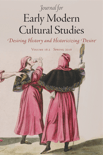
Journal for Early Modern Cultural Studies
Advancing Knowledge Through Early Modern PerspectivesThe Journal for Early Modern Cultural Studies, published by University of Pennsylvania Press, serves as a pivotal platform for scholars investigating the cultural, social, and intellectual developments of the early modern period. With its ISSN 1531-0485 and E-ISSN 1553-3786, this journal stands out in the field of cultural studies by offering an interdisciplinary approach that bridges history, literature, and art. While it does not currently offer Open Access options, it remains committed to disseminating high-quality research that emphasizes the significance of early modern cultures in shaping contemporary thought. The journal’s rigorous peer-review process ensures that each published article contributes to the advancement of knowledge and inspires further inquiry among researchers, professionals, and students alike. Located in Philadelphia, PA, the Journal for Early Modern Cultural Studies is well-positioned to engage a global audience and foster discussions that resonate across disciplines.
Innes Review
Advancing scholarly discourse in culture, history, and religion.The Innes Review is a distinguished academic journal published by Edinburgh University Press, focusing on the study of culture, history, and religion. With a commitment to advancing scholarly discourse, the journal serves as an essential resource for researchers and professionals alike, providing critical insights and analyses that cater to the diverse interests within Cultural Studies, History, and Religious Studies. Established in 1996 and continuing through 2024, the journal has achieved notable recognition, reflecting its contributions through its Q3 ranking in History and Q4 rankings in Cultural and Religious Studies according to the latest metrics. While it currently operates without an open access model, the Innes Review remains accessible through a variety of academic databases and resources, underpinned by rigorous peer-review processes that ensure high-quality publications. As such, it stands as a vital platform for disseminating innovative research and fostering intellectual engagement within the humanities.
EARLY MUSIC HISTORY
Unveiling the Melodies of TimeEARLY MUSIC HISTORY is an esteemed academic journal published by Cambridge University Press, specializing in the rich and diverse field of early music, providing a vital platform for research and discourse since its inception. With an ISSN of 0261-1279 and an E-ISSN of 1474-0559, the journal operates from its headquarters in Cambridge, United Kingdom. Known for its scholarly rigor, EARLY MUSIC HISTORY is ranked within the Q2 category in Music, illustrating its significant contribution to the field. The journal covers a broad time frame, examining musical developments from the medieval to the early modern period, and features articles that seek to illuminate historical contexts and contemporary implications of early music practices. Despite lacking the Open Access option, it remains a valued resource for researchers and professionals seeking to advance their understanding of this dynamic area of study. The journal not only fosters a deeper appreciation of early music history but also positions itself as a pivotal contributor to ongoing academic dialogue, making it essential reading for scholars in the arts and humanities.
Early Medieval Europe
Illuminating the Intricacies of Medieval DynamicsEarly Medieval Europe, published by WILEY, is a distinguished academic journal that delves into the multifaceted history and cultural dynamics of the early medieval period in Europe. With an ISSN of 0963-9462 and an E-ISSN of 1468-0254, this journal provides a vital platform for scholars and researchers seeking to share innovative research developments within the field. Covering a range of disciplines including history and arts, it holds a category quartile ranking of Q3 in Arts and Humanities (miscellaneous) and History, alongside Q4 in Geography, Planning, and Development. Notably, it ranks #302 out of 1760 in the Arts and Humanities—History category, reflecting its significance and impact within the scholarly community. While devoted to the promotion of traditional scholarly communication, Early Medieval Europe also welcomes interdisciplinary approaches, making it a valuable resource for students, professionals, and academics interested in insights and advancements related to medieval studies. With an ongoing commitment to meaningful dialogue and exploration, this journal remains a pivotal resource for understanding the complexities of early medieval Europe.
MOYEN AGE
Illuminating History, Language, and LiteratureMOYEN AGE is a distinguished academic journal published by LE MOYEN AGE BOECK & LARCIER S A in Belgium, focused on the multifaceted disciplines of History, Linguistics, and Literature. With its ISSN 0027-2841 and E-ISSN 1782-1436, this journal serves as a platform for researchers, professionals, and students alike to engage with scholarly articles that contribute to the understanding of medieval studies. Although currently categorized in the fourth quartile across various fields as of 2023, MOYEN AGE demonstrates a commitment to fostering academic dialogue and exploration around historical linguistics and literary theory. The journal is available via subscription, making it an essential resource for those looking to deepen their knowledge in its scope, which spans from 2001 through 2024. As it continues to evolve, MOYEN AGE remains a relevant source for emerging thinkers and established scholars drawn to the complexities of the medieval era.

STUDI MEDIEVALI
Exploring the Depths of Medieval Culture and HistorySTUDI MEDIEVALI, published by the Centro Ital Stud Sull Alto Med, is a premier journal dedicated to the exploration of medieval studies, focusing on both cultural and historical dimensions. Since its inception in 2002, this journal has become an essential resource for scholars and students alike, providing critical insights into the complexities of the medieval era. Although it currently operates under a traditional access model, its contributions to the field are undeniable, with a 2023 ranking in the fourth quartile for Cultural Studies and History categories in Scopus rankings, highlighting its niche yet valuable position within academic discourse. Based in Spoleto, Italy, the journal serves as a platform for innovative research and interdisciplinary dialogue, inviting contributions that challenge conventional understandings and stimulate further inquiry into medieval life. Researchers and professionals will find in STUDI MEDIEVALI an opportunity to engage with a community of passionate scholars dedicated to uncovering the multifaceted realities of the medieval period.