
Journal of Pediatric Emergency and Intensive Care Medicine
Scope & Guideline
Fostering knowledge exchange for pediatric healthcare excellence.
Introduction
Aims and Scopes
- Pediatric Emergency Medicine:
The journal publishes research that enhances understanding of emergency medical practices for children, including the assessment and management of acute illnesses and injuries. - Pediatric Intensive Care:
Research articles often focus on intensive care practices for critically ill pediatric patients, encompassing clinical outcomes, treatment protocols, and innovative care strategies. - Multidisciplinary Approaches:
The journal highlights the importance of collaborative efforts among various health professionals in pediatric care, including nurses, physicians, and allied health workers, to improve patient outcomes. - Quality of Care and Patient Safety:
Research addressing the quality of care, patient safety, and caregiver burden in pediatric settings is a significant focus, aiming to enhance health service delivery. - Longitudinal Studies and Case Reports:
The journal features longitudinal studies and case reports that provide insights into rare diseases, treatment outcomes, and evolving medical practices in pediatric populations.
Trending and Emerging
- Impact of COVID-19 on Pediatric Care:
A significant increase in studies related to the effects of the COVID-19 pandemic on pediatric emergency and intensive care has been observed, addressing both direct impacts on health and changes in healthcare delivery. - Technology in Pediatric Medicine:
There is a growing focus on the use of technology, such as telemedicine and advanced monitoring systems, in pediatric care, reflecting the ongoing digital transformation in healthcare. - Caregiver Burden and Quality of Life:
Research exploring the challenges faced by caregivers of children with chronic conditions is emerging as a vital area of focus, highlighting the need for supportive measures and resources. - Management of Rare Pediatric Conditions:
An increasing number of publications are dedicated to the management and treatment of rare pediatric diseases and conditions, indicating a trend towards specialized knowledge and tailored treatment approaches. - Palliative Care in Pediatrics:
Emerging themes include the integration of palliative care principles in pediatric medicine, emphasizing the importance of quality of life and symptom management for seriously ill children.
Declining or Waning
- Forensic Pediatric Cases:
There has been a noticeable reduction in publications focusing on forensic cases in pediatric emergency settings, possibly due to a shift towards more prevalent clinical issues or the integration of these topics into broader emergency medicine research. - Traditional Diagnostic Methods:
Research on conventional diagnostic methods has decreased, indicating a potential move towards more innovative and technology-driven approaches in pediatric diagnostics. - Single-Center Studies:
The prevalence of single-center studies appears to be declining, with a trend towards multi-center collaborative research that provides broader insights and enhances the generalizability of findings.
Similar Journals
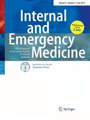
Internal and Emergency Medicine
Bridging Critical Care and Internal Medicine InnovationsInternal and Emergency Medicine is a highly regarded academic journal published by Springer-Verlag Italia SRL, dedicated to advancing the fields of emergency medicine and internal medicine. With an impressive Q1 ranking in Emergency Medicine and a Q2 ranking in Internal Medicine as of 2023, the journal serves as a vital platform for researchers and professionals alike seeking to disseminate pioneering findings and innovative practices. Established in 2006 and operational until 2024, the journal focuses on the intersection of these critical medical domains, providing insight into urgent clinical challenges and everyday internal medicine cases. Although currently not open access, it offers subscription options for readers aiming to deepen their knowledge in these essential areas of healthcare. The journal’s contributions are instrumental in shaping medical protocols and enriching the education of students and practitioners globally, all while based in the heart of Italy, specifically Milan.
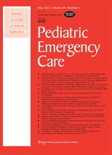
PEDIATRIC EMERGENCY CARE
Transforming Emergency Medicine for Young PatientsPediatric Emergency Care, published by Lippincott Williams & Wilkins, serves as a vital resource within the fields of Emergency Medicine, Pediatrics, and Child Health. Established in 1985, this journal offers a platform for the dissemination of impactful research, offering critical insights for healthcare professionals dedicated to improving emergency care for children. With an impressive impact factor, it ranks in the Q2 category in Emergency Medicine and Pediatrics, highlighting its significance in advancing clinical practices and outcomes. Although not an open-access journal, it provides extensive access options to ensure the research is available to a broad spectrum of readers. The journal's rigorous standards and commitment to excellence make it an essential tool for researchers, practitioners, and students aiming to stay at the forefront of pediatric emergency care advancements.
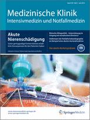
Medizinische Klinik-Intensivmedizin und Notfallmedizin
Advancing Critical Care Knowledge for Better Patient OutcomesMedizinische Klinik-Intensivmedizin und Notfallmedizin, published by SPRINGER HEIDELBERG, is a distinguished journal that serves the fields of critical care, intensive care medicine, emergency medicine, and internal medicine. With an ISSN of 2193-6218 and an E-ISSN of 2193-6226, the journal has established its presence in Germany and has garnered respect within the international medical community. It has demonstrated noteworthy impact, classified in the Q2 and Q3 quartiles across various categories in 2023, including Critical Care and Intensive Care Medicine, Emergency Medicine, and Emergency Nursing. This journal not only showcases cutting-edge research but also offers a platform for sharing innovative practices and clinical developments, thereby facilitating improved patient care and outcomes. As an accessible resource for researchers, professionals, and students dedicated to advancing their knowledge in acute and critical care settings, the journal represents an essential addition to the scholarly landscape in its field.
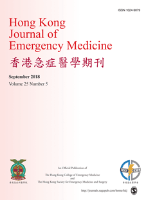
Hong Kong Journal of Emergency Medicine
Empowering Practitioners with Vital InsightsThe Hong Kong Journal of Emergency Medicine, published by WILEY, stands as a vital resource in the field of Emergency Medicine since its inception in 2004. With a commitment to advancing clinical practice and research, this open access journal—transitioned to open access in 2018—facilitates the dissemination of crucial knowledge among healthcare professionals and researchers, fostering a collaborative environment for addressing urgent medical challenges. The journal boasts an impressive impact factor and holds a Q2 ranking in the Emergency Medicine category for 2023, reflecting its significance and influence within the academic community. Located in Hong Kong, this journal aims to explore a broad spectrum of topics related to emergency and critical care, making it an essential publication for those seeking to enhance their understanding and practice in this fast-evolving field. Accessible through ISSN: 1024-9079 and E-ISSN: 2309-5407, it promises to be an invaluable asset for researchers, practitioners, and students alike.
Emergency Radiology
Empowering Healthcare Professionals with Essential Radiology KnowledgeEmergency Radiology, published by SPRINGER HEIDELBERG, is a leading journal in the fields of emergency medicine and radiology, dedicated to advancing the understanding and application of diagnostic imaging in urgent medical conditions. Established in 1994, this journal has consistently contributed to the discourse around emergency diagnostics, maintaining a strong position within the academic community, as evidenced by its Q2 rankings in both Emergency Medicine and Radiology, Nuclear Medicine and Imaging categories as of 2023. With a distinguished focus on innovative research and case studies, it serves a diverse audience of researchers, clinicians, and healthcare professionals who seek to enhance their knowledge and improve patient outcomes in emergency settings. While the journal is not currently open access, it offers robust subscription options and continues to be an integral resource for those at the forefront of emergency care. With an ISSN of 1070-3004 and an E-ISSN of 1438-1435, Emergency Radiology is positioned to remain a key player in shaping the future of medical imaging through its commitment to high-quality research and evidence-based practices.
Journal of Critical Care Medicine
Fostering global dialogue in critical care practices.The Journal of Critical Care Medicine, published by SCIENTO, is a pioneering open-access journal dedicated to advancing the field of critical care, emergency medicine, anesthesiology, and pulmonary medicine. Since its inception in 2015, this journal has made significant strides in fostering knowledge dissemination and scholarly communication within the medical community. With an ISSN of 2393-1809 and an E-ISSN of 2393-1817, it provides a platform for high-quality research that impacts clinical practices and improves patient outcomes. Currently ranked in the second and third quartiles across multiple categories such as Critical Care and Intensive Care Medicine, and Emergency Medicine, the journal’s impact is underlined by its inclusion in prestigious databases like Scopus. The journal’s commitment to open-access publishing ensures that vital research is accessible to a wider audience, enriching the global dialogue in critical care practices. Researchers, healthcare professionals, and students seeking to remain at the forefront of this rapidly evolving field will find an invaluable resource in the Journal of Critical Care Medicine.
Current Emergency and Hospital Medicine Reports
Advancing Emergency Care Through Rigorous ResearchCurrent Emergency and Hospital Medicine Reports, published by Springer, is a pivotal journal in the field of emergency and hospital medicine. With a commitment to disseminating crucial research and advancements, this journal serves as a platform for sharing high-quality studies that enhance clinical practices and improve patient outcomes. As an important resource for researchers, healthcare professionals, and students, it caters to the growing need for evidence-based knowledge in emergency medicine. Although currently not classified as open access, the journal offers a wealth of information that aligns with the latest innovations and practices in the discipline. By engaging with diverse topics, from clinical interventions to hospital management strategies, it aims to inform and inspire the next generation of practitioners and scholars in this vital field of medicine. With its ISSN of 2167-4884, Current Emergency and Hospital Medicine Reports is dedicated to advancing the frontiers of emergency healthcare through rigorous research and illuminating insights.
Journal of Pediatric Intensive Care
Empowering pediatric healthcare with cutting-edge insights.Journal of Pediatric Intensive Care, published by GEORG THIEME VERLAG KG, is a vital resource in the field of pediatric healthcare, focusing specifically on intensive care practices and advancements. With the ISSN 2146-4618 and E-ISSN 2146-4626, this journal aims to bridge the gap between research and clinical practice, providing a platform for the dissemination of high-quality articles that explore cutting-edge techniques, innovative treatments, and the latest developments in pediatric critical care. Although the journal had its coverage in Scopus between the years 2012 to 2013, it continues to play an essential role for researchers, healthcare professionals, and students striving to improve outcomes for critically ill children. Triaging the complexities inherent in pediatric care, the journal welcomes submissions that contribute to the ongoing dialogue within the intensive care community, ensuring that each article serves to inform, educate, and enhance pediatric intensive care practices globally.
Signa Vitae
Connecting global experts in critical and emergency healthcare.Signa Vitae is a distinguished academic journal published by MRE PRESS, focusing on critical care, intensive care medicine, and emergency medicine. Established in 2008 and running through 2024, this journal serves as an essential conduit for the dissemination of innovative research and clinical practices in these dynamic fields. Based in Croatia, Signa Vitae is indexed in Scopus, highlighting its importance within the scholarly community, boasting respectable quartiles with a Q3 ranking in both Critical Care and Intensive Care Medicine and Emergency Medicine as of 2023. Although it operates under a traditional access model, the journal aims to enhance knowledge sharing and interdisciplinary dialogue among researchers, healthcare professionals, and students globally, addressing the urgent challenges and advancements in patient care. By providing a platform for high-quality studies and reviews, Signa Vitae continues to advance the conversation and practice within critical and emergency medicine.
Notarzt
Bridging gaps in knowledge for improved patient outcomes.Notarzt is a well-regarded academic journal published by GEORG THIEME VERLAG KG, focusing on critical care, intensive care medicine, and emergency medicine. With an ISSN of 0177-2309 and an E-ISSN of 1438-8693, this German-based journal has been contributing to the medical field since its inception in 1985. Despite being categorized in the Q4 quartile for both Critical Care and Intensive Care Medicine and Emergency Medicine, Notarzt continues to provide a platform for innovative research, case studies, and developments that inform practitioners and researchers alike. With a publication history spanning significant years such as 1993 and 1999 to 2024, Notarzt is dedicated to improving outcomes in emergency and critical care settings through the dissemination of pivotal findings and comprehensive reviews. Although currently not an Open Access journal, it remains an essential resource for professionals striving to stay abreast of developments in their field.