JOURNAL OF PHOTOCHEMISTRY AND PHOTOBIOLOGY A-CHEMISTRY
metrics 2024
Transforming Understanding Through Light and Chemistry
Introduction
JOURNAL OF PHOTOCHEMISTRY AND PHOTOBIOLOGY A-CHEMISTRY is a prestigious peer-reviewed journal published by Elsevier Science SA, focusing on the interdisciplinary fields of photochemistry and photobiology. Established in 1987 and set to span to 2025, the journal has earned a notable reputation, currently ranking in the Q2 quartile in Chemical Engineering, Chemistry, and Physics & Astronomy, as per the 2023 metrics. With an impressive Scopus ranking, including #34 in General Physics and Astronomy and #50 in General Chemical Engineering, it represents a significant platform for researchers aiming to contribute to advancements in these critical areas. While the journal operates under a subscription model, it remains accessible through various academic databases, ensuring that cutting-edge research reaches a global audience. Researchers, professionals, and students are encouraged to explore the latest studies and reviews that explore the interactions of light with chemical processes and biological systems, positioning the journal as essential reading for anyone in the field.
Metrics 2024
 0.654.103.70176
Metrics History
Rank 2024
Scopus
IF (Web Of Science)
JCI (Web Of Science)
Quartile History
Similar Journals
INORGANIC CHEMISTRY
Transforming Ideas into Insights in Inorganic ChemistryInorganic Chemistry, published by the American Chemical Society, stands at the forefront of the field of inorganic and physical chemistry, boasting an impressive impact in the academic community with a 2023 classification in the Q1 quartile across multiple categories including Inorganic Chemistry and Miscellaneous Chemistry. Since its inception in 1962, this esteemed journal has been a crucial platform for disseminating groundbreaking research, innovative methodologies, and comprehensive reviews integral to understanding the complex behaviors of inorganic materials. With a ranking of #12 out of 79 in Inorganic Chemistry and #37 out of 189 in Physical and Theoretical Chemistry according to Scopus metrics, Inorganic Chemistry has established itself as a premier destination for researchers, professionals, and students alike, eager to stay abreast of pivotal developments and trends in the discipline. Despite being a subscription-based journal, its esteemed reputation and critical contributions make it essential for anyone engaged in the exploration of inorganic chemical phenomena. As it prepares to converge into a new era by 2024, the journal continues to embody excellence and innovation, fostering a dynamic exchange of ideas essential for advancing this vibrant area of science.
JOURNAL OF PHOTOCHEMISTRY AND PHOTOBIOLOGY C-PHOTOCHEMISTRY REVIEWS
Exploring the Synergy of Light and BiologyThe JOURNAL OF PHOTOCHEMISTRY AND PHOTOBIOLOGY C-PHOTOCHEMISTRY REVIEWS, published by Elsevier, is a premier scholarly journal that serves as a critical resource for researchers and professionals in the field of photochemistry and photobiology. With a distinguished Q1 ranking in key categories such as Catalysis, Organic Chemistry, and Physical and Theoretical Chemistry, this journal consistently publishes high-impact articles that contribute significantly to the advancement of knowledge in these disciplines. The journal's rigorous peer-review process ensures the integrity and quality of the research it disseminates. Researchers benefit from its comprehensive review articles that discuss recent advancements, theoretical developments, and practical applications of photochemical processes, making it an essential read for anyone in the field. The journal's impact and relevance are evidenced by its impressive Scopus rankings, including a top percentile of 98th in Organic Chemistry. As the journal continues to explore innovative and interdisciplinary approaches, it stands out as a vital platform for sharing and discussing cutting-edge research findings within the community.

PHOTOCHEMICAL & PHOTOBIOLOGICAL SCIENCES
Empowering Researchers to Illuminate Ecological InsightsPHOTOCHEMICAL & PHOTOBIOLOGICAL SCIENCES is a distinguished peer-reviewed journal published by SpringerNature, focusing on the rigorous exploration of photochemical and photobiological processes that impact various scientific disciplines. Established in 2002, this journal serves as a vital resource for researchers and professionals in the fields of chemistry, biology, and environmental sciences, addressing fundamental questions as well as practical applications. With an impressive Scopus ranking of #67 out of 189 in the category of Physical and Theoretical Chemistry, it holds a significant position within the academic community, evidenced by its Q2 quartile ranking in 2023. Although it operates under a subscription model, the journal encourages broad engagement from scholars by hosting various articles that contribute to the understanding of light-mediated chemical processes and their relevance to ecological and biological phenomena. The journal’s objectives include fostering innovative research, supporting interdisciplinary collaboration, and disseminating knowledge that drives advancements in both academic and applied sciences. By bridging theoretical insights with practical applications, PHOTOCHEMICAL & PHOTOBIOLOGICAL SCIENCES continues to make substantial contributions to the scientific discourse surrounding photochemistry and photobiology.
DYES AND PIGMENTS
Exploring the Spectrum of Innovation in Chemical Engineering.Dyes and Pigments, published by Elsevier Science Ltd, stands as a pivotal journal in the field of chemical engineering, particularly focusing on the realms of dyes and pigments as materials with extensive application across industries. Since its inception in 1980, this journal has evolved to capture cutting-edge research until 2024, making significant contributions to both the Chemical Engineering and Process Chemistry and Technology domains, where it currently ranks in the Q2 category. With an impressive Scopus ranking placing it among the top 82nd percentile in General Chemical Engineering and the top 73rd percentile in Process Chemistry and Technology, it demonstrates a robust commitment to publishing high-quality, impactful research. Although it does not offer an open-access option, its comprehensive content remains accessible to a wide audience of researchers, professionals, and students who are deeply engaged in the study and development of new dye and pigment technologies. Engaging with this journal not only enriches knowledge but also facilitates critical discussions that drive future innovations in chemical material sciences.
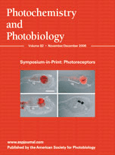
PHOTOCHEMISTRY AND PHOTOBIOLOGY
Bridging disciplines through cutting-edge photochemical research.Photochemistry and Photobiology is a premier journal published by Wiley, dedicated to advancing the field of photochemistry and its applications in biology. With a long-standing history since its inception in 1962, this journal is recognized for its significant contribution to the understanding of light-driven processes, encompassing areas such as biochemistry, medicine, and theoretical chemistry. As evidenced by its impressive Q2 rankings in several categories, including Biochemistry and Physical and Theoretical Chemistry, Photochemistry and Photobiology is an influential resource for researchers and professionals worldwide. The journal's commitment to high-quality research is reflected in its solid standing within important Scopus ranks, marking it as a vital outlet for innovative studies that elucidate the roles of photochemical reactions in biological systems. While it operates on a traditional model rather than Open Access, the journal remains a crucial platform for exchanging knowledge and fostering collaborations across these interconnected disciplines. Explore the latest findings and contribute to the growing body of knowledge in this dynamic field.

Methods and Applications in Fluorescence
Illuminating the Future of Fluorescence ResearchMethods and Applications in Fluorescence is a premier academic journal published by IOP Publishing Ltd, dedicated to the interdisciplinary study of fluorescence techniques and their applications across various scientific fields. With a distinguished impact factor and categorized in the Q2 quartile for 2023 in multiple domains including Atomic and Molecular Physics, Optics, Instrumentation, and Materials Science, this journal plays a crucial role in advancing research and innovation in the field. The journal's scope encompasses a rich array of methodologies and applied studies, fostering collaboration between researchers and professionals aiming to push the boundaries of fluorescence sciences. With its commitment to rigorous peer review and open dissemination of knowledge, Methods and Applications in Fluorescence is essential for anyone involved in fluorescence-related research or applications, offering insightful contributions that drive the field forward. The journal is accessible to academics from around the globe, ensuring dissemination of valuable findings and methodologies from 2013 to 2024 and beyond.

Asian Journal of Organic Chemistry
Exploring the depths of organic chemistry excellence.Asian Journal of Organic Chemistry, published by WILEY-V C H VERLAG GMBH, stands as a pivotal platform in the realm of organic chemistry, catering to researchers and professionals eager to share their contributions to the field. With an ISSN of 2193-5807 and E-ISSN of 2193-5815, this journal spans a commendable convergence from 2012 to 2024, featuring a notable impact factor highlighted by its Q2 ranking in the 2023 Organic Chemistry category. Positioned at rank #94 out of 211 in Scopus, the journal emphasizes the importance of quality research and innovation in organic chemistry. The lack of open access enhances the journal's selectivity, ensuring only the most rigorous and impactful studies are published. Serving as a vital resource for scholars, students, and practitioners alike, the Asian Journal of Organic Chemistry fosters the dissemination of knowledge, advances academic dialogue, and reinforces the pivotal role of organic chemistry in scientific advancement.

Crystals
Exploring the Boundaries of Crystalline InnovationCrystals is a premier open-access journal, published by MDPI since 2011, that focuses on the multidisciplinary fields of chemical engineering, condensed matter physics, inorganic chemistry, and materials science. With its E-ISSN 2073-4352, the journal is headquartered in Switzerland, and actively contributes to the global scientific community by facilitating the dissemination of high-quality research. Ranking in the Q2 quartile across multiple categories, including Chemical Engineering (miscellaneous) and Materials Science (miscellaneous) for 2023, Crystals provides a platform for innovative studies that span from fundamental research to practical applications. The journal's commitment to open access ensures that groundbreaking findings are readily available to researchers, professionals, and students alike, fostering an environment of collaboration and knowledge sharing that is essential in advancing the scientific understanding of crystalline materials.
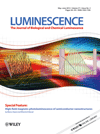
LUMINESCENCE
Fostering Collaboration in the World of LightLUMINESCENCE is a premier international journal published by WILEY, dedicated to advancing the field of luminescence and its applications across various scientific disciplines. With an ISSN of 1522-7235 and an E-ISSN of 1522-7243, this journal plays a pivotal role in disseminating high-quality research from 1997 to 2024. Positioned in the <> Q3 quartile within Biophysics and Q2 in Chemistry (miscellaneous), LUMINESCENCE ranks #37 out of 111 in its chemistry category and #57 out of 152 in biophysics, reflecting its significant impact in these domains. The journal facilitates open access, enabling wide visibility and engagement with groundbreaking research findings. Aimed at researchers, professionals, and students alike, LUMINESCENCE serves as a vital platform for sharing innovative studies and fostering collaboration in luminescence phenomena, thereby enhancing our understanding and utilization of this critical aspect of modern science.
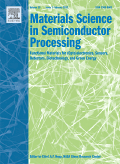
MATERIALS SCIENCE IN SEMICONDUCTOR PROCESSING
Illuminating the Path of Advanced Material ProcessingMATERIALS SCIENCE IN SEMICONDUCTOR PROCESSING, published by ELSEVIER SCI LTD, is a premier journal dedicated to advancing knowledge in the field of semiconductor processing, an area pivotal to the development of modern electronic applications. With an ISSN of 1369-8001 and an E-ISSN of 1873-4081, this journal exemplifies excellence with a remarkable standing in various disciplines, as indicated by its 2023 Scopus rankings—occupying the top quartile (Q1) in Condensed Matter Physics and Mechanical Engineering, and Q2 in Materials Science and Mechanics of Materials. The journal not only provides a platform for high-impact original research, reviews, and significant findings but also bridges theoretical and practical implications within the field. Operating under a publication timeline that extends from 1998 to 2025, it remains an essential resource for researchers, professionals, and students seeking to deepen their understanding of semiconductor materials and processes. Although not an open-access journal, it offers robust options for access, ensuring that cutting-edge developments are made available to the scholarly community.