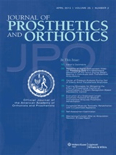
JOURNAL OF PROSTHETICS AND ORTHOTICS
Scope & Guideline
Advancing the Future of Mobility and Care
Introduction
Aims and Scopes
- Clinical Outcomes and Rehabilitation:
Research focusing on the clinical outcomes of various prosthetic and orthotic interventions, assessing how these devices impact patient rehabilitation, mobility, and overall quality of life. - Innovative Technologies and Design:
Exploration of new technologies and design methodologies in prosthetics and orthotics, including 3D printing, robotic systems, and advanced materials aimed at enhancing device functionality and user comfort. - Biomechanics and Kinematics:
Studies investigating the biomechanical aspects of prosthetic and orthotic use, including gait analysis, kinematic performance, and the physiological responses of users during various activities. - Patient-Centered Care and User Experience:
Research emphasizing the importance of patient perspectives, satisfaction, and usability of prosthetic and orthotic devices, ensuring that user needs and experiences are central to device design and implementation. - Education and Professional Development:
Discussion and analysis of educational practices within the prosthetics and orthotics field, including training models, competencies required for practitioners, and the evolution of educational standards.
Trending and Emerging
- Digital Health and Telehealth Solutions:
There is a growing trend towards integrating digital health technologies and telehealth solutions in prosthetics and orthotics, enhancing accessibility to care and monitoring patients remotely. - Advanced Materials and Fabrication Techniques:
The use of advanced materials, including lightweight composites and smart materials, along with innovative fabrication techniques such as additive manufacturing, is gaining attention for their potential to improve prosthetic and orthotic performance. - Focus on Quality of Life and Psychosocial Outcomes:
Research increasingly emphasizes the psychosocial aspects of limb loss and the impact of prosthetic and orthotic devices on users' quality of life, signaling a shift towards a more holistic understanding of patient care. - Interdisciplinary Approaches to Care:
Emerging research highlights the importance of interdisciplinary collaboration in the care of prosthetic and orthotic users, involving physical therapists, occupational therapists, engineers, and other healthcare professionals to optimize patient outcomes. - Sustainability and Cost-Effectiveness:
There is a growing emphasis on sustainability in prosthetics and orthotics, with studies exploring the cost-effectiveness of different interventions and the environmental impact of manufacturing processes.
Declining or Waning
- Traditional Manufacturing Techniques:
Research centered around conventional methods of prosthetic and orthotic manufacturing has seen a decline, likely due to the increasing adoption of advanced technologies such as 3D printing and digital fabrication. - Generalized Approaches to Rehabilitation:
There appears to be a waning interest in generalized rehabilitation approaches, with a shift towards more individualized and technology-integrated rehabilitation strategies that consider specific patient needs and technological advancements. - Static Orthotic Designs:
Static orthotic designs have become less prominent as the field moves towards more dynamic and adaptable solutions that better address the functional needs of users in real-world settings.
Similar Journals
Disability and Rehabilitation-Assistive Technology
Enhancing Quality of Life Through Collaborative ResearchDisability and Rehabilitation-Assistive Technology, published by Taylor & Francis Inc, is a leading journal dedicated to advancing research in the field of assistive technology, disability, and rehabilitation. With an ISSN of 1748-3107 and an E-ISSN of 1748-3115, this journal serves as a vital resource for researchers, clinicians, and professionals, providing high-quality, peer-reviewed articles that explore the latest innovations and methodologies in assistive technologies aimed at improving the quality of life for individuals with disabilities. The journal is recognized for its significant impact across multiple disciplines, achieving prestigious Q1 rankings in Rehabilitation and Speech and Hearing, and maintaining a solid position in Q2 across other relevant categories such as Biomedical Engineering and Orthopedics. As a collaborative platform for sharing knowledge and research findings, Disability and Rehabilitation-Assistive Technology plays a critical role in bridging the gap between technical advancements and practical applications in rehabilitation. Researchers and practitioners are encouraged to contribute and engage with the journal to enhance the collective understanding and efficacy of assistive technologies.
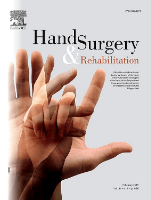
Hand Surgery & Rehabilitation
Fostering Collaboration in Hand Surgery and RecoveryHand Surgery & Rehabilitation, published by ELSEVIER, is a vital resource for researchers, clinicians, and students engaged in the fields of orthopedics, rehabilitation, and surgery. With an ISSN of 2468-1229 and an E-ISSN of 2468-1210, this journal has established a prominent presence since its inception in 2016, with a convergence period extending until 2024. It holds a commendable ranking in the Q2 category within Rehabilitation and Surgery, as well as a Q3 classification in Orthopedics and Sports Medicine for the year 2023. With a Scopus Rank of #290/551 in Surgery and #86/161 in Rehabilitation, it exemplifies the ongoing pursuit of excellence in its domain. As an open access journal, it provides a platform for sharing significant research findings and advancements in hand surgery and rehabilitation, thereby contributing to the enhancement of clinical practice and patient outcomes. Engaging with this journal places professionals at the forefront of the latest developments in these critical areas of medicine, promoting interdisciplinary collaboration and fostering innovation.

Journal of Prosthodontics-Implant Esthetic and Reconstructive Dentistry
Innovating Prosthodontics for a Brighter SmileThe Journal of Prosthodontics-Implant Esthetic and Reconstructive Dentistry is a premier academic publication dedicated to advancing the field of dentistry, particularly in the realms of prosthodontics and implant esthetics. Published by WILEY, this esteemed journal boasts an impressive impact factor and is positioned in the prestigious Q1 quartile in the field of dentistry, ranked 8th out of 132 in general dentistry by Scopus, placing it in the 94th percentile. Since its inception in 1992, the journal has continuously contributed to the dissemination of innovative research and best practices, fostering collaboration among researchers, clinicians, and educators. Though it is not currently an open-access publication, the journal ensures rigorous peer-review processes that uphold the highest academic standards. As it continues to evolve until 2024, it remains an essential resource for those seeking to deepen their understanding of esthetic and reconstructive dentistry and to stay abreast of the latest advancements in this dynamic field.

Orthopadie
Connecting professionals to the latest in sports medicine.Orthopadie is a pivotal journal in the field of orthopedics and sports medicine, published by SPRINGER. With its ISSN 2731-7145 and E-ISSN 2731-7153, this journal serves as a key resource for researchers, professionals, and students looking to stay updated with the latest advancements in orthopedic practices and sports-related injuries. Based in Germany, it reflects a commitment to fostering rigorous academic dialogue and innovative research from 2022 to 2024. The journal has achieved a respectable Q3 category ranking in Orthopedics and Sports Medicine for 2023, positioning it within the competitive landscape of its field, ranking #214 out of 321 in *Scopus* for its subject area. While currently not offering open access options, the journal remains dedicated to disseminating vital findings that enhance understanding and treatment within the orthopedic community. With a growing impact within the scientific community, Orthopadie is poised to become an essential platform for pioneering research and knowledge in orthopedics.
Rehabilitation Process and Outcome
Exploring pathways to effective rehabilitation solutions.Rehabilitation Process and Outcome, published by SAGE Publications Ltd, is a premier peer-reviewed journal dedicated to advancing the field of rehabilitation science. With an ISSN of 1179-5727 and an E-ISSN of 1179-5727, this open-access journal has been committed to disseminating high-quality research since its inception in 2008. The journal provides a vital platform for researchers, clinicians, and practitioners to share innovative studies, clinical practices, and advancements in rehabilitation methodologies. Its emphasis on open access ensures that findings are readily available to a global audience, promoting collaboration and knowledge exchange in the rehabilitation community. Rainier emphasis on practical outcomes supports the journal's mission to enhance patient care and recovery processes. Based in London, England, Rehabilitation Process and Outcome continues to foster significant discourse in the rehabilitation sector, making it an essential resource for those involved in enhancing recovery strategies and overall health outcomes.
JOURNAL OF REHABILITATION MEDICINE
Unlocking Potential: Pioneering Research in Rehabilitation MedicineJOURNAL OF REHABILITATION MEDICINE, published by the FOUNDATION REHABILITATION INFORMATION in Sweden, stands as a leading platform for the dissemination of groundbreaking research in the field of rehabilitation. With an impact factor that places it in the Q1 category for Physical Therapy and Rehabilitation and a noteworthy Q2 ranking in Sports Science and Medicine (miscellaneous), this journal serves as an essential resource for researchers, clinicians, and students dedicated to improving patient care and rehabilitation outcomes. As an Open Access publication since 2001, it ensures that knowledge is widely accessible, promoting collaborative efforts across the global rehabilitation community. Aiming to bridge the gap between research and clinical practice, the journal covers a comprehensive range of topics, providing a vital forum for innovative studies that advance the understanding and effectiveness of rehabilitation therapies. As it approaches its convergence into 2024, the JOURNAL OF REHABILITATION MEDICINE continues to be a cornerstone for all those committed to advancing rehabilitation sciences.

Prosthesis
Exploring the future of biomedical engineering and materials science.Prosthesis is an esteemed open-access journal published by MDPI, dedicated to advancing the fields of biomedical engineering, materials science, oral surgery, and rehabilitation. Since its inception in 2019, the journal has been pivotal in disseminating high-quality research that addresses contemporary challenges in prosthetic development, design, and application. With an impressive categorization in the Q2 quartile across multiple disciplines, including a Rank of #12 in Dentistry & Oral Surgery and #26 in Medicine & Rehabilitation, Prosthesis is a vital resource for researchers, practitioners, and students aiming to enhance their knowledge and impact in these rapidly evolving fields. The journal's commitment to open access ensures that its wide array of articles, studies, and reviews are freely available to the global academic community, promoting collaboration and innovation. Based in Switzerland, at ST ALBAN-ANLAGE 66, CH-4052 BASEL, Prosthesis not only fosters scholarly exchange but also aims to contribute significantly to the improvement of patient outcomes through cutting-edge research and technological advancements.
KNEE SURGERY SPORTS TRAUMATOLOGY ARTHROSCOPY
Leading the Charge in Sports Traumatology and ArthroscopyKNEE SURGERY SPORTS TRAUMATOLOGY ARTHROSCOPY is a premier academic journal published by Springer, dedicated to the fields of orthopedics, sports medicine, and surgery. With an impressive impact factor and ranked in the Q1 category across multiple disciplines, this journal is at the forefront of clinical and experimental research, providing invaluable insights into knee surgery and sports-related injuries. It has been a trusted resource since its inception in 1993, with a commitment to disseminating high-quality research and clinical findings that advance the practice and understanding of knee surgery. Researchers and professionals can expect to find ground-breaking studies and comprehensive reviews that are critical for improving patient outcomes in the ever-evolving landscape of sports medicine. Although not an open access journal, KNEE SURGERY SPORTS TRAUMATOLOGY ARTHROSCOPY remains a vital platform for scholarly discourse and innovation, shaping the future of orthopedic sports science.
AMERICAN JOURNAL OF SPORTS MEDICINE
Connecting Science and Practice in Sports MedicineAMERICAN JOURNAL OF SPORTS MEDICINE is a premier publication in the field of sports health and rehabilitation, published by SAGE PUBLICATIONS INC. With a longstanding history since its inception in 1973, this esteemed journal has become a crucial resource for researchers, clinicians, and students alike, dedicated to advancing the science of sports medicine. The journal holds an impressive impact factor and consistently ranks in the Q1 category across multiple relevant fields, including Orthopedics, Sports Science, and Physical Therapy. This status reflects its high-quality contributions that significantly shape contemporary practices and methodologies. As a vital platform for the dissemination of innovative research and clinical studies, the AMERICAN JOURNAL OF SPORTS MEDICINE encourages submissions that provide insights into injury prevention, rehabilitation, and performance enhancement, thus addressing the evolving challenges faced in sports medicine. While the journal does not currently follow an open-access model, its wide-reaching influence is augmented by its robust indexing in Scopus, where it maintains a 96th percentile rank in both Health Professions and Medicine categories. Researchers and practitioners in sports medicine are invited to engage with the dynamic content that continually pushes the boundaries of knowledge and application in this essential field.
Physiotherapy Research International
Empowering Practitioners through Cutting-Edge Research.Physiotherapy Research International is a leading journal in the fields of Physical Therapy, Sports Therapy, and Rehabilitation, published by WILEY. With a commendable impact factor reflecting its significant contribution to the profession, this journal enjoys a competitive position, ranking in the 66th percentile and 84th out of 247 in its category according to Scopus. The journal encompasses a broad scope of research from 1996 to 2024, addressing critical advancements in physiotherapy and rehabilitation practices. Although it is not an Open Access journal, it provides valuable insights and research findings that foster knowledge and innovation among practitioners and researchers alike. As a Q2 category journal in its field for 2023, Physiotherapy Research International aims to facilitate the dissemination of high-quality research aimed at improving patient outcomes and guiding clinical practice. It serves as an essential resource for those committed to advancing the science and practice of physiotherapy.