
Journal of Radiation Protection and Research
metrics 2024
Championing Excellence in Radiation Protection Studies
Introduction
Journal of Radiation Protection and Research, published by the Korean Association of Radiation Protection (KARP), serves as a pivotal platform for disseminating innovative research in the fields of radiation safety and health-related issues. With an ISSN of 2508-1888 and an E-ISSN of 2466-2461, this South Korea-based journal aims to bridge the gap between scientific research and practical application, emphasizing radiation protection, environmental health, and public safety. Though categorized in Q4 for Health, Toxicology and Mutagenesis, and Q3 for several other scopes as of 2023, the journal is dedicated to publishing high-quality studies that contribute to the improvement of safety standards and methodologies in radiation practice. The journal also provides valuable insights for practitioners in the healthcare and environmental sectors, making it an essential resource for researchers, professionals, and students alike who aspire to advance their understanding and application of radiation science. As the field evolves, so does the Journal of Radiation Protection and Research, which seeks to foster a collaborative and innovative academic community dedicated to ensuring safe and effective radiation use.
Metrics 2024
 0.320.60-4
Metrics History
Rank 2024
Scopus
IF (Web Of Science)
JCI (Web Of Science)
Quartile History
Similar Journals
Life Sciences in Space Research
Innovating Insights for Life in Extraterrestrial EnvironmentsLife Sciences in Space Research, published by ELSEVIER, is a leading journal dedicated to advancing the understanding of life sciences in the context of space exploration and extraterrestrial environments. With a focus on interdisciplinary research, the journal addresses critical topics spanning Agricultural and Biological Sciences, Astronomy and Astrophysics, Ecology, and Health, Toxicology and Mutagenesis. Established in 2014 and set to continue through 2024, it is recognized with a solid impact factor and impressive quartile rankings—including Q2 in several categories, reflecting its influential position among contemporary scientific discourse. The journal welcomes a diverse array of research articles that delve into the implications of space travel on biological systems, innovative ecological practices for sustained extraterrestrial habitation, and critical health-related issues associated with radiation exposure. Researchers, professionals, and students will find Life Sciences in Space Research an invaluable resource for cutting-edge insights and developments in the rapidly evolving field of astrobiology and space science. For more information, please access the journal through its designated platform.
RADIATION MEASUREMENTS
Unveiling the Science Behind Radiation Phenomena.RADIATION MEASUREMENTS is a highly regarded academic journal published by Pergamon-Elsevier Science Ltd, focusing on the interdisciplinary field of radiation science and instrumentation. With an ISSN of 1350-4487 and an E-ISSN of 1879-0925, this journal aims to disseminate cutting-edge research and practical advancements from 1994 to 2024. It holds a commendable position in the Scopus rankings, being categorized in the top quartiles (Q2) for both Instrumentation and Radiation, reflecting its significance in the scientific community with a notable percentile of 64th and 59th, respectively. Although it does not offer Open Access options, the journal serves as a vital resource for researchers, professionals, and students seeking to explore innovations that shape the understanding and measurement of radiation phenomena. With a commitment to high-quality research, RADIATION MEASUREMENTS continues to contribute essential knowledge in the fields of physics and astronomy, positioning itself as a key publication for those dedicated to advancing radiation technology and its applications.
Physica Medica-European Journal of Medical Physics
Elevating Standards in Radiology and BiochemistryPhysica Medica - European Journal of Medical Physics is a premier peer-reviewed journal published by ELSEVIER SCI LTD, dedicated to advancing the field of medical physics. Established in 1989 and serving as a critical platform for innovative research, this journal covers a broad spectrum of topics within biophysics, radiology, and imaging sciences, consistently ranked in the Q1 category across these disciplines. With an impressive impact factor that highlights its influence within the scientific community—ranking 52/333 in Radiology, 42/243 in Physics and Astronomy, and 35/152 in Biochemistry—the journal is a valuable resource for professionals, researchers, and students aiming to contribute to the technological and methodological advancements in medical physics. Physica Medica is committed to fostering open dialogue and collaboration within the global medical physics community, although it currently does not offer open access options. The journal's extensive citation history and ongoing relevance underscore its importance in the continuous evolution of medical science.
RADIATION PROTECTION DOSIMETRY
Connecting research and practice in the realm of radiation protection.RADIATION PROTECTION DOSIMETRY is a vital academic journal dedicated to the field of radiation protection, published by Oxford University Press. With an ISSN of 0144-8420 and an E-ISSN of 1742-3406, this journal serves as a platform for groundbreaking research and developments in dosimetry, health physics, and radiation safety spanning over four decades since its inception in 1981. Recognized with a Q3 ranking in multiple categories including Medicine (miscellaneous) and Public Health, this journal plays a key role in disseminating important findings that inform policy, enhance practice, and promote the protection of both individuals and the environment from radiation hazards. While currently not available as Open Access, the journal's curated content is essential for researchers, professionals, and students dedicated to advancing knowledge in radiation protection and related areas. Interested readers will find the latest research trends, case studies, and reviews invaluable for their work and studies within this multidisciplinary domain.
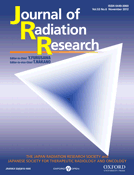
JOURNAL OF RADIATION RESEARCH
Advancing knowledge in radiation science since 1960.JOURNAL OF RADIATION RESEARCH, published by Oxford University Press, is a prominent peer-reviewed journal focusing on the diverse fields of radiation science, including health, toxicology, and radiology. Since its inception in 1960, this open-access journal has provided a critical platform for the dissemination of high-quality research, making it accessible to a global audience of researchers, professionals, and students. With a consistent track record, the journal holds an impressive impact factor and is categorized in Q2 of Radiation studies and Q3 in Health and Toxicology as per the 2023 rankings, reflecting its influential role in shaping contemporary discourse in the field. The journal also boasts notable rankings within Scopus, further underscoring its importance in advancing knowledge and innovations related to radiation. Spanning from 1960 to 2024, the JOURNAL OF RADIATION RESEARCH remains at the forefront of scientific exploration and is essential reading for anyone committed to advancing the understanding of radiation and its effects.
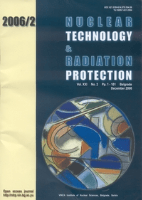
Nuclear Technology & Radiation Protection
Connecting scholars for a safer nuclear landscape.Nuclear Technology & Radiation Protection is a distinguished open-access journal published by the VINCA Institute of Nuclear Sciences, Serbia, dedicated to advancing knowledge in the fields of nuclear energy and radiation safety. Since its inception in 2002, the journal has been an essential resource for researchers, professionals, and students, offering a platform for the dissemination of high-quality research that contributes to the safe and efficient use of nuclear technology. With an impressive Q2 ranking in both the Nuclear Energy and Engineering and Safety, Risk, Reliability and Quality categories for 2023, the journal reflects a commitment to excellence and relevance within its scope. It serves as a pivotal forum for sharing innovative findings, addressing current challenges, and contributing to the global discourse on nuclear safety and technology. The journal is indexed in Scopus, enhancing its visibility and impact in the academic community. By facilitating unrestricted access to its articles, Nuclear Technology & Radiation Protection continues to foster collaboration and engagement among scholars in the nuclear science domain.
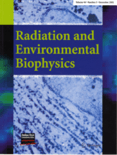
RADIATION AND ENVIRONMENTAL BIOPHYSICS
Pioneering Research for a Safer TomorrowRADIATION AND ENVIRONMENTAL BIOPHYSICS, published by SPRINGER, is a premier journal dedicated to advancing the understanding of the interactions between radiation and biological systems within environmental contexts. With an ISSN of 0301-634X and an E-ISSN of 1432-2099, this journal has established itself as a vital source of innovative research across multiple disciplines, including Biophysics, Environmental Science, and Radiation Studies, maintaining a significant presence since its inception in 1974. The journal is categorized within the Q3 in Biophysics and Q2 in both Environmental Science and Radiation for 2023, indicating its relevance and influence in these domains. Researchers and professionals will find the journal's rich content invaluable, offering insights that could impact public health, environmental policy, and radiation safety. Although it is not an open-access journal, RADIATION AND ENVIRONMENTAL BIOPHYSICS provides critical information through its rigorous peer-reviewed articles, making it an essential resource for academics and practitioners aiming to contribute to this evolving field.
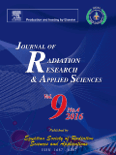
Journal of Radiation Research and Applied Sciences
Advancing knowledge in radiation science and its applications.Journal of Radiation Research and Applied Sciences, published by ELSEVIER, is a premier open-access journal since 2013, dedicated to advancing the understanding and application of radiation research in various fields. With an ISSN of 1687-8507, this journal serves as a vital resource for researchers, professionals, and students engaged in the study of the physical and biological effects of radiation, radiation physics, and its applications in medicine and industry. Its rigorous peer-review process ensures the dissemination of high-quality research that meets the growing demands for innovative solutions in radiation science. By offering comprehensive access options, the journal promotes an inclusive approach to sharing knowledge with the global community. The Journal of Radiation Research and Applied Sciences stands out as a key platform for scholarly communication, fostering advancements that impact both theory and practice in the rapidly evolving landscape of radiation research.

RADIATION PHYSICS AND CHEMISTRY
Exploring the Frontiers of Radiation ScienceRADIATION PHYSICS AND CHEMISTRY, published by Pergamon-Elsevier Science Ltd in the United Kingdom, stands as a leading journal in the field of radiation studies, bridging fundamental research and practical applications. With an impressive 2023 Scopus Rank of 11 out of 58 in the Radiation category, reflecting an 81st percentile ranking, the journal maintains a robust reputation within the scientific community. The journal focuses on the experimental and theoretical aspects of radiation physics, chemistry, and their interdisciplinary applications, providing critical insights that aid the advancement of knowledge in various domains, including nuclear energy, materials science, and healthcare. Although open access options are not available, the journal garners substantial readership and engagement from researchers, professionals, and students alike, as it publishes innovative studies and reviews from 1985 through to its anticipated conclusion in 2025. The ISSN for the journal is 0969-806X, with the E-ISSN being 1879-0895, ensuring global accessibility to cutting-edge research in radiation science.
Applied Radiation and Isotopes
Bridging Research and Application in Radiation ScienceApplied Radiation and Isotopes is a premier journal dedicated to the dissemination of high-quality research in the fields of radiation and isotopes, published by PERGAMON-ELSEVIER SCIENCE LTD. With a commendable impact factor reflecting its respected standing, this journal ranks in the Q3 category within Radiation according to the 2023 evaluation, emphasizing its relevance in the scientific community. Operating out of the United Kingdom, it has been a crucial platform for innovation and knowledge sharing since its inception, covering a wide array of applications ranging from the medical to the industrial sectors. Researchers can access a wealth of articles through its online platform, although it currently does not offer open access options. Applied Radiation and Isotopes is thus an essential resource for researchers, professionals, and students aiming to stay abreast of the latest developments in radiation physics and isotopic applications, making impactful contributions to the field.