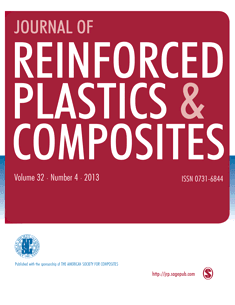
JOURNAL OF REINFORCED PLASTICS AND COMPOSITES
metrics 2024
Elevating Research in Polymers and Composites
Introduction
Welcome to the JOURNAL OF REINFORCED PLASTICS AND COMPOSITES, a leading publication in the realms of materials science, engineering, and polymers. Published by SAGE Publications Ltd, this journal stands out with its robust Q2 ranking in multiple categories, including Ceramics and Composites, Materials Chemistry, Mechanical Engineering, and Mechanics of Materials. Since its inception in 1982, the journal has become an essential resource for researchers and professionals, disseminating pioneering research and innovative applications in reinforced plastics and composite materials. Though not open access, subscribers gain exclusive insights into groundbreaking findings contributing to the advancement of the industry. The journal is indexed in Scopus, with notable rankings that reflect its influence and high-quality scholarship. With ongoing coverage until 2024, the JOURNAL OF REINFORCED PLASTICS AND COMPOSITES remains committed to fostering academic dialogues and facilitating advancements in sustainable materials and advanced engineering solutions.
Metrics 2024
 0.582.303.2088
Metrics History
Rank 2024
Scopus
IF (Web Of Science)
JCI (Web Of Science)
Quartile History
Similar Journals
INTERNATIONAL JOURNAL OF ADHESION AND ADHESIVES
Advancing Adhesion Science for Tomorrow's Innovations.INTERNATIONAL JOURNAL OF ADHESION AND ADHESIVES, published by Elsevier Science Ltd, serves as a premier platform for the dissemination of cutting-edge research findings in the field of adhesion and adhesive technologies. Since its inception in 1980, the journal has consistently ranked highly, reflecting its critical role in advancing knowledge across multiple disciplines, including Biomaterials, Chemical Engineering, and Polymers and Plastics. With its impressive positioning as Q1 in Chemical Engineering and Polymers and Q2 in Biomaterials, it operates within the top echelons of its categories, underscoring its importance to academics and industry professionals alike. The journal also boasts significant Scopus rankings, placing it in the top 75th percentile for Chemical Engineering and in the top 74th percentile for Materials Science. Although it does not offer open access, the journal remains accessible to a wide audience through various institutional subscriptions. The scope of the INTERNATIONAL JOURNAL OF ADHESION AND ADHESIVES includes exploring the fundamental principles and applications of adhesion science, materials interactions, and innovative adhesive formulations, making it an invaluable resource for researchers, professionals, and students dedicated to enhancing material performance and engineering solutions.
Composites Communications
Exploring Innovations in Material ScienceComposites Communications is a premier academic journal dedicated to the field of materials science, specifically focusing on the innovative research and applications of composite materials. Published by ELSEVIER SCI LTD in the United Kingdom, this journal has rapidly established its presence since its inception in 2016. With an impressive impact factor and ranking in the top quartile across various categories including Ceramics and Composites, Materials Chemistry, Mechanics of Materials, and Polymers and Plastics, it serves as a pivotal platform for disseminating high-quality research findings. The journal does not currently offer open access options, ensuring that it maintains a rigorous peer-review process that guarantees the integrity and quality of published works. Researchers, professionals, and students within the materials science community will find Composites Communications an invaluable resource for advancing their knowledge and contributing to the evolving landscape of composite material studies. With its convergence years extending to 2024, the journal is poised to remain at the forefront of academic discourse in this critical area of research.
Advanced Composites and Hybrid Materials
Pioneering Research in Hybrid MaterialsAdvanced Composites and Hybrid Materials, published by SPRINGER NATURE, is a premier journal dedicated to the field of materials science, with a keen focus on innovative composite materials and their applications. With its ISSN 2522-0128 and E-ISSN 2522-0136, the journal has established itself as a cornerstone for researchers and professionals in materials chemistry, ceramics, and polymers, achieving an impressive Q1 ranking across multiple categories in 2023. In particular, it ranks #3 out of 161 in Polymers and Plastics and #4 out of 127 in Ceramics and Composites, highlighting its influential presence within the academic community. The journal aims to provide a cutting-edge platform for the dissemination of groundbreaking research and developments from 2018 to 2024, facilitating knowledge sharing and collaboration among experts. While currently adopting a traditional access model, the significance and impact of research published in this journal cannot be overstated, making it an essential resource for anyone interested in advancing the field of composite materials.
POLYMER SCIENCE SERIES A
Connecting Ideas, Inspiring Discoveries in Polymer ResearchPOLYMER SCIENCE SERIES A is a distinguished journal dedicated to the field of polymer science, with a focus on advancing knowledge in materials chemistry and polymers and plastics. Published by MAIK NAUKA/INTERPERIODICA/SPRINGER, this journal provides a platform for researchers and practitioners to disseminate their findings and innovations. With an ISSN of 0965-545X and an E-ISSN of 1555-6107, it is widely accessible to the academic community. Although currently non-open access, the journal has maintained its significance since its inception in 1991, boasting an evolving emphasis on contemporary issues in polymer science up to 2024. Ranked in the Q3 category for both Materials Chemistry and Polymers and Plastics in 2023, POLYMER SCIENCE SERIES A plays a crucial role in the broader academic landscape, particularly for those committed to understanding and enhancing polymer materials. The journal’s reputation is solidified by its Scopus rankings, where it addresses critical advancements and fosters collaborative research opportunities within the community. We invite researchers, professionals, and students to explore the valuable insights published within these pages.

Fibers is a leading peer-reviewed open access journal published by MDPI, focusing on cutting-edge research within the realm of materials science, particularly in the domains of biomaterials, ceramics and composites, and structural engineering. Established in 2013, the journal has gained recognition for its significant contributions to the field, boasting an impact factor that positions it in the Q2 quartile across multiple categories such as Biomaterials, Ceramics and Composites, Civil and Structural Engineering, and Mechanics of Materials as of 2023. With a Scopus ranking that highlights its prominence—such as in the top 20% in Civil and Structural Engineering—the journal fosters an inclusive platform for academic dialogue and technical advancement. Researchers and professionals can access the journal’s comprehensive articles freely, promoting the dissemination of knowledge that is crucial for the advancement of innovative materials and their applications. Situated in Basel, Switzerland, Fibers continues to be an essential resource for those looking to stay at the forefront of research and technology in material sciences.
JOURNAL OF TESTING AND EVALUATION
Transforming Knowledge into Practical ApplicationsWelcome to the JOURNAL OF TESTING AND EVALUATION, an esteemed publication dedicated to the fields of materials science and mechanical engineering, published by the American Society for Testing and Materials. With a history of excellence since its inception in 1973 and a convergence of insightful research extending to 2024, this journal serves as a pivotal platform for disseminating innovative research, methodologies, and findings in testing and evaluation processes. Although it is not an open-access journal, it holds a respectable impact with a ranking in the third quartile across various categories and Scopus ranks, making it an important resource for academic and industry professionals alike. By providing rigorous evaluation of materials and engineering practices, the JOURNAL OF TESTING AND EVALUATION continues to shape the future of research in these dynamic fields, offering vital contributions that are essential for advancing knowledge and practical applications.
Functional Composites and Structures
Fostering Excellence in Functional Composites.Functional Composites and Structures is a prestigious academic journal published by IOP Publishing Ltd, dedicated to advancing the field of materials science with a focus on innovative composite materials and their structural applications. Established in 2019 and running through 2024, this journal uniquely bridges several disciplines, consistently ranking in the Q2 quartile across key categories including Ceramics and Composites, Electronic, Optical and Magnetic Materials, and Mechanics of Materials. With a commendable Scopus rank that places it within the top tiers of its field, the journal is instrumental for researchers, engineers, and scholars seeking to explore the latest developments in material properties, functionality, and applications. Although access options are not specified, the open-access nature of the journal promotes wider dissemination and engagement with cutting-edge research. As the demand for smarter, more efficient materials continues to grow, Functional Composites and Structures serves as a vital resource for fostering collaboration and driving innovation in material sciences.
PLASTICS RUBBER AND COMPOSITES
Elevating Knowledge in Plastics, Rubber, and CompositesPLASTICS RUBBER AND COMPOSITES is a leading academic journal published by SAGE Publications Inc., dedicated to advancing the understanding and application of polymers, plastics, and composite materials. With an ISSN of 1465-8011 and an E-ISSN of 1743-2898, this quarterly publication attracts a diverse readership from the fields of ceramics and composites, chemical engineering, materials chemistry, and polymer science. Currently indexed in the Q3 category across multiple relevant domains, the journal provides a platform for high-quality research and innovations that contribute significantly to material science. The journal's commitment to disseminating cutting-edge research makes it a valuable resource for researchers, industry professionals, and students who are eager to explore the latest developments and applications in this dynamic field. Despite its current non-open access status, the journal's rigorous peer-review process ensures that all published articles meet the highest academic standards, thus reinforcing its reputation as an essential source for scholarly work in the materials sector.
POLYMER COMPOSITES
Connecting Minds in Polymer and Composite ResearchPOLYMER COMPOSITES, published by WILEY, is a leading journal dedicated to advancing the fields of materials science and engineering through the exploration of polymer composite materials. With its foundation dating back to 1980, this esteemed journal has continuously provided a platform for researchers to publish high-quality studies and innovative methodologies in areas such as ceramics, composites, and miscellaneous chemistry. Ranked in the prestigious Q1 quartile for sectors like Polymers and Plastics as well as Materials Chemistry, POLYMER COMPOSITES stands significant within the academic community, holding a notable impact factor that reflects its influence. The journal encompasses a comprehensive range of topics, making it essential reading for professionals, researchers, and students aiming to stay at the forefront of developments in polymer science and composite technologies. Although it does not currently offer Open Access, readers can access its impactful publications through institutional or individual subscriptions, contributing to ongoing advancements in the field and facilitating the exchange of valuable knowledge among scientists and engineers worldwide.
Materials Performance and Characterization
Transforming Materials Science Through Peer-Reviewed InsightsMaterials Performance and Characterization is a distinguished journal published by the American Society for Testing and Materials (ASTM), specializing in the field of materials science. With ISSN 2379-1365 and E-ISSN 2165-3992, this journal serves as a pivotal platform for disseminating innovative research in the areas of metals and alloys, polymers and plastics, ceramics and composites, and mechanics of materials. Established in 2012, it continues to feature peer-reviewed articles that contribute to both theoretical advancements and practical applications, emphasizing the importance of materials performance in various industries. Despite its current Q4 and Q3 rankings across categories as of 2023, the journal is committed to enhancing its influence in the materials science community, fostering engagement among researchers, professionals, and students alike. The journal is essential for anyone seeking to stay at the forefront of materials research and characterization.