
Journal of Research in Health Sciences
Scope & Guideline
Advancing global health through innovative research.
Introduction
Aims and Scopes
- Public Health Research:
The journal prioritizes studies that address public health challenges, including disease prevention, health promotion, and health policy analysis. - Epidemiological Studies:
It publishes research that investigates the distribution and determinants of health-related states or events in specified populations, emphasizing systematic reviews and meta-analyses. - Behavioral Health:
The journal includes research on behavioral factors affecting health, such as substance use, mental health, and lifestyle choices. - Clinical Interventions and Outcomes:
It focuses on clinical studies that evaluate the effectiveness of interventions, treatment protocols, and health care delivery systems. - Health Equity and Social Determinants:
Research exploring the impact of social determinants on health outcomes and the disparities in health care access and quality is a key focus area. - Innovative Methodologies:
The journal encourages the use of advanced statistical and machine learning techniques to analyze health data and improve research outcomes.
Trending and Emerging
- Mental Health Interventions:
There is an increasing focus on mental health topics, particularly regarding interventions and their effectiveness in preventing issues such as anxiety, depression, and suicidal behaviors. - Impact of Technology on Health:
Research exploring the role of technology, including digital health apps and social media, in shaping health behaviors and outcomes is gaining traction. - Environmental Health Studies:
Emerging themes related to environmental impacts on health, such as air pollution and climate change, are becoming more prominent in recent research. - COVID-19 Related Research:
The ongoing impact of COVID-19 continues to drive research, with studies focusing on long-term effects, vaccine efficacy, and public health responses. - Machine Learning in Health Research:
The adoption of machine learning and advanced data analytics in health research is on the rise, facilitating innovative approaches to understanding health data. - Health Disparities and Equity:
An increasing number of publications are dedicated to exploring health disparities and the social determinants of health, reflecting a growing awareness of equity in health care access and outcomes.
Declining or Waning
- Traditional Clinical Trials:
There appears to be a decreasing emphasis on traditional clinical trial methodologies as more researchers adopt innovative analytical techniques and observational studies. - Single-Disease Focus Studies:
Research focusing primarily on single diseases without considering comorbidities or broader health implications is becoming less common as there is a shift towards holistic health perspectives. - Basic Science Research:
There is a noticeable decline in basic science studies in favor of applied research that addresses real-world public health issues. - Non-Communicable Diseases (NCDs) Focus:
While still relevant, the specific focus on NCDs without integration into broader health systems or socioeconomic contexts seems to be less frequent in recent publications. - Static Health Surveys:
Surveys that do not include dynamic or longitudinal elements are less common, indicating a shift towards more comprehensive and adaptive research designs.
Similar Journals

Revista de Salud Publica-Cordoba
Transforming public health discourse through shared knowledge.Revista de Salud Publica-Cordoba is a distinguished open-access journal published by the Universidad Nacional de Córdoba, Escuela de Salud Pública. Since its inception in 2005, this journal has actively contributed to the field of public health, providing a platform for researchers, professionals, and students to share and disseminate valuable insights and advancements in health-related studies. With its ISSN 1853-1180 and E-ISSN 1852-9429, the journal emphasizes the accessibility of research findings to a global audience, thereby fostering innovation and collaboration within the public health community. The journal aims to address pressing public health issues through rigorous research and interdisciplinary approaches, making it a crucial resource for those committed to improving global health outcomes. Researchers, professionals, and students are encouraged to engage with this vital publication to stay informed on contemporary public health challenges and solutions.
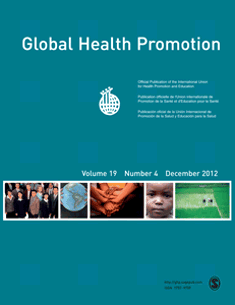
Global Health Promotion
Connecting researchers and practitioners for impactful solutions.Global Health Promotion is a premier journal published by SAGE Publications Inc., dedicated to advancing the field of public health through innovative research and practical applications. With an ISSN of 1757-9759 and E-ISSN 1757-9767, this journal has established itself as a vital resource for professionals and researchers focused on health promotion and disease prevention strategies globally. Based in the United Kingdom, it publishes high-quality articles that contribute to the understanding of environmental and occupational health, capturing a diverse range of topics that reflect contemporary challenges in public health. As of 2023, the journal is ranked in the Q2 quartile for its impactful contributions, and it is positioned at the 58th percentile among its peers, indicating a robust standing within the academic community. Global Health Promotion aims to bridge gaps between theory and practice, facilitating knowledge exchange that informs policy and improves health outcomes worldwide. With an open access model in the pipeline, it promises to enhance accessibility and reach, making critical research available to a broader audience.
PREVENTION SCIENCE
Fostering collaboration for stronger health outcomes.PREVENTION SCIENCE, published by Springer/Plenum Publishers, is a leading journal within the field of public health, recognized for its high impact and scholarly contributions. With an ISSN of 1389-4986 and an E-ISSN of 1573-6695, the journal has established itself as a vital resource for researchers and professionals alike, boasting a commendable Q1 ranking in Public Health, Environmental, and Occupational Health as of 2023. As underscored by its Scopus rank of #115 out of 665 in its category, it is positioned in the 82nd percentile, highlighting its influential role in advancing knowledge on prevention strategies. Covering a comprehensive range of topics related to health promotion and disease prevention, PREVENTION SCIENCE serves as an essential platform for disseminating empirical research and theoretical insights. Although it does not currently offer Open Access options, the journal is committed to enhancing public health understanding and practices through rigorous academic scrutiny. Since its convergence in 2000, it has been at the forefront of preventative research, making significant strides towards improving health outcomes across diverse populations. Readers and contributors will find a wealth of information relevant to ongoing debates and advancements in the field.

Central European Journal of Public Health
Bridging Research and Practice in Public HealthThe Central European Journal of Public Health, ISSN 1210-7778 and E-ISSN 1803-1048, is a vital academic forum published by the NATIONAL INSTITUTE OF PUBLIC HEALTH, Czech Republic. With its comprehensive coverage of contemporary issues in public health and medicine since its inception in 1993, this journal aims to bridge the gap between research and practice, fostering a deeper understanding of health dynamics within Central Europe and beyond. As a Q3 ranked journal in both the fields of Medicine (miscellaneous) and Public Health, Environmental and Occupational Health as per 2023 metrics, it provides an accessible platform for innovative studies, policy analyses, and reviews that contribute to the global discourse on public health challenges. Though primarily based in the Czech Republic, it welcomes contributions from a worldwide audience, enhancing its scope and impact. Researchers, practitioners, and students will find invaluable insights that not only enrich academic scholarship but also inform effective public health interventions.
Asia-Pacific Journal of Public Health
Empowering health outcomes through rigorous research.Asia-Pacific Journal of Public Health, published by SAGE Publications Inc, is a leading platform for disseminating scholarly research in the field of public health. With an impressive scope that spans from the late 1980s to the present, the journal offers a wealth of articles that address critical issues faced by diverse populations in the Asia-Pacific region. Categorized in the Q3 quartile for both Medicine (miscellaneous) and Public Health, Environmental and Occupational Health, it holds a significant position within its field, ranked 310 out of 665 in the Scopus database. Researchers and professionals have access to valuable insights that inform public health policy and practice, making this journal an essential resource for those aiming to enhance health outcomes in the region. While not currently open access, the journal's rigorous peer-review process ensures the integrity and relevance of its content. As the landscape of public health continues to evolve, the Asia-Pacific Journal of Public Health remains a vital resource for advancing knowledge, fostering collaboration, and promoting a healthier society.

Northern Clinics of Istanbul
Connecting scholars to shape the future of medicine.Northern Clinics of Istanbul is an esteemed open-access journal dedicated to advancing knowledge within the field of medicine, specifically focusing on miscellaneous areas of general medicine. Published by KARE PUBL since 2014, it provides a vital platform for researchers, healthcare professionals, and students to share innovative findings and foster academic dialogue. With its ISSN 2148-4902 and E-ISSN 2536-4553, the journal has garnered attention in the academic community, earning a reputable Q4 quartile ranking in the category of Medicine (Miscellaneous) for the year 2023 and a Scopus rank of #497 out of 636. Based in Istanbul, Turkey, the journal is committed to accessibility and relevance, making significant contributions to the global medical discourse. Northern Clinics of Istanbul aims to serve as an interdisciplinary hub for innovative research, promoting the dissemination of knowledge and enhancing collaborative efforts among scholars. Join us in exploring the latest insights that are shaping healthcare today.

EPIDEMIOLOGIC REVIEWS
Synthesizing Knowledge for a Healthier TomorrowEPIDEMIOLOGIC REVIEWS, an esteemed publication from Oxford University Press Inc, stands as a beacon in the fields of Epidemiology and Medicine, with a significant focus on synthesizing and analyzing the latest research and developments in these areas since its inception in 1979. This journal, with its ISSN 0193-936X and E-ISSN 1478-6729, is recognized for its high academic rigor, boasting a 2023 Q1 quartile ranking in both Epidemiology and Miscellaneous Medicine, and ranks #25 out of 148 in Scopus's Epidemiology category, placing it in the prestigious 83rd percentile. Although it does not currently offer open access, its subscription options provide comprehensive access to a wealth of epidemiological knowledge, essential for researchers, public health professionals, and students keen on advancing their understanding of health trends and disease patterns. With a commitment to promoting high-quality research and impactful insights, EPIDEMIOLOGIC REVIEWS plays a crucial role in enhancing public health discourse and shaping future epidemiological inquiries.
Preventive Medicine
Innovating public health solutions for global well-being.Preventive Medicine is a premier academic journal published by Academic Press Inc Elsevier Science, renowned for its influential contributions to the fields of Epidemiology and Public Health. Since its inception in 1946 and through its dedicated issues leading into 2024, the journal has established itself as a leading platform for cutting-edge research, boasting impressive Scopus rankings, with a notable Q1 status across relevant categories. This journal provides an essential forum for scholars, practitioners, and policy-makers interested in the prevention of diseases and the promotion of health within populations. With each issue, it disseminates valuable insights on preventive strategies, health behaviors, and epidemiological trends, making it crucial for anyone invested in the advancement of public health sciences. The journal does not offer open access options, ensuring that content remains relevant and targeted to its scholarly audience. Given its valuable contributions and recognition in the academic community, Preventive Medicine continues to play a pivotal role in shaping evidence-based approaches to health promotion and disease prevention in modern societal contexts.
Journal of Epidemiology and Global Health
Unlocking the potential of open-access research for a healthier world.The Journal of Epidemiology and Global Health (ISSN: 2210-6006; E-ISSN: 2210-6014), published by SpringerNature, stands as a premier open-access platform in the field of epidemiology, dedicated to advancing our understanding of global health challenges since 2011. Based in Switzerland, this journal is recognized for its significant contributions to the discipline, achieving an impressive Q1 ranking in Epidemiology and positioning itself at the 88th percentile within the Scopus Medicine - Epidemiology category. With a goal to disseminate innovative research and foster dialogue among scholars, public health professionals, and students, the journal provides a rich repository of empirical studies, reviews, and theoretical contributions that address pressing epidemiological issues. Its commitment to open access ensures that vital research is freely available to the global community, thereby amplifying its impact and relevance. Researchers seeking to publish and access high-quality, peer-reviewed articles will find the Journal of Epidemiology and Global Health an invaluable resource in navigating the ever-evolving landscape of public health.

BMC PUBLIC HEALTH
Championing open-access research for a healthier world.Welcome to BMC Public Health, a premier open-access journal published by BMC, dedicated to advancing research in the fields of public health, environmental, and occupational health. Since its inception in 2001, BMC Public Health has emerged as a leading platform for disseminating high-quality research, achieving a remarkable Q1 ranking in 2023 within its category, and earning a notable position of rank #114 out of 665 in Scopus, reflecting its impact and relevance in a competitive field. With a commitment to open-access publishing, the journal ensures that research findings are accessible to a global audience, fostering collaboration and knowledge sharing among researchers, professionals, and students alike. Based in the United Kingdom, BMC Public Health aims to address pressing issues in public health through innovative research and comprehensive reviews, making significant contributions to policy-making and best practices worldwide. We invite you to explore the wealth of knowledge and contributions made by authors in this essential publication.