
Journal of Space Safety Engineering
metrics 2024
Pioneering research for a safer journey into space.
Introduction
The Journal of Space Safety Engineering, published by ELSEVIER, is a pioneering platform dedicated to advancing the field of aerospace safety and engineering. Since its inception in 2014, this journal has catered to researchers and professionals focusing on the crucial intersection of aerospace engineering and safety, risk, reliability, and quality management. With an ISSN of 2468-8975 and E-ISSN of 2468-8967, it has established itself within the academic community, currently holding a Q3 ranking in both Aerospace Engineering and Safety, Risk, Reliability, and Quality categories, according to the 2023 metrics. The journal, which covers converged years up to 2024, is instrumental for those seeking to explore innovative safety solutions in space missions and exploration, making it an essential resource for students, industry professionals, and researchers alike. Although it is not open access, it remains a credible source of impactful studies that contribute to enhancing safety protocols and engineering practices in aerospace endeavors. With a strong focus on rigorously vetted research, the Journal of Space Safety Engineering ensures that important advancements in this dynamic and vital field are shared widely among experts and stakeholders.
Metrics 2024
 0.311.00-14
Metrics History
Rank 2024
Scopus
IF (Web Of Science)
JCI (Web Of Science)
Quartile History
Similar Journals
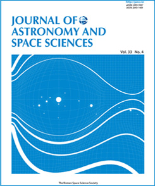
Journal of Astronomy and Space Sciences
Connecting Global Minds in the Quest for Cosmic Understanding.The Journal of Astronomy and Space Sciences, published by the Korean Space Science Society, is a premier open-access platform dedicated to advancing the fields of astronomy, astrophysics, and space sciences. Established in 1984, the journal has been instrumental in disseminating high-quality research findings, fostering collaboration among scientists globally, and providing insights into the dynamics of our universe. With an ISSN of 2093-5587 and an E-ISSN of 2093-1409, the journal has gained notable recognition, currently ranking in the Q3 quartile in Earth and Planetary Sciences and Physics and Astronomy as of 2023. Although the journal's H-Index is currently unspecified, its commitment to rigorous peer-review processes and open-access availability ensures that groundbreaking research is accessible to a wide audience. Based in Seoul, South Korea, the journal is poised to continue supporting innovative research through 2024 and beyond. Researchers, professionals, and students alike will find valuable resources and opportunities within its pages, further establishing this journal as a crucial resource in the exploration of the cosmos.

Journal of Aeronautics Astronautics and Aviation
Navigating the Dynamics of Aerospace InnovationJournal of Aeronautics Astronautics and Aviation, published by the Aeronautical & Astronautical Society Republic of China, is a premier scholarly journal dedicated to advancing knowledge in the dynamic fields of aerospace engineering and space sciences. Operating under the ISSN 1990-7710, this journal plays a pivotal role in disseminating innovative research and practice-oriented studies that address both theoretical and applicative aspects of aeronautics and astronautics. With an impressive history spanning from 2006 to 2024, the journal has established itself as a valuable resource for researchers, professionals, and students alike, featuring contributions that reflect the latest developments and trends within the industry. In the latest rankings, it holds a Q3 classification in Aerospace Engineering and Q4 in Space and Planetary Science, indicating its growing influence despite its niche scope. With an open access model that facilitates widespread readership, the Journal of Aeronautics Astronautics and Aviation strives to foster collaboration and knowledge sharing in these ever-evolving scientific domains.
Chinese Journal of Aeronautics
Empowering global collaboration in aerospace innovation.Chinese Journal of Aeronautics, published by Elsevier Science Inc, serves as a premier platform for cutting-edge research in the field of aerospace and mechanical engineering. With an impressive impact factor that reflects its significant contribution to the discipline, this Open Access journal has been disseminated globally since 2002, allowing unrestricted access to high-quality articles and research findings. The journal is recognized for its exceptional ranking, holding a prestigious Q1 category in both Aerospace Engineering (Rank #8/153, 95th percentile) and Mechanical Engineering (Rank #46/672, 93rd percentile) as of 2023. It publishes original research, reviews, and technical notes that enhance our understanding of aeronautics and its applications, making it an essential resource for researchers, professionals, and students alike. Located in New York, USA, the journal continues to foster innovation and collaboration in aeronautical sciences, shaping the future of aviation and space exploration.
JOURNAL OF SAFETY RESEARCH
Championing excellence in safety research since 1969.The JOURNAL OF SAFETY RESEARCH, published by Pergamon-Elsevier Science Ltd, stands as a premier platform for scholarly discourse within the domain of safety, risk, reliability, and quality. With an esteemed impact factor and a strong ranking of #38 out of 207 in its category as per Scopus, this journal maintains a distinguished Q1 quartile status, reflecting its influence and significance in advancing safety research since its inception in 1969. Researchers, practitioners, and students alike will find a wealth of knowledge here as the journal explores critical aspects of safety in various contexts, highlighting innovative strategies and empirical findings that contribute to improved safety outcomes globally. Though it operates under a traditional access format, the journal’s extensive repository of articles ensures that vital information remains accessible to its readership. The JOURNAL OF SAFETY RESEARCH is not only a cornerstone for those within the safety engineering field, but also a vital resource for professionals seeking to enhance their understanding of risk management and quality assurance methodologies.
TUNNELLING AND UNDERGROUND SPACE TECHNOLOGY
Unlocking the Future of Tunnelling and Construction.TUNNELLING AND UNDERGROUND SPACE TECHNOLOGY, published by Pergamon-Elsevier Science Ltd, stands at the forefront of research in the fields of tunnelling, underground construction, and geotechnical engineering. With the high reputation reflected in its prestigious Q1 status in both Building and Construction and Geotechnical Engineering and Engineering Geology quartiles, this journal serves as an essential platform for pioneering studies and innovative practices. The journal has demonstrated a notable impact in the academic community, evidenced by its impressive Scopus rankings, with an esteemed rank of #7 in Geotechnical Engineering out of 229 journals, placing it in the 97th percentile. This positions it as a vital resource for researchers and professionals seeking the latest advancements in underground space technology. Published since 1986 and continuing through 2024, the journal aims to disseminate cutting-edge research that enhances both the science and practice of tunnelling, providing a significant repository for students and experts eager to advance their understanding and expertise in this critical area of engineering.

Journal of Health and Safety at Work
Innovating practices for a safer work environment.The Journal of Health and Safety at Work, published by the Iranian Occupational Health Association, is a vital resource for researchers, professionals, and students engaged in the fields of occupational health, safety, and environmental management. With an ISSN of 2251-807X and E-ISSN 2383-2088, this Open Access journal has been dedicated to disseminating knowledge since 2012, ensuring that critical research is accessible to a global audience. The journal’s scope encompasses a diverse range of topics including human factors and ergonomics, safety research, and public health, with a focus on enhancing workplace safety and environmental standards. Although currently positioned in the Q4 category across various disciplines within safety and health research, the journal offers a unique platform for emerging studies and innovative practices, making it a significant contributor to the discourse in these fields. The journal's commitment to open access aligns with the growing trend of transparent scholarship, thus facilitating the sharing of vital insights to improve workplace health and safety outcomes. Researchers aiming to publish groundbreaking studies in this pivotal area will find the Journal of Health and Safety at Work an indispensable avenue for advancing knowledge and fostering professional collaboration.
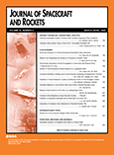
JOURNAL OF SPACECRAFT AND ROCKETS
Leading the Way in Rocket Science Excellence.The Journal of Spacecraft and Rockets, published by the American Institute of Aeronautics and Astronautics, serves as a premier platform for disseminating cutting-edge research in the fields of aerospace engineering and space science. Established in 1964, this esteemed journal has evolved over nearly six decades, solidifying its reputation with a consistent publication history through 2024. With an impact factor positioning it within the Q2 quartile in both Aerospace Engineering and Space and Planetary Science categories, it ranks as a vital resource, featuring high-quality manuscripts that address the latest advancements and findings in spacecraft design, propulsion systems, and austere planetary exploration. The journal's rigorous peer-review process ensures that articles meet the high academic standards expected by practitioners in the aerospace sector. Researchers, engineers, and students alike will find the Journal of Spacecraft and Rockets to be an invaluable resource for both foundational knowledge and innovative research developments, advancing the future of aeronautics and astronautics.
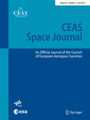
CEAS Space Journal
Illuminating the path of space exploration with impactful studies.CEAS Space Journal, published by SPRINGER WIEN, serves as a critical platform for advancing knowledge in the fields of aerospace engineering and space science. With an ISSN of 1868-2502 and an E-ISSN of 1868-2510, this journal has been at the forefront of scholarly communication since its inception in 2011, showcasing cutting-edge research that spans to the present day (2024). The journal holds a solid reputation, ranking in the Q2 quartile for Aerospace Engineering and Q3 for Space and Planetary Science as of 2023, illustrating its impactful contributions within these disciplines. Scopus rankings further underline its prominence, placing it in the 70th percentile among aerospace engineering journals. Although it is not an open access publication, the insights published in the CEAS Space Journal are invaluable for researchers, professionals, and students alike, providing essential studies and reviews that push the boundaries of aerospace innovation and planetary exploration. The journal's commitment to quality and rigor makes it an indispensable resource for anyone looking to deepen their understanding of contemporary challenges and technological advancements in space science.
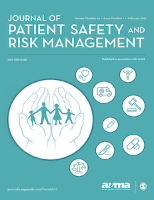
Journal of Patient Safety and Risk Management
Navigating the complexities of healthcare risk with expertise.Journal of Patient Safety and Risk Management, published by SAGE Publications Ltd, stands as a vital resource for the exploration and discourse surrounding safety and risk in healthcare environments. Established in 2018 and continuing through 2024, this journal delivers a rich repository of knowledge aimed at improving patient safety protocols and mitigating risks within healthcare systems. With an ISSN of 2516-0435 and an E-ISSN of 2516-0443, the journal is indexed in several categories with a notable performance in Health Policy and Health (social science), rated in Q3, while also addressing Leadership and Management in Q4. Despite the absence of an open access model, the journal provides a platform for researchers, healthcare professionals, and students to stay informed about the latest developments and evidence-based practices within the dynamically evolving landscape of patient safety. Given its Scopus rankings, which include a percentile of 46th in Health (social science) and 36th in Health Policy, the journal is positioned as a credible and impactful publication for those dedicated to enhancing patient care through robust risk management strategies.

Journal of Aerospace Information Systems
Pioneering Research for Tomorrow's Aerospace ChallengesJournal of Aerospace Information Systems, published by the American Institute of Aeronautics and Astronautics, is a premier scholarly platform dedicated to advancing the interdisciplinary field of aerospace information systems. With a focus on innovative research and practical applications, this journal supports the dynamic integration of aerospace engineering, computer science, and electrical engineering. Positioned in Q2 quartiles for 2023 in its respective categories, it ranks notably in Aerospace Engineering (#52/153) and Electrical and Electronic Engineering (#357/797), indicating its significant influence within the scientific community. Research published within its pages addresses a diverse range of technological advancements and applications that are vital for the development of contemporary aerospace systems. As an open-access journal, it facilitates broader dissemination of knowledge, allowing researchers, professionals, and students to engage with cutting-edge discoveries and methodologies. With its competitive impact and commitment to fostering innovation, the Journal of Aerospace Information Systems is an essential resource for anyone involved in the burgeoning field of aerospace technology.