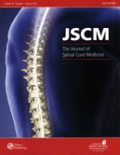
JOURNAL OF SPINAL CORD MEDICINE
Scope & Guideline
Innovating the future of spinal cord medicine.
Introduction
Aims and Scopes
- Clinical and Translational Research:
The journal publishes studies that translate basic science findings into clinical applications, particularly those that can improve treatment outcomes for spinal cord injury patients. - Rehabilitation and Quality of Life Studies:
Research on rehabilitation practices and their impact on the quality of life for individuals with spinal cord injuries, including studies on physical therapy, community integration, and psychosocial aspects. - Innovative Therapies and Technologies:
Exploration of new technologies and therapeutic approaches such as robotic rehabilitation, telehealth interventions, and pharmacological treatments aimed at enhancing recovery and function. - Epidemiological and Public Health Research:
Studies that investigate the prevalence, incidence, and risk factors associated with spinal cord injuries, contributing to a better understanding of public health implications. - Multidisciplinary Approaches:
Research that involves collaboration across various disciplines, including neurology, psychology, physiotherapy, and occupational therapy, to provide holistic care for spinal cord injury patients.
Trending and Emerging
- Telehealth and Remote Interventions:
The rise of telehealth has prompted a surge in research focused on remote patient monitoring, virtual rehabilitation, and online support programs, particularly following the COVID-19 pandemic. - Mental Health and Psychosocial Aspects:
There is a growing emphasis on the psychological impact of spinal cord injuries, including studies on mental health disorders, coping strategies, and community reintegration. - Personalized Medicine and Individualized Care,:
Emerging themes include personalized rehabilitation approaches that consider individual patient characteristics, preferences, and responses to treatment. - Community-Based Rehabilitation and Engagement:
Research focusing on community participation and engagement strategies is gaining traction, highlighting the importance of social inclusion for improving quality of life. - Innovative Assistive Technologies:
The journal is increasingly featuring studies on cutting-edge assistive technologies such as exoskeletons, robotic therapies, and smart devices that enhance mobility and independence.
Declining or Waning
- Traditional Surgical Approaches:
Research related to conventional surgical methods for spinal cord injuries appears to be declining as interest shifts towards minimally invasive techniques and non-surgical interventions. - Pharmacological Interventions for Pain Management:
While pain management remains crucial, the focus on traditional pharmacological approaches, particularly opioids, is waning in favor of non-pharmacological and integrative therapies. - Basic Science Studies without Clinical Relevance:
There is a noticeable decrease in purely basic science research that does not translate into clinical practice, with a growing emphasis on studies that have direct implications for patient care. - Longitudinal Studies with Limited Generalizability:
Longitudinal studies that do not adequately address diverse populations or settings are becoming less common, as the journal increasingly values research that reflects broader applicability.
Similar Journals

NEUROSURGERY
Innovating Clinical Practices in Neurology and Surgery.NEUROSURGERY, published by Lippincott Williams & Wilkins, stands as a foremost journal in the field of clinical neurology and surgery, reflecting a commitment to advancing knowledge and practice through high-quality research and discourse. With an impact factor indicative of its scholarly significance and a remarkable Scopus ranking placing it in the Q1 category for both neurology and surgery, this journal provides a vital platform for clinicians, researchers, and students to explore cutting-edge developments and innovations. NEUROSURGERY publishes peer-reviewed articles that span the spectrum of neurosurgical practice, from basic science discoveries to clinical applications, fostering a collaborative exchange of ideas and methodologies. Since its inception in 1977, the journal has maintained a focus on delivering substantive research that informs practice and enhances patient care, making it an essential resource for professionals dedicated to the fields of neurology and surgery. The journal is based in India, and while it currently does not offer open access options, its rich archive from 1977 to 2024 ensures a comprehensive repository of knowledge for those engaged in this critical area of medicine.
Topics in Spinal Cord Injury Rehabilitation
Empowering Lives with Cutting-Edge InsightsTopics in Spinal Cord Injury Rehabilitation is a premier journal dedicated to advancing research and clinical practices in the field of spinal cord injury rehabilitation. Published by the American Spinal Injury Association, this journal focuses on providing up-to-date insights and innovative strategies to enhance recovery and quality of life for individuals with spinal cord injuries. With an impressive trajectory from 1998 to 2024, it is recognized within the Q2 category for Neurology (clinical), Physical Therapy, Sports Therapy and Rehabilitation, and Rehabilitation as of 2023. Although the journal is not open access, it remains a critical resource for healthcare professionals and researchers, boasting a solid impact in the Scopus rankings that positions it among the top quartiles in its categories. Researchers, clinicians, and students alike will find invaluable knowledge within its pages, supporting the ongoing evolution of therapeutic approaches and rehabilitation methodologies. For subscriptions and more details, contact AMER SPINAL INJURY ASSOC at 9702 Gayton Rd, Suite 306, Richmond, VA 23238, United States.
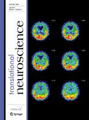
Translational Neuroscience
Unveiling the Clinical Potential of Neuroscience Research.Translational Neuroscience, published by DE GRUYTER POLAND SP Z O O, is a leading open-access journal since its inception in 2015, dedicated to the multidisciplinary exploration of neurological research and its clinical applications. With an ISSN of 2081-3856 and an E-ISSN of 2081-6936, the journal serves as a crucial platform for scholars and practitioners to disseminate innovative findings and theoretical advancements in the field of neuroscience. Covering various aspects of general neuroscience, it is ranked in the Q3 quartile for 2023 and positioned at Rank #75 out of 113 in its category, reflecting its growing impact within the scientific community. The journal strives to bridge the gap between laboratory research and clinical practice, fostering collaboration among researchers, clinicians, and educators. The editorial team is committed to maintaining high publication standards that engage the audience with rigorous research while promoting a culture of open science. For those interested in the forefront of neuroscience research, Translational Neuroscience offers an invaluable resource for knowledge and innovation.

NEUROMODULATION
Fostering Excellence in Neuromodulatory ResearchNEUROMODULATION is a premier academic journal dedicated to advancing the fields of anesthesiology, pain medicine, and neurology. Published by Elsevier, this prestigious journal has consistently maintained a high impact factor, reflecting its relevance and influence in the medical community. With a commendable track record spanning from 1998 to 2024, NEUROMODULATION is classified in the Q1 quartile for both Anesthesiology and Pain Medicine and Medicine (miscellaneous), demonstrating its excellence among top-tier journals. Additionally, it ranks in the Q2 quartile for Neurology and Clinical Neurology, showcasing a broad appeal across multiple disciplines. The journal's substantial Scopus rankings—22nd out of 136 in Anesthesiology and Pain Medicine and 93rd out of 400 in Clinical Neurology—underscore its critical role in disseminating cutting-edge research and clinical findings. NEUROMODULATION endeavors to provide a robust platform for researchers, clinicians, and students to explore innovative therapeutic approaches and the complexities of neural modulation, ultimately contributing to improved patient outcomes and advancing the state of medical science.
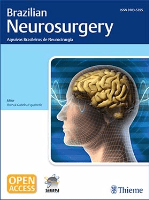
Brazilian Neurosurgery-Arquivos Brasileiros de Neurocirurgia
Advancing Neurosurgical Knowledge GloballyBrazilian Neurosurgery-Arquivos Brasileiros de Neurocirurgia, published by GEORG THIEME VERLAG KG, is a distinguished peer-reviewed open access journal that has been making significant contributions to the field of neurosurgery since its transition to open access in 2015. This Brazilian journal, which is accessible to a global audience, aims to disseminate high-quality research articles, reviews, and case reports that enhance the understanding and practice of neurosurgery and clinical neurology. Despite its current ranking in the Q4 category for both neurology and surgery in 2023, the journal is committed to improving its impact and accessibility for researchers, medical professionals, and students worldwide. As an important platform for innovative ideas and discussions, it takes pride in publishing scientifically rigorous content that informs and shapes the future of neurosurgical practices. With the rise of open access publishing, Brazilian Neurosurgery aligns itself with contemporary trends, making vital research readily available to its diverse readership while nurturing academic collaborations within the neurosurgical community.
Pain Practice
Transforming Patient Care with Cutting-edge ResearchPain Practice is an esteemed journal published by WILEY, focusing on the vital field of Anesthesiology and Pain Medicine. With an impressive impact factor reflected in its ranking of #30 out of 136 in its category, Pain Practice operates within the Q2 quartile, indicating its significant influence and contribution to research and clinical practices in managing pain. Established in 2004 and set to converge in 2024, this journal is dedicated to publishing high-quality, peer-reviewed articles that cover a wide range of topics related to pain management, therapeutic approaches, and novel interventions. Although it does not currently offer open access, it remains a crucial resource for professionals and researchers in the field, encouraging advancements in treatment methods and enhancing patient care in pain management.
Journal of Neurological Surgery Part A-Central European Neurosurgery
Championing the future of neurology and surgery.The Journal of Neurological Surgery Part A – Central European Neurosurgery is a prominent peer-reviewed publication dedicated to advancing the field of neurosurgery and its related disciplines. Published by THIEME MEDICAL PUBL INC and based in Germany, this journal has been a platform for critical advancements in clinical neurology and surgery since its inception in 2012, and it is set to continue through 2024. With a current impact factor reflecting its influence in the medical community, the journal ranks in the Q3 quartile across the categories of Medicine (miscellaneous), Neurology (clinical), and Surgery for 2023, ensuring a robust participation from the academic and medical professionals alike. It is indexed in Scopus, highlighting its global recognition, with rankings of #248/551 and #257/400 in the fields of Medicine & Surgery and Neurology, respectively. The journal features a range of open access options, thereby facilitating unrestricted dissemination of high-quality research to a wide audience. As a valuable resource, it aims to promote the exchange of innovative ideas and research findings that can contribute to clinical practice and improve patient outcomes in neurosurgery.

SPINAL CORD
Innovating solutions for spinal cord disorders.SPINAL CORD, published by SpringerNature, is an esteemed peer-reviewed journal focusing on critical advancements in the fields of neurology, rehabilitation, and related disciplines. With an ISSN of 1362-4393 and E-ISSN 1476-5624, this journal has made significant contributions to the understanding and treatment of spinal cord disorders since its inception in 1996. Aiming to provide a platform for innovative research, it has achieved impressive rankings in various categories, such as Q1 in Rehabilitation, reflecting its influence and relevance in the academic community. SPINAL CORD is recognized within the top tier of journals, with notable Scopus rankings placing it in the 80th percentile for Rehabilitation. The journal is committed to open access, ensuring unrestricted availability of its research to foster knowledge dissemination. Operating from its UK base in London, this journal is essential for researchers, healthcare professionals, and students who seek to deepen their understanding of spinal injuries, advancements in clinical practices, and rehabilitation methodologies.

AMERICAN JOURNAL OF SPORTS MEDICINE
Pioneering Insights in Athletic PerformanceAMERICAN JOURNAL OF SPORTS MEDICINE is a premier publication in the field of sports health and rehabilitation, published by SAGE PUBLICATIONS INC. With a longstanding history since its inception in 1973, this esteemed journal has become a crucial resource for researchers, clinicians, and students alike, dedicated to advancing the science of sports medicine. The journal holds an impressive impact factor and consistently ranks in the Q1 category across multiple relevant fields, including Orthopedics, Sports Science, and Physical Therapy. This status reflects its high-quality contributions that significantly shape contemporary practices and methodologies. As a vital platform for the dissemination of innovative research and clinical studies, the AMERICAN JOURNAL OF SPORTS MEDICINE encourages submissions that provide insights into injury prevention, rehabilitation, and performance enhancement, thus addressing the evolving challenges faced in sports medicine. While the journal does not currently follow an open-access model, its wide-reaching influence is augmented by its robust indexing in Scopus, where it maintains a 96th percentile rank in both Health Professions and Medicine categories. Researchers and practitioners in sports medicine are invited to engage with the dynamic content that continually pushes the boundaries of knowledge and application in this essential field.

Brain and Spine
Innovating the future of neurological research and collaboration.Brain and Spine is a premier academic journal published by ELSEVIER, dedicated to advancing the fields of neuroscience and neurology. With its unique focus on the complex interactions between brain function and spinal health, this journal serves as an essential resource for researchers, clinicians, and students alike. Though currently lacking an official impact factor, its ranking within Scopus highlights its relevance, placing it in the 25th percentile for neuroscience (miscellaneous) and the 23rd percentile within neurology, indicating that while it is a developing journal, it holds potential for significant contributions to the field. Operating under open-access principles, it aims to disseminate valuable findings widely, ensuring that novel insights into neurological health are accessible to a global audience. Brain and Spine seeks to foster interdisciplinary collaboration and innovation, making it an invaluable platform for those striving to enhance our understanding of the brain and spinal cord's intricate functions and interdependencies.