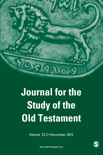
Journal for the Study of the Old Testament
Scope & Guideline
Elevating Research in Old Testament Theology
Introduction
Aims and Scopes
- Textual Analysis and Criticism:
The journal emphasizes rigorous textual analysis, exploring the historical, literary, and theological aspects of Old Testament texts. This includes studies on the Masoretic Text, Septuagint, and other ancient versions. - Historical and Cultural Contexts:
Papers often investigate the historical and cultural contexts of the Old Testament, including archaeological findings, ancient Near Eastern cultures, and socio-political dynamics of biblical times. - Theological Interpretation:
The journal encourages theological reflection on the Old Testament, examining its implications for contemporary faith communities and its relevance to modern theological discourse. - Intertextual and Comparative Studies:
Scholars frequently draw comparisons between Old Testament texts and other ancient literatures, including Apocrypha and Pseudepigrapha, as well as later religious texts, highlighting themes of continuity and divergence. - Literary and Rhetorical Criticism:
The journal also focuses on the literary qualities of Old Testament texts, analyzing narrative techniques, poetic forms, and rhetorical strategies employed within the scripture. - Gender and Social Identity Studies:
Recent papers demonstrate a growing interest in gender studies and social identity within the Old Testament, exploring how these themes are represented and their implications for contemporary discussions.
Trending and Emerging
- Trauma and Resilience Studies:
Recent papers are increasingly addressing themes of trauma and resilience within Old Testament narratives, drawing connections to modern psychological and sociocultural contexts. - Postcolonial and Diaspora Studies:
There is a growing emphasis on postcolonial readings of the Old Testament, exploring how texts relate to issues of identity, diaspora, and the experiences of marginalized communities. - Environmental and Ecological Theology:
Emerging discussions focus on ecological themes within the Old Testament, examining the text's implications for contemporary environmental ethics and stewardship. - Digital Humanities and Textual Analysis:
The integration of digital humanities in biblical studies is gaining traction, with scholars utilizing digital tools for textual analysis, visualization, and collaborative research. - Interdisciplinary Approaches:
There is an increasing trend towards interdisciplinary research, where scholars incorporate insights from fields such as anthropology, sociology, and literary theory to enrich Old Testament studies.
Declining or Waning
- Historical Critical Methodologies:
There seems to be a decline in the prevalence of historical-critical methodologies that focus solely on the historical accuracy and authorship of texts, as newer approaches emphasize narrative and thematic analysis. - Traditional Exegesis:
Papers focused on traditional exegesis without contemporary application or intertextual analysis are becoming less common, as scholars prefer to engage with texts in ways that resonate with current issues. - Focus on Specific Books:
There is a noticeable decrease in studies that concentrate exclusively on individual books of the Old Testament, with a shift towards broader thematic explorations that connect multiple texts.
Similar Journals

BIBLICA
Engaging with the Rich Tapestry of Biblical LiteratureBIBLICA is a prestigious academic journal devoted to the study of biblical texts, their historical contexts, and theological implications. Published by PEETERS in Italy, this journal has made significant contributions to the field of Religious Studies since its inception, achieving a commendable Q3 rank in the current category quartiles for 2023. With an ISSN of 0006-0887, BIBLICA engages a diverse readership, providing a platform for scholarly articles that address both contemporary and historical issues related to biblical literature. Although it does not offer open access, its reputation and rigorous peer-review process ensure that each publication is of high scholarly merit. With convergence spanning from 2002 to 2023 and Scopus rankings placing it at #341 out of 644 in Arts and Humanities, BIBLICA serves as an essential resource for researchers, professionals, and students seeking insights into biblical studies and its myriad implications in the modern world.
Teoliteraria-Revista Brasileira de Literaturas e Teologias
Unlocking New Perspectives in Literature and TheologyTeoliteraria-Revista Brasileira de Literaturas e Teologias is a distinguished open-access journal published by the Pontifícia Universidade Católica de São Paulo (PUC-SP), dedicated to the interdisciplinary exploration of literature and theology. Since its establishment in 2011, this journal has been pivotal in fostering dialogue between literary studies and theological discourse, offering scholars a platform for innovative research and thought-provoking articles. With its ISSN 2236-9937, Teoliteraria prides itself on promoting academic rigor and diversity in scholarship, making it an indispensable resource for researchers, professionals, and students pursuing insights at the intersection of these rich fields. Located in São Paulo, Brazil, the journal is easily accessible to a global audience, underscoring its commitment to knowledge dissemination and scholarly collaboration.

CATHOLIC BIBLICAL QUARTERLY
Fostering critical discourse in the study of biblical texts.Catholic Biblical Quarterly is a prominent scholarly journal published by the Catholic Biblical Association of America, dedicated to advancing the study of biblical texts within the contexts of history, theology, and literary criticism. With its ISSN 0008-7912 and E-ISSN 2163-2529, this quarterly publication has established itself as a vital resource for researchers, clergy, and students in the field of biblical studies. Although the journal does not offer open access, it remains a respected platform for rigorous academic discourse and the dissemination of high-quality research articles. The content covers a broad scope, including in-depth analyses, critical reviews, and insightful commentaries, contributing significantly to both contemporary scholarship and traditional theological exploration. Since its inception, the journal has aimed to foster a deeper understanding of the Scriptures, making it an essential resource for anyone engaged in biblical scholarship.
Journal for the Study of the Pseudepigrapha
Engaging with the Voices Beyond the CanonThe Journal for the Study of the Pseudepigrapha, published by SAGE Publications Ltd, is an esteemed periodical dedicated to advancing the scholarly exploration of pseudepigraphal literature and its impact on religious studies. With an ISSN of 0951-8207 and E-ISSN 1745-5286, this journal provides a vital platform for researchers, professionals, and students alike who seek to deepen their understanding of the diverse literary and theological dimensions of pseudepigrapha. Operating from the United Kingdom, the journal's output spans from 1987 to 2024, ensuring a rich archive of insights and discussions relevant to contemporary debates within the field. It currently holds a categorization in the fourth quartile of Religious Studies (Q4) and ranks 308 out of 644 in the Scopus database, highlighting its established presence among a growing community of scholars. The journal does not currently offer Open Access, though its content remains highly valuable for those engaged in the investigation of ancient texts beyond the canonical scriptures. By fostering rigorous analysis and multifaceted discourse, the Journal for the Study of the Pseudepigrapha continues to make significant contributions to the understanding of identity, tradition, and textual interpretation within various cultural contexts.
HARVARD THEOLOGICAL REVIEW
Illuminating Historical and Contemporary Faith PerspectivesHARVARD THEOLOGICAL REVIEW is a prestigious academic journal that has been a cornerstone of the field of religious studies since its inception in 1908. Published by Cambridge University Press, this journal holds a significant position in scholarly discourse, boasting a 2023 Scopus ranking of #181 out of 644 in the Arts and Humanities category and a commendable Q2 quartile status. With a focus on theological inquiry, the journal serves as a vital platform for both historical and contemporary studies in religion, making it an essential resource for researchers, professionals, and students alike. The HARVARD THEOLOGICAL REVIEW publishes a diverse array of articles, reviews, and essays that contribute to the critical understanding of theological concepts and the interplay of religion in society. Although it does not provide open access options, the journal remains robust in its contributions, fostering a rich dialogue in the field well into 2024 and beyond.
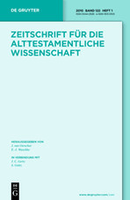
ZEITSCHRIFT FUR DIE ALTTESTAMENTLICHE WISSENSCHAFT
Pioneering Research in Ancient Wisdom and ContextZEITSCHRIFT FUR DIE ALTTESTAMENTLICHE WISSENSCHAFT, published by WALTER DE GRUYTER GMBH, stands as a premier platform in the fields of Religious Studies and History, with distinguished rankings of Q1 in Religious Studies and Q2 in History. Established in Germany and active since 1881, this journal has a storied legacy of advancing scholarly dialogue pertaining to the Old Testament and its historical context. With an ISSN of 0044-2526 and an E-ISSN of 1613-0103, it serves as a crucial resource for researchers, professionals, and students, fostering a robust understanding of ancient texts and their significance in contemporary society. Though it does not currently offer open access, its merit is reflected in its Scopus rankings, placing it in the 65th percentile for Religious Studies and the 63rd percentile for History. As this journal continues its publication journey through 2024, it remains dedicated to enriching the academic landscape by publishing original research, critical reviews, and comprehensive studies that illuminate the complexities and nuances of Old Testament scholarship.

Journal for the Study of the New Testament
Fostering Interdisciplinary Dialogue in Religious StudiesThe Journal for the Study of the New Testament, published by SAGE Publications Ltd, stands as a premier academic resource in the field of Religious Studies with an impressive impact, ranking in the top quartile (Q1) as per the 2023 category quartiles. This esteemed journal, with an ISSN of 0142-064X and an E-ISSN of 1745-5294, has been at the forefront of New Testament scholarship since its inception in 1978. It provides a platform for innovative research, critical inquiry, and interdisciplinary dialogue among scholars, researchers, and students. The journal's rigorous approach to peer-reviewed articles ensures a high standard of scholarship, making it a vital source for those engaged in understanding the complexities and historical contexts of the New Testament. With a Scopus rank of #161 out of 644 in Religious Studies and a 75th percentile ranking, it is positioned as a significant contributor to academic discourse in the humanities. As it continues its publication journey until 2024, the Journal for the Study of the New Testament remains essential for anyone interested in deepening their insights into biblical texts and their implications in contemporary society.
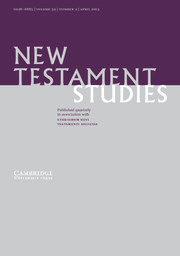
NEW TESTAMENT STUDIES
Advancing Scholarship in Historical ContextsNEW TESTAMENT STUDIES is a prestigious academic journal published by Cambridge University Press, dedicated to the advanced study of the New Testament and its historical context. With an ISSN of 0028-6885 and an E-ISSN of 1469-8145, this journal has established itself as a leading resource in the fields of History and Religious Studies, currently holding a Q1 ranking in both categories as of 2023. With a remarkable convergence of scholarly discourse from 1954 to 2024, the journal is noted for its rigorous peer-reviewed articles that contribute significantly to the understanding of early Christian texts. Although not an open-access publication, it provides essential access options through academic libraries, ensuring that researchers, professionals, and students alike can engage with its high-impact content. With a Scopus ranking placing it in the 80th percentile in both Religious Studies and History, NEW TESTAMENT STUDIES is an invaluable outlet for innovative research and critical scholarship that shapes contemporary biblical studies.

REVUE BIBLIQUE
Unveiling Historical Contexts Through Rigorous ResearchREVUE BIBLIQUE is a prestigious scholarly journal published by PEETERS, renowned for its contributions to the fields of Archaeology, History, and Religious Studies. Based in France and accessible internationally, this journal has been a vital resource for researchers and scholars since its inception, showcasing a commitment to high-quality academic discourse. Recognized within the Q1 and Q2 quartiles for various categories in the 2023 rankings, REVUE BIBLIQUE highlights critical examinations of historical contexts and religious texts, fostering interdisciplinary dialogue and innovation in the humanities. Although it operates under traditional subscription models, the journal’s rigorous peer-review process and comprehensive thematic coverage make it an indispensable tool for advancing knowledge in its domains. Scholars looking to delve into the complexities of faith, history, and cultural heritage will find REVUE BIBLIQUE an essential addition to their research arsenal.
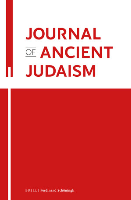
Journal of Ancient Judaism
Advancing Understanding of Ancient Texts and TraditionsThe Journal of Ancient Judaism is an esteemed academic publication focusing on the dynamic field of religious studies, particularly the historical and cultural contexts of ancient Judaism. Published by BRILL, a reputable international publisher known for its scholarly contributions, this journal is dedicated to advancing the study of ancient Jewish texts, traditions, and their socio-political environments. With an ISSN of 1869-3296 and an E-ISSN of 2196-7954, the journal has established its footprint in the scholarly community, supported by its ranking in the Q3 quartile for Religious Studies in 2023 and a Scopus rank of #371 out of 644 in its category. The content showcased in this journal is vital for researchers, professionals, and students alike, offering peer-reviewed articles that contribute to the broader understanding and appreciation of ancient Jewish heritage and its influence on contemporary religious thought. With a timeline spanning from 2015 to 2024, the journal aims to facilitate rigorous academic discourse and provide open access to vital research findings, fostering a deeper engagement with the complexities of ancient Judaism.