JOURNAL OF TOXICOLOGY AND ENVIRONMENTAL HEALTH-PART A-CURRENT ISSUES
metrics 2024
Connecting Disciplines for Innovative Environmental Solutions
Introduction
JOURNAL OF TOXICOLOGY AND ENVIRONMENTAL HEALTH-PART A-CURRENT ISSUES, published by Taylor & Francis Inc, stands as a key resource in the interdisciplinary field of toxicology and environmental health. Operating under the ISSN 1528-7394 and E-ISSN 1087-2620, this journal maintains a strong presence with a Q2 category ranking in Health, Toxicology and Mutagenesis and a Q3 ranking in Toxicology as of 2023. It aims to disseminate critical findings that address contemporary issues in toxicology and environmental health, emphasizing the implications of environmental agents on human health. The journal offers both subscription and open access options, making cutting-edge research accessible to a diverse readership. With coverage of key topics from 1998 to 2024, it is an essential platform for academics, professionals, and students seeking to stay at the forefront of environmental health sciences.
Metrics 2024
 0.572.302.6099
Metrics History
Rank 2024
Scopus
IF (Web Of Science)
JCI (Web Of Science)
Quartile History
Similar Journals
DRUG AND CHEMICAL TOXICOLOGY
Innovating research for a healthier tomorrow.Drug and Chemical Toxicology is a well-respected journal in the fields of toxicology, pharmacology, and public health, published by Taylor & Francis Ltd. Since its inception in 1978, this journal has diligently explored the effects and mechanisms of chemical exposures on health and the environment, fulfilling a crucial role in advancing scientific understanding and safeguarding public health. The journal is indexed across prestigious databases and features an impressive array of articles categorized within the Q2 and Q3 quartiles across various categories in 2023, reflecting its significance in Chemical Health and Safety as well as Environmental and Occupational Health disciplines. With an extensive reach and a focus on interdisciplinary research, Drug and Chemical Toxicology offers a rich repository of original research, reviews, and methodological advancements, catering to a diverse audience of researchers, professionals, and students dedicated to the betterment of safety and health standards. Although not an open-access publication, its articles are widely accessible to the academic community, ensuring that critical innovations and insights are shared for the greater good.
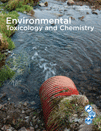
ENVIRONMENTAL TOXICOLOGY AND CHEMISTRY
Unraveling the complexities of environmental health and chemistry.ENVIRONMENTAL TOXICOLOGY AND CHEMISTRY is a premier journal published by Wiley that has established itself as an essential resource for researchers, professionals, and students in the fields of environmental chemistry and toxicology. With a robust trajectory since its inception in 1982, the journal offers critical insights into the interactions between environmental pollutants and biological systems, aiming to advance our understanding of the impacts of toxins on health and ecosystems. Recognized in the top quartile (Q1) of both Environmental Chemistry and Health, Toxicology, and Mutagenesis categories as of 2023, the journal is respected for its rigorous peer-reviewed content and high impact factor. It ranks 33rd out of 148 in Health, Toxicology and Mutagenesis and 48th out of 147 in Environmental Chemistry according to Scopus metrics, placing it firmly within the most influential publications in these fields. Although it does not currently offer open access, the journal remains a vital conduit for disseminating cutting-edge research and innovative methodologies that address pressing environmental challenges.

Toxics is a leading international journal published by MDPI that has been dedicated to advancing the knowledge in the fields of toxicology, environmental health, and chemical safety since its inception in 2013. With an impressive Open Access model, it ensures that all research findings are readily available to a global audience, fostering collaboration and innovation across academia and industry. The journal is esteemed for its rigorous peer-review process and holds notable rankings, including Q1 status in Chemical Health and Safety and Q2 in both Health, Toxicology and Mutagenesis and Toxicology, reflecting its impact on critical research areas. Based in Basel, Switzerland, Toxics provides a platform for researchers, professionals, and students to disseminate significant findings on the implications of toxic substances in health and the environment, aiming to improve public health outcomes and inform regulatory decisions. With its ongoing commitment to high-quality research and relevant access options, Toxics continues to be an essential resource in the domain of toxicology and environmental sciences.
MUTATION RESEARCH-GENETIC TOXICOLOGY AND ENVIRONMENTAL MUTAGENESIS
Advancing knowledge in genetic toxicology and environmental mutagenesis.MUTATION RESEARCH-GENETIC TOXICOLOGY AND ENVIRONMENTAL MUTAGENESIS, published by Elsevier, is a renowned journal that explores critical advancements in the field of genetic toxicology and environmental mutagenesis. With an ISSN of 1383-5718 and an E-ISSN of 1879-3592, it ranks in Q3 for Genetics and Q2 for Health, Toxicology, and Mutagenesis as of 2023. This journal not only emphasizes the importance of environmental factors in genetic material alterations but also disseminates significant research findings that aid in understanding the implications for public health and safety. Operating from Amsterdam, Netherlands, it serves as a pivotal platform for researchers, professionals, and students, fostering an informed community keen on evolving the parameters of genetic research. Although it currently does not offer open access, the journal's commitment to high-quality peer-reviewed content ensures substantial contributions to the academic literature, enhancing our comprehension of mutagenic processes and their environmental triggers.
Particle and Fibre Toxicology
Pioneering insights into particulate and fiber toxicity.Particle and Fibre Toxicology is a leading open-access journal dedicated to advancing the field of toxicology, specifically focusing on the health impacts of particulate matter and fibers. Published by BMC since 2004, this journal operates from its offices in the United Kingdom and has gained significant recognition in the scientific community, achieving an impressive impact factor that highlights its relevance and influence. As indicated by its Q1 ranking in various categories including Health, Toxicology and Mutagenesis and Medicine (miscellaneous), it occupies a prestigious position in the academic landscape, appealing to researchers, professionals, and students alike. With a Scopus ranking of #4 in Toxicology and #7 in Environmental Science, the journal ensures high visibility and accessibility, providing a platform for the dissemination of key research findings and innovative methodologies in the interdisciplinary domains of toxicology. Through its commitment to open access, Particle and Fibre Toxicology fosters knowledge-sharing and collaboration, facilitating significant advancements in our understanding of the toxicological effects of environmental agents.

Reviews of Environmental Contamination and Toxicology
Pioneering insights into environmental challenges and solutions.Reviews of Environmental Contamination and Toxicology is a leading journal published by SPRINGER, dedicated to advancing the understanding of environmental science, toxicology, and public health. Since its inception in 1987, this esteemed journal has established itself as an invaluable resource for researchers and practitioners alike, showcasing a wealth of peer-reviewed articles that delve into the complexities of environmental contaminants and their effects on human health and ecosystems. With an impressive impact factor and consistently ranking in the Q1 category across multiple fields including Health, Toxicology and Mutagenesis, as well as Public Health, this journal commands attention, boasting Scopus rankings that place it among the top-tier publications globally. Researchers will find that the journal provides not only in-depth reviews but also practical implications for policy and practice regarding environmental issues. Located in the heart of New York, Reviews of Environmental Contamination and Toxicology is poised to remain at the forefront of this critical field through 2024 and beyond, making it an essential addition to the library of any environmental health scholar or practitioner.
Archives of Environmental & Occupational Health
Elevating the discourse on toxicology and occupational safety.Archives of Environmental & Occupational Health is a prestigious journal published by Routledge Journals, Taylor & Francis Ltd, dedicated to advancing research and knowledge in the realms of environmental science, occupational health, and toxicology. With an ISSN of 1933-8244 and an E-ISSN of 2154-4700, this peer-reviewed journal has gained significant recognition, currently holding a Q2 ranking in Environmental Science and Q3 rankings in Health, Toxicology and Mutagenesis, and Public Health. Established in 2005, it serves as a vital platform for researchers, practitioners, and policymakers alike who aim to address and disseminate findings on pressing environmental and occupational health issues. The journal is not open access, allowing for rigorous peer review processes while still reaching a broad readership. As it converges through 2024, the Archives of Environmental & Occupational Health continues to play a critical role in shaping discourse and fostering innovation in the field, making it an essential resource for those committed to improving both human health and the environment.
ARCHIVES OF TOXICOLOGY
Elevating Standards in Toxicological ResearchARCHIVES OF TOXICOLOGY is a prestigious journal published by Springer Heidelberg, dedicated to advancing research in the field of toxicology and related disciplines. With a distinguished history dating back to 1930, this journal has continuously provided vital insights and groundbreaking studies, making it a cornerstone in the areas of health, toxicology, and medicine. Recognized for its high impact, it occupies a top-ranking position in Scopus, with remarkable quartile placements in 2023, categorizing it as Q1 in Health, Toxicology and Mutagenesis, and Q1 in Medicine (Miscellaneous). The journal highlights critical research and innovative methodologies, appealing to a diverse audience of researchers, professionals, and students committed to understanding the complexities of toxic substances and their implications for public health and environmental safety. The journal does not currently offer open access, allowing for a more traditional but rigorous peer-review process that ensures the quality and integrity of every published article. Join the global discourse in toxicological science with ARCHIVES OF TOXICOLOGY, where every contribution furthers the understanding of safety and toxicity in our world.

JOURNAL OF APPLIED TOXICOLOGY
Leading Insights into Applied ToxicologyJOURNAL OF APPLIED TOXICOLOGY, published by Wiley, stands as a leading platform in the field of toxicology, focusing on the rigorous examination of chemical substances and their effects on biological systems. With an impressive Impact Factor, it ranks in the top quartile (Q2) for toxicology journals, reflecting its esteemed position within the scientific community. The journal, identifiable by its ISSN 0260-437X and E-ISSN 1099-1263, has been an invaluable resource since its inception in 1981, and it continues to serve as a conduit for innovative research and practical applications through 2024. Positioned at the forefront of the field, it garners recognition in the Scopus Rankings, where it ranks #31 out of 133 journals in the toxicology category, placing it in the 77th percentile—a testament to its contribution to the advancement of pharmacology and toxicological sciences. While not an open-access journal, it remains accessible to a wide audience of researchers, professionals, and students eager to explore cutting-edge findings in applied toxicology, making it a pivotal resource for enhancing knowledge and fostering collaboration in the field.
TOXICOLOGY AND INDUSTRIAL HEALTH
Transforming toxicology insights into real-world health solutions.TOXICOLOGY AND INDUSTRIAL HEALTH, published by SAGE PUBLICATIONS INC, is a premier journal in the field of toxicology, public health, and environmental health, with a significant history dating back to 1985. With its ISSN 0748-2337 and E-ISSN 1477-0393, the journal provides a platform for disseminating groundbreaking research and comprehensive reviews that address the complexities of toxic substances in industrial and occupational settings. Despite its Q3 ranking among peers in health, toxicology, and public health, this journal is becoming increasingly influential, reflected in its growing citation metrics. Researchers and professionals benefit from its commitment to fostering knowledge in both theoretical and practical contexts, making it an essential resource for those dedicated to advancing understanding in this vital field. The journal's main objectives include promoting research addressing the implications of toxicology on health and safety standards across industries, ensuring accessibility to current studies for a global audience. Overall, TOXICOLOGY AND INDUSTRIAL HEALTH plays a critical role in bridging the gap between research and real-world applications, proving invaluable to students, professionals, and researchers alike in their pursuit of enhancing public health and environmental safety.