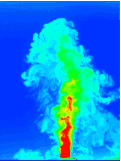
JOURNAL OF TURBULENCE
metrics 2024
Connecting Scholars in the World of Turbulence
Introduction
JOURNAL OF TURBULENCE, published by Taylor & Francis Ltd, stands as a premier interdisciplinary platform for the dissemination of high-quality research in fluid dynamics, with a particular focus on turbulence phenomena. With an impressive Impact Factor and esteemed Q1 ranking across multiple categories, including Computational Mechanics and Condensed Matter Physics, this journal maintains its status as a vital resource for researchers, professionals, and students engaged in these dynamic fields. Since its inception in 2000, the journal has increasingly become a pivotal reference for innovative methodologies, experimental techniques, and theoretical advances related to turbulence. Although it operates on a subscription basis, its commitment to rigorous peer review ensures that only the most significant contributions are published, further enriching the academic community. With its broad scope and relevance, JOURNAL OF TURBULENCE invites scholars to contribute to this exciting area of study and explore the complex behaviors exhibited in turbulent flows.
Metrics 2024
 0.791.502.2063
Metrics History
Rank 2024
Scopus
IF (Web Of Science)
JCI (Web Of Science)
Quartile History
Similar Journals

International Journal of Fluid Mechanics Research
Advancing Knowledge in Mechanical Engineering and PhysicsThe International Journal of Fluid Mechanics Research, published by BEGELL HOUSE INC, is a pivotal platform for the dissemination of innovative research within the fields of Mechanical Engineering and Physics. With a focus on the intricate dynamics of fluid behavior, this journal has been a cornerstone of scholarly communication since its inception in 1996, continuing to engage a global audience of researchers and professionals through to 2024. With a respectable Impact Factor reflecting its significant contributions to the disciplines—ranking in Q3 for both Mechanical Engineering and Miscellaneous Physics and Astronomy categories—this journal presents a unique opportunity for authors to share their findings in a peer-reviewed environment. Although it does not currently offer Open Access options, all published articles are carefully curated, ensuring high-quality research is accessible to its readership. As the journal navigates the complexities of fluid mechanics, it fosters an interdisciplinary dialogue, bridging theoretical frameworks with practical applications, thereby enhancing understanding and innovation in related fields.
Journal of Fluid Science and Technology
Pioneering Research in Fluid Science and TechnologyThe Journal of Fluid Science and Technology, published by the Japan Society of Mechanical Engineers, serves as a pivotal platform for the dissemination of cutting-edge research in the fields of fluid mechanics and mechanical engineering. With an ISSN of 1880-5558, this Open Access journal has been dedicated to advancing the understanding of fluid flow and transfer processes since its establishment. As of 2023, it holds a significant position with a Q3 quartile ranking in both Fluid Flow and Transfer Processes and Mechanical Engineering categories. Researchers and practitioners are encouraged to explore the journal’s extensive collection of articles, contributing to the body of knowledge that impacts various practical applications in engineering and technology. The journal, which has established a reputation for quality amidst a competitive landscape, further fosters international collaboration and education by providing unrestricted access to its content. For professionals and students alike, the Journal of Fluid Science and Technology represents an invaluable resource for the latest findings and innovations in fluid dynamics and mechanical systems.
EXPERIMENTAL THERMAL AND FLUID SCIENCE
Exploring the dynamics of heat and fluid with cutting-edge studies.EXPERIMENTAL THERMAL AND FLUID SCIENCE is a prestigious academic journal published by Elsevier Science Inc, dedicated to advancing the fields of thermal and fluid sciences. With a strong focus on innovative experimental research, it plays a crucial role in disseminating new knowledge and techniques across multiple domains, including Aerospace Engineering, Chemical Engineering, Fluid Flow and Transfer Processes, Mechanical Engineering, and Nuclear Engineering. Holding a notable impact factor and ranking in the Q1 quartile across these categories since 2023, the journal is recognized for its high-quality contributions, which appeal to a diverse audience of researchers, industry professionals, and students alike. Additionally, with dedicated coverage from its inception in 1988 to projections extending through 2025, EXPERIMENTAL THERMAL AND FLUID SCIENCE provides a vital platform for sharing advancements in experimental techniques and findings that shape the future of engineering and applied sciences.
JOURNAL OF HEAT TRANSFER-TRANSACTIONS OF THE ASME
Fostering Innovation in Heat Transfer Technologies.JOURNAL OF HEAT TRANSFER-TRANSACTIONS OF THE ASME, with ISSN 0022-1481 and E-ISSN 1528-8943, is a leading publication in the field of heat transfer, mechanical engineering, and related disciplines, published by the renowned American Society of Mechanical Engineers (ASME). This esteemed journal, which has been in circulation since 1945, provides a platform for novel research findings and reviews that the mechanical engineering community can rely upon, contributing significantly to the advancement of knowledge in heat transfer processes. The journal is recognized for maintaining a strong impact in several categories, attaining Q2 quartile rankings in Condensed Matter Physics, Mechanical Engineering, and Mechanics of Materials, reflecting its influential role in shaping scientific dialogues. With a commendable Scopus ranking, including a percentile of 63rd in Mechanical Engineering, it attracts submissions from leading researchers and industry professionals alike. Although access options are currently undergoing changes, the commitment to disseminating cutting-edge research remains steadfast. Gathering insights from historical and contemporary studies, the JOURNAL OF HEAT TRANSFER stands as a vital resource for those aiming to innovate in heat transfer technologies and methodologies.
IZVESTIYA ATMOSPHERIC AND OCEANIC PHYSICS
Exploring the depths of our planet's atmospheres and oceans.Izvestiya Atmospheric and Oceanic Physics is a distinguished journal dedicated to advancing the fields of atmospheric science and oceanography, published by MAIK Nauka/Interperiodica/Springer. With a rich publication history spanning from 1972 to the present, this journal serves as a vital platform for both theoretical and experimental studies that enhance our understanding of complex atmospheric and oceanic systems. Despite its current categorization in the Q4 quartile according to the 2023 rankings, the journal continues to provide crucial insights, as evidenced by its established ranks in Scopus—placing it in the 15th and 26th percentiles of its respective categories. Researchers, professionals, and students alike are encouraged to contribute to and engage with the latest findings published in this journal, fostering a collaborative spirit within the scientific community dedicated to tackling pressing environmental challenges.

JOURNAL OF ENHANCED HEAT TRANSFER
Bridging Theory and Practice in Thermal ManagementThe JOURNAL OF ENHANCED HEAT TRANSFER, published by BEGELL HOUSE INC, is a prominent resource for researchers and professionals in the fields of mechanical engineering, fluid flow and transfer processes, and condensed matter physics. With a history spanning from 1993 to 2024, this journal offers a platform for disseminating cutting-edge research and innovations that enhance our understanding of heat transfer phenomena. Although it operates under a traditional subscription model, its impressive standing is underscored by its Scopus rankings—positioned within the 59th percentile for Mechanical Engineering and 58th percentile for Fluid Flow and Transfer Processes. Additionally, it holds Q2 and Q3 categorizations in relevant fields, reflecting its importance in advancing knowledge and applications in heat transfer technology. This journal effectively bridges the gap between theoretical insights and practical solutions, making it an indispensable tool for academics, industrial practitioners, and students eager to explore advancements in thermal management and efficiency.
FLOW TURBULENCE AND COMBUSTION
Unraveling the dynamics of flow and combustion phenomena.Flow Turbulence and Combustion is a premier peer-reviewed journal published by Springer, focusing on the intricate dynamics of fluid mechanics, turbulence, and combustion phenomena. With an impressive impact factor and categorized in the Q1 quartile across Chemical Engineering, Physical and Theoretical Chemistry, and Physics and Astronomy, this journal serves as an invaluable resource for researchers, professionals, and students engaged in these fields. Founded in 1996, it presents cutting-edge research, comprehensive reviews, and innovative methodologies that advance the understanding of turbulent flow and combustion processes. The journal's commitment to open access ensures broad dissemination of knowledge, fostering greater collaboration and advancement in scientific inquiry. Based in the Netherlands, Flow Turbulence and Combustion continues to serve as a crucial platform for reporting significant findings and developments until 2024, appealing to a global audience passionate about fluid dynamics.
PHYSICS OF FLUIDS
Exploring the Dynamics of Fluids with PrecisionPHYSICS OF FLUIDS is a premier journal published by AIP Publishing that serves as a vital resource for the fluid mechanics community. With an impressive impact factor and a consistent ranking in the Q1 quartile across multiple related disciplines—including Computational Mechanics, Condensed Matter Physics, Fluid Flow and Transfer Processes, Mechanical Engineering, and Mechanics of Materials—this journal is renowned for disseminating high-quality research in the dynamic field of fluid dynamics. Covering a wide range of topics, from fundamental fluid mechanics to advanced computational modeling, PHYSICS OF FLUIDS plays a crucial role in advancing understanding and fostering innovation in both academic and industrial applications. With its strong reputation and significant readership, this journal is essential for researchers, professionals, and students seeking to stay updated on the latest developments in fluid physics.
Journal of Mathematical Fluid Mechanics
Innovating Fluid Dynamics with Mathematical PrecisionThe Journal of Mathematical Fluid Mechanics, published by SPRINGER BASEL AG, is a prestigious academic journal dedicated to the study of fluid dynamics through the lens of mathematics. With its ISSN 1422-6928 and E-ISSN 1422-6952, this journal has firmly established itself in the academic community since its inception in 2004, converging knowledge across various mathematical disciplines until 2024. Recognized in the top Q1 quartile rankings for Applied Mathematics, Computational Mathematics, Condensed Matter Physics, and Mathematical Physics as of 2023, it reflects a strong commitment to high-quality research and innovation. The journal features a variety of research articles, reviews, and theoretical frameworks, serving as an essential resource for researchers, professionals, and students eager to explore the mathematical principles underlying fluid mechanics. While it does not offer open access, the impact of its contributions resonates within interdisciplinary fields, advancing both theoretical insights and practical applications.

Special Topics & Reviews in Porous Media-An International Journal
Fostering Collaboration in Engineering and Materials ScienceSpecial Topics & Reviews in Porous Media-An International Journal is a prominent academic journal published by BEGELL HOUSE INC, dedicated to the exploration and innovation within the field of porous media. With an ISSN of 2151-4798 and E-ISSN 2151-562X, this journal serves as a key platform for researchers, professionals, and students engaging with topics in engineering and materials science, holding a respectable Q3 ranking in both categories as of 2023. Spanning a publication history from 2010 to 2024, the journal aims to disseminate high-quality, peer-reviewed research that addresses the complexities and advancements in porous materials, facilitating knowledge sharing and fostering collaboration. Although not an open-access journal, it ensures broad accessibility to its valuable content through institutional subscriptions. Positioned at the intersection of theory and practical applications, Special Topics & Reviews in Porous Media plays a crucial role in advancing the understanding of this interdisciplinary field and acts as a significant resource for academics and industry practitioners alike.