
JSIAM Letters
Scope & Guideline
Fostering Collaboration in the Mathematical Community
Introduction
Aims and Scopes
- Computational Mathematics and Numerical Analysis:
The journal publishes research on numerical methods and computational techniques for solving mathematical problems, including finite element methods, error analysis, and optimization algorithms. - Dynamical Systems and Chaos Theory:
Research in this area explores the behavior of complex systems over time, including studies on chaotic systems, synchronization, and stability analysis. - Mathematical Modeling and Simulation:
Papers often focus on the development of mathematical models to simulate real-world phenomena, particularly in fields such as physics, finance, and engineering. - Machine Learning and Data Analysis:
The journal includes studies that apply machine learning techniques to solve mathematical problems, particularly in pattern recognition, optimization, and predictive modeling. - Cryptography and Information Security:
Research on cryptographic methods, including isogeny-based cryptography and security protocols, is a significant focus, reflecting the journal's commitment to applied mathematics in information security.
Trending and Emerging
- Advanced Machine Learning Techniques:
There is an increasing focus on the application of advanced machine learning methods, such as generative adversarial networks (GANs) and deep learning, to solve complex mathematical problems and improve predictive accuracy. - Optimization under Uncertainty:
Research on optimization problems that incorporate uncertainty is gaining traction, reflecting its relevance in fields like finance and engineering, where real-world conditions are unpredictable. - Interdisciplinary Applications of Mathematics:
Papers that apply mathematical theories to diverse fields such as environmental science, economics, and health sciences are emerging, highlighting the relevance of mathematical methods in solving global challenges. - Topology and Data Analysis:
The application of topological methods in data analysis, particularly persistent homology, is a growing theme, showcasing the intersection of algebraic topology and machine learning. - Numerical Approaches to Complex Systems:
An increasing number of publications focus on numerical simulations of complex dynamical systems, indicating a trend towards computational experiments to validate theoretical findings.
Declining or Waning
- Classical Methods in Differential Equations:
Research focusing on purely classical approaches to differential equations has seen a decline as more advanced numerical and computational techniques gain prominence. - Traditional Statistical Methods:
The journal has published fewer papers focusing on basic statistical methods, as the trend shifts towards more complex machine learning and data-driven approaches. - Basic Theoretical Frameworks in Mathematical Physics:
There has been a noticeable reduction in the publication of papers that explore fundamental theoretical physics without a strong application to computational or practical problems.
Similar Journals

Proceedings of the Romanian Academy Series A-Mathematics Physics Technical Sciences Information Science
Exploring Innovations in Technical Sciences and InformationProceedings of the Romanian Academy Series A-Mathematics Physics Technical Sciences Information Science, published by EDITURA ACAD ROMANE, is a noteworthy academic journal that serves as a platform for disseminating original research in the intersecting fields of mathematics, physics, engineering, and computer science. With an ISSN of 1454-9069, this journal not only highlights the vibrant academic contributions from Romania but also attracts international submissions, thus fostering global collaboration. Though it currently does not offer an open-access model, the journal remains indexed in significant databases, reflecting its commitment to quality and scholarly rigor. The journal’s impact can be seen through its rankings, including Q4 in Computer Science, Q3 in Engineering, and Q4 across Mathematics and Physics, as well as its Scopus percentile rankings, which indicate meaningful contributions to these domains. With a converged publication span from 2008 to 2024, it aims to catalyze advancements in technical sciences while enriching the academic discourse among researchers, professionals, and students alike. The journal’s headquarters in Bucharest, Romania, positions it as a key player in the Eastern European academic landscape, making it essential reading for those engaged in cutting-edge research.
CHAOS SOLITONS & FRACTALS
Exploring the Intricacies of Chaos and StructureCHAOS SOLITONS & FRACTALS, published by Pergamon-Elsevier Science Ltd, stands as a premier journal in the fields of mathematical physics, applied mathematics, and nonlinear dynamics. With an impressive impact factor and a 2023 ranking placing it in the Q1 quartile for both applied mathematics and mathematical physics, this journal serves as an essential platform for groundbreaking research and innovative theories that explore the complex interplay between chaos, solitons, and fractal structures. Established in 1991 and converging research until 2024, the journal features rigorous peer-reviewed articles that appeal to academics, professionals, and students alike, facilitating the dissemination of knowledge within a community passionate about statistical and nonlinear physics. Although not open access, its rich content is critical for those seeking to deepen their understanding and advance their work in these dynamic and multifaceted areas of study.
Communications in Mathematical Sciences
Exploring Innovative Solutions in MathematicsCommunications in Mathematical Sciences is a prestigious journal published by INT PRESS BOSTON, INC, dedicated to advancing the field of mathematical sciences through the dissemination of high-quality research. Since its inception in 2003, the journal has established itself as a key platform for scholars in both applied and theoretical mathematics, evidenced by its impressive rankings, with a Q2 designation in Applied Mathematics and a Q1 status in Miscellaneous Mathematics categories as of 2023. Although not an open-access journal, it provides comprehensive access to groundbreaking studies that span a wide array of topics within mathematical sciences, making it invaluable for researchers, professionals, and students alike. The journal's strong performance metrics, including a Scopus rank that places it in the 64th and 38th percentiles for General and Applied Mathematics, respectively, highlight its influence and significance within the academic community. With an optimistic convergence towards future advancements by 2024, Communications in Mathematical Sciences continues to play a vital role in the growth and evolution of mathematical inquiry.
ADVANCES IN COMPUTATIONAL MATHEMATICS
Transforming Complex Challenges into Computational SolutionsADVANCES IN COMPUTATIONAL MATHEMATICS, published by Springer, is a leading international journal dedicated to the dynamic and rapidly evolving fields of Applied Mathematics and Computational Mathematics. With an impressive Q1 ranking in both categories as of 2023, the journal serves as a vital platform for researchers and professionals to disseminate innovative methodologies and computational techniques that address complex mathematical challenges. Operating since 1993 and continuing to contribute substantially to the academic landscape through 2024, it boasts a robust reputation within the mathematics community, underscored by its Scopus rankings—#230 out of 635 in Applied Mathematics and #80 out of 189 in Computational Mathematics. This journal, based in the Netherlands, emphasizes cutting-edge research while offering a wealth of access options to facilitate scholarly communication. As such, ADVANCES IN COMPUTATIONAL MATHEMATICS stands as an essential resource for anyone interested in the forefront of computational techniques and mathematical theory.

Frontiers of Mathematics
Advancing Mathematical Frontiers for a Brighter TomorrowFrontiers of Mathematics, published by SPRINGER HEIDELBERG, is an emerging academic journal dedicated to fostering the advancement of mathematical sciences from 2023 to 2024. With an ISSN of 2731-8648 and E-ISSN of 2731-8656, this journal is positioned in the category of Q2 in the miscellaneous mathematics domain, showcasing its commitment to quality research and innovation. Although in its nascent stages, it has swiftly established a foothold within the global academic landscape, holding a Scopus rank of #198/399 and a median percentile of 50, indicating a promising trajectory. By providing an open-access option, Frontiers of Mathematics ensures broad dissemination of research findings, fostering collaboration and knowledge sharing across the mathematical community. Researchers, professionals, and students alike will find this journal to be an invaluable resource, contributing to important discussions and advancements in various mathematical fields.

Annals of Mathematical Sciences and Applications
Bridging Theory and Practice in Mathematical SciencesAnnals of Mathematical Sciences and Applications, published by INT PRESS BOSTON, INC, stands as a prominent journal in the field of mathematical sciences, notably emphasizing the intersection of theoretical advancements and practical applications. Recognized for its commitment to disseminating innovative research, this journal serves as a pivotal platform for scholars, professionals, and students aiming to explore the diverse realms of applied mathematics, mathematical modeling, statistics, and computational methods. Though the journal does not currently offer an open access model, it provides crucial insights and fosters dialogue among the research community, contributing to the development and application of mathematical theories to real-world challenges. With its ISSN of 2380-288X and E-ISSN 2380-2898, the journal is positioned to be an essential resource for those seeking to advance their understanding and application of mathematics in various disciplines.
IMA JOURNAL OF APPLIED MATHEMATICS
Transforming Challenges into Solutions Through MathematicsThe IMA Journal of Applied Mathematics, published by Oxford University Press, serves as a pivotal platform for disseminating innovative research in the field of applied mathematics. With its ISSN 0272-4960 and E-ISSN 1464-3634, the journal has established itself as an essential resource for academics and practitioners, showing notable engagement with both theoretical and practical aspects of mathematics. Spanning over five decades since its inception in 1965, the journal covers a broad range of topics aimed at addressing complex real-world problems through mathematical modeling and computational techniques. Holding a Q3 quartile ranking in the applied mathematics category for 2023, and a Scopus rank of #310 out of 635, it plays a significant role in contributing to the academic discourse within this dynamic field. Despite not being open access, the journal's robust reputation and commitment to rigorous peer review ensure that cutting-edge research remains accessible to its audience of researchers, professionals, and students dedicated to advancing mathematical sciences. Its ongoing commitment to exceptional scholarship makes the IMA Journal of Applied Mathematics a vital resource for those seeking to explore and apply mathematical principles in various contexts.
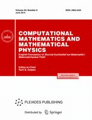
COMPUTATIONAL MATHEMATICS AND MATHEMATICAL PHYSICS
Advancing the Frontiers of Computational DiscoveryCOMPUTATIONAL MATHEMATICS AND MATHEMATICAL PHYSICS is a prestigious journal published by PLEIADES PUBLISHING INC, dedicated to advancing the fields of computational mathematics and mathematical physics. With an ISSN of 0965-5425 and an E-ISSN of 1555-6662, the journal has established its importance within the academic community since its inception in 1985. It is classified in the third quartile (Q3) for computational mathematics in 2023, and while currently it does not offer open access options, it remains a valuable resource for researchers seeking to disseminate their findings and engage with cutting-edge developments in the field. The journal encompasses a broad spectrum of topics, including numerical analysis, applied mathematics, and the intersection of physics and computational techniques, highlighting its relevance in addressing complex problems in both theoretical and applied contexts. Scholars will find a platform that not only promotes rigorous research but also encourages collaboration and innovation within the scientific community.
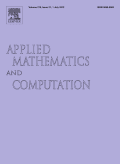
APPLIED MATHEMATICS AND COMPUTATION
Transforming Complex Problems into Mathematical SolutionsApplied Mathematics and Computation is a premier journal dedicated to the dissemination of high-quality research in the field of applied mathematics and computational methods. Published by Elsevier Science Inc, this influential journal has established itself as a key resource for researchers, professionals, and students interested in mathematical modeling, numerical analysis, computational algorithms, and their applications across various disciplines. With an impressive impact factor reflecting its scholarly credibility, it holds a distinguished position in the Q1 quartile for both applied and computational mathematics as of 2023, ranking #31/635 and #12/189 in Scopus categories respectively, thereby indicating its significant impact on the academic community. The journal encompasses a broad spectrum of topics, encouraging original research, critical reviews, and innovative methodologies that address real-world challenges. Although it currently does not offer open access options, it remains a cornerstone publication for those at the forefront of mathematical research, continuously bridging theory with practical computation since its inception in 1975.
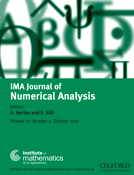
IMA JOURNAL OF NUMERICAL ANALYSIS
Connecting Researchers in the World of Numerical AnalysisIMA Journal of Numerical Analysis, published by Oxford University Press, stands as a premier platform for cutting-edge research in the field of numerical analysis, exemplifying the latest advancements and methodologies in applied, computational, and general mathematics. Since its inception in 1981, this esteemed journal has continually contributed to the academic community by publishing high-quality, peer-reviewed articles that foster innovation and collaboration among researchers. With an impressive Q1 ranking across multiple categories, including Applied Mathematics and Computational Mathematics, it plays a crucial role in disseminating knowledge, as indicated by its Scopus rankings which place it in the top 25% of journals within its field. Although the journal is not open access, it remains a vital resource for academics, professionals, and students eager to engage with the ongoing evolution of numerical methods. By serving as a conduit for novel ideas and rigorous research, the IMA Journal of Numerical Analysis ensures that its contributors and readers are at the forefront of this dynamic discipline.