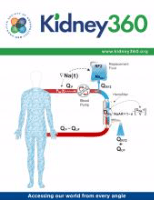
Kidney360
Scope & Guideline
Connecting disciplines to enhance kidney health.
Introduction
Aims and Scopes
- Kidney Disease Mechanisms:
Research on the underlying biological and pathological mechanisms of various kidney diseases, including glomerular disorders, tubulointerstitial diseases, and systemic conditions affecting kidney function. - Clinical Management and Therapeutics:
Studies that evaluate the effectiveness of current and emerging therapies for kidney diseases, including pharmacological interventions, dialysis techniques, and transplant outcomes. - Patient-Centered Outcomes:
Research focusing on the quality of life, patient experiences, and preferences related to kidney disease management, including the impact of treatments on patient well-being. - Health Disparities and Access to Care:
Investigations into the socio-economic and racial disparities in kidney disease prevalence, treatment access, and outcomes, aiming to inform equitable healthcare practices. - Global Perspectives in Nephrology:
A focus on international practices and challenges in nephrology, including dialysis and transplantation across different healthcare systems and demographics. - Innovations in Kidney Diagnostics:
Exploration of new biomarkers, imaging techniques, and diagnostic methods to improve early detection and monitoring of kidney diseases.
Trending and Emerging
- Impact of COVID-19 on Kidney Health:
A significant surge in research addressing the implications of COVID-19 on kidney health, including the effects of vaccination on patients with kidney disease and the management of acute kidney injury in COVID-19 cases. - Artificial Intelligence and Machine Learning:
Emerging interest in the application of AI and machine learning techniques for predicting kidney disease outcomes, optimizing treatment protocols, and enhancing diagnostic accuracy. - Patient-Centric Care Models:
A growing emphasis on understanding patient experiences and preferences in kidney disease management, with research focusing on shared decision-making, telehealth, and patient-reported outcomes. - SGLT2 Inhibitors and Cardiorenal Outcomes:
An increasing body of literature exploring the role of SGLT2 inhibitors in treating kidney disease and their cardiovascular benefits, reflecting a broader interest in integrated therapies. - Environmental Factors and Kidney Disease:
Emerging research examining the influence of environmental factors, such as air pollution and dietary impacts, on kidney health and disease progression. - Global Health Perspectives in Nephrology:
A trend towards investigating kidney health in low- and middle-income countries, emphasizing the challenges and innovations in nephrology practice globally.
Declining or Waning
- Traditional Dialysis Techniques:
There has been a noticeable shift towards exploring novel dialysis technologies and home-based therapies, leading to a decrease in studies focused solely on conventional hemodialysis methods. - Pharmacogenomics of Kidney Disease:
Though initial interest was significant, the focus on pharmacogenomics specific to nephrology has waned, with fewer studies emerging in this area compared to other rapidly advancing topics. - Basic Science Studies in Animal Models:
Research employing animal models for basic science studies of kidney diseases has decreased, possibly due to a growing emphasis on translational research and human studies. - Epidemiological Studies of Kidney Disease:
While epidemiological studies are still relevant, there appears to be a reduction in the volume of publications exploring the epidemiology of specific kidney diseases, as more attention is directed towards clinical interventions and outcomes.
Similar Journals
Nephrologie & Therapeutique
Fostering dialogue for a healthier future in nephrology.Nephrologie & Therapeutique is a distinguished peer-reviewed journal published by JOHN LIBBEY EUROTEXT LTD, dedicated to the field of nephrology. Since its inception in 2005, this journal has been pivotal in disseminating high-quality research in the areas of kidney disease, renal therapies, and nephrological advancements, and it continues to serve as an essential resource for professionals, researchers, and students alike. With an ISSN of 1769-7255 and an E-ISSN of 1872-9177, the journal is indexed in Scopus and is currently ranked in the third quartile (Q3) within the nephrology category, showing significant contributions to the discipline, despite its current ranking of 64 out of 81. Although Nephrologie & Therapeutique does not operate under an open access model, it nevertheless provides valuable insights and updates on the latest findings and practices in nephrology, making it an important platform for academic discourse in this field. The journal's commitment to advancing knowledge and fostering interdisciplinary dialogue underscores its role as a key player in shaping future research and clinical practices in nephrology.
SEMINARS IN NEPHROLOGY
Elevating the Standards of Kidney ResearchSEMINARS IN NEPHROLOGY, published by W B SAUNDERS CO-ELSEVIER INC, stands as a premier journal in the field of nephrology, with a notable impact factor in its category. With its dedicated scope spanning significant developments from 1981 to 2024, this journal provides an essential platform for researchers, clinicians, and students to explore critical advances in renal medicine. Noteworthy for its classification in the Q1 quartile of nephrology journals, SEMINARS IN NEPHROLOGY ranks #18 out of 81 in Scopus, placing it in the 78th percentile of its field, which underscores its influence and contribution to contemporary research. While it currently does not offer open access, the journal remains a vital resource for anyone seeking to deepen their understanding of nephrological advancements and complexities. With an established address located at 1600 John F. Kennedy Boulevard, Ste 1800, Philadelphia, PA 19103-2899, it continues to draw a global readership committed to the pursuit of knowledge in kidney health and disease.
SEMINARS IN DIALYSIS
Innovative solutions for the evolving landscape of nephrology.SEMINARS IN DIALYSIS is a reputable peer-reviewed journal published by WILEY, focusing on advancements in the field of nephrology, particularly in the context of dialysis. With its ISSN 0894-0959 and E-ISSN 1525-139X, this journal serves as an essential resource for researchers, healthcare professionals, and students committed to exploring innovative practices and solutions in kidney health. Since its inception in 1988 and continuing to 2024, the journal has established itself in the Q2 category of nephrology, highlighting its significance in academic discourse, as reflected by its Scopus rank of #42 out of 81 in the field. Although not openly accessible, SEMINARS IN DIALYSIS offers crucial insights into clinical practices and research findings that shape the future of dialysis treatment, making it a cornerstone publication for those dedicated to improving patient outcomes in nephrology.
PEDIATRIC NEPHROLOGY
Innovating treatments to enhance the lives of young patients.Pediatric Nephrology, published by Springer, is a leading international journal dedicated to advancing the field of pediatric nephrology and enhancing the health of children with renal disorders. With its ISSN 0931-041X and E-ISSN 1432-198X, this esteemed journal has been in circulation since 1987 and has established itself as a vital resource for researchers and clinicians alike. Featuring a robust impact factor and categorized in Q1 for Pediatrics, Perinatology and Child Health, and Q2 for Nephrology, Pediatric Nephrology stands at the forefront of medical literature, reflecting its commitment to disseminating high-quality research. The journal is particularly noted for its comprehensive scope, encompassing clinical studies, innovative treatments, and cutting-edge research findings that shape pediatric kidney care. Located in Germany and reaching a global audience, this journal not only supports the academic community but also plays a crucial role in improving health outcomes for children worldwide. Access to its valuable content is essential for any practitioner or researcher invested in the evolving landscape of pediatric medicine.
Kidney Research and Clinical Practice
Pioneering discoveries in nephrology and urology.Kidney Research and Clinical Practice is a premier open-access journal dedicated to advancing the field of nephrology and urology, published by the Korean Society of Nephrology. Established in 1982, this journal serves as a vital platform for researchers, clinicians, and students by disseminating pioneering research, reviews, and case studies that address significant challenges in kidney health and disease management. With a commendable Q1 ranking in both nephrology and urology categories in 2023, and an impressive standing in Scopus rankings (Rank #30/120 in Urology and #26/81 in Nephrology), the journal plays a critical role in shaping contemporary discussions and innovations in these fields. As an open-access publication, Kidney Research and Clinical Practice ensures wide-reaching visibility and accessibility, fostering collaboration and knowledge-sharing within the global medical community. For those looking to deepen their understanding of renal science and improve clinical practices, this journal is an invaluable resource.
Clinical and Experimental Nephrology
Advancing kidney health through rigorous research.Clinical and Experimental Nephrology, published by SPRINGER, serves as a crucial platform for researchers and practitioners in the field of nephrology. With its roots dating back to 1999, the journal has made significant strides in exploring various dimensions of kidney health, thereby enriching our understanding of nephrological diseases. Aimed at fostering interdisciplinary dialogue, it covers a broad spectrum of topics from clinical practices to experimental research, evidenced by its ranked quartiles of Q2 in Nephrology and Q3 in both Physiology and Medical Physiology within its latest evaluation. Although not open access, the journal's rigorous peer-review process ensures the publication of high-quality research, making it a valuable resource for professionals, academic institutions, and students. The journal is located in Japan, with its editorial office situated at One New York Plaza, Suite 4600, New York, NY 10004, United States, reflecting its global influence and intent to disseminate critical findings in nephrology and beyond.
CLINICAL NEPHROLOGY
Bridging science and practice in nephrology.CLINICAL NEPHROLOGY is a prestigious academic journal dedicated to advancing the field of nephrology and related areas of medicine. Published by DUSTRI-VERLAG DR KARL FEISTLE, this journal has been a critical resource for researchers and practitioners since its inception in 1973, with a commitment to disseminating high-quality, peer-reviewed articles that provide insights into clinical practices, innovative treatments, and emerging research in kidney diseases. With an ISSN of 0301-0430, CLINICAL NEPHROLOGY stands out in the medical community, achieving a commendable Q3 ranking in both general medicine and nephrology fields as of 2023. The journal's focus on both clinical application and rigorous scientific inquiry makes it an essential read for healthcare professionals and researchers looking to stay at the forefront of nephrology advancements. Although it operates under a subscription model, its broad scope promises invaluable contributions that address practical challenges and foster interdisciplinary dialogue within the healthcare landscape.
Kidney International Supplements
Exploring new frontiers in kidney disease management.Kidney International Supplements is a prestigious academic journal published by Elsevier Science Inc, specializing in the field of nephrology. With an impressive impact factor and ranked in the top percentile, it holds the esteemed position of Q1 in nephrology categories, reflecting its influential contribution to the academic community. Throughout its publication history from 2011 to 2022 and in the anticipated 2024 edition, the journal has provided a vital platform for disseminating high-quality research and insights, catering to professionals, researchers, and students dedicated to advancing kidney health. While it offers traditional access options, the journal is committed to promoting the highest standards of research integrity and innovation in nephrology. The journal plays an essential role in shaping the future of kidney disease treatment, levelling knowledge exchange across specialties, and fostering collaboration among experts in the field.
NEPHRON
Fostering a global community dedicated to kidney health advancements.NEPHRON is a premier peer-reviewed academic journal dedicated to advancing the field of nephrology and renal medicine. Published by KARGER, renowned for its commitment to quality research, NEPHRON serves as a vital resource for researchers, clinicians, and students interested in the latest findings and developments in kidney health. With an ISSN of 1660-8151 and an E-ISSN of 2235-3186, the journal ensures wide accessibility and dissemination of knowledge in the renal domain. Although specific impact metrics such as the HIndex are presently unavailable, NEPHRON's emphasis on Open Access publishing greatly enhances its visibility and accessibility, allowing groundbreaking research to reach a global audience. Through a comprehensive scope that encompasses clinical studies, basic research, and translational science, NEPHRON contributes significantly to the understanding and treatment of kidney diseases. Join the vibrant community of professionals and scholars who are shaping the future of nephrology by engaging with the wealth of knowledge presented in NEPHRON.
Nature Reviews Nephrology
Empowering professionals with essential nephrology knowledge.Nature Reviews Nephrology is a prestigious academic journal published by NATURE PORTFOLIO, focusing on the rapidly evolving field of nephrology. As a leader in its category, it holds an impressive Q1 ranking in the 2023 category for Nephrology and ranks #1 out of 81 in the Scopus metrics, reflecting its high impact and relevance within the scientific community, with a staggering 99th percentile ranking. Established in 2009, this journal provides in-depth reviews, critical analysis, and cutting-edge research updates, making it an essential resource for researchers, professionals, and students alike. With an accessible Open Access policy, it enhances the dissemination of knowledge, ensuring that vital research in renal health and disease reaches a wide audience. Situated in the United Kingdom, Nature Reviews Nephrology remains committed to advancing understanding and treatment in nephrology, emphasizing the importance of this area of study in improving patient outcomes globally.