Kiva-Journal of Southwestern Anthropology and History
Scope & Guideline
Diving Deep into Southwestern Narratives
Introduction
Aims and Scopes
- Archaeological Research:
The journal emphasizes archaeological studies, exploring ancient cultures, artifacts, and sites within the Southwestern United States, particularly focusing on indigenous populations and their histories. - Bioarchaeology and Human Remains:
A significant aspect of the journal's focus includes the bioarchaeology of care, which investigates health, trauma, and social structures through the analysis of human remains and burial practices. - Cultural and Historical Analysis:
The journal incorporates historical perspectives, examining how historical events and cultural exchanges have shaped the contemporary landscape and identities in the Southwest. - Community and Indigenous Perspectives:
There is a strong emphasis on community archaeology and indigenous perspectives, promoting engagement with local communities and recognizing their roles in historical narratives. - Environmental Archaeology:
Research often includes environmental aspects, studying how ancient populations interacted with their environments, including agricultural practices and resource management. - Material Culture Studies:
The journal features extensive studies on material culture, including ceramics, textiles, and other artifacts that provide insights into the daily lives and practices of past societies.
Trending and Emerging
- Interdisciplinary Approaches:
There is a growing trend towards interdisciplinary research that combines anthropology, archaeology, history, and environmental science, reflecting a more holistic understanding of the Southwest. - Indigenous Knowledge and Practices:
Emerging themes include the incorporation of indigenous knowledge systems and practices, particularly in research methodologies and community engagement, highlighting the importance of local perspectives. - Environmental Impact Studies:
Research focusing on the environmental impacts of ancient populations, including climate change and resource management, has gained traction, reflecting current global concerns about sustainability. - Technological Innovations in Archaeology:
The use of advanced technologies, such as unmanned aerial systems and isotopic analysis, is on the rise, enabling more precise archaeological mapping and understanding of material culture. - Social Identity and Community Dynamics:
Recent studies increasingly explore social identity, community dynamics, and the role of gender within ancient societies, providing nuanced insights into social structures.
Declining or Waning
- Traditional Historical Narratives:
There has been a noticeable decline in papers focusing solely on traditional historical narratives without incorporating contemporary methodologies or indigenous perspectives. - Broad Overviews of Prehistoric Cultures:
Research that offers broad overviews of prehistoric cultures without specific case studies or detailed archaeological evidence has become less frequent, as there is a greater emphasis on in-depth, localized studies. - Single-Site Studies:
The trend towards multi-site and regional studies has overshadowed single-site studies, which are now less common as researchers aim for broader contextualization of findings. - Colonial Encounters without Local Context:
Papers discussing colonial encounters are increasingly required to include local indigenous perspectives and impacts, leading to a decline in more generalized colonial narratives.
Similar Journals

SOUTH AFRICAN ARCHAEOLOGICAL BULLETIN
Fostering Academic Excellence in the Study of Human History.Welcome to the SOUTH AFRICAN ARCHAEOLOGICAL BULLETIN, a premier academic journal dedicated to the dynamic field of archaeology in South Africa and beyond. Published by the SOUTH AFRICAN ARCHAEOLOGICAL SOC, this journal boasts an impressive Q1 ranking in both Archaeology (arts and humanities) and Archaeology categories as of 2023, placing it among the top tier of scientific journals in its discipline. With an extensive publication history spanning from 2002 to 2023, it serves as a crucial platform for disseminating pioneering research and scholarly discussions that illuminate the rich tapestry of South African archaeological heritage. Although it does not currently offer open access, the journal’s rigorous peer-review process, combined with its standing in the Scopus rankings—where it ranks 78 out of 413 in the arts and humanities and 75 out of 354 in social sciences—underscores its commitment to academic excellence. Researchers, professionals, and students alike will find this journal an essential resource for exploring innovative methodologies, archaeological discoveries, and theoretical advancements shaping the understanding of human history.

Conimbriga-Revista de Arqueologia
Bridging Cultures Through Innovative Archaeological ResearchConimbriga-Revista de Arqueologia is a distinguished open-access journal dedicated to the field of archaeology, published by COIMBRA UNIVERSITY PRESS. Since its inception, the journal has fostered a vibrant intellectual community focused on the exploration and dissemination of archaeological research, particularly emphasizing studies relevant to the rich historical and cultural heritage of Portugal and beyond. With its open access model established in 2014, it has become a vital resource for researchers, professionals, and students to share their findings without access barriers, encouraging collaboration and knowledge exchange. Despite the absence of specific metrics such as the HIndex and Scopus rankings, the journal is recognized for its commitment to high-quality scholarship and its role in advancing archaeological discourse. Positioned within the scholarly landscape, Conimbriga-Revista de Arqueologia serves as a crucial platform for the publication of innovative research, reviews, and critical essays, making it an essential journal for those invested in the archaeological sciences.

California Archaeology
Connecting Scholars to California's Archaeological TreasuresCalifornia Archaeology is a premier academic journal dedicated to the multifaceted study of archaeology within the context of California's rich historical and cultural landscape. Published by Routledge Journals, Taylor & Francis Ltd, this journal conveys cutting-edge research from 2009 to 2024 and is recognized for its impact in the field, with a commendable Q2 ranking in both archaeology and arts and humanities as of 2023. Scholars and practitioners are encouraged to disseminate their findings and insights through this journal, contributing to a deeper understanding of archaeological practices and interpretations in California. With access options designed to enhance the visibility of research, California Archaeology serves as an essential resource for professionals, students, and researchers devoted to advancing knowledge in archaeology, making it a cornerstone of academic discourse in the discipline.

ARCHAEOLOGY IN OCEANIA
Advancing Archaeological Insights from the PacificARCHAEOLOGY IN OCEANIA, published by Wiley, is a leading journal that delves into the rich and diverse archaeological landscape of the Pacific region. With a commitment to advancing knowledge in anthropology and archaeology, this esteemed publication has been pivotal in shaping scholarly discussions since its inception in 1966. Spanning generations of research, it has seen converged years of publication from 1966 to 1980 and from 2002 to 2024. With an impressive Scopus ranking placing it in the top quartiles across multiple categories - including Q2 in Anthropology and Q1 in Archeology (arts and humanities) - the journal distinguishes itself as a must-read for researchers, professionals, and students alike. Although it operates on a subscription model, its rigorous peer-reviewed articles and comprehensive studies contribute significantly to understanding the past of Oceania, making it an essential resource for those invested in this vibrant field of study.
Journal of the British Archaeological Association
Fostering Dialogue on the Treasures of British HistoryJournal of the British Archaeological Association is a prestigious publication in the field of archaeology, dedicated to fostering scholarly dialogue and advancing research related to Britain's rich archaeological heritage. Published by Routledge Journals, Taylor & Francis Ltd, this journal serves as a vital platform for researchers, professionals, and students alike, offering insights into archaeological practices and findings from the United Kingdom and beyond. With an ISSN of 0068-1288 and an E-ISSN of 1747-6704, the journal has a notable history spanning from 1980 to the present, contributing significantly to the academic community. Currently categorized within Quartile 4 for archaeology and visual arts, it serves as a resource for emerging researchers while promoting innovative perspectives in archaeology. Although it operates under a traditional subscription access model, the quality and depth of content delve into significant archaeological discussions, making it an essential read for those seeking to broaden their understanding of archaeological methodologies and theories. The association's commitment to preserving and interpreting archaeological data ensures that the Journal of the British Archaeological Association remains an indispensable resource for anyone passionate about uncovering the past.
Archaeological Journal
Innovative Discoveries, Timeless NarrativesArchaeological Journal, published by Taylor & Francis Ltd, stands as a leading voice in the field of archaeology, with a remarkable distinction in the Q1 category for both arts and humanities as well as conservation, underscoring its critical role in advancing scholarly dialogue and research. With an ISSN of 0066-5983 and E-ISSN of 2373-2288, this journal provides a platform for innovative research from 1977, now offering insights up to 2024. The United Kingdom-based journal is highly regarded, being within the top 81st percentile in archaeology and conservation according to Scopus rankings. Essential for researchers, professionals, and students, the journal's content spans rigorous archaeological studies, theoretical advancements, and discussions on conservation practices, ultimately aimed at fostering a deeper understanding of humanity's past. Notably, with no open access option, it maintains a traditional publishing approach, thereby ensuring curated and high-quality contributions to the academic community.

Stratum Plus
Uncovering the Past, Shaping the FutureStratum Plus, published by HIGH ANTHROPOLOGICAL SCH UNIV, is a distinguished academic journal based in Moldova that focuses on the fields of Anthropology, Archeology, and History. With an impressive impact factor reflecting its stature—ranked in the Q2 category for both Anthropology and Archeology, and Q1 for Archeology in the arts and humanities—this journal is a vital resource for scholars, professionals, and students alike. The journal's comprehensive scope encompasses a wide array of interdisciplinary studies, making it a beacon for innovative research and critical discourse within these disciplines. Since its inception in 2014, Stratum Plus has strived to foster academic excellence and knowledge dissemination, thus playing a crucial role in shaping contemporary anthropological and archaeological thought. While currently not available as Open Access, the journal maintains a strong online presence, with access options available through institutional subscriptions. Located at ZIMBRULUI 10A ST, KISHINEV MD-2024, MOLDOVA, Stratum Plus invites contributors and readers to engage with cutting-edge research that continues to enrich the global academic community.
LATIN AMERICAN ANTIQUITY
Celebrating the Legacy of Pre-Columbian CulturesLATIN AMERICAN ANTIQUITY is a prestigious journal published by Cambridge University Press, focusing on the archaeology and history of Latin America. With an impressive impact factor reflecting its critical role in the academic community, this journal exemplifies excellence in research, landing in Q1 across multiple categories, including Archaeology and History, as per the 2023 category quartiles. The journal's scope covers a broad range of topics related to pre-Columbian cultures, ancient civilizations, and historical developments, making it essential reading for researchers, professionals, and students keen on exploring the rich tapestry of Latin American heritage. Although it is not an open-access publication, LATIN AMERICAN ANTIQUITY remains a vital resource for those dedicated to advancing knowledge in this dynamic field. With its commitment to scholarly rigor and a strong ranking in Scopus, it serves as a cornerstone for academic dialogue and investigation.

Revista de Arqueologia Historica Argentina y Latinoamericana
Unearthing the Past, Shaping the Future of ArchaeologyRevista de Arqueologia Historica Argentina y Latinoamericana is a vital scholarly journal dedicated to the field of archaeology, with a particular focus on the historical dimensions of Argentina and Latin America. Published by the Assoc Professional Archaeologists Argentine Republic, this open-access journal has been enriching the archaeological discourse since 2007, making its valuable content freely accessible to researchers, professionals, and students around the globe. With an ISSN of 1851-3190 and an E-ISSN of 2344-9918, the journal aims to foster a deeper understanding of the archaeological heritage of the region by publishing innovative research articles, critical reviews, and methodological advancements in the study of historical archaeology. Positioned as a prominent platform for scholarship, it plays a crucial role in advancing archaeological knowledge while promoting interdisciplinary approaches within the field.
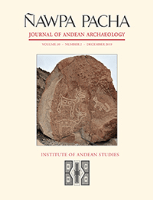
Nawpa Pacha
Bridging Disciplines for a Deeper Understanding of Heritage.Nawpa Pacha, a prestigious journal published by Taylor & Francis Ltd, stands as a significant platform for advancing research in Archaeology within the fields of Arts and Humanities. Since its inception in 2019, it has rapidly established itself with an impressive impact, evidenced by its categorization in the Q1 quartile for Archaeology and its significant rankings—placing it at Rank #88 in the Arts and Humanities category and Rank #86 in the Social Sciences. Published in the United Kingdom, the journal aims to foster interdisciplinary dialogue and promote scholarly work that contributes to the understanding of archaeological heritage and practices. Researchers, professionals, and students alike will find this journal indispensable for disseminating innovative methodologies, theoretical frameworks, and case studies that push the boundaries of archaeological inquiry. Whether seeking to explore historical narratives or contemporary archaeological challenges, Nawpa Pacha serves as a vital resource in the ever-evolving landscape of archaeological research.