
Konstantinove Listy-Constantines Letters
metrics 2024
Elevating the study of history, philosophy, and religion to new heights.
Introduction
Konstantinove Listy - Constantines Letters is a premier academic journal published by the Constantine Philosopher University in Nitra, Slovakia. With a focus on the interdisciplinary exploration of historical, philosophical, and religious studies, this journal has established itself as a significant platform for scholarly discourse since its inception in 2015. The journal's impressive rankings—Q1 in History and Religious Studies, along with Q2 in Philosophy—demonstrate its commitment to high-quality research, concurrent with its strong performance in Scopus rankings, placing it in the 80th percentile for both Religious Studies and History disciplines. As an integral part of the academic landscape, Konstantinove Listy invites researchers, professionals, and students alike to contribute to its mission of advancing knowledge and understanding in these vital fields. While the journal operates under traditional publishing, it is recognized for its accessibility and contribution to fostering a vibrant scholarly community.
Metrics 2024
 0.250.700.409
Metrics History
Rank 2024
Scopus
JCI (Web Of Science)
Quartile History
Similar Journals
JOURNAL OF ECCLESIASTICAL HISTORY
Bridging Past and Present in Ecclesiastical DiscourseJOURNAL OF ECCLESIASTICAL HISTORY, published by Cambridge University Press, serves as a vital platform for scholarly inquiry into the historical dimensions of ecclesiastical studies, examining the intersections of religion, society, and culture from 1950 to present and projected through 2024. With an ISSN of 0022-0469 and E-ISSN 1469-7637, this journal is recognized within the academic community, categorized in the Q3 quartile in both History and Religious Studies for 2023. Although it does not offer open access, the journal's commitment to rigorous peer-reviewed research and its publication of original articles contribute significantly to the understanding of ecclesiastical history. Scholars and students alike can benefit from its rich discussions and analyses, reinforcing the journal's importance in fostering relevant debates in the fields of History and Religious Studies. Located at Edinburgh Building, Shaftesbury Rd, CB2 8RU Cambridge, England, the journal continues to attract contributions from leading experts, ensuring its role in disseminating high-quality research.

Journal for the Study of Christian Culture
Unveiling the Rich Tapestry of Christian InfluenceJournal for the Study of Christian Culture, published by the Institute for the Study of Christian Culture at Renmin University of China, serves as a critical platform for academic discourse in the interdisciplinary field of Christian studies. With an ISSN of 2071-9957, this journal aims to illuminate the dynamic interplay between Christian thought and cultural contexts, fostering a deeper understanding of how faith influences and is influenced by society. Although currently not Open Access, the journal attracts a diverse readership, including researchers, students, and professionals devoted to exploring theological, historical, and sociocultural dimensions of Christianity. The journal encourages submissions that contribute original research and significant insights, securing its position as an essential resource for those engaged in the study of Christian culture globally. The journal's commitment to excellence and scholarly rigor positions it as a key player in advancing knowledge in this vital field.
JOURNAL OF NEAR EASTERN STUDIES
Advancing Knowledge in Archaeology and Cultural StudiesJournal of Near Eastern Studies (ISSN: 0022-2968; E-ISSN: 1545-6978), published by University of Chicago Press, stands as a cornerstone of academic discourse in the fields of Archaeology, Cultural Studies, and Linguistics and Language. With a prestigious track record that has evolved since its inception and spanning converged publication years from 1968 to 2024, this journal holds an impressive Q1 ranking in Cultural Studies and Linguistics and Language, and a solid Q2 ranking in Archaeology and Arts and Humanities as of 2023. Despite not offering open access, it is widely regarded for its rigorous peer-reviewed articles that contribute significantly to the understanding of Near Eastern history, culture, and languages. The journal's sustained recognition in Scopus rankings, including a notable 30th rank out of 173 in Arts and Humanities, ensures it remains an essential resource for researchers, academics, and students dedicated to exploring the rich tapestry of the Near East. With its base in Chicago, USA, the Journal of Near Eastern Studies continues to foster interdisciplinary collaboration and scholarly excellence.
Scando-Slavica
Unveiling the Complexities of Cultural ExchangesScando-Slavica is a renowned academic journal published by ROUTLEDGE JOURNALS, TAYLOR & FRANCIS LTD, specializing in the rich interplay of Scandinavian and Slavic studies. With its ISSN 0080-6765 and E-ISSN 1600-082X, the journal has been a critical resource for scholars since its inception in 1954, covering a wide range of disciplines including archaeology, cultural studies, history, linguistics, and literature. As of 2023, it has consistently ranked in the third quartile across various categories, indicating its influential role in disseminating innovative research within the arts and humanities. With a focus on interdisciplinary dialogue, Scando-Slavica aims to foster a deeper understanding of cultural exchanges and linguistic connections, making it an essential read for researchers, professionals, and students interested in exploring the complexities of Nordic and Slavic interactions. While currently not an open access journal, its contributions have garnered substantial citations, bolstering its academic impact and relevance in a diverse scholarly landscape.
SLAVIC REVIEW
Advancing Knowledge in Slavic Cultural and Social Dimensions.SLAVIC REVIEW, published by Cambridge University Press, is a prominent academic journal that delves into the rich tapestry of Slavic studies, focusing on the cultural, historical, and social dimensions of Slavic regions. With an ISSN of 0037-6779 and an E-ISSN of 2325-7784, this journal holds a significant position within the academic community, ranking in the Q2 category of Arts and Humanities (miscellaneous) and achieving a Q1 rating in Cultural Studies as of 2023. Notably, the journal has consistent relevance in the field, as evidenced by its Scopus rankings—Rank #260 in Cultural Studies and Rank #204 in Miscellaneous Arts and Humanities. Since its converged years starting from 1966 up to the present, SLAVIC REVIEW has been an essential resource for researchers, professionals, and students aiming to deepen their understanding of Slavic cultures. While it operates on a traditional subscription model and does not provide open access, the journal remains a vital platform for pioneering research and critical discourse in Slavic studies.

Studia Ceranea
Unlocking Knowledge in Cultural and Religious StudiesStudia Ceranea is an esteemed academic journal published by WYDAWNICTWO UNIWERSYTETU LODZKIEGO, dedicated to advancing research in the fields of Cultural Studies, History, and Religious Studies. With an ISSN of 2084-140X and an E-ISSN matching, this journal has been a pivotal platform for scholarly dialogue since its establishment, now enjoying an Open Access format since 2016, which fosters greater accessibility of its articles. Based in Poland, Studia Ceranea has witnessed significant convergence, with publication efforts spanning from 2011 to 2024. The journal's current standing is reflected in its quartile rankings, placing it in the Q4 category for 2023 across Cultural Studies, History, and Religious Studies. Additionally, it sits at rank #1124 in History and #414 in Religious Studies within Scopus ranks, evidencing its role in the wider academic landscape. Researchers, professionals, and students alike are encouraged to engage with this journal as it continues to explore and illuminate critical themes within the humanities and social sciences.

Byzantinoslavica-Revue Internationale des Etudes Byzantines
Unveiling the Rich Tapestry of Byzantine InfluenceByzantinoslavica-Revue Internationale des Etudes Byzantines is a leading academic journal published by the SLOVANSKY USTAV AKAD CESKE REPUBLIKY, dedicated to the rich field of Byzantine and Slavic studies. Established in 1972, this esteemed publication has become a valuable resource for researchers, professionals, and students alike, providing insightful articles that delve into various aspects of cultural, historical, linguistic, and literary studies concerning the Byzantine heritage and its impact on Slavic cultures. With its current Scopus rankings, including a Q4 categorization in Cultural Studies, History, and Linguistics and Language, the journal reflects its steadfast commitment to advancing research in these important fields, despite its relatively modest impact factors. Located in the heart of Prague, this journal fosters an academic environment that encourages interdisciplinary dialogue and collaboration. While it operates without open access options, it continues to serve as a crucial platform for scholarly exchange and the dissemination of knowledge within the global academic community.

Studia Theologica-Czech Republic
Exploring the Depths of Theology and FaithStudia Theologica-Czech Republic is a leading academic journal dedicated to the field of religious studies, published by UNIV PALACKEHO OLOMOUCI. With an impressive Q1 ranking in 2023, it showcases rigorous and innovative research in theology and religious studies. Since its inception, this Open Access journal has been committed to disseminating scholarly articles that explore a broad spectrum of religious phenomena, interpretations, and historical contexts, making it an invaluable resource for researchers, professionals, and students alike. The journal has transitioned from its initial print format to an Open Access model since 2015, allowing for wider accessibility and engagement within the academic community. Operating from Olomouc, Czech Republic, Studia Theologica not only contributes significantly to global discourse in the humanities but also provides a vital platform for interdisciplinary dialogue among theological scholars.
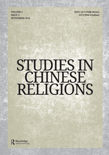
Studies in Chinese Religions
Advancing Understanding of Ancient Beliefs and PracticesStudies in Chinese Religions is a prestigious academic journal published by Routledge Journals, Taylor & Francis Ltd, focusing on a diverse range of topics within the field of religious studies, particularly those related to Chinese religions. With an ISSN of 2372-9988 and an E-ISSN of 2372-9996, this journal serves as an essential platform for researchers, professionals, and students seeking to explore the intricate landscape of religious practices, beliefs, and historical developments in China. Since its inception in 2015, Studies in Chinese Religions has contributed significantly to advancing scholarly discourse, evidenced by its positioning in the Q2 category for Religious Studies and its Scopus rank of 442/644 as of 2023. The journal offers in-depth articles, reviews, and original research that illuminate the complexities of Chinese religious traditions and their global implications. Although it does not currently offer open access options, it remains a vital resource for academic advancement in understanding the socio-cultural dimensions of religion in a rapidly changing world. Join a vibrant community of scholars dedicated to unearthing the rich tapestry of Chinese religious practices by submitting your research and engaging with cutting-edge scholarship.

Studia Slavica et Balcanica Petropolitana
Unveiling Historical Narratives of the Slavic and Balkan RegionsStudia Slavica et Balcanica Petropolitana is an esteemed open-access journal, published by the Department of History at St. Petersburg State University, focusing on interdisciplinary research within the fields of Slavic and Balkan studies. Since its inception in 2007, the journal has made significant contributions to the academic discourse surrounding historical and contemporary issues pertinent to these regions, thus achieving a strong reputation among scholars. As of 2023, it is categorized in the Q2 quartile for History, ranked 873 out of 1760 in the arts and humanities segment, highlighting its impactful scholarly contributions. The journal operates out of Russia, with its editorial office located at Mendeleevskaya Liniya in St. Petersburg. Its accessible publishing model promotes widespread dissemination of knowledge, making it an invaluable resource for researchers, professionals, and students who aim to deepen their understanding of Slavic and Balkan societies from both historical and modern perspectives.