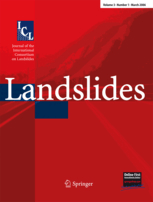
Landslides
metrics 2024
Advancing the Frontiers of Geotechnical Knowledge
Introduction
Landslides, published by Springer Heidelberg, is a premier journal in the field of Geotechnical Engineering and Engineering Geology, distinguished by its impressive Q1 quartile ranking in 2023. With its focus on advancing knowledge related to landslides—covering origins, mechanics, risk assessment, and mitigation strategies—this journal serves as an essential resource for researchers, professionals, and students alike. Spanning from 2004 to 2024, it emphasizes interdisciplinary approaches, employing cutting-edge research and methodologies to address the complexities of landslide phenomena. The journal's exceptional standing is further evidenced by its Scopus rank of 4 out of 229 in its category, placing it in the 98th percentile of its field. Although it is not an open-access publication, Landslides provides invaluable insights and significant contributions to the global understanding of geotechnical challenges, making it a vital platform for disseminating research and fostering academic discourse in this critical area.
Metrics 2024
 2.025.806.90113
Metrics History
Rank 2024
Scopus
IF (Web Of Science)
JCI (Web Of Science)
Quartile History
Similar Journals
Seismic Instruments
Innovating seismic solutions for engineering and environmental challenges.Seismic Instruments is a prestigious academic journal dedicated to advancing the field of geophysical instrumentation and its applications in seismic studies. Published by PLEIADES PUBLISHING INC, this journal serves as a crucial resource for researchers, professionals, and students interested in the development, evaluation, and deployment of seismic instrumentation technologies. Although it does not currently offer open access, it provides a comprehensive platform for high-quality research articles, reviews, and technical notes that explore the latest innovations and findings in seismic studies. With an ISSN of 0747-9239 and an E-ISSN of 1934-7871, Seismic Instruments aims to foster collaboration and knowledge exchange among the global academic community, emphasizing the importance of instrumentation in understanding seismic activity and its implications for engineering, environmental science, and hazard mitigation.
PHYSICS AND CHEMISTRY OF THE EARTH
Exploring the Dynamics of Geophysical and Geochemical InteractionsThe Physics and Chemistry of the Earth is a premier interdisciplinary journal published by Pergamon-Elsevier Science Ltd, dedicated to advancing the understanding of Earth sciences through the integration of geophysical and geochemical perspectives. With an ISSN of 1474-7065 and an E-ISSN of 1873-5193, the journal serves as a critical platform for researchers and professionals to disseminate key findings and innovative methodologies in the realms of geophysics and petrology. As of 2023, it proudly holds a Q2 ranking in both Geochemistry and Petrology and Geophysics, reflecting its robust impact in the scientific community, with Scopus rankings that position it in the top 20% and 32% of its respective categories. Notably, the journal is available in an open-access format, allowing for greater dissemination and accessibility of research contributions. With a publication history spanning from 1992 to 2024, Physics and Chemistry of the Earth stands as a vital resource for ongoing research and discovery in the Earth sciences, making it an essential read for academics and practitioners alike.

Riset Geologi dan Pertambangan
Connecting researchers to drive advancements in earth sciences.Riset Geologi dan Pertambangan is an esteemed open-access journal published by the Indonesian Institute of Sciences, R&D Centre Biology, dedicated to advancing research in the fields of geology and mining. With an ISSN of 0125-9849 and an E-ISSN of 2354-6638, this journal has been fostering the dissemination of knowledge since 2005, ensuring that critical findings are accessible to a global audience. The journal serves as an important platform for researchers, professionals, and students to share innovative research, methodologies, and case studies that contribute to sustainable mining practices and geological advancements. By promoting interdisciplinary collaboration and the latest developments in the field, Riset Geologi dan Pertambangan plays a vital role in shaping the future of geology and mining research, particularly within the Southeast Asian context.

Geofizika
Empowering Geophysics Through Open KnowledgeGeofizika, an esteemed journal published by the Andrija Mohorovičić Geophysical Institute at the University of Zagreb, presents a significant platform for research in the fields of geophysics and Earth sciences. With an Open Access model established since 1984, this journal ensures that scientific knowledge is accessible to a broad audience, encouraging collaborations and the free exchange of ideas. Geofizika has steadily evolved through its converging years from 1989 to 1999 and has been active from 2003 to the present, reflecting its commitment to advancing geophysical research. The journal has been recognized for its contributions to Earth and Planetary Sciences and has acquired respectable ranks in various categories; notably, it holds a Q4 status in Geophysics as of 2023. Researchers, professionals, and students will find Geofizika a valuable resource for the latest discoveries and methodologies in geophysics, supporting the academic community in expanding the frontiers of knowledge in these vital scientific domains.
SOIL DYNAMICS AND EARTHQUAKE ENGINEERING
Innovating Solutions for Earthquake Challenges through Soil ScienceSOIL DYNAMICS AND EARTHQUAKE ENGINEERING is a premier academic journal published by ELSEVIER SCI LTD, focusing on the intersection of civil and structural engineering, geotechnical engineering, and soil science. Since its inception in 1986, the journal has established itself as a critical resource for advancing knowledge in these fields over nearly four decades, with a remarkable Q1 ranking in 2023 across multiple categories, including Civil and Structural Engineering, Geotechnical Engineering, and Soil Science. The journal’s impactful research, reflected in its high Scopus ranks, serves as a vital reference for both professionals and academics dedicated to understanding soil dynamics and mitigating earthquake hazards. Although it currently does not offer open access, the journal's rigorous peer-review process ensures that published articles provide substantial contributions to the understanding of soil behavior under seismic conditions. Whether you are a researcher, a practitioner, or a student, SOIL DYNAMICS AND EARTHQUAKE ENGINEERING offers essential insights and innovative methodologies pivotal for advancing your work in soil dynamics and earthquake engineering.

Ecological Indicators
Empowering research for informed environmental decision-making.Ecological Indicators, published by Elsevier, is a prestigious journal dedicated to advancing the fields of ecology and environmental science. With an impressive impact factor and ranked in the Q1 quartile for both Ecology and Decision Sciences categories, the journal serves as a vital resource for researchers and professionals aiming to apply ecological knowledge to real-world problems. The journal covers a broad scope of topics within ecological indicators, aiming to provide comprehensive insights into biodiversity, ecosystem health, and sustainability metrics. Founded in 2001 and continuing through 2024, Ecological Indicators has established itself as a leader in disseminating significant research and innovative findings. The journal's standing is reflected in its remarkable Scopus ranks, placing it among the top percentile in its respective categories. Authors are encouraged to submit their work to share vital findings with an engaged audience of researchers, professionals, and dedicated students, ensuring the continued relevance and impact of ecological research on global environmental policies and practices.

Italian Geotechnical Journal-Rivista Italiana di Geotecnica
Innovative Insights for the Future of Geotechnical Engineering.Italian Geotechnical Journal-Rivista Italiana di Geotecnica, published by PATRON EDITORE S R L, is a rigorously peer-reviewed journal dedicated to advancing the field of geotechnical engineering and engineering geology. With a history dating back to 1976 and an active publication span from 2011 to 2024, the journal provides a vital platform for researchers and practitioners to disseminate innovative findings and methodologies in the field. Although it currently holds a Q4 category ranking in Geotechnical Engineering and Engineering Geology, the journal is committed to maintaining high academic standards and quality of publication. Its Scopus ranking places it within the 29th percentile of Earth and Planetary Sciences, indicating its significance among scholarly publications. The Italian Geotechnical Journal serves not only as a resource for academic inquiry but also as an essential tool for professionals seeking to stay abreast of the latest developments and applications in geotechnical research. This journal is essential for students and researchers aiming to deepen their knowledge and contribute to ongoing discourse in geotechnics.
Quarterly Journal of Engineering Geology and Hydrogeology
Uncovering Insights for Sustainable Engineering Practices.The Quarterly Journal of Engineering Geology and Hydrogeology, published by GEOLOGICAL SOC PUBL HOUSE, stands as a crucial resource in the realms of Earth and Planetary Sciences, Geology, and Geotechnical Engineering. With an ISSN of 1470-9236 and its E-ISSN 2041-4803, this esteemed journal has been committed to disseminating high-quality research from its inception in 2001 through to 2024. Although it operates under traditional subscription access, the journal remains dedicated to providing a platform for rigorous scientific discourse and knowledge exchange. In 2023, it was recognized with a Q3 category rank across multiple disciplines, reflecting its growing influence and solid standing; it ranks #105 out of 321 in Earth and Planetary Sciences: Geology, and #97 out of 229 in Geotechnical Engineering and Engineering Geology. The journal aims to bridge the gap between theoretical research and practical applications, making it an invaluable tool for researchers, professionals, and students eager to advance their knowledge in the interrelated fields of engineering geology and hydrogeology.

Geoenvironmental Disasters
Uncovering insights into geoenvironmental hazards.Geoenvironmental Disasters, published by SPRINGERNATURE, is a leading open-access journal dedicated to advancing the interdisciplinary fields of environmental science, geography, and geotechnical engineering. Since its inception in 2014, the journal has made significant strides in disseminating high-quality research that addresses the challenges posed by geoenvironmental hazards and their impacts on society. With an impressive Q1 ranking across multiple categories, including Environmental Science (miscellaneous) and Geography, Planning and Development, it occupies a vital niche within the academic community. The journal’s rigorous peer-review process ensures that only the most insightful contributions are made available to a global audience. Researchers, professionals, and students are encouraged to engage with the content, which covers a wide range of topics, including disaster management, risk assessment, and stakeholder engagement in policy-making. This commitment to open-access accessibility since 2014 further enhances its reach and impact, providing a critical platform for advancing knowledge and innovation in managing geoenvironmental disasters.
Advances in Meteorology
Navigating the Future of Meteorological ScienceAdvances in Meteorology is a renowned open-access journal published by Hindawi Ltd, dedicated to the dynamic field of meteorology and related atmospheric sciences. Since its inception in 2009, this journal has served as a vital platform for researchers and professionals, facilitating the dissemination of cutting-edge research that advances our understanding of atmospheric phenomena. With a commendable impact in the realms of Geophysics, Atmospheric Science, and Environmental Pollution, it boasts impressive Scopus rankings—34th percentile in Geophysics, 54th in Atmospheric Science, and 61st in Environmental Pollution—highlighting its significance and relevance in these critical areas. The journal's commitment to open access ensures that vital research reaches a wide audience, fostering collaboration and innovation within the scientific community. Positioned with a mix of rigorous research and interdisciplinary approaches, Advances in Meteorology continues to shape the landscape of atmospheric science research from its base in Egypt, addressing pressing global challenges related to climate and environment.