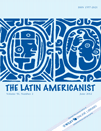
Latin Americanist
metrics 2024
Unveiling the Complexities of Latin American Transformations
Introduction
Latin Americanist is a distinguished academic journal published by the University of North Carolina Press, dedicated to advancing scholarly discourse on issues pertinent to Latin America and its diasporas. With an ISSN of 1557-2021 and an E-ISSN of 1557-203X, this publication seeks to illuminate the complexities of cultural, social, and political dynamics within the region through rigorous research and critical analysis. Although it currently operates under a subscription model, the journal remains an essential resource for researchers, students, and professionals eager to engage with contemporary Latin American studies. The journal's commitment to quality scholarship fosters a vibrant community aimed at deepening understanding of Latin American identities and transformations. Its contributions make it a vital platform for innovative ideas and discussions that shape the understanding of this diverse and influential region.
Metrics 2024
 -0.200.30-
Metrics History
Rank 2024
JCI (Web Of Science)
Quartile History
Similar Journals

LATIN AMERICAN POLITICS AND SOCIETY
Decoding the Socio-Political Landscape of Latin AmericaLatin American Politics and Society, published by Cambridge University Press, is a leading academic journal dedicated to the interdisciplinary study of political and social dynamics in Latin America. With an impressive impact factor and distinguished rankings in several categories—specifically Q1 in Geography, Planning and Development; Political Science and International Relations; and Sociology and Political Science—this journal serves as a crucial resource for scholars and practitioners in these fields. With ISSN 1531-426X and E-ISSN 1548-2456, it provides a platform for innovative research that reflects the complexity of Latin American societies. This journal not only fosters scholarly discourse but also ensures broad accessibility through its open access options, making cutting-edge research available to a wider audience. Engaging with topics from governance, policy analysis, and community studies to social movements, Latin American Politics and Society is essential for those seeking to understand the socio-political landscape of this pivotal region from 2001 to 2024 and beyond.

Universitas-Revista de Ciencias Sociales y Humanas
Unlocking Insights in Social Sciences and HumanitiesUniversitas-Revista de Ciencias Sociales y Humanas is a distinguished academic journal published by the Salesian Polytechnic University of Ecuador, aimed at advancing research and knowledge in the fields of social sciences and humanities. With an ISSN of 1390-3837 and an E-ISSN of 1390-8634, this journal has embraced the Open Access model since 2002, ensuring that its valuable content is freely accessible to researchers, practitioners, and students globally. Situated in Cuenca, Ecuador, this journal serves as a vital resource for exploring interdisciplinary approaches and contemporary issues in social sciences, offering a platform for rigorous scholarly discourse and innovative research. Given its commitment to quality and accessibility, Universitas plays a crucial role in fostering academic collaboration and advancing the frontiers of knowledge in Latin America and beyond.
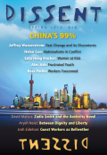
DISSENT
Uncovering the complexities of contemporary social movements.DISSENT is a prominent journal published by the Foundation Study Independent Social Ideas, Inc, dedicated to the examination and critique of various social ideas and movements. Since its inception in 1976, DISSENT has established itself as a pivotal platform for scholars and practitioners in the fields of sociology and political science, although it currently resides in the Q4 quartile for both categories according to the 2023 rankings. With its ISSN 0012-3846 and E-ISSN 1946-0910, DISSENT engages with complex societal issues, providing invaluable insights that contribute to the discourse surrounding social justice, inequality, and ideological critique. While the journal does not offer open access, it remains relevant for academic institutions and professionals seeking to deepen their understanding of contemporary social challenges. Its evolving scope and emphasis on independent thought make it an essential resource for researchers and students alike, fostering an environment of critical analysis and dialogue.

Revista Mexicana de Ciencias Politicas y Sociales
Cultivating Inclusive Dialogue for a Better TomorrowRevista Mexicana de Ciencias Politicas y Sociales, published by the esteemed Universidad Nacional Autónoma de México (UNAM), serves as a pivotal platform for scholarly discourse in the realms of political science and social studies. With an ISSN of 0185-1918 and offering open access since 1990, this journal endeavors to make cutting-edge research available to a global audience, particularly enhancing accessibility for researchers, students, and professionals in Mexico and beyond. Although the journal witnessed a convergence in coverage years from 1949 to 2020 and has been ranked in notable categories such as Urban Studies and Sociology & Political Science in Scopus, it remains committed to fostering innovative discussions addressing pressing social and political issues. This effort is reflected in its current Scopus ranking, which places it within the 39th and 32nd percentiles of its respective categories. The journal's focus on inclusivity and scholarly rigor makes it an essential resource for those seeking to advance their understanding of political and social dynamics in contemporary society.

Analecta Politica
Innovating research to illuminate contemporary politics.Analecta Politica is a distinguished academic journal dedicated to the exploration of political science in a global context, published by the Universidad Pontificia Bolivariana. Since becoming an Open Access publication in 2011, it has fostered a platform for scholars, researchers, and practitioners to disseminate their work freely, thereby enhancing the accessibility and impact of research in the field. With a commitment to advancing knowledge in areas such as governance, policy analysis, and international relations, Analecta Politica serves as an essential resource for understanding contemporary political dynamics. The journal encourages contributions that stimulate critical dialogue and promote innovative research, making it a vital tool for those engaged in political studies and related disciplines. With its continuous development and dedication to quality scholarship, Analecta Politica stands out as a key player in the advancement of political science research in Latin America and beyond.

Revista Rupturas
Fostering Collaboration in Evolving Socio-Political Landscapes.Revista Rupturas is a pioneering academic journal in the field of social sciences, published by UNIV ESTATAL DISTANCIA in Costa Rica. With its Open Access model established in 2011, the journal aims to create a platform for the dissemination of innovative research and critical discourse within the rapidly evolving socio-political landscape of Latin America and beyond. Through its commitment to accessibility, Revista Rupturas enables researchers, professionals, and students to engage with cutting-edge findings and theoretical advancements. Although specific metrics such as the HIndex and Scopus rankings are currently unlisted, the journal aspires to contribute significantly to scholarly discussions, foster collaboration among scholars, and serve as a valuable resource for those interested in contemporary social issues.

Temas y Debates
Fostering Insightful Debates, Bridging Knowledge GapsTemas y Debates is a distinguished academic journal dedicated to the exploration of political science and international relations, published by the esteemed Universidad Nacional de Rosario, Faculty of Political Science and International Relations. With its commitment to open access since 2007, this journal strives to disseminate valuable knowledge widely, ensuring that research is accessible to all, fostering a culture of transparency and collaboration within the academic community. Aiming to contribute significantly to the dialogue in political and social issues, Temas y Debates provides a platform for scholarly articles that delve into contemporary debates and analyses relevant to Latin America and beyond. Despite the absence of a specific HIndex, its dedication to high-quality research makes it a vital resource for researchers, professionals, and students alike, who are eager to stay informed about the latest trends and discussions in the field.
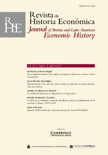
Revista de Historia Economica
Unraveling the Threads of Economic NarrativesRevista de Historia Economica, published by Cambridge University Press, is a distinguished peer-reviewed journal that serves as a vital platform for interdisciplinary scholarship in the fields of Economics and History. With an impressive impact factor and ranked within the top quartiles in its respective categories—Q2 in Economics and Econometrics and Q1 in History—this journal stands as a significant resource for researchers and professionals seeking to explore the intricate relationships between economic phenomena and historical contexts. Covering a timeline of research from 1983 to 2024, it addresses both contemporary and historical economic issues, making it an essential read for students and scholars alike. The journal, although not Open Access, maintains rigorous standards of academic excellence and inclusivity, aiming to enhance the understanding of economic history through comprehensive analyses and innovative perspectives. Its esteemed editorial board and qualitative publications ensure that Revista de Historia Economica is at the forefront of economic historiography, attracting a wide readership base in the United Kingdom and beyond.

Foro Internacional
Exploring International Dynamics Through Scholarly InsightForo Internacional is a distinguished academic journal published by the COLEGIO MEXICO, A C, DEPT PUBLICACIONES. Since its inception in 1960, this Open Access journal has served as a vital platform for scholarly discourse in the field of international studies, fostering critical analysis and understanding of global dynamics. With a commitment to disseminating high-quality research, Foro Internacional provides researchers, professionals, and students with access to a wealth of knowledge that addresses contemporary issues from a Latin American perspective. While specific impact factors and Scopus rankings are yet to be disclosed, the journal's legacy and ongoing contributions to academia underscore its relevance and importance. The journal is based in Mexico City, enriching the academic landscape and promoting cross-border collaboration in scholarly activities.

Izquierdas
Cultivating Critical Insights in History and PoliticsIzquierdas is a distinguished open access journal published by ARIADNA EDICIONES in partnership with Saint Petersburg State University, focusing on the dynamic fields of History, Political Science, and Sociology. Established in Chile and operating since 2008 as an open access platform, the journal fosters academic discourse and research dissemination for scholars and practitioners alike. With a commendable Q2 ranking in History and Q3 status in both Political Science and Sociology as of 2023, Izquierdas occupies a significant position within its categories, being recognized for its contributions to advancing understanding of leftist political thought and social dynamics. Its Scopus rankings further underscore its valuable contribution to the arts and humanities and social sciences, making it an essential resource for anyone engaged in contemporary social and political issues. The journal continues to evolve and adapt, set to converge from 2013 to 2024, ensuring it remains at the forefront of scholarly communication in its field. For researchers, professionals, and students passionate about these critical domains, Izquierdas represents a vital repository of innovative ideas and peer-reviewed research.