
LAW & SOCIETY REVIEW
Scope & Guideline
Advancing Knowledge at the Intersection of Justice and Community
Introduction
Aims and Scopes
- Interdisciplinary Legal Studies:
The journal focuses on integrating insights from sociology, political science, anthropology, and other fields to analyze legal systems and their societal implications. - Social Justice and Human Rights:
A core theme of the journal is the exploration of legal issues related to social justice, human rights, and the struggles of marginalized communities within legal frameworks. - Legal Consciousness and Experience:
The journal investigates how individuals and groups perceive, understand, and interact with law, emphasizing the subjective experiences of legal actors. - Critique of Power Structures:
Contributions frequently critique existing power dynamics, particularly in relation to state authority, policing, and institutional practices that perpetuate inequality. - Emerging Legal Movements:
The journal publishes work on contemporary movements and their legal implications, including issues related to immigration, LGBTQ+ rights, and environmental justice.
Trending and Emerging
- Surveillance and Policing:
Recent publications have increasingly examined issues surrounding surveillance technologies, policing practices, and citizen responses to state monitoring, reflecting growing societal concerns about privacy and civil liberties. - Racial Justice and Equity:
A significant trend is the focus on racial justice, exploring how law intersects with issues of race, identity, and systemic inequality, particularly in response to movements like Black Lives Matter. - Legal Pluralism and Globalization:
There is a rising interest in legal pluralism, examining how multiple legal systems coexist and interact, especially in the context of globalization and transnational legal issues. - Rights and Activism:
Emerging themes around activism, particularly grassroots movements advocating for rights related to immigration, gender, and environmental justice, are becoming more prominent in the journal's discourse. - Relational Rights and Community Dynamics:
The concept of relational rights, which emphasizes the interconnectedness of rights within community contexts, is gaining traction, reflecting a shift towards understanding law as a social phenomenon rather than just a set of rules.
Declining or Waning
- Traditional Legal Doctrines:
There appears to be a waning interest in purely doctrinal analyses of law, with fewer contributions focusing solely on legal texts and statutes without contextual or sociological analysis. - Historical Legal Analysis:
Papers that focus exclusively on historical accounts of legal systems or cases have become less frequent, as the journal shifts towards contemporary issues and their sociopolitical implications. - Formalistic Approaches to Law:
There is a noticeable decline in contributions that adopt formalistic or overly technical perspectives on law, as the emphasis on practical, lived experiences and outcomes gains traction. - Conventional Criminal Justice Issues:
While still relevant, traditional criminal justice topics, such as sentencing or procedural rules, are being overshadowed by broader discussions on systemic reform and social justice. - International Law in Isolation:
The focus on international law as a standalone subject has decreased, with a growing preference for analyses that connect international legal issues to local contexts and social movements.
Similar Journals

Alternative Law Journal
Unpacking Complexities at the Intersection of Law and Sociology.Alternative Law Journal, published by SAGE Publications Ltd, stands as a pivotal platform for critical discourse within the fields of law, sociology, and political science. Since its inception in 2008, the journal has fostered innovative scholarship aimed at exploring the intersections of legal practices and social justice, making it an essential resource for researchers, practitioners, and students alike. With its current ranking at Q3 in both the Law and Sociology categories according to the latest Scopus metrics, the Alternative Law Journal ensures a robust academic discourse, promoting diverse perspectives and challenging conventional norms. The journal's address reflects its international reach, further underscoring its commitment to fostering a global dialogue on pressing legal and societal issues. This journal is crucial for anyone seeking to stay updated with contemporary thoughts and research impacting law and society.

Law Culture and the Humanities
Navigating the Complexities of Law and the HumanitiesLaw Culture and the Humanities, published by SAGE Publications Ltd, serves as a pivotal forum for interdisciplinary dialogue at the intersection of law and the humanities. With an ISSN of 1743-8721 and an E-ISSN of 1743-9752, this esteemed journal has been contributing to scholarly discourse since its inception in 2005 and continues to do so until 2024. The journal carries a respectable impact factor showcased through its category rankings: Q3 in Arts and Humanities (miscellaneous), Q2 in Cultural Studies, and Q3 in Law. Its Scopus rankings reflect an impressive standing in the social sciences, particularly within Cultural Studies and Law, indicating that it is a fundamental resource for researchers and professionals aiming to explore the nuanced relationships between legal frameworks and cultural expressions. While not an Open Access journal, it offers substantial insights into contemporary debates, making it essential for academics and students engaged in the study of law's cultural dimensions.

University of Bologna Law Review
Transforming Legal Scholarship for a Global AudienceUniversity of Bologna Law Review, published by UNIV STUDI BOLOGNA, ALMADL JOURNALS, serves as a pivotal platform for legal scholars and practitioners in the field of law. Established as an Open Access journal in 2016, it has committed itself to disseminating high-quality research and fostering vibrant discussions around contemporary legal issues. Based in Italy, the journal addresses a broad spectrum of topics within the realm of law, enhancing its reach and applicability. Although it currently holds a Q4 ranking in the 2023 law category according to Scopus, this reflects its potential for growth and contribution to academic discourse. The journal’s h-index and precise scope will be developed as it continues to publish groundbreaking research up to 2024. With an aim to cultivate educational resources and foster innovative legal thought, the University of Bologna Law Review is an essential resource for researchers, professionals, and students alike, harnessing the power of open access to engage a global audience.
Asian Journal of Law and Society
Advancing the Dialogue on Law and Society in AsiaAsian Journal of Law and Society, published by Cambridge University Press, serves as a vital platform for scholarly discourse in the fields of law and social sciences. With an impressive 2023 impact factor placing it in the Q2 quartile in both law and sociology/political science categories, this journal is influential in shaping contemporary legal and sociological thought. Covering a broad range of topics, from legal frameworks in Asian contexts to the interplay between law and societal dynamics, the journal invites researchers, practitioners, and students to contribute original articles, critiques, and interdisciplinary analyses. Although it does not currently offer open access options, the Asian Journal of Law and Society continues to be recognized for its significant contributions, as reflected in its Scopus rankings, where it is positioned in the top 30% of law journals and around the 44% ranking in sociology and political science. This trajectory highlights its importance for anyone interested in understanding the complex legal landscapes and social structures across Asia.

Revista CES Derecho
Connecting Scholars and Practitioners for a Progressive Legal Future.Revista CES Derecho is a distinguished academic journal published by UNIV CES, focused on the multifaceted field of law. Situated in Medellin, Colombia, this journal serves as a vital platform for disseminating innovative research and critical analysis in legal studies, encouraging the exchange of ideas among scholars, practitioners, and students alike. With its commitment to open access, the journal provides unfettered access to its content, ensuring that its valuable insights reach a diverse audience. Although specific metrics such as H-Index and Scopus rankings are currently unavailable, the Revista CES Derecho aims to enhance the quality of legal education and practice by fostering scholarly discourse and informing progressive legal thought. Researchers and practitioners are invited to contribute to this dynamic publication, further enriching the discourse in the ever-evolving landscape of law.

Novum Jus
Advancing interdisciplinary dialogue in Law and Society.Novum Jus is a prominent academic journal dedicated to advancing knowledge in the fields of Law, Sociology, and Political Science. Published by UNIV CATOLICA COLOMBIA, FAC DERECHO, this open-access journal has been providing a platform for scholarly communication since 2008, making valuable research freely accessible to readers around the globe. With an impressive impact reflected in its 2023 category quartiles—Q1 in Law and Q2 in Sociology and Political Science—Novum Jus is ranked favorably within Scopus, standing at #479 out of 1025 for Law and #823 out of 1466 for Sociology and Political Science, indicating its significant contribution to the academic community. The journal aims to foster interdisciplinary dialogue and disseminate innovative ideas that shape contemporary legal and social landscapes, catering to researchers, professionals, and students alike. With its commitment to quality and rigorous peer review, Novum Jus remains an essential resource for those engaged in the evolving dynamics of law and society.
International Journal of Law in Context
Bridging Legal Theory and Real-World ContextsInternational Journal of Law in Context, published by Cambridge University Press, is a distinguished peer-reviewed journal that explores the intricate relationship between law and its cultural, social, and political contexts. With an ISSN of 1744-5523 and an E-ISSN of 1744-5531, this journal has established itself as a vital resource for legal scholars and practitioners. Operating from the United Kingdom, it has been actively contributing to the field of law since 2005, and is currently indexed in Scopus, ranking 317 out of 1025 in the Social Sciences Law category, placing it in the 69th percentile. Although it does not currently offer open access, the journal aims to provide insightful analyses and critical discussions relevant to contemporary legal issues and challenges. The 2023 Q3 category ranking further underscores its reputation in the legal academic community, making it a significant platform for researchers, professionals, and students interested in the contextual dimensions of law.
Legal Theory
Illuminating the Intersection of Law and PhilosophyLegal Theory, published by Cambridge University Press, stands as a significant academic journal dedicated to the exploration of the conceptual foundations and implications of law within the wider realm of philosophy. Established in 1995 and maintaining a consistent publication record through 2023, the journal has garnered a reputation for its high-quality scholarly contributions, reflected in its impressive rankings: Q2 in Law and Q1 in Philosophy as of 2023. With an impactful presence in the Scopus Ranks, Legal Theory is positioned 158th in Philosophy and 337th in Law, highlighting its relevance and influence—especially within the arts and humanities. This journal serves as a critical platform for researchers, professionals, and students who seek to engage with the intricate interplay between legal norms and philosophical inquiries. Though not open access, it offers a wealth of knowledge that is integral to advancing discourse in legal philosophy, making it an essential resource for those looking to deepen their understanding of contemporary legal theories and their implications.
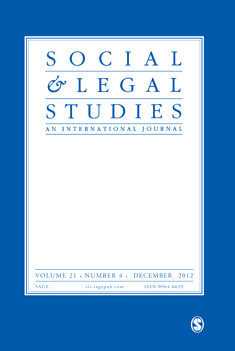
SOCIAL & LEGAL STUDIES
Exploring the Nexus of Legal and Social DynamicsSOCIAL & LEGAL STUDIES, published by SAGE Publications Ltd, stands at the forefront of interdisciplinary research within the spheres of law, sociology, and political science. With an ISSN of 0964-6639 and an E-ISSN of 1461-7390, the journal has established a significant presence in academia since its inception in 1992. This esteemed journal, recognized as a Q1 publication in Law and holding Q2 status in both miscellaneous Social Sciences and Sociology & Political Science categories, garners attention from leading scholars and practitioners alike, evidenced by its impressive Scopus rankings, including a top 88th percentile in Law. Although it does not offer open access, researchers and students can rely on this journal for high-quality, peer-reviewed articles that synthesize theoretical and empirical insights, addressing contemporary legal and social issues. As it converges into 2024, SOCIAL & LEGAL STUDIES continues to be a vital platform for advancing discussions that shape the interplay between societal norms and legal frameworks.
Jurisprudence-An International Journal of Legal and Political Thought
Cultivating Rigorous Scholarship in JurisprudenceJurisprudence: An International Journal of Legal and Political Thought, published by ROUTLEDGE JOURNALS, TAYLOR & FRANCIS LTD, serves as a vital platform for scholars and practitioners engaged in the ever-evolving discourse of legal and political theory. With its ISSN 2040-3313 and E-ISSN 2040-3321, this esteemed journal spans a converged period from 2015 to 2024, and has established itself in the Q2 quartile of the law category, ranking #359 out of 1025 and placing in the 65th percentile as per Scopus metrics in 2023. Based in the United Kingdom, this journal is dedicated to exploring the intricate relationships between law, political ideologies, and contemporary societal issues, thereby fostering interdisciplinary dialogue that is crucial for navigating today’s complex legal landscapes. Although it does not currently provide an open access option, Jurisprudence continues to attract a broad readership of researchers, professionals, and students seeking rigorous scholarship and practical insights into legal and political thought. With its strong impact within the field, the journal plays a significant role in shaping future discussions and advancements in legal studies.