
Law Technology and Humans
metrics 2024
Fostering Collaboration in Law, Technology, and Humanity
Introduction
Law Technology and Humans is an innovative open-access journal published by Queensland University of Technology in Australia. Since its inception in 2019, it has emerged as a vital platform for scholarly discourse at the intersection of law, technology, and society, addressing pertinent challenges and advancements from 2019 to 2024. With categories spanning from Law and Social Sciences to Biotechnology and Information Systems, the journal caters to a diverse audience, achieving respectable rankings within its field—ranked #382 in Social Sciences (Law) and within the 62nd percentile in 2023. As a practitioner or researcher navigating the rapidly evolving landscape of tech law, Law Technology and Humans serves as an essential resource, fostering interdisciplinary collaboration and providing critical insights into the implications of technological innovation. By maintaining an open-access format, the journal enhances accessibility, promoting widespread engagement and knowledge sharing among academics, professionals, and students globally.
Metrics 2024
 -1.001.00-
Metrics History
Rank 2024
IF (Web Of Science)
JCI (Web Of Science)
Quartile History
Similar Journals

MINNESOTA LAW REVIEW
Exploring the Boundaries of Legal Thought and PracticeMINNESOTA LAW REVIEW is a prestigious academic journal dedicated to advancing legal scholarship and discourse, published by the MINN LAW REVIEW FOUND in the United States. Established in 1976, this journal has become a cornerstone in the field of law, achieving an impressive Q1 ranking in the Law category for 2023, underscoring its significance and influence in legal studies, with a Scopus rank placing it in the 65th percentile among social sciences law journals. The ISSN number for both print and electronic editions is 0026-5535, ensuring broad accessibility to its scholarly contributions. With a commitment to publishing innovative and analytical articles that address contemporary legal issues, the MINNESOTA LAW REVIEW serves as an essential resource for researchers, students, and legal professionals seeking to deepen their understanding and engage with critical legal concepts. While it does not currently provide open access, its wide array of topics spans various disciplines within law, fostering a vibrant academic community dedicated to the exploration of legal principles and their applications. The journal’s editorial office can be found at 229 19TH AVE SOUTH, UNIVERSITY OF MINNESOTA, MINNEAPOLIS, MN 55455, where a team of experts curates content that reflects the evolving landscape of legal thought.

University of Pennsylvania Journal of International Law
Navigating the Complexities of Global JurisprudenceThe University of Pennsylvania Journal of International Law is a pivotal academic publication that serves as a forum for groundbreaking legal scholarship, particularly in the complex and dynamic field of international law. Published by the University of Pennsylvania Law School, this journal supports a diverse array of interdisciplinary research and discourse, capturing insights that bridge legal, economic, and political landscapes. As of 2023, it is positioned in Quartile 3 in Law and Quartile 4 in Economics according to Scopus rankings, underscoring its relevance and contributions to legal academia. The journal is accessible through conventional methods, with its physical presence anchored in Philadelphia, Pennsylvania. With a commitment to fostering dialogue on both emerging and traditional legal issues, the journal aims to engage scholars, practitioners, and students alike, encouraging contributions that enrich understanding and drive progressive legal thought. This commitment to academic excellence ensures that the University of Pennsylvania Journal of International Law remains a vital resource for those seeking to navigate the challenges of international legal frameworks.

Revista General de Derecho Penal
Advancing the discourse in criminal law.Revista General de Derecho Penal, published by IUSTEL, is a premier academic journal dedicated to the dynamic field of criminal law. With an ISSN of 1698-1189, this journal serves as a crucial platform for researchers, legal professionals, and students to share their insights and findings related to penal law and its evolving applications in contemporary society. Although it is not an open access journal, it maintains high scholarly standards, helping to advance discourse in legal studies. The journal's address is C PRINCESA NO 29, 2A DCHA, MADRID 28008, SPAIN, positioning it within a vibrant academic community. With a focus on current legal challenges and theoretical advancements, Revista General de Derecho Penal plays an essential role in fostering understanding and developing effective legal frameworks in criminal justice, making it an invaluable resource for those engaged in the study and practice of law.

Northwestern Journal of International Law & Business
Innovating Insights into International Business PracticesThe Northwestern Journal of International Law & Business, published by the NORTHWESTERN UNIVERSITY SCHOOL OF LAW, serves as a critical platform for scholarly discourse at the intersection of law and international business. With an ISSN of 0196-3228, this journal covers a diverse range of topics relevant to practitioners and academics alike, encouraging in-depth analysis and debate surrounding contemporary issues in international legal frameworks and business practices. While currently categorized in the Q4 quartile across multiple fields including Business and International Management, Law, and Strategy and Management, it presents a unique opportunity for contributors to elevate their work within an evolving landscape. The journal's accessibility options cater to a variety of readers, fostering a rich exchange of ideas among researchers, students, and professionals dedicated to the advancement of international law and business scholarship. By publishing rigorous research and original insights, the Northwestern Journal aims to influence the academic community and inform policy-making processes worldwide, thus proving its value in the global academic discourse.

Revista Juridica de Castilla y Leon
Unlocking Contemporary Legal Insights for AllRevista Juridica de Castilla y Leon is a prestigious academic journal dedicated to advancing legal scholarship in the field of law and governance. Published by the JUNTA CASTILLA & LEON, CONSEJERIA PRESIDENCIA & ADM TERRITORIAL, this journal plays a vital role in disseminating high-quality research and foster dialogue among legal practitioners, researchers, and students alike. Since transitioning to Open Access in 2003, it has removed barriers to knowledge, allowing a global audience uncontrolled access to innovative legal studies and practices. With its ISSN 1696-6759 and E-ISSN 2254-3805, the journal is committed to publishing articles that address contemporary issues and challenges in the legal landscape, particularly those relevant to the Spanish context. As a reliable source for its readers, Revista Juridica de Castilla y Leon contributes significantly to the field of law, encouraging interdisciplinary research and collaboration to influence policy and improve legal frameworks in Spain and beyond.

CATHOLIC UNIVERSITY LAW REVIEW
Engaging Minds at the Crossroads of Law and Religion.CATHOLIC UNIVERSITY LAW REVIEW is a premier legal periodical published by the Catholic University of America Press, located in the heart of Washington, D.C. with a dedicated focus on the intersections of law, education, and religious studies. Since its establishment in 1973, the journal has served as a critical platform for scholarly discourse, presenting innovative legal analysis and thought-provoking research that caters to scholars, practitioners, and students alike. With an ISSN of 0008-8390, this non-open access journal holds a notable place in the academic community, reflected by its category quartiles in 2023, ranking Q4 in Education and Law, and Q3 in Religious Studies. The Catholic University Law Review is distinguished not only by its commitment to advancing legal scholarship but also by its dedication to exploring the implications of law through a distinctly Catholic lens. Its consistent output of high-quality articles contributes to ongoing debates and developments in these fields, making it an essential resource for those interested in the legal implications of contemporary issues.

Revista Boliviana de Derecho
Empowering Legal Discourse Across Spanish-speaking NationsRevista Boliviana de Derecho is a prominent academic journal dedicated to the exploration and dissemination of legal studies, particularly focusing on the issues pertinent to Bolivia and Latin America. Published by Inst Derecho Iberoamericano, this journal serves as a vital platform for researchers, legal professionals, and students to engage with contemporary legal theories and practices. With its ISSN 2070-8157 and E-ISSN 2706-8080, the journal adheres to high academic standards and aims to contribute significantly to the advancement of legal scholarship in the Spanish-speaking world. Although it operates within a closed access framework, its publications are crucial for understanding the evolution of legal frameworks and their implications in a rapidly changing society. By providing a convergence of diverse legal opinions and analyses, Revista Boliviana de Derecho remains an essential resource for anyone invested in the field of law.
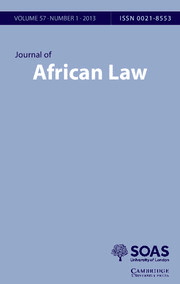
Journal of African Law
Exploring diverse legal frameworks across the African continent.The Journal of African Law, published by Cambridge University Press, serves as a vital resource for scholars, practitioners, and students engaged in the dynamic and evolving field of law across the African continent. Since its inception in 1957, this journal has provided a platform for scholarly discourse and in-depth analysis of legal frameworks, systems, and practices across diverse African jurisdictions, with coverage continuing until 2024. Recognized in the Q4 category in Law, and positioned in the 41st percentile within the Scopus rankings, it emphasizes the importance of African perspectives and methodologies in global legal scholarship. Although it does not offer open access, its printed and digital formats ensure accessibility to a wide audience keen on the intersection of law, culture, and governance. The Journal of African Law not only highlights contemporary legal challenges but also enriches the academic conversation surrounding law and justice in Africa, making it an essential publication for contributing to the discourse and understanding of legal issues on the continent.
Juridicas CUC
Pioneering Accessible Legal Research for AllJuridicas CUC, published by UNIV COSTA, is a distinguished open-access journal dedicated to the field of Law, prominent since 2011. With an ISSN of 1692-3030 and an E-ISSN of 2389-7716, this journal serves as a vital resource for researchers, professionals, and students in Colombia and beyond. It holds a commendable Q2 status in Law for 2023, and its Scopus ranking places it at #425 out of 1025 in Social Sciences _ Law, reflecting its commitment to high-quality scholarship, evident in its 58th percentile. The journal aims to foster academic dialogue by publishing innovative and impactful research, contributing to the advancement of legal studies in a global context. Located in Barranquilla, Colombia, Juridicas CUC is committed to enhancing accessibility to legal research, ensuring that scholars from various backgrounds can engage with contemporary legal issues effectively.

Annual Review of Law and Social Science
Advancing Insights at the Intersection of Law and Social ScienceThe Annual Review of Law and Social Science, published by ANNUAL REVIEWS, is an essential interdisciplinary journal that bridges the domains of law, sociology, and political science. Established in 2006, this pivotal resource has consistently been recognized for its scholarly excellence, achieving a Q1 ranking in both the Law and Sociology and Political Science categories as of 2023. With a remarkable Scopus ranking that places it in the 93rd percentile among law journals, it serves as a vital platform for researchers and professionals seeking to engage with comprehensive reviews of contemporary issues at the intersection of these fields. Although not an open-access journal, its contributions are fundamental for advancing scholarship and fostering deeper insights into the relationship between social dynamics and legal frameworks. The journal's rigorous annual reviews provide valuable syntheses of the latest research, making it an indispensable resource for academics, policymakers, and students alike.