LETTERS IN ORGANIC CHEMISTRY
metrics 2024
Championing Vital Research in Organic Chemistry
Introduction
LETTERS IN ORGANIC CHEMISTRY is a distinguished journal published by Bentham Science Publishers Ltd, focusing on the rapidly evolving field of organic chemistry. Established in 2005, the journal commits itself to disseminating vital research findings, reviews, and innovative methodologies that contribute to the understanding and advancement of organic chemistry and biochemistry. With an ISSN of 1570-1786 and an E-ISSN of 1875-6255, this journal enhances accessibility and visibility for authors and readers alike, albeit not adopting an open-access model. Positioned within Q4 quartile rankings for both Biochemistry and Organic Chemistry, it serves a niche audience keen on exploring emerging trends and breakthroughs in these disciplines. Its Scopus rankings further reflect its role in the global academic landscape, albeit at the beginning stages of its impact journey. Based in the United Arab Emirates, LETTERS IN ORGANIC CHEMISTRY is dedicated to fostering dialogue among researchers and practitioners, paving the way for future innovations in organic and biochemical sciences.
Metrics 2024
 0.170.700.6033
Metrics History
Rank 2024
Scopus
IF (Web Of Science)
JCI (Web Of Science)
Quartile History
Similar Journals

Organic Communications
Connecting theory with practical innovation in Organic Chemistry.Organic Communications is an esteemed journal published by ACG PUBLICATIONS, dedicated to advancing the field of Organic Chemistry. Established in 2008 and continuing its journey into 2024, this scholarly journal provides a platform for the dissemination of high-impact research findings, reviews, and methodological advances that shape the landscape of organic chemistry. Located in Turkey, it has made notable strides with a current Scopus rank of #148 out of 211 within its category, placing it in the 30th percentile. As a Q3 journal in organic chemistry, it caters to a diverse readership of researchers, professionals, and students, offering insights that bridge theoretical research and practical applications. Although it does not operate under an open access model, Organic Communications is poised to contribute significantly to the academic community by enabling access to crucial research developments and fostering collaboration within the discipline.
POLYCYCLIC AROMATIC COMPOUNDS
Exploring the Depths of Chemical ComplexityPOLYCYCLIC AROMATIC COMPOUNDS, published by TAYLOR & FRANCIS LTD, is a pivotal journal dedicated to the study of polycyclic aromatic compounds, which play a significant role in fields spanning materials chemistry, organic chemistry, and polymers. With an ISSN of 1040-6638 and an E-ISSN of 1563-5333, this journal features a robust collection of research that informs and guides advancements in understanding the complex interactions and applications of these compounds. Having established its presence since 1990, POLYCYCLIC AROMATIC COMPOUNDS currently holds a Q3 ranking in multiple categories, including Materials Chemistry, Polymers and Plastics, and Organic Chemistry, showcasing its consistent contributions to scientific dialogues. Though traditionally not an open access journal, it provides immense value to researchers, professionals, and students seeking reliable and impactful studies. The journal is located in the United Kingdom at 2-4 PARK SQUARE, MILTON PARK, ABINGDON OR14 4RN, OXON, ENGLAND, and continues to be a trusted source for cutting-edge research in the field.
CURRENT ORGANIC SYNTHESIS
Innovating Synthesis, Inspiring DiscoveryCURRENT ORGANIC SYNTHESIS, published by Bentham Science Publishers Ltd, is a leading journal in the field of organic chemistry and biochemistry that serves as a vital platform for researchers and professionals advancing the synthesis of organic compounds. With an ISSN of 1570-1794 and an E-ISSN of 1875-6271, it boasts a significant impact within its category, ranked in the Q3 quartile for both biochemistry and organic chemistry as of 2023. The journal covers innovative research and reviews that enhance our understanding of organic synthesis methodologies, showcasing contributions that advance the field. Operating from Sharjah, United Arab Emirates, CURRENT ORGANIC SYNTHESIS has evolved since its inception in 2005, providing access to a wealth of information essential for students, professionals, and researchers alike. While it currently does not offer open access, the journal continues to maintain a strong community of scholars dedicated to fostering dialogue and innovation in the organic sciences.
SYNLETT
Exploring New Horizons in Synthetic MethodologiesSYNLETT is a prominent academic journal dedicated to the field of Organic Chemistry, published by GEORG THIEME VERLAG KG. Since its inception in 1989, the journal has played a critical role in advancing the understanding of synthetic methodologies and organic compounds, offering a platform for innovative research and discoveries. With an ISSN of 0936-5214 and an E-ISSN of 1437-2096, SYNLETT is well-regarded in the academic community, presently positioned in the Q3 quartile for Organic Chemistry according to the 2023 category rankings. The journal is particularly valuable for researchers and professionals seeking insights into contemporary organic synthesis methods and their applications. Although it does not operate under an Open Access model, it remains a crucial resource within the field, contributing to significant advancements and collaborations globally. For those engaged in organic synthesis, SYNLETT not only encapsulates cutting-edge research but also inspires innovation in the discipline.
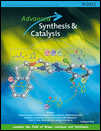
ADVANCED SYNTHESIS & CATALYSIS
Unleashing potential through cutting-edge methodologies.ADVANCED SYNTHESIS & CATALYSIS is a prestigious academic journal published by Wiley-VCH Verlag GmbH, based in Germany. This journal, with ISSN 1615-4150 and E-ISSN 1615-4169, plays a pivotal role in the fields of Chemistry and Chemical Engineering, earning commendable rankings such as Q2 in Catalysis and Q1 in Organic Chemistry in 2023. Its high impact factor and recognition—ranking #18 in both Organic Chemistry and Catalysis—further underscore its significance as a platform for groundbreaking research and innovative methodologies. Spanning from 1996 through 2024, ADVANCED SYNTHESIS & CATALYSIS aims to disseminate high-quality, cutting-edge studies related to synthetic processes and catalytic technologies, ensuring accessibility via their open access options. By fostering a vibrant scholarly community, this journal serves as an essential resource for researchers, professionals, and students dedicated to driving advancements in synthetic and catalytic chemistry.
ORGANIC PREPARATIONS AND PROCEDURES INTERNATIONAL
Catalyzing Discoveries in Organic Chemistry Since 1971ORGANIC PREPARATIONS AND PROCEDURES INTERNATIONAL is a prominent journal in the field of organic chemistry, published by Taylor & Francis Inc. With an ISSN of 0030-4948 and an E-ISSN of 1945-5453, this journal has been a vital resource for researchers since its inception in 1971, showcasing a broad range of methodologies, protocols, and innovative applications within organic synthesis. Although categorized in the Q4 quartile for organic chemistry, the journal provides a critical platform for researchers at all levels to disseminate their findings and to access a wealth of practical organic procedures. It currently ranks #151 out of 211 in the Scopus Organic Chemistry category, underscoring its role in advancing the discipline despite its relatively modest impact factor. The journal offers a diverse collection of scholarly articles that are essential for both professional chemists and students, enriching their understanding of organic preparation techniques. Inviting contributions that encompass the full spectrum of organic synthesis, this journal serves as a valuable conduit for knowledge exchange in the ever-evolving field of organic chemistry.

ORGANIC SYNTHESES
Fostering Excellence in Organic Chemistry PracticesORGANIC SYNTHESES is a prestigious journal dedicated to the field of organic chemistry, published by ORGANIC SYNTHESES INC. Since its inception in 1946, the journal has served as a vital platform for researchers, educators, and practitioners in chemistry, showcasing significant findings and methodologies that advance the discipline. Although it currently does not offer open access, it is recognized for its rigorous peer-review process and its contribution to standardizing organic synthesis methods. With an ISSN of 0078-6209 and an E-ISSN of 2333-3553, the journal's impact reflects its quality, with a current Scopus ranking placing it in the fourth quartile in both Organic Chemistry and Physical and Theoretical Chemistry. This positioning underscores its critical role in fostering knowledge and innovation within these fields. Researchers and students alike will find ORGANIC SYNTHESES an essential resource for staying informed on contemporary practices and discoveries in organic synthesis.
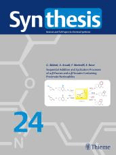
SYNTHESIS-STUTTGART
Innovating Synthetic Methodologies for a Sustainable Future.SYNTHESIS-STUTTGART
Published by the esteemed Georg Thieme Verlag KG, SYNTHESIS-STUTTGART stands as a vital resource in the field of Chemistry, specifically focusing on Organic Chemistry and Catalysis. With an impressive publication history dating back to 1970 and continuing through 2024, it serves as a platform for innovative research and developments in synthetic methodologies and their applications. The journal holds a significant impact factor, reflecting its influence within the academic community, and is recognized in the Scopus rankings as a reputable source in its categories, with a rank of #99/211 in Organic Chemistry and #43/68 in Catalysis. Researchers, professionals, and students alike can benefit greatly from its content, which upholds rigorous peer-review standards and contributes to the global discourse in these critical scientific domains.
CURRENT ORGANIC CHEMISTRY
Illuminating Pathways in Organic Chemistry InnovationCURRENT ORGANIC CHEMISTRY, published by Bentham Science Publishers, stands as a pivotal platform in the field of organic chemistry, providing innovative insights and advancements since its inception in 1997. With an ISSN of 1385-2728 and an E-ISSN of 1875-5348, this esteemed journal has carved a niche in the academic landscape, currently ranking in the Q3 category for Organic Chemistry according to the 2023 metrics. Operating from the United Arab Emirates, it engages a diverse audience of researchers, professionals, and students by delivering quality peer-reviewed articles that cover a broad spectrum of organic chemistry research. Although the journal does not offer open access, it remains a respected source of knowledge, indexed in Scopus with a percentile ranking of 43, encouraging rigorous discourse and the dissemination of cutting-edge findings. With continuous publication through 2024, CURRENT ORGANIC CHEMISTRY is dedicated to advancing the frontiers of organic chemistry research and technology.

ARKIVOC
Advancing Organic Chemistry Through Open AccessARKIVOC is an esteemed open-access journal dedicated to the field of Organic Chemistry, published by ARKAT USA INC. Since its inception in 2000, ARKIVOC has aimed to disseminate high-quality research and advancements in organic chemistry, fostering an international exchange of knowledge within this ever-evolving discipline. With its ISSN 1551-7004 and E-ISSN 1551-7012, the journal is committed to providing accessible content free of charge to researchers, students, and professionals around the globe. Although currently categorized in the fourth quartile of Organic Chemistry with a Scopus rank of #188 out of 211, ARKIVOC continues to encourage the publication of innovative works and critical reviews that highlight emerging trends and methodologies in organic synthesis, reaction mechanisms, and material sciences. Its open-access model since 2000 ensures that valuable contributions to scientific knowledge are widely available, promoting collaboration and discovery. The journal is based in the United States, with its editorial office located at the University of Florida, under the guidance of prominent chemists. ARKIVOC provides an essential platform for those deeply engaged in organic chemistry research, supporting the advancement of science for future generations.