Levant
metrics 2024
Connecting Scholars to the Heart of Middle Eastern Studies
Introduction
Levant is a prestigious academic journal published by Routledge Journals, Taylor & Francis Ltd, focusing on the fields of Archaeology and History. Since its inception in 1969, the journal has become a vital platform for researchers, professionals, and students interested in Middle Eastern studies, presenting high-quality research that reflects the rich cultural and historical tapestry of the Levant region. With an impressive impact factor and classified as Q1 in both Archaeology and History, Levant showcases innovative scholarship that pushes the boundaries of knowledge while maintaining rigorous academic standards. Although it is not an open-access journal, its articles are widely accessible through libraries and academic institutions, ensuring a broad reach for its impactful publications. With ongoing research converging from 1969 through to 2024, Levant remains a cornerstone for advancing academic discourse and exploration in relevant historical narratives.
Metrics 2024
 0.390.501.2026
Metrics History
Rank 2024
Scopus
JCI (Web Of Science)
Quartile History
Similar Journals

ARCHAEOLOGY
Connecting History with Contemporary RelevanceARCHAEOLOGY is a distinguished peer-reviewed journal published by the Archaeological Institute of America, focusing on the multifaceted aspects of archaeological research and its relevance to contemporary society. Established in 1966, this journal serves as a critical platform for scholarly discourse in the field, showcasing innovative findings, theoretical advancements, and methodological discussions related to archaeology. While it maintains a Q4 ranking within the disciplines of archaeology and arts and humanities, its contributions remain valuable for those engaging in archaeological studies or seeking to understand historical and cultural narratives. The journal is accessible in print, with an ISSN of 0003-8113 and an E-ISSN of 1943-5746, ensuring that a wide audience can benefit from its insights. Although currently not classified as Open Access, the meticulous peer-review process ensures a high standard of academic rigor, making it an essential source for researchers, professionals, and students alike who are dedicated to exploring the past through archaeological lenses.
Journal of Eastern Mediterranean Archaeology and Heritage Studies
Championing Research in Eastern Mediterranean ArchaeologyJournal of Eastern Mediterranean Archaeology and Heritage Studies, published by Penn State University Press, is a premier academic journal dedicated to the exploration and understanding of the archaeological and heritage landscapes of the Eastern Mediterranean region. With an ISSN of 2166-3548 and an E-ISSN of 2166-3556, this journal serves as an essential resource for researchers, professionals, and students in the fields of archaeology, conservation, and heritage studies. Its notable impact is reflected through its Q2 category rankings in both Archaeology and Conservation, coupled with commendable Scopus rankings, positioning it within the top quartiles of its disciplines. The journal not only fosters scholarly dialogue by publishing cutting-edge research but also aims to bridge the gap between academic inquiry and practical conservation efforts. As the field continues to evolve, this journal provides a vital forum for disseminating knowledge and advancing the preservation of cultural heritage, making it indispensable for all engaged in the study of the Eastern Mediterranean’s rich archaeological heritage.
ACTA ARCHAEOLOGICA
Fostering Dialogue in Archaeological ScholarshipACTA ARCHAEOLOGICA is a highly regarded, peer-reviewed journal published by BRILL, focusing on the dynamic field of archaeology. With an ISSN of 0065-101X and an E-ISSN of 1600-0390, this journal disseminates innovative research, critical analyses, and comprehensive reviews that contribute to our understanding of human history, cultural heritage, and archaeological methodology. ACTA ARCHAEOLOGICA has excelled in its field, achieving a Q1 ranking in both the Arts and Humanities and Social Sciences categories for 2023, showcasing its impact and relevance in scholarly discourse. Though not currently open access, the journal caters to a diverse audience of researchers, professionals, and students, offering invaluable insights into archaeological studies from a global perspective. As it continues to foster academic dialogue, ACTA ARCHAEOLOGICA remains a cornerstone for those looking to deepen their knowledge and engage with cutting-edge archaeological research.
Asian Perspectives-The Journal of Archaeology for Asia and the Pacific
Discovering Connections: Where History Meets InnovationAsian Perspectives - The Journal of Archaeology for Asia and the Pacific is a prestigious journal published by University of Hawaii Press, focusing on the intricate field of archaeology in Asia and the Pacific. With a rich publication history dating back to 1993, the journal has established itself as a vital platform for disseminating research that illuminates the archaeological heritage and cultural dynamics of this diverse region. Recognized for its scholarly impact, it enjoys a commendable impact factor and ranks in the Q2 category for Anthropology and Archaeology, indicating its significant contribution to these fields. Although it operates on a traditional subscription-based model, the journal is accessible to institutional and individual subscribers worldwide. With an emphasis on interdisciplinary research, Asian Perspectives invites contributions that foster a deeper understanding of historical and contemporary issues through archaeology, making it an invaluable resource for researchers, professionals, and students alike committed to advancing scholarly dialogue in the region. Explore a wealth of innovative studies and insights that continue to shape the understanding of Asia and the Pacific's archaeological narrative.
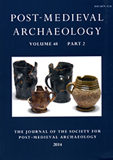
Post-Medieval Archaeology
Exploring the Intersection of History and ArchaeologyPost-Medieval Archaeology is a distinguished academic journal published by ROUTLEDGE JOURNALS, TAYLOR & FRANCIS LTD, focusing on the rich tapestry of human history from the post-medieval period through the lens of archaeology. With a proud publication history spanning since 1967, this journal addresses the integration of archaeological findings with historical narratives, contributing significantly to the field of archaeology and history. The journal holds an impressive categorization within the Q2 and Q3 quartiles for Archaeology and History in 2023, showcasing its commitment to academic excellence and relevance within these disciplines. Researchers and professionals alike will find value in its critical examinations and innovative methodologies that illuminate the past, making it a pivotal resource for those engaged in archaeological research. As an essential platform for scholarly debate and dissemination, Post-Medieval Archaeology continues to advance the understanding of post-medieval contexts and material culture, fostering discussions that resonate through various areas of the arts, humanities, and social sciences.
African Archaeological Review
Unearthing Africa's Rich HeritageWelcome to the African Archaeological Review, a leading academic journal published by Springer, dedicated to advancing the field of archaeology with a unique focus on the African continent. Since its inception in 1983, this journal has become a pivotal platform for researchers, professionals, and students seeking to explore the complexities of African cultural heritage through empirical studies, theoretical discussions, and methodological innovations. With a commendable Q1 ranking in both Archaeology (Arts and Humanities) and Archaeology categories for 2023, this journal ranks among the top 10% of publications in its field, reflecting its influential contributions to archaeological scholarship. The Scopus ranking places it at #40 out of 413 in Arts and Humanities and #39 out of 354 in Social Sciences, highlighting its esteemed status within academic circles. Although it does not currently offer Open Access options, the journal remains committed to disseminating vital research findings that shape our understanding of Africa's rich archaeological landscape. Join a community dedicated to unraveling past human behaviors and interactions within diverse African environments through the pages of the African Archaeological Review.

Azania-Archaeological Research in Africa
Decoding the Mysteries of Africa's Ancient Civilizations.Azania-Archaeological Research in Africa, published by Routledge Journals, Taylor & Francis Ltd, stands as a premier academic resource in the field of archaeology, specifically focusing on African archaeological research. With a remarkable tradition dating back to 1966, the journal spans over half a century of rigorous scholarship, aiming to enrich our understanding of Africa's diverse cultural and historical narratives. Currently indexed in the prestigious Q1 category for both Archaeology and Arts and Humanities, it ranks impressively in the Scopus database, placing within the top 12% of journals in its field. This commitment to excellence facilitates the dissemination of innovative and insightful research, catering to a broad audience of researchers, professionals, and students alike. While the journal is not open access, its impactful contributions continue to shape contemporary archaeological discourse, making it an essential resource for anyone passionate about the study of Africa's archaeological heritage.

Opuscula-Annual of the Swedish Institutes at Athens and Rome
Connecting Scholars to the Heart of Mediterranean StudiesOpuscula - Annual of the Swedish Institutes at Athens and Rome is a distinguished academic journal dedicated to advancing the field of archaeology, classics, history, and the visual arts. Published by the Editorial Committee Swedish Institute Athens & Rome, this journal fosters interdisciplinary dialogue and research, contributing valuable scholarship to these interconnected domains. With an impressive impact factor reflected in the authoritative Scopus rankings, it holds a commendable Q2 ranking in Archaeology and Arts and Humanities and achieves Q1 status in Classics, History, and Visual Arts and Performing Arts. Although Open Access options are not specified, the journal remains a critical resource for scholars seeking peer-reviewed articles that cover a range of topics pertinent to the rich legacies of the Mediterranean. By bridging historical inquiry with contemporary analysis, Opuscula serves as an essential platform for researchers, professionals, and students, ensuring the ongoing vitality of academic discourse in these vital fields.
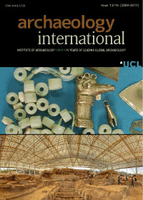
Archaeology International
Fostering collaboration in the ever-evolving field of archaeology.Archaeology International is a prestigious open-access journal dedicated to advancing the field of archaeology since its inception in 1997. Published by UCL PRESS, the journal provides a platform for researchers, professionals, and students to disseminate their findings and share innovative ideas in archaeological studies. It features a rich array of articles that capture current trends, methodologies, and debates within the discipline, fostering a collaborative academic environment. Based in London, England, this journal is committed to accessibility and inclusivity, ensuring that valuable research is available to a global audience without subscription barriers. With a focus on interdisciplinary approaches, Archaeology International serves as an essential resource for those interested in the preservation of cultural heritage, and it actively encourages contributions that explore both past civilizations and contemporary archaeological practices.

Anadolu Arastirmalari-Anatolian Research
Innovating Insights into Archaeology and HistoryAnadolu Arastirmalari-Anatolian Research, published by ISTANBUL UNIVERSITY, is a prominent open-access journal dedicated to the exploration of history, archaeology, and related fields. Since its transition to open access in 2017, the journal has become a vital resource for scholars and practitioners, facilitating the dissemination of innovative research findings. With a strong focus on the intricacies of Anatolian history and archaeology, the journal has earned notable recognition, achieving a Q1 ranking in History and Q2 rankings in both Archaeology and Arts and Humanities categories as of 2023. This positions it among the foremost journals in its field, providing an essential platform for interdisciplinary research and discourse. The journal's impact factor is evidenced by its significant citation metrics and rigorous editorial standards, aiming to contribute meaningfully to scholarly dialogue and knowledge production. Researchers, professionals, and students alike will find this journal indispensable for understanding the rich tapestry of Anatolian culture and heritage.