
Linguistic Research
metrics 2024
Advancing Theoretical and Empirical Insights in Linguistics
Introduction
Linguistic Research, published by the Kyung Hee University Institute for Study of Language & Information, stands as a prominent platform within the field of linguistics and language studies. With an ISSN of 1229-1374, this journal has gained recognition for its contributions to theoretical and empirical research since its inception in 2014. Ranked in the Q2 category of linguistics and language in 2023, it has established its presence in prestigious databases like Scopus, where it ranks #404 in Arts and Humanities and #479 in Social Sciences. The journal actively encourages scholarly discussion and innovation, providing a crucial venue for researchers, professionals, and students to disseminate their findings and engage in the evolving conversation around language. Despite not being open access, Linguistic Research is pivotal for those seeking comprehensive insights and advancements in linguistic studies, making it an essential resource for anyone passionate about the dynamics of language and communication.
Metrics 2024
 0.220.400.409
Metrics History
Rank 2024
Scopus
JCI (Web Of Science)
Quartile History
Similar Journals

Acta Linguistica Academica
Exploring the Frontiers of Language and CultureActa Linguistica Academica is a distinguished academic journal published by Akademiai Kiado ZRT, located in Hungary. Since its inception in 2017, the journal has occupied a premier position in its field, achieving Q1 rankings in both Cultural Studies and Linguistics and Language, as well as in Literature and Literary Theory in 2023. With an impressive Scopus ranking placing it in the top percentiles across various categories, Acta Linguistica Academica stands out as a vital resource for researchers, professionals, and students dedicated to exploring the nuances of language, literature, and cultural dynamics. The journal provides a platform for high-quality research and diverse perspectives, facilitating the dissemination of innovative ideas and comprehensive analyses in these disciplines. As an esteemed open-access journal, it ensures that cutting-edge research is readily available to the academic community and the public at large, affirming its commitment to accessibility and knowledge sharing.

Lingue e Linguaggio
Unveiling the Nuances of Language and CommunicationLingue e Linguaggio, published by SOC ED IL MULINO, is a distinguished academic journal in the field of Linguistics and Language, hailing from Bologna, Italy. With an esteemed Q2 ranking in its category as of 2023, this journal is recognized for its contributions to both the arts and humanities as well as social sciences, achieving notable positions within Scopus rankings. It serves as a vital platform for researchers, practitioners, and students interested in exploring various linguistic phenomena, language dynamics, and theoretical frameworks. Although it operates under a traditional subscription model rather than open access, its comprehensive array of studies and publications provides significant insights and fosters academic discourse. With a publication period extending from 2002 to 2024, Lingue e Linguaggio continues to be a key resource for advancing the understanding of language in contemporary contexts.

Functions of Language
Fostering Scholarly Dialogue in Linguistic FunctionsFunctions of Language, published by John Benjamins Publishing Co, serves as a vital platform for scholars and practitioners in the fields of linguistics and language studies. With its ISSN 0929-998X and E-ISSN 1569-9765, this esteemed journal, based in the Netherlands, has solidified its reputation through a focused dedication to exploring the multifaceted roles that language plays across various contexts. Ranked in the top percentile of leading journals in Linguistics and Language (Q2 category, 2023) and holding impressive Scopus ranks within both the Arts and Humanities and Social Sciences sectors, the journal emphasizes research that interlinks theoretical insights with practical implications. Functions of Language aims to advance our understanding of linguistic structures and their applications, making it an essential resource for researchers, professionals, and students alike who are eager to contribute to the evolving discourse in language studies. With content converging from 1994 to 2024, the journal reflects ongoing scholarly engagement and innovation in the field.
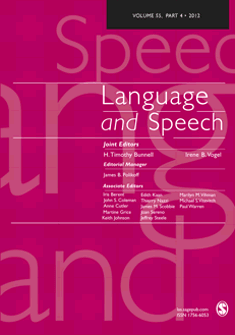
LANGUAGE AND SPEECH
Connecting Disciplines Through Language and SpeechLANGUAGE AND SPEECH, published by SAGE PUBLICATIONS LTD, is a premier journal that serves the multifaceted realms of linguistics, speech science, and sociology. With a robust history of scholarly contribution since 1958 and an anticipated continuation through to 2024, the journal is recognized for its high-impact research, boasting a commendable impact factor and achieving Q1 ranking in both Linguistics and Sociology as well as Q2 in Medicine and Speech and Hearing categories as of 2023. The journal, available in both print and online formats with ISSN 0023-8309 and E-ISSN 1756-6053, provides a vital platform for interdisciplinary discourse among researchers, professionals, and students alike. Its rigorous review process and quality publications place it at the forefront of academic inquiry, offering critical insights that advance the understanding of language and its implications in various contexts. As a key resource in the field, LANGUAGE AND SPEECH continues to foster innovation and knowledge dissemination, making it an essential addition to the libraries of those committed to exploring the depths of communication sciences.

DEUTSCHE SPRACHE
Unraveling the Nuances of the German LanguageDEUTSCHE SPRACHE, published by Erich Schmidt Verlag, is a pivotal journal dedicated to the intricate study of the German language. With its ISSN 0340-9341 and E-ISSN 1866-5233, this publication serves as a vital resource for linguists, educators, and language enthusiasts alike. Spanning diverse topics within the fields of linguistics and language, psychology, and social sciences, the journal has earned a Q3 ranking in Linguistics and Language, alongside a Q4 ranking in both Psychology (miscellaneous) and Social Sciences (miscellaneous) as of 2023. Although the journal is not Open Access, it provides invaluable insights on the developments in German language research from its convergence years of 2002 to 2011 and 2017 to 2023. Positioned in Berlin-Tiergarten, Germany, DEUTSCHE SPRACHE continues to expand its influence and accessibility to researchers, professionals, and students keen on understanding the nuances of linguistic expression in the German language.

BRAIN AND LANGUAGE
Pioneering Research on Language Mechanisms and CognitionBRAIN AND LANGUAGE is a premier journal published by Academic Press Inc Elsevier Science, dedicated to fostering scholarly communication in the fields of Cognitive Neuroscience, Linguistics, Psychology, and Speech and Hearing. With its ISSN 0093-934X (Print) and 1090-2155 (Online), the journal has established a significant presence since its inception in 1974, continuing to provide valuable insights into the intricate relationship between brain function and language processing. This journal is highly regarded, boasting a 2023 ranking of Q1 in Linguistics and Language, reflecting its influential contributions to the field, alongside Q2 rankings in categories such as Cognitive Neuroscience and Experimental Psychology. With a rigorous peer-review process, it serves as an essential resource for researchers and professionals seeking to deepen their understanding of language mechanisms and their cognitive underpinnings. Despite not being an Open Access journal, BRAIN AND LANGUAGE ensures that its articles are widely accessible and of high quality, making it an indispensable platform for both emerging and established scholars aiming to expand the boundaries of research in language and cognition.

Languages
Empowering researchers with accessible insights into language studies.Languages, published by MDPI, is a prestigious open-access journal dedicated to the field of Linguistics and Language studies. Since its inception in 2016, this journal has rapidly established itself as a leading platform for high-quality research, achieving an impressive Q1 ranking in 2023 and standing out in both the Arts and Humanities as well as the Social Sciences categories with significant percentile rankings (76th and 74th respectively). Based in Switzerland, Languages fosters an international community of scholars who are committed to exploring the multifaceted dimensions of language, from theoretical frameworks to practical applications. With a robust e-ISSN of 2226-471X, the journal prioritizes accessibility, allowing researchers, professionals, and students to freely engage with cutting-edge research and insights. By bridging the gap between theory and practice, Languages plays a crucial role in advancing our understanding of linguistic phenomena, making it an invaluable resource for anyone invested in the study of language.
SKASE Journal of Theoretical Linguistics
Bridging Heritage and Modernity in Linguistic ScholarshipSKASE Journal of Theoretical Linguistics, published by the SLOVAK ASSOCIATION STUDY ENGLISH-SKASE, is a distinguished Open Access journal that expands the horizons of linguistic research and theoretical frameworks. With its ISSN N/A and E-ISSN 1336-782X, the journal has established itself as a pivotal resource for scholars in the field, achieving a commendable Q2 ranking in Linguistics and Language as of 2023. The journal, which has been in continuous publication since 2017, actively publishes innovative research studies, reviews, and theoretical discussions, easing access to groundbreaking work for academics and practitioners alike. Based in Slovakia, it connects a rich heritage of linguistic scholarship and is indexed in Scopus, ranking alongside its peers in both Arts and Humanities and Social Sciences categories. The SKASE Journal of Theoretical Linguistics is crucial for anyone interested in the evolving landscapes of linguistics, serving as an invaluable platform for disseminating knowledge and fostering collaboration amongst researchers worldwide.
APPLIED LINGUISTICS
Connecting Scholars Through Language and CommunicationApplied Linguistics, published by Oxford University Press, is a premier scholarly journal that has significantly contributed to the fields of linguistics and communication since its inception in 1980. With an impressive impact factor and ranked in the top quartile (Q1) in both Communication and Linguistics and Language categories, Applied Linguistics is recognized for its rigorous peer-reviewed articles that explore the intersections of language, society, and cognition. The journal enjoys a remarkable position in the Scopus rankings, placing it among the top 2% of publications in its discipline. Researchers, professionals, and students benefit from its comprehensive scope, which encompasses innovative research on language acquisition, discourse analysis, and applied linguistics methodologies. Although not an open access journal, its commitment to advancing knowledge and fostering academic discussions makes it an indispensable resource for anyone interested in the critical role of language in various contexts.
Journal of Second Language Studies
Navigating the Dynamics of Language EducationWelcome to the Journal of Second Language Studies, a premier publication dedicated to advancing the field of language acquisition and pedagogy. Published by John Benjamins Publishing Co in the Netherlands, this journal (ISSN: 2542-3835, E-ISSN: 2542-3843) holds a significant place within the academic community, reflected by its Q2 ranking in Education and Q1 in Linguistics and Language for 2023. With a strong Scopus presence, ranking 197/1088 in Language and Linguistics, it appeals to a broad audience of researchers, educators, and students interested in the complexities of second language learning. The journal has been publishing groundbreaking research from 2018 to 2024, focusing on innovative methodologies, theoretical frameworks, and practical applications that enhance second language education. Although currently not open access, this journal serves as an essential resource for those seeking to deepen their understanding of language dynamics and teaching strategies in a diverse educational landscape.