
Machine Learning-Science and Technology
metrics 2024
Shaping tomorrow's technology through groundbreaking research.
Introduction
Machine Learning-Science and Technology is a premier open-access journal published by IOP Publishing Ltd, dedicated to advancing the field of artificial intelligence, human-computer interaction, and software development. Since its inception in 2020, this innovative journal has established itself as a critical resource for researchers, professionals, and students alike, achieving a commendable Q1 ranking across multiple categories in 2023. With an impressive Scopus ranking—#70 out of 407 in Computer Science Software, #26 out of 145 in Human-Computer Interaction, and #73 out of 350 in Artificial Intelligence—it provides a platform for cutting-edge research and significant advancements in machine learning technologies. Accessibility as an open-access journal since its launch ensures that the latest findings are freely available to a broader audience, fostering collaboration and knowledge-sharing within the scientific community. The journal aims to cover a wide spectrum of topics within its scope, encouraging submissions that push the boundaries of what is possible in machine learning applications. By fostering an environment of innovation, Machine Learning-Science and Technology stands at the forefront of this rapidly evolving field, shaping the future of technology and its interaction with society.
Metrics 2024
 -6.306.40-
Metrics History
Rank 2024
IF (Web Of Science)
JCI (Web Of Science)
Quartile History
Similar Journals
International Journal of Intelligent Engineering Informatics
Transforming Ideas into Intelligent Solutions.International Journal of Intelligent Engineering Informatics, published by INDERSCIENCE ENTERPRISES LTD, stands at the forefront of research in the interdisciplinary domains of computer science, artificial intelligence, and human-computer interaction. With an ISSN of 1758-8715 and E-ISSN of 1758-8723, this journal serves as a vital resource for researchers and professionals seeking to explore the latest advancements in intelligent engineering and informatics techniques crucial for the evolution of modern technologies. Although currently not an open-access publication, it provides a necessary platform for disseminating high-quality research; its impact factor continues to grow, attracting a diverse readership interested in signal processing, software development, and computer vision. Covering innovative topics from 2022 to 2024, the journal is committed to fostering scholarly dialogue that paves the way for emerging trends and applications in the field, ensuring its relevance and significance in today's rapidly advancing technological landscape.
KNOWLEDGE-BASED SYSTEMS
Pioneering Insights in Knowledge Management and Software DevelopmentKNOWLEDGE-BASED SYSTEMS, published by ELSEVIER, is a leading international journal that has established itself as a cornerstone in the fields of Artificial Intelligence, Information Systems and Management, and Software Development. With an impressive track record of over 35 years in publication, this journal is highly regarded for its significant contributions to the understanding and advancement of intelligent systems, providing a platform for innovative research and applications. It boasts a strong impact factor, maintaining a Q1 ranking across multiple categories, including Management Information Systems and Decision Sciences, reflecting its prestige and relevance in the academic community. Researchers and practitioners alike benefit from access to high-quality, peer-reviewed articles that explore the intersection of knowledge management and transformative technologies. The journal's commitment to fostering interdisciplinary research encourages the dissemination of knowledge that shapes the future of intelligent decision-making processes. With a substantial audience that includes professionals, academics, and students, KNOWLEDGE-BASED SYSTEMS continues to be a vital resource for those at the frontier of technological advancement.
CONNECTION SCIENCE
Connecting Ideas, Innovating Solutions in AI and Software EngineeringCONNECTION SCIENCE, published by Taylor & Francis Ltd, is a premier open-access journal in the fields of Artificial Intelligence, Human-Computer Interaction, and Software Engineering, with an impressive history dating back to 1989. With an aim to foster innovative research and breakthroughs, this journal serves as a vital platform for scholars and practitioners seeking to publish and disseminate their findings. As of 2023, CONNECTION SCIENCE proudly holds a Q2 ranking in all three categories, reflecting its significance and influence within the academic community, supported further by robust Scopus rankings placing it in top percentiles across the disciplines. In addition to its extensive service to the global research community, it has transitioned to open access since 2022, enhancing the accessibility of high-impact research to a wider audience. For anyone involved in these dynamic fields, CONNECTION SCIENCE is crucial for keeping up with trends, theories, and practical applications that drive the future of technology and artificial intelligence.
JOURNAL OF INTELLIGENT INFORMATION SYSTEMS
Bridging Academia and Industry in Intelligent SolutionsThe Journal of Intelligent Information Systems, published by Springer since 1992, is a premier academic journal that offers a multidisciplinary platform in the fields of Artificial Intelligence, Computer Networks and Communications, Hardware and Architecture, Information Systems, and Software. With an impressive impact reflected in its 2023 Q2 category rankings across multiple domains and a commendable standing in the Scopus Rankings—ranking #84 in Computer Networks and Communications and #101 in Artificial Intelligence—the journal is recognized for its contribution to advancing knowledge and innovation. Although it is not an open-access journal, its accessibility through institutional subscriptions ensures that a wide range of researchers, professionals, and students can engage with high-quality, peer-reviewed research that addresses the latest advancements and trends in intelligent systems. For over three decades, this journal has effectively bridged gaps between academia and industry, making it a vital resource for those aiming to push boundaries in intelligent information systems.

Data Science and Engineering
Transforming research into real-world impact.Data Science and Engineering is a premier open access journal published by SPRINGERNATURE, dedicated to advancing the fields of data science, artificial intelligence, computational mechanics, and information systems. Since its inception in 2016, this journal has rapidly established itself as a leader in the academic community, boasting an impressive Q1 ranking in multiple computer science categories, including Artificial Intelligence, Software, and Information Systems. With a commitment to disseminating high-quality research, it caters to a diverse audience of researchers, professionals, and students eager to explore the intersection of data and technology. The journal's robust global reach, combined with its respected reputation, empowers authors to share their findings widely, facilitating breakthroughs and innovations across the digital landscape. Join the vibrant community of scholars contributing to this integral field of study, and stay informed with the latest research by accessing the journal freely online.
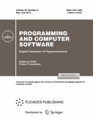
PROGRAMMING AND COMPUTER SOFTWARE
Exploring the Frontiers of Software Engineering ExcellencePROGRAMMING AND COMPUTER SOFTWARE is a distinguished journal committed to advancing the field of software development and programming methodologies. Published by PLEIADES PUBLISHING INC, this journal has been a valuable resource since its inception in 1978, reaching out to researchers, professionals, and students alike. With an emphasis on rigorous peer-reviewed articles, the journal holds a Q3 ranking in the realm of Software according to the latest 2023 Category Quartiles. Though it does not offer open access, the journal ensures that high-quality research is disseminated to its audience, providing insights into evolving programming techniques, software engineering challenges, and innovative solutions. With its convergence of years extending to 2024, PROGRAMMING AND COMPUTER SOFTWARE remains a pivotal publication, fostering a deeper understanding of the complexities in computer programming while supporting the broader software community.
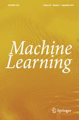
MACHINE LEARNING
Catalyzing Innovation in Machine Learning TechniquesMACHINE LEARNING is a premier academic journal published by SPRINGER, dedicated to advancing the field of artificial intelligence and software engineering. Established in 1986, this journal has consistently showcased pioneering research and innovative methodologies that facilitate the understanding and application of machine learning techniques across various domains. With an impressive impact factor reflecting its high-quality publications, it is classified within the top quartile (Q1) in both Artificial Intelligence and Software categories as of 2023, underscoring its critical role in these fields. The journal boasts significant Scopus rankings, placing it at the 45th and 54th positions, respectively, in Computer Science - Software and Computer Science - Artificial Intelligence, further validating its stature as a vital resource for researchers, professionals, and students alike. While not an open-access journal, MACHINE LEARNING ensures that its comprehensive peer-reviewed articles are widely circulated, fostering academic dialogue and innovation. The journal continues to be a go-to platform for cutting-edge research, providing invaluable insights and contributions that drive the future of machine learning.
Frontiers in Computer Science
Exploring innovative horizons in computer science research.Frontiers in Computer Science is a premier open-access journal published by Frontiers Media SA that has rapidly established itself as a prominent platform for scholarly research in the diverse and evolving field of computer science. With a notable impact factor reflecting its high citation rates, this journal aims to disseminate innovative findings and groundbreaking studies across multiple subdisciplines, including Computer Science Applications, Computer Vision and Pattern Recognition, and Human-Computer Interaction. Since its inception in 2019, and with a consistent trajectory from 2019 to 2024, it has garnered accolades, achieving Q2 ranking in several categories and an impressive Q1 in miscellaneous areas of computer science. Researchers, professionals, and students alike are encouraged to contribute to this dynamic journal that serves as a vital resource for advancing knowledge and fostering collaborative dialogue in the global computer science community. Frontiers in Computer Science is committed to providing open access to research, promoting unrestricted sharing of ideas and fostering innovation at the intersection of technology and society.
Machine Learning and Knowledge Extraction
Empowering Researchers with Open Access to Cutting-Edge FindingsMachine Learning and Knowledge Extraction, published by MDPI, is an esteemed Open Access journal that has been at the forefront of disseminating cutting-edge research since its inception in 2019. Based in Switzerland, this journal has established itself as a significant contributor to the fields of Artificial Intelligence and Engineering, currently ranking in the Q2 category in Artificial Intelligence and Q1 in Engineering (miscellaneous) for 2023. With a notable Scopus ranking, it holds the 35th position out of 204 in Engineering, placing it in the 83rd percentile, while it ranks 127th out of 350 in Computer Science, reaching the 63rd percentile. Machine Learning and Knowledge Extraction serves as a vital platform for researchers, professionals, and students alike, promoting insightful discussions, innovative methodologies, and profound discoveries in machine learning and data extraction techniques. The journal's open access model ensures that groundbreaking research is widely accessible, fostering collaboration and advancing knowledge across various disciplines.
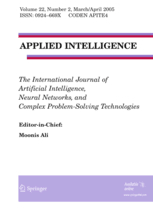
APPLIED INTELLIGENCE
Shaping the landscape of applied intelligence for tomorrow.Applied Intelligence is a prominent peer-reviewed journal that has been instrumental in advancing the field of Artificial Intelligence since its inception in 1991. Published by Springer, a reputable name in academic publishing, the journal focuses on the innovative applications of intelligent systems, algorithms, and methodologies across various disciplines. With an impressive Q2 ranking in the Artificial Intelligence category for 2023, and a Scopus rank of #117 out of 350 in its field, Applied Intelligence is recognized for its significant contributions and rigorous standards. The journal is accessed primarily through subscription, ensuring that high-quality research reaches the academic community and industry professionals alike. Its commitment to disseminating cutting-edge research makes it an invaluable resource for researchers, practitioners, and students interested in the practical implications of AI advancements. Join a community dedicated to exploring the transformative power of artificial intelligence and stay ahead in this ever-evolving field!