
Magnificat Cultura i Literatura Medievals
Scope & Guideline
Fostering Inclusive Research in Medieval Heritage
Introduction
Aims and Scopes
- Textual Criticism and Editions:
The journal emphasizes the critical editing of medieval texts, providing new editions and translations, which are essential for understanding the historical and cultural contexts of these works. - Cultural and Historical Contextualization:
Papers often explore the social, political, and religious influences on medieval literature, examining how these contexts shape texts and their interpretations. - Interdisciplinary Approaches:
The journal encourages interdisciplinary research, integrating perspectives from history, musicology, art history, and other fields to enrich the understanding of medieval literature. - Focus on Catalan and Iberian Literature:
A significant portion of the journal's content is dedicated to Catalan and broader Iberian literary traditions, reflecting the unique cultural heritage of the region. - Gender Studies in Medieval Literature:
There is a notable emphasis on exploring themes of gender and representation in medieval texts, particularly concerning the roles of women and the portrayal of femininity. - Digital Humanities and Manuscript Studies:
The journal incorporates discussions on digital methodologies and the study of manuscripts, highlighting the evolution of medieval texts in the digital age.
Trending and Emerging
- Digital Humanities and Textual Encoding:
There is a rising trend in the application of digital humanities methodologies, such as TEI encoding and digital editions, facilitating new ways to interact with and analyze medieval texts. - Gender and Identity in Medieval Studies:
An increasing number of studies are focusing on gender dynamics and identity formation within medieval literature, indicating a broader engagement with contemporary discussions on gender and representation. - Intertextuality and Adaptation:
Emerging interest in how medieval texts interact with one another, including adaptations and reinterpretations, suggests a shift towards understanding literature as a network of evolving cultural narratives. - Cultural Exchange and Translation:
Papers examining the processes of translation and cultural exchange in the medieval context are gaining prominence, highlighting the interconnectedness of various medieval cultures. - Hagiography and Lives of Saints:
There is a renewed focus on hagiographical studies, particularly concerning the lives of female saints, reflecting an interest in religious narratives and their cultural implications.
Declining or Waning
- Traditional Literary Forms:
There has been a noticeable decrease in papers focusing exclusively on traditional forms of medieval literature, such as epic poetry and ballads, as researchers seek to explore more varied and nuanced literary expressions. - Historical Linguistics:
The interest in historical linguistics, particularly the study of medieval language evolution, seems to be waning, with fewer studies dedicated to linguistic analysis compared to previous years. - Thematic Studies on Chivalry:
Themes centered around chivalric literature and knightly ideals have seen less frequency in recent publications, suggesting a shift towards more diverse themes that encompass broader social issues. - Religious Texts as Central Focus:
While religious texts remain important, there appears to be a decline in papers that focus solely on doctrinal or liturgical texts, with a growing preference for secular themes and their intersections with the sacred.
Similar Journals

STUDI MEDIEVALI
Reviving the Voices of the Medieval WorldSTUDI MEDIEVALI, published by the Centro Ital Stud Sull Alto Med, is a premier journal dedicated to the exploration of medieval studies, focusing on both cultural and historical dimensions. Since its inception in 2002, this journal has become an essential resource for scholars and students alike, providing critical insights into the complexities of the medieval era. Although it currently operates under a traditional access model, its contributions to the field are undeniable, with a 2023 ranking in the fourth quartile for Cultural Studies and History categories in Scopus rankings, highlighting its niche yet valuable position within academic discourse. Based in Spoleto, Italy, the journal serves as a platform for innovative research and interdisciplinary dialogue, inviting contributions that challenge conventional understandings and stimulate further inquiry into medieval life. Researchers and professionals will find in STUDI MEDIEVALI an opportunity to engage with a community of passionate scholars dedicated to uncovering the multifaceted realities of the medieval period.
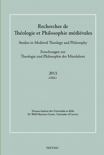
Recherches de Theologie et Philosophie Medievales
Illuminating the Intersection of Faith and ReasonRecherches de Theologie et Philosophie Medievales is a distinguished scholarly journal dedicated to the exploration of medieval theology and philosophy, published by PEETERS in Belgium. With an ISSN of 1370-7493 and an E-ISSN of 1783-1717, it has become an essential resource for researchers and scholars within its domain since its inception in 1996. This journal occupies a notable position, recognized in the Q3 category across critical fields such as History, Philosophy, and Religious Studies in 2023, showcasing its valuable contribution to academic discourse. The journal ranks impressively in Scopus, holding positions of #202, #576, and #327 in Religious Studies, History, and Philosophy respectively, placing it in the 68th, 67th, and 59th percentiles. Though it operates under traditional access models, its rigorous peer-reviewed articles provide in-depth analyses and perspectives that are invaluable for students, academics, and professionals alike, making it an indispensable component of medieval studies.
Journal of Medieval Iberian Studies
Connecting Cultures Through Medieval ScholarshipThe Journal of Medieval Iberian Studies is a leading academic journal published by Routledge Journals, Taylor & Francis Ltd, dedicated to exploring the diverse and rich tapestry of medieval Iberian history and culture. With its ISSN 1754-6559 and E-ISSN 1754-6567, this journal serves as a vital resource for scholars engaged in the fields of cultural studies and history, attaining a prestigious Q1 ranking in both categories as of 2023. The journal is recognized for its significant contribution to the humanities, featuring peer-reviewed articles that foster innovative research and critical discourse on medieval Iberia from 2010 to 2024. Spanning an array of topics, it encapsulates interdisciplinary approaches to medieval studies, making it an essential publication for researchers, professionals, and students alike who seek to deepen their understanding of this pivotal period in history. Although it currently does not offer open access options, the journal is committed to advancing scholarly discussion and knowledge dissemination within the academic community.
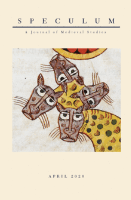
SPECULUM-A JOURNAL OF MEDIEVAL STUDIES
Exploring the Depths of Medieval InsightSPECULUM: A Journal of Medieval Studies, published by University of Chicago Press, stands as a premier academic platform within the field of medieval studies. With an impressive legacy dating back to its inception in 1926, this journal has attracted scholarly contributions that explore the rich tapestry of human experience during the medieval period, encompassing areas such as history, literature, philosophy, cultural studies, and the visual and performing arts. It boasts elite rankings—Q1 in History, Literature and Literary Theory, Religious Studies, and Visual Arts and Performing Arts, with a commendable Q2 in Cultural Studies and Philosophy—attesting to its impact and relevance in academia. Although it is not an open-access journal, the rigorous peer-review process and critical scholarship found within its pages provide invaluable insights for researchers, professionals, and students alike. With a substantial Scopus ranking, ID 0038-7134, and E-ISSN 2040-8072, SPECULUM continues to serve as an essential resource for advancing knowledge and understanding of the medieval world, encouraging interdisciplinary dialogue and scholarly interaction.
MEDIEVAL HISTORY JOURNAL
Diving into the Rich Tapestry of Medieval LifeWelcome to the MEDIEVAL HISTORY JOURNAL, a prominent academic platform published by SAGE PUBLICATIONS INC, dedicated to advancing the field of medieval studies. Since its inception in 1998, this journal has established itself as a vital source of scholarly discourse, offering a rich array of articles that cover various aspects of medieval history, from cultural and societal developments to the intricate interplay of politics and religion. With an impressive rank of #568 out of 1760 in the Scopus Arts and Humanities History category and a respectable 67th percentile, the journal exemplifies rigorous academic standards and impactful research. Although it operates primarily under subscription access, its contributions are indispensable for researchers, professionals, and students seeking to deepen their understanding of the medieval era. The journal's ongoing commitment to publishing cutting-edge research makes it a cornerstone for anyone passionate about exploring the complexities of medieval history.

Carte Romanze
Navigating the Intersection of Culture and NarrativeCarte Romanze is a prominent academic journal published by Milano University Press, dedicated to the field of literature and cultural studies. With an ISSN of 2282-7447, it offers an invaluable platform for researchers, professionals, and students interested in exploring the rich landscapes of narrative and cultural expression. Since its transition to Open Access in 2013, the journal has championed the dissemination of knowledge, making high-quality research freely available to a global audience. Situated in the historic city of Milan, the journal aims to foster interdisciplinary dialogue and innovation in literary scholarship while maintaining rigorous academic standards. As it continues to contribute to the landscape of contemporary literature studies, Carte Romanze is poised to inspire new scholarly conversations and ideas.

CAMBRIAN MEDIEVAL CELTIC STUDIES
Illuminating the Medieval Celtic ExperienceCambrian Medieval Celtic Studies is a distinguished academic journal dedicated to the exploration and analysis of the rich cultural, historical, and linguistic heritage of the Celtic regions during the medieval period. Published by the Department of Welsh at the University of Aberystwyth in the United Kingdom, this journal serves as a vital platform for scholars and researchers in the fields of archaeology, history, linguistics, and literary studies. With its ISSN 1353-0089, the journal has been operational since 2002, delivering valuable insights and fostering scholarly discourse up to the present, with plans for future publications extending to 2024. Although currently categorized in the Q4 quartile across various relevant fields, Cambrian Medieval Celtic Studies remains committed to enhancing the understanding of medieval Celtic culture through rigorous research and peer-reviewed content. Researchers and students alike will find this journal an essential resource for advancing their studies in these dynamic fields, as it provides open access to a wealth of interdisciplinary perspectives in the arts and humanities.

Listy Filologicke
Fostering Excellence in Humanities and Social Sciences Research.Listy Filologicke is a distinguished academic journal published by the Institute of Classical Studies at the Academy of Sciences of the Czech Republic, focusing on the interdisciplinary fields of History, Linguistics and Language, and Literature and Literary Theory. With an ISSN of 0024-4457 and an E-ISSN of 2570-9410, this journal has been a pivotal platform for scholarly discourse since its convergence years began in 2003. Notably, it holds a Q3 classification in History and Linguistics and Language, and a Q2 in Literature and Literary Theory as of 2023. Its rankings within Scopus illustrate its relevance and impact in academia, with noteworthy positions in the Arts and Humanities and Social Sciences categories. Researchers, professionals, and students will find Listy Filologicke an invaluable resource for exploring cutting-edge research, critical analyses, and discourse that contribute significantly to their respective fields. Based in the heart of the Czech Republic, it continues to promote scholarly excellence and foster international collaboration.
REVUE D HISTOIRE LITTERAIRE DE LA FRANCE
Charting the Evolution of French Literary TheoryREVUE D'HISTOIRE LITTERAIRE DE LA FRANCE, published by Classiques Garnier, is a distinguished academic journal dedicated to the exploration and analysis of French literary history and theory. With an ISSN of 0035-2411 and an E-ISSN of 2105-2689, this journal serves as an essential resource for researchers, professionals, and students in the fields of literature and the humanities. Though it does not currently offer open access, its rigorous scholarship contributes significantly to the understanding of historical literary movements and their cultural contexts. Despite its discontinuation in Scopus after 2016, the journal has a notable academic pedigree, providing critical perspectives on literature from the past to the contemporary era. Situated at 6 Rue de la Sorbonne, Paris 75005, France, the journal aims to enrich the discourse surrounding literary theory and history, highlighting its enduring relevance in today's scholarly landscape.

Zeitschrift fur Katalanistik
Unveiling Insights in Linguistics and Literary TheoryZeitschrift für Katalanistik is a distinguished academic journal published by Albert Ludwig University in Germany, catering to the fields of Linguistics and Literature. With an impressive converged history from 2010 to 2023, this journal operates under rigorous academic scrutiny, as evidenced by its classification in the Q3 quartile for Linguistics and Q2 for Literature and Literary Theory. It holds a respectable ranking in the Scopus database, indicating its solid contribution to ongoing scholarly dialogue, particularly in the realms of both language and literary studies. Despite not currently offering Open Access options, the journal provides a vital platform for researchers, professionals, and students seeking to publish and explore contemporary issues in Katalan studies. With its comprehensive scope and academic rigor, Zeitschrift für Katalanistik remains an essential resource for anyone passionate about the intersection of Catalan language and literature.