
MALIMBUS
Scope & Guideline
Fostering collaboration for the preservation of avian diversity.
Introduction
Aims and Scopes
- Avian Biodiversity Documentation:
The journal prioritizes the documentation of bird species across various West African countries, highlighting new records, range extensions, and species descriptions that contribute to the understanding of regional biodiversity. - Field Observations and Behavior Studies:
MALIMBUS publishes studies based on field observations that investigate bird behavior, nesting habits, and interactions with their environment, providing insights into the ecology of avian species. - Conservation and Habitat Studies:
Research focused on the conservation of bird habitats and the impact of environmental changes is a core area, showcasing studies on habitat use, threats to populations, and conservation strategies. - Collaborative Research Initiatives:
The journal encourages collaborative projects, particularly those involving local researchers and conservationists, to enhance data collection and awareness about avian species in their native regions. - Taxonomy and Systematics:
MALIMBUS also addresses taxonomic issues and systematics of bird species, providing molecular and morphological evidence to clarify species identities and relationships.
Trending and Emerging
- Focus on Lesser-Known Species:
There is a growing trend of documenting lesser-known or newly discovered species, as indicated by the increasing number of papers detailing first records and descriptions of species in specific regions. - Environmental Impact Assessments:
Recent studies are increasingly assessing the impacts of environmental changes on bird populations, showcasing a shift towards understanding how habitat modification affects avian biodiversity. - Citizen Science and Community Engagement:
The rise of citizen science initiatives is reflected in the journal's publications, with studies highlighting community involvement in bird monitoring and conservation efforts. - Use of Technology in Ornithology:
Emerging themes include the use of technology, such as satellite tracking and acoustic monitoring, to study bird movements and behaviors, indicating a modernization of research methodologies. - Conservation Awareness and Policy Advocacy:
There is an increasing emphasis on conservation awareness and policy advocacy, with papers that not only present research findings but also discuss implications for conservation practices and policies.
Declining or Waning
- General Observations of Common Species:
There has been a noticeable decrease in studies focusing on common or widely distributed bird species, possibly due to a shift towards more specialized or lesser-known species that require documentation. - Traditional Nesting Studies:
Research that traditionally focused on nesting behaviors of common species has waned, as more emphasis is placed on unique or endangered species and their specific breeding behaviors. - Historical Data Comparisons:
There is a declining trend in papers that compare current data with historical observations, which may suggest a move towards more immediate field research rather than retrospective analysis. - Less Focus on Ornithological Events:
Papers discussing large-scale ornithological events or migrations have become less frequent, possibly indicating a shift in focus to localized studies that address specific regional concerns. - Ecological Impact Studies:
Investigations into the ecological impacts of birds on their environments have seen a reduction, as the journal shifts towards more direct conservation and field study reports.
Similar Journals
Ornithology
Elevating Understanding of Our Feathered Friends.Ornithology, published by Oxford University Press Inc, is a premier journal dedicated to the field of avian biology, offering a platform for researchers, professionals, and students to share groundbreaking findings in the study of birds. With an impressive impact factor and ranking in the Q1 quartile for both Animal Science and Zoology, as well as Ecology, Evolution, Behavior, and Systematics, Ornithology serves as a vital resource for advancing our understanding of avian species and their ecological roles. The journal allows open access viewing, broadening the reach and impact of published research. Covering comprehensive studies from 1982 to 2023, it facilitates collaboration and innovation within the global ornithological community. Engaging with Ornithology not only elevates your research profile but also contributes to the rich tapestry of knowledge concerning the world's diverse bird populations.

Ornithology Research
Connecting Researchers in Avian StudiesOrnithology Research is a leading academic journal published by SPRINGERNATURE, specializing in the field of avian studies and contributing to the broader category of Animal Science and Zoology. With a respectable Q2 ranking in its field as of 2023, this journal provides a dynamic platform for the dissemination of innovative research findings related to ornithology, ecology, and conservation. The journal, which transitioned to an Open Access model, ensures that its research is accessible to a global audience, fostering collaboration and knowledge sharing across disciplines. With an E-ISSN of 2662-673X, Ornithology Research serves the needs of researchers, professionals, and students dedicated to understanding the complexities of avian life. Its commitment to high-impact, peer-reviewed articles makes it an essential resource for anyone interested in advancing the science of ornithology.
ORNIS HUNGARICA
Championing high-quality research in animal sciences.ORNIS HUNGARICA, an esteemed journal in the fields of Animal Science and Zoology as well as Ecology, Evolution, Behavior and Systematics, is published by Walter de Gruyter GmbH, a leading scientific publisher renowned for its commitment to disseminating high-quality research. Operating under an Open Access model since 2012, this journal provides invaluable access to scholarly articles, fostering collaboration and knowledge sharing among researchers and professionals. With its ISSN 1215-1610 and E-ISSN 2061-9588, ORNIS HUNGARICA has become a noteworthy platform for innovative studies and findings from Hungary and beyond, contributing significantly to the discourse in its field. As indicated by its Q3 ranking in Animal Science and Zoology and Q4 ranking in Ecology, the journal is recognized for its diverse research contributions, although it aims to expand its reach and relevance in future editions. Researchers and students alike will find in ORNIS HUNGARICA a dedicated resource for advancing knowledge and furthering the understanding of avian biology and ecology.
JOURNAL OF FIELD ORNITHOLOGY
Elevating Understanding of Avian Species and Their HabitatsJOURNAL OF FIELD ORNITHOLOGY, published by the Resilience Alliance, is a premier academic journal dedicated to advancing knowledge in the fields of ornithology, ecology, and animal behavior. With an ISSN of 0273-8570 and a growing E-ISSN of 1557-9263, this journal has been a vital platform for researchers since its inception in 1996, continuing to publish cutting-edge studies up until 2024. The journal is recognized within the academic community, holding a Q2 ranking in Animal Science and Zoology and a Q3 ranking in Ecology, Evolution, Behavior and Systematics as of 2023. While the journal does not currently operate under an open access model, it remains a critical source for researchers, students, and professionals seeking to explore innovative research and discoveries in field ornithology. The diverse range of topics covered underscores its commitment to highlighting significant findings and fostering a deeper understanding of avian species and their ecosystems.

Avian Biology Research
Pioneering insights into avian ecology and behavior.Avian Biology Research, published by SAGE PUBLICATIONS LTD, is a leading journal dedicated to advancing the study of avian species through high-quality, peer-reviewed research. With an ISSN of 1758-1559 and an E-ISSN of 1758-1567, this journal has established itself as a vital resource within the fields of Animal Science and Zoology, as well as Ecology, Evolution, Behavior, and Systematics. The journal is currently ranked Q3 in both categories according to the 2023 release of the category quartiles, and it contributes significantly to the global understanding of avian biology, including behavior, physiology, and conservation efforts. Positioned within the competitive landscape of the Scopus rankings, it finds itself amidst a diverse array of research, with medical and environmental implications. As an open-access journal, Avian Biology Research ensures greater accessibility to its contents, fostering disseminative opportunities for researchers, professionals, and students alike. With a publication window spanning from 2008 to 2024, it continues to be an invaluable platform for the dissemination and dialogue of avian research, thereby enlightening future inquiries and driving scientific advancements in this crucial area of biology.
JOURNAL OF AVIAN BIOLOGY
Championing the study of birds to inspire conservation efforts.Journal of Avian Biology, published by Wiley, is a leading journal in the field of animal science and zoology, with an impressive impact factor highlighting its significance in advancing our understanding of avian ecology and behavior. Since its inception in 1994, this journal has provided a vital platform for researchers, professionals, and students to share innovative studies and findings related to avian biology, contributing to a broader understanding of ecological dynamics and conservation strategies. Recognized in the Q1 category for Animal Science and Zoology and Q2 for Ecology, Evolution, Behavior and Systematics, it ranks 112th out of 490 in its primary field, demonstrating a strong percentile performance. The journal invites submissions that explore diverse aspects of avian research, fostering interdisciplinary discussions that are crucial for ongoing scientific inquiries. With both print and electronic formats, it maintains an accessible repository of knowledge for the global conservation community. Engage with the latest in avian studies through the Journal of Avian Biology and contribute to the evolution of this critical field.
Zoologia
Championing Open Access in ZoologyZoologia, published by the SOC BRASILEIRA ZOOLOGIA and UNIV FEDERAL PARANA, is a premier open-access journal dedicated to the field of zoology and related disciplines. Established in 2009 and based in Brazil, this journal has quickly positioned itself as a vital resource for researchers, professionals, and students, providing a platform for innovative research and comprehensive reviews in animal science and zoology. With an H-index indicative of its growing citation impact and a current Scopus ranking placing it in the 46th percentile of its category, Zoologia focuses on increasing the visibility and accessibility of cutting-edge zoological research. The journal aims to advance the understanding of animal biology, ecology, and conservation, making it an essential read for those invested in animal science. As an open-access publication, it ensures that knowledge dissemination is unrestricted, fostering a collaborative scientific community striving towards impactful conservation and biodiversity initiatives.
AVIAN DISEASES
Innovating solutions for poultry health challenges.AVIAN DISEASES, a prominent journal published by the American Association of Avian Pathologists, serves as a critical platform for advancing research in the field of avian health and pathology. With the ISSN 0005-2086 and E-ISSN 1938-4351, this journal has been a cornerstone of scholarly communication since its inception in 1963, covering a wide array of topics including epidemiology, immunology, and microbiology as they pertain to avian species. Recognized for its academic rigor, AVIAN DISEASES boasts a commendable 2023 categorization in Q2 for Animal Science and Zoology, alongside Q3 rankings in Food Animals and Immunology, indicative of its significant contribution to these fields. Although it does not offer Open Access options, the journal continues to attract a diverse international readership, providing invaluable resources for researchers, practitioners, and students dedicated to avian medicine and veterinary science. By addressing critical issues affecting poultry health and production, AVIAN DISEASES plays an essential role in promoting sustainable practices within the agricultural industry.

ORNITOLOGIA NEOTROPICAL
Exploring the rich tapestry of Neotropical birdlife.ORNITOLOGIA NEOTROPICAL is a vital journal dedicated to advancing the field of Neotropical ornithology, published by the esteemed Neotropical Ornithological Society in collaboration with the USGS Patuxent Wildlife Research Center. With an ISSN of 1075-4377, this journal serves as a platform for researchers, professionals, and students to disseminate important findings related to avian biodiversity, ecology, and conservation in the Neotropical region. Although currently classified in Q4 quartiles for both Animal Science and Zoology and Ecology, Evolution, Behavior and Systematics, ORNITOLOGIA NEOTROPICAL has been gaining recognition since its inception in 2005. The journal promotes open discussions and rigorous methodologies that significantly contribute to the understanding and protection of avian species. By facilitating accessibility to cutting-edge research and fostering a collaborative scientific community, ORNITOLOGIA NEOTROPICAL aims to enhance the impact and importance of ornithological studies in the Neotropical domain.
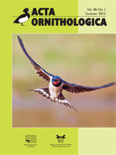
ACTA ORNITHOLOGICA
Exploring the intricate world of avian biology and conservation.ACTA ORNITHOLOGICA is a prominent peer-reviewed journal dedicated to advancing the field of ornithology. Published by the MUSEUM & INST ZOOLOGY in Poland, the journal focuses on a wide array of topics related to avian biology, ecology, and conservation, supporting the dissemination of high-quality research aimed at understanding bird populations and their habitats. With a respectable impact factor reflected in its Q3 rank within the fields of Animal Science and Zoology, ACTA ORNITHOLOGICA stands as a reliable source for professionals and academics alike. The journal is indexed in major databases like Scopus, further contributing to its visibility and accessibility to scholars worldwide. Engaging with this journal provides researchers and students with invaluable insights and opportunities to contribute to the growing body of knowledge in ornithological studies as it continues to maintain its commitment to excellence and relevance in the scientific community from its inception in 1981.