MARINE CHEMISTRY
metrics 2024
Decoding the Chemical Mysteries of the Ocean
Introduction
MARINE CHEMISTRY, published by Elsevier, is a premier international journal that has been at the forefront of advancing knowledge in the fields of chemistry, oceanography, and environmental science since its inception in 1972. As indicated by its impressive impact factor and its numerous Q1 rankings in Chemistry, Oceanography, and Water Science and Technology for 2023, the journal is a vital resource for researchers and professionals dedicated to addressing critical issues related to marine environments and their chemical dynamics. The journal publishes high-quality research that explores various aspects of chemical processes in aquatic systems, aiming to bridge the gap between theoretical studies and practical applications. With a significant emphasis on interdisciplinary work, MARINE CHEMISTRY serves as a platform for sharing innovative research findings that contribute to the sustainability and health of marine ecosystems. Although it is not an open-access publication, its comprehensive repository of scholarly articles remains accessible through institutional subscriptions, providing limitless opportunities for growth and discovery in the field.
Metrics 2024
 0.993.003.30149
Metrics History
Rank 2024
Scopus
IF (Web Of Science)
JCI (Web Of Science)
Quartile History
Similar Journals

Marine Pollution Bulletin
Advancing knowledge on marine ecosystems.Marine Pollution Bulletin is a premier interdisciplinary journal dedicated to publishing innovative research and critical reviews focused on the impact of human activities on marine ecosystems. Published by PERGAMON-ELSEVIER SCIENCE LTD, this journal is renowned for its rigorous peer-review process and holds a prestigious position in the academic community, with a 2023 Q1 ranking in Aquatic Science, Oceanography, and Pollution. With a history spanning from 1970 to 2024, it provides a vital platform for researchers, professionals, and students alike to share groundbreaking findings in marine environmental science. The journal, based in the United Kingdom at The Boulevard, Langford Lane, Kidlington, Oxford OX5 1GB, England, is indexed in Scopus and ranks impressively in various categories, underscoring its significance in advancing the understanding of marine pollutants and their ecological consequences. Submissions are encouraged for original research, review articles, and case studies that contribute to this critical field, enabling the academic community to explore solutions for mitigating marine pollution.
International Journal of Sediment Research
Exploring the Depths of Geological KnowledgeThe International Journal of Sediment Research, published by KEAI PUBLISHING LTD, stands as a premier platform for advanced studies in the fields of geology and stratigraphy. With an impressive Q1 ranking in both categories in 2023, this journal hosts a wealth of research that has significantly contributed to our understanding of sediment dynamics and geological processes since its inception in 1981. The journal is dedicated to publishing high-quality research articles, reviews, and case studies that span a broad range of topics, including sedimentology, stratigraphic analysis, and environmental geology. Researchers, professionals, and students will find invaluable insights within its pages, courtesy of cutting-edge methodologies and rigorous peer-review standards. Despite its non-open access status, the journal ensures a global reach, facilitating knowledge sharing and collaboration among academia and industry. With a rich history and a forward-looking approach to scientific exploration, the International Journal of Sediment Research remains a vital resource for those committed to advancing our understanding of Earth's sedimentary systems.
LIMNOLOGY AND OCEANOGRAPHY
Bridging the Gap Between Theory and Practice in Aquatic ScienceLimnology and Oceanography is a premier peer-reviewed journal published by Wiley that has been at the forefront of aquatic sciences since its inception in 1956. With an impressive impact factor placing it in Q1 in both Aquatic Science and Oceanography categories, this journal showcases cutting-edge research and studies relevant to the dynamics of freshwater and marine ecosystems. Limnology and Oceanography serves as a vital platform for researchers, professionals, and students to disseminate their findings and foster a deeper understanding of aquatic environments. The journal does not currently offer open access, but it provides a unique opportunity for scholars to contribute to a body of work that influences policy, conservation efforts, and the scientific community at large. With its substantial ranking in Scopus as #12 in Aquatic Science and #9 in Oceanography, Limnology and Oceanography remains a critical resource for advancing knowledge in these vital fields.
ACTA OCEANOLOGICA SINICA
Navigating the Frontiers of Ocean ResearchACTA OCEANOLOGICA SINICA, published by SPRINGER, stands as a significant voice in the fields of Aquatic Science and Oceanography, contributing vital research and insights since its inception in 1985. With an ISSN of 0253-505X and an E-ISSN of 1869-1099, this journal maintains a strong international focus, delivering high-quality peer-reviewed articles that address pressing marine and freshwater environmental issues. Although it operates under a subscription model, its Q3 ranking in both Aquatic Science and Oceanography demonstrates its solid standing within Scopus, placing it in the 48th and 44th percentiles respectively. The journal aims to foster knowledge exchange and collaboration among researchers, professionals, and students by providing a platform for innovative studies and comprehensive reviews. With a dedicated editorial board and a commitment to advancing scientific understanding, ACTA OCEANOLOGICA SINICA serves as an essential resource for anyone engaged in the study of oceanographic phenomena and aquatic ecosystems.
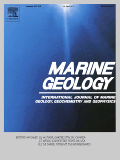
MARINE GEOLOGY
Highlighting Innovations in Marine Geological Science.MARINE GEOLOGY, published by Elsevier, is a premier journal dedicated to advancing the understanding of marine geological processes and their interactions with the Earth's systems. With an ISSN of 0025-3227 and an E-ISSN of 1872-6151, this esteemed journal has been a vital resource for researchers and professionals since its inception in 1964. The journal is recognized for its high impact, with commendable rankings, including Q1 in both Geology and Oceanography, and Q2 in Geochemistry and Petrology according to its 2023 category quartiles. With a Scopus rank within the top percentiles in various fields, MARINE GEOLOGY offers a platform for original research, critical reviews, and significant advancements in the field, covering topics ranging from sedimentology to geochemical processes in marine environments. Although it does not operate under an open-access model, its rigorous peer-review process ensures high-quality publications that contribute to our understanding of oceanic and geological sciences. Researchers, students, and professionals alike will find MARINE GEOLOGY to be an essential resource for collaboration and discovery within the vast field of marine science.
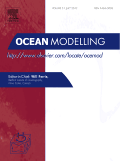
OCEAN MODELLING
Innovating Insights for Marine Mastery.OCEAN MODELLING, published by Elsevier Science Ltd, is a leading journal dedicated to advancing the understanding of ocean systems through innovative modeling techniques and interdisciplinary research. With an ISSN of 1463-5003 and E-ISSN 1463-5011, this journal is esteemed within the fields of Atmospheric Science, Computer Science (Miscellaneous), Geotechnical Engineering and Engineering Geology, and Oceanography, as reflected by its impressive quartile rankings in 2023, including Q1 in Oceanography and Q1 in Computer Science. Researchers and professionals benefit from the journal’s high-impact contributions, as indicated by Scopus rankings that place it among the top-tier publications in its categories. Although not an open-access journal, OCEAN MODELLING provides essential insights and methodologies crucial for both academic and practical applications, facilitating knowledge transfer and innovation among marine scientists, engineers, and policy-makers engaged in vital ecological studies and technological advancements regarding our oceans. Join the forefront of marine modeling research by contributing to and exploring the wealth of knowledge presented in OCEAN MODELLING.
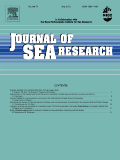
JOURNAL OF SEA RESEARCH
Fostering Interdisciplinary Insights in Marine ResearchJOURNAL OF SEA RESEARCH, published by Elsevier, is a premier academic journal dedicated to advancing knowledge in the fields of aquatic science, ecology, and oceanography. Since its inception in 1996, this journal has provided a vital platform for researchers and professionals to disseminate groundbreaking findings and promote fostering interdisciplinary discussions. With its impressive Q2 ranking in multiple categories, including Aquatic Science and Ecology, Evolution, Behavior and Systematics, it positions itself as a significant contributor to marine and environmental studies. The journal is accessible in both print (ISSN: 1385-1101) and online formats (E-ISSN: 1873-1414), ensuring wide reach and engagement within the scholarly community. Researchers and students alike will find the journal not only a reliable source of information but also a source of inspiration for future explorations. With a commitment to quality and a broad scope that spans fundamental to applied research, JOURNAL OF SEA RESEARCH remains an indispensable resource for understanding the complexities of marine environments and their relevance to our changing world.
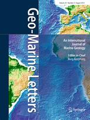
GEO-MARINE LETTERS
Innovating Insights for a Sustainable Marine FutureGEO-MARINE LETTERS, published by Springer, is a prestigious academic journal that has been a pivotal platform for the dissemination of innovative research in the fields of Earth and Planetary Sciences, Oceanography, Environmental Science, and Geotechnical Engineering since its inception in 1981. With an E-ISSN of 1432-1157, this journal has established itself in the Q2 quartile across multiple categories in 2023, indicating its influential position within the scientific community, as reflected by its Scopus rankings. While it currently does not offer an open access option, its rigorous peer-review process ensures the publication of high-quality research that contributes significantly to advancing our understanding of marine and geological sciences. Researchers, professionals, and students alike will benefit from the diverse scope of studies featured in GEO-MARINE LETTERS, making it an essential resource for those engaged in environmental and marine research. Situated in Germany, the journal's commitment to excellence continues to shape critical discussions and innovations in the field.
Marine Genomics
Unlocking Marine Mysteries Through Genomic ScienceMarine Genomics, published by Elsevier, is a pivotal journal specializing in the intersection of genomic sciences and aquatic biology. With an ISSN of 1874-7787 and an E-ISSN of 1876-7478, this journal serves as a vital platform for researchers and professionals eager to advance our understanding of marine genetic diversity, evolutionary processes, and biotechnological applications. The journal holds a Q2 ranking in Aquatic Science and a Q3 ranking in Genetics, reflecting its significant contributions to the field alongside its impressive Scopus rankings in both Agricultural and Biological Sciences and Biochemistry, Genetics, and Molecular Biology. As an essential resource for students and academics alike, Marine Genomics is committed to fostering awareness and knowledge of marine ecosystems through quality research disseminated to a global audience. This journal is particularly crucial in an era where understanding aquatic genomics is increasingly vital for conservation efforts and sustainable practices in marine environments.

Oceans-Switzerland
Diving into the Science of Our OceansOceans-Switzerland, published by MDPI, is an esteemed open-access journal established in 2020, with a focus on providing a platform for the dissemination of high-quality research in the fields of Environmental Science and Oceanography. Based in the picturesque city of Basel, Switzerland, the journal seeks to foster a deeper understanding of oceanic processes and their implications for the environment through rigorous peer-reviewed articles. With an impact factor reflected in its 2023 Scopus rankings, placing it in the 56th percentile across its categories, Oceans-Switzerland continues to promote interdisciplinary collaboration and innovation, targeting a wide audience of researchers, professionals, and students keen on exploring the complexities of ocean systems. The journal's commitment to open-access policy ensures that groundbreaking research is available to a global audience, reinforcing its crucial role in advancing knowledge and shaping practices within the scientific community.