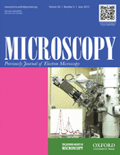
Microscopy
metrics 2024
Bridging Disciplines Through Advanced Imaging Research
Introduction
Microscopy, published by Oxford University Press, is a prestigious journal dedicated to advancing the field of microscopy and imaging in biological and applied sciences. With a dynamic coverage dating from 1953 to the present, it offers vital insights into the latest techniques and applications across various disciplines, including Instrumentation, Radiology, Nuclear Medicine and Imaging, and Structural Biology. The journal is recognized for its quality, illustrated by its Q2 and Q3 quartile rankings in relevant categories for 2023. Researchers, professionals, and students will find Microscopy an invaluable resource for keeping abreast of contemporary developments and methodologies in the field. As an open-access journal, it promotes equitable access to cutting-edge research and fosters collaboration among the international scientific community, making it essential reading for anyone involved in microscopy research and its applications. For more information, please visit their site for access options and contributions.
Metrics 2024
 0.561.501.6059
Metrics History
Rank 2024
Scopus
IF (Web Of Science)
JCI (Web Of Science)
Quartile History
Similar Journals
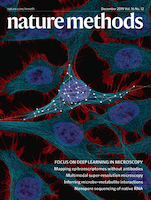
NATURE METHODS
Unveiling the latest advancements in biological methodologies.NATURE METHODS, published by NATURE PORTFOLIO, is a prestigious journal at the forefront of publishing influential research in the disciplines of Biochemistry, Biotechnology, Cell Biology, and Molecular Biology. With a high impact factor and its exemplary Q1 rankings across various categories in 2023, this journal epitomizes excellence, providing a vital platform for researchers and professionals to disseminate groundbreaking methodologies and innovative techniques that drive scientific advancement. Established in 2004 and continuing through to 2024, NATURE METHODS encompasses a diverse array of research articles, reviews, and commentary, making it an essential resource for anyone involved in the biological sciences. While the journal is not currently open access, its contributions are invaluable, offering insights that not only elevate academic discourse but also enhance experimental practice and technological application. Its influence and rigorous peer review process ensure it remains a cornerstone in the rapidly evolving fields of biochemistry and molecular biology.

PROCEEDINGS OF THE JAPAN ACADEMY SERIES B-PHYSICAL AND BIOLOGICAL SCIENCES
Advancing Knowledge in Physical and Biological SciencesPROCEEDINGS OF THE JAPAN ACADEMY SERIES B-PHYSICAL AND BIOLOGICAL SCIENCES, published by JAPAN ACAD, is a distinguished journal dedicated to the dissemination of cutting-edge research in the fields of physical and biological sciences. With an impressive journey from 1977 to 2024, this journal has established itself as a vital platform for advancing scientific knowledge and fostering academic collaboration. Moreover, its excellence is reflected in its 2023 rankings, achieving Q1 status in multiple categories, including Agricultural and Biological Sciences, Medicine, Multidisciplinary studies, and Physics and Astronomy. The journal serves as an essential resource for researchers and professionals aiming to explore innovative ideas and findings, as well as a valuable tool for students committed to their academic growth. The journal is not open access, providing a unique avenue for curated scholarly content that is highly regarded within the academic community.
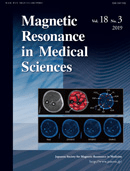
Magnetic Resonance in Medical Sciences
Fostering Collaboration for Breakthrough DiscoveriesMagnetic Resonance in Medical Sciences is a leading open-access journal published by the Japanese Society of Magnetic Resonance Medicine, dedicated to advancing the field of medical imaging through high-quality research articles and reviews. With a strong focus on radiology, nuclear medicine, and imaging technologies, this journal serves as a crucial platform for the dissemination of innovative studies, as evidenced by its impressive Scopus ranking of #75 in its category and a commendable 77th percentile standing. Since its inception in 2002 and becoming open access in 2016, it has fostered a collaborative research environment, welcoming contributions from both seasoned experts and emerging scholars alike. The journal's commitment to enhancing diagnostic techniques and patient outcomes makes it an invaluable resource for researchers, healthcare professionals, and students passionate about the transformative potential of magnetic resonance imaging. Located in Tokyo, Japan, Magnetic Resonance in Medical Sciences continues to shape the future of medical imaging through rigorous scholarship and impactful research.

PROGRESS IN BIOCHEMISTRY AND BIOPHYSICS
Bridging Theory and Practice in Molecular SciencesPROGRESS IN BIOCHEMISTRY AND BIOPHYSICS, published by the Chinese Academy of Sciences, Institute of Biophysics, serves as a vital platform for advancing the field of biochemistry and biophysics. With a legacy dating from 1996 through 2024, this journal has been instrumental in disseminating critical research findings and innovative methodologies that push the boundaries of our understanding of biochemical processes and biophysical phenomena. Though currently unlisted as Open Access, the journal embodies rigorous peer-reviewed scholarship, positioned in the competitive Q4 quartile for both biochemistry and biophysics categories as per the 2023 metrics. It caters to a diverse audience, including researchers, professionals, and students who are keen to explore foundational and emerging concepts within these dynamic fields. By publishing comprehensive studies and reviews, the journal not only highlights progress but also fosters collaboration and dialogue among scholars worldwide, making it an essential resource for anyone invested in biochemical and biophysical research.
Journal of X-Ray Science and Technology
Pioneering Research in X-Ray TechnologyThe Journal of X-Ray Science and Technology, published by IOS PRESS, serves as a premier platform for researchers and professionals dedicated to advancements in the fields related to X-ray science, imaging techniques, and instrumentation. With an ISSN of 0895-3996 and an E-ISSN of 1095-9114, this journal has established itself as a vital resource since its inception in 1989. The journal has transitioned through multiple publishing phases, currently converging its years of publication from 2001 to 2024, thereby enriching the scientific community’s understanding across various categories, notably in the second quartile (Q2) of Condensed Matter Physics, Electrical and Electronic Engineering, Instrumentation, Radiation, and Radiology, Nuclear Medicine and Imaging as of 2023.
In addition to its commendable Scopus rankings—which highlight its relevance and impact within the medical and physical sciences—the journal emphasizes the dissemination of impactful research, innovative techniques, and collaborative efforts within the X-ray scientific community. Despite being a subscription-based journal, its contributions are crucial for those aiming to stay at the forefront of research and technological development in these rapidly evolving fields.

Optics is a pioneering open access journal published by MDPI, dedicated to advancing the field of optics and photonics. Since its inception in 2020, the journal has fostered the dissemination of high-quality research and innovative developments in optical sciences, contributing significantly to its community of researchers, professionals, and students in Switzerland and beyond. With an impact factor reflective of its growing prominence, Optics strives to address a diverse scope, encompassing atomic and molecular physics, electronic materials, and broader topics in physics and astronomy. The journal's commitment to open access ensures that cutting-edge research is freely available, promoting collaboration and knowledge-sharing across disciplines. As of 2023, it holds a Q4 ranking in several categories, including Atomic and Molecular Physics, and Optics, which illustrates its evolving role in the academic landscape, positioning it as a valuable resource for those seeking to explore the frontiers of optical technology and its applications.
MICRON
Elevating Research Standards in Microscopy and BeyondMICRON is a distinguished academic journal published by Pergamon-Elsevier Science Ltd, focusing on the fields of Cell Biology, Materials Science, Physics and Astronomy, and Structural Biology. Established in 1978, this international journal has been a vital conduit for research and advancements in biological and material sciences, providing a platform for both foundational studies and innovative techniques. With an impressive impact factor anchored in the Q2 and Q3 quartiles across various categories in 2023, MICRON continues to attract a diverse range of submissions, showcasing significant findings that contribute to the scientific community. Although it does not currently offer Open Access, it is widely recognized for its rigorous peer-review process and high-quality publications. Addressed to a global audience, MICRON serves as an essential resource for researchers, professionals, and students seeking to deepen their understanding and engage with the latest developments within its multifaceted fields of study.
PHILOSOPHICAL MAGAZINE LETTERS
Advancing Knowledge in the Realm of MatterPHILOSOPHICAL MAGAZINE LETTERS, published by Taylor & Francis Ltd, is a prestigious open-access journal dedicated to the vibrant field of Condensed Matter Physics. With an ISSN of 0950-0839 and an E-ISSN of 1362-3036, the journal has been a pivotal platform for disseminating crucial research findings since its inception in 1981. As of 2023, it transitioned to open access, enhancing visibility and accessibility for researchers worldwide. Located in the United Kingdom, it holds a rank of #268 out of 434 in the field, placing it in the 38th percentile for its category. Its recent categorization as Q3 in Condensed Matter Physics reflects its commitment to advancing knowledge through rigorous peer-reviewed articles. The journal welcomes contributions that push the boundaries of understanding in condensed matter, fostering innovation and collaboration among physicists, professionals, and students alike. Explore groundbreaking research and join a community dedicated to the exploration of the fundamental properties of matter.

Current Optics and Photonics
Pioneering Research at the Intersection of Optics and PhysicsCurrent Optics and Photonics is a premier journal published by the Optical Society Korea, focusing on the dynamic and evolving fields of optics and photonics. With an ISSN of 2508-7266 and E-ISSN 2508-7274, it provides a comprehensive platform for scholarly communication, emphasizing innovations, advances in technology, and theoretical developments in atomic and molecular physics and optics. Situated in South Korea's vibrant academic landscape, this open access journal aims to bridge the gap between theoretical research and practical applications, fostering collaboration and knowledge sharing among researchers, professionals, and students alike. Although currently ranked in the Q3 category for both Atomic and Molecular Physics and Optics, with a Scopus rank of #183/224, it showcases significant contributions that enhance understanding in these critical areas. The journal encourages submission of original research articles, reviews, and technical notes, with the objective of driving forward the conversation in optics and photonics throughout its converged years from 2017 to 2024. Embrace the opportunity to contribute to this expanding field and become part of a community that is at the forefront of scientific discovery.
ANATOMIA HISTOLOGIA EMBRYOLOGIA
Cultivating a Deeper Understanding of Biological SystemsANATOMIA HISTOLOGIA EMBRYOLOGIA, published by Wiley, is a well-regarded journal that serves as a vital resource in the field of anatomy and histology, with a particular emphasis on embryological studies. Established in 1972, this journal fosters cutting-edge research and discussions that deepen our understanding of the intricate relationships between structure and function across various species, while also addressing the parallels within veterinary and medical contexts. Though currently not open access, the journal maintains a significant impact within its scope, evidenced by its strong performance in Scopus rankings, particularly in the veterinary sciences, where it stands at rank #81 out of 194. With its dedicated focus on progressive scientific inquiry and publication regularly until 2024, the journal is committed to advancing knowledge and providing a platform for scholars, researchers, and practitioners alike. ANATOMIA HISTOLOGIA EMBRYOLOGIA is pivotal for those aiming to engage with the latest findings and methodologies in the fields of medicine and veterinary science, ensuring it remains an essential addition to any academic library.