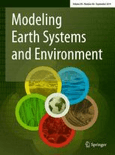
Modeling Earth Systems and Environment
metrics 2024
Fostering collaboration in the realm of Earth systems science.
Introduction
Modeling Earth Systems and Environment is a premier interdisciplinary journal published by Springer Heidelberg, dedicated to advancing the understanding and modeling of Earth's systems and environmental processes. Since its inception in 2015, this journal has established itself as a vital resource within the academic community, attaining a Q1 ranking in Agricultural and Biological Sciences and Q2 rankings in Computers in Earth Sciences, Environmental Science, and Statistics, reflecting its high impact and relevance across multiple disciplines. Featuring rigorous peer-reviewed research, Modeling Earth Systems and Environment aims to bridge the gap between theory and practical application, fostering collaboration among researchers, professionals, and students alike. With access options that prioritize the dissemination of knowledge, this journal is crucial for those seeking to contribute to the fields of environmental modeling and systems science, encouraging innovations that address contemporary environmental challenges.
Metrics 2024
 0.682.703.0055
Metrics History
Rank 2024
Scopus
IF (Web Of Science)
JCI (Web Of Science)
Quartile History
Similar Journals
Russian Meteorology and Hydrology
Bridging the gap between research and real-world applications.Russian Meteorology and Hydrology is a distinguished journal published by PLEIADES PUBLISHING INC, specializing in the fields of meteorology and hydrology. With an ISSN of 1068-3739 and an E-ISSN of 1934-8096, this journal has been an authoritative source of research and insights since its inception in 1993. Aiming to disseminate cutting-edge research and foster discussions across related disciplines, it ranks in the Q4 category for Atmospheric Science and Q3 for both Fluid Flow and Transfer Processes as well as Water Science and Technology as of 2023. While currently not an open-access publication, it provides crucial insights essential for researchers, professionals, and students dedicated to understanding the complexities of climate systems and water resources. With its focus on innovative methodologies and comprehensive studies, Russian Meteorology and Hydrology remains a vital platform for advancing knowledge and practice in these critical domains.
GLOBAL AND PLANETARY CHANGE
Illuminating the Path to Global Environmental SolutionsGLOBAL AND PLANETARY CHANGE, published by Elsevier, is a premier international journal focused on the critical issues surrounding environmental science, climate change, and planetary dynamics. Since its inception in 1989, this journal has established itself as a leading voice in the field, currently holding a prestigious Q1 ranking in both Global and Planetary Change and Oceanography as of 2023. With a remarkable influence reflected in its Scopus rankings—15th in Earth and Planetary Sciences and 34th in Global and Planetary Change—it serves as an essential platform for researchers, professionals, and students. The journal provides a comprehensive examination of cutting-edge research findings and innovative developments that address the urgent challenges facing our planet. Although it is not an Open Access journal, it remains a vital resource for anyone keen to contribute to or stay informed on the ever-evolving discourse of global environmental change, promoting sustainable solutions for the future.
Hydrology Research
Pioneering solutions for global water challenges.Hydrology Research, a leading academic journal published by IWA Publishing, is dedicated to advancing the field of water science and technology. With an impressive impact factor and a Q2 ranking in its category, the journal plays a pivotal role in disseminating innovative research and practices in hydrology. Established in 1973 and transitioning to an Open Access model in 2020, it provides unrestricted access to high-quality articles that cover a broad spectrum of topics, including hydrological processes, water management, and environmental impact assessments. Situated in Denmark, Hydrology Research continues to thrive as an essential platform for researchers, professionals, and students alike, encouraging the exchange of ideas that contribute to sustainable water solutions worldwide. With a comprehensive coverage of research converging from 1973 to 2024, it stands as a testament to ongoing progress in the water science community.
Journal of Geovisualization and Spatial Analysis
Exploring the Intersection of Geography and InnovationJournal of Geovisualization and Spatial Analysis, published by SpringerNature, is an influential open-access journal specializing in the cutting-edge fields of geovisualization, spatial analysis, and their application in earth sciences and geography. Since its inception in 2017, this journal has established a prominent stance with a high impact factor and prestigious Q1 rankings across multiple categories, including Computers in Earth Sciences, Earth and Planetary Sciences (miscellaneous), and Geography, Planning and Development. The editorial board is committed to advancing innovative research and methodologies, providing a platform for scholars to disseminate their findings globally. With impressive Scopus rankings—placing it in the top percentiles among its peers—the journal serves as a vital resource for researchers, professionals, and students keen on understanding spatial data and its implications for geographic science. Its emphasis on rigorous peer review and rapid publication enhances accessibility to substantive research, thus fostering knowledge sharing within the scientific community. Based in Switzerland, the journal promotes a collaborative environment for interdisciplinary studies, making it an essential read for anyone involved in spatial analysis research.
Journal of the Korean Earth Science Society
Illuminating the Path of Earth Science DiscoveriesJournal of the Korean Earth Science Society is a leading peer-reviewed publication dedicated to advancing research in the dynamic field of Earth sciences. Published by the Korean Earth Science Society, this journal serves as a vital platform for disseminating original research, reviews, and significant advancements in areas such as geology, mineralogy, geophysics, and environmental science. With its ISSN 1225-6692 and E-ISSN 2287-4518, the journal is recognized for its commitment to quality and rigor. Although it does not provide open access options at present, it continues to play a crucial role in informing the scholarly community and enhancing the understanding of Earth science phenomena, thus bridging knowledge gaps and fostering collaboration among researchers, professionals, and students alike. For those interested in the latest developments and innovative research findings in Earth sciences, the Journal of the Korean Earth Science Society remains an indispensable resource.
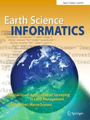
Earth Science Informatics
Harnessing Informatics to Unlock Earth's Secrets.Earth Science Informatics, published by SPRINGER HEIDELBERG, serves as a premier platform for disseminating innovative research in the realm of Earth and Planetary Sciences. With an ISSN of 1865-0473 and an E-ISSN of 1865-0481, this journal offers insightful contributions that leverage informatics and data-driven approaches to address complex geoscientific challenges. As a testament to its impact in the field, it ranks in the Q2 quartile and holds an impressive 73rd percentile rank among 195 journals in the broader **Earth and Planetary Sciences** category, as per Scopus rankings. This journal invites researchers, professionals, and students to explore and contribute to the growing body of knowledge that bridges the gap between informatics and Earth science, fostering advancements in both theoretical frameworks and practical applications. Situated in Germany, at TIERGARTENSTRASSE 17, D-69121 HEIDELBERG, it aims to enhance interdisciplinary collaboration and propel scientific discovery from 2009 to 2024 and beyond, reinforcing its vital role in the academic community.
Earth Sciences Research Journal
Connecting Global Experts in Earth SciencesThe Earth Sciences Research Journal, published by the UNIV NACIONAL DE COLOMBIA, serves as a pivotal platform for the dissemination of knowledge in the diverse field of Earth and Planetary Sciences since its inception. With an ISSN of 1794-6190 and an E-ISSN of 2339-3459, this Open Access journal has been committed to providing unrestricted access to high-quality research since 2004. Located in Bogotá, Colombia, it has gained recognition within the academic community, achieving a Q3 quartile ranking in Earth and Planetary Sciences and notable Scopus rankings, which further underscores its relevance and reach. Its scope encompasses varied research topics, making it an essential resource for researchers, professionals, and students alike, seeking to contribute to or stay informed on the latest developments in the Earth sciences up to the year 2024. The journal not only anticipates cutting-edge research but also emphasizes collaborative dialogues among global experts, driving forward the conversation on critical issues facing our planet.
Carpathian Journal of Earth and Environmental Sciences
Innovating Insights into Earth’s Dynamic ChangesCarpathian Journal of Earth and Environmental Sciences is a distinguished academic journal dedicated to advancing the interdisciplinary field of Earth and environmental sciences. Published by the Carpathian Association for Environment and Earth Sciences, this journal plays a pivotal role in disseminating high-quality research focused on the dynamic interactions between geological processes and environmental changes. With an ISSN of 1842-4090 and an E-ISSN of 1844-489X, the journal is indexed in Scopus and holds an esteemed Q3 quartile ranking in both Earth and Planetary Sciences and Environmental Science categories as of 2023. Since its inception in 2008, the Carpathian Journal has provided an open access platform for researchers, professionals, and students to share insights, foster collaboration, and engage in critical discussions on pressing environmental issues. By continuously contributing to the body of knowledge in this field, the journal not only enhances academic discourse but also promotes sustainable environmental practices across Romania and beyond.
Journal of Water and Climate Change
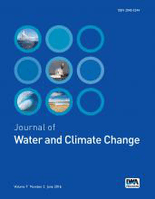
Bridging Water Wisdom and Climate InsightsJournal of Water and Climate Change is a premier open-access journal published by IWA Publishing, dedicated to advancing the understanding of the interplay between water resources and climate change. With an ISSN of 2040-2244 and an E-ISSN of 2408-9354, this journal has established itself as a crucial platform for interdisciplinary research, publishing high-quality articles that address the challenges posed by climate variability on water systems globally. Since achieving open access status in 2021, the journal has fostered wider dissemination of knowledge among its audience, featuring works that span pivotal topics in Atmospheric Science, Global and Planetary Change, and Water Management. Notably ranked within the top quartiles in several relevant categories as of 2023, it occupies a vital position in the academic community, offering insights that are essential for policymakers, environmental scientists, and researchers striving to create sustainable solutions for water and climate challenges. Its commitment to excellence is reflected in its strong Scopus rankings, standing at the 66th percentile in Water Science and Technology and 65th percentile in Management, Monitoring, Policy, and Law. Located in the United Kingdom, this journal not only serves as a repository of cutting-edge research from 2010 to 2024 but also engages a diverse readership passionate about promoting sustainable water management practices.
Progress in Physical Geography-Earth and Environment
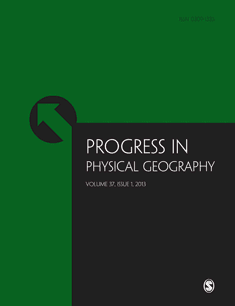
Empowering scholars to navigate Earth’s changing landscapes.Progress in Physical Geography-Earth and Environment is a premier academic journal published by SAGE Publications Ltd, renowned for its contributions to the fields of Earth and Planetary Sciences and Geography. With a distinguished history spanning from 1977 to 2024, this journal maintains a robust Q1 classification in both Earth and Planetary Sciences and Geography, Planning and Development, reflecting its high impact and rigorous scholarly standards. As evidenced by its Scopus rankings, it stands at the forefront of research, positioned in the 89th percentile among leading journals. Progress in Physical Geography aims to facilitate the exchange of innovative research, insights, and methodologies, making it an essential resource for researchers, professionals, and students dedicated to understanding and shaping the natural environment. While currently not designated as an Open Access journal, the wide accessibility of its content, combined with its significant impact factor, underscores its importance within the academic community seeking to advance knowledge and application in geography and environmental sciences.