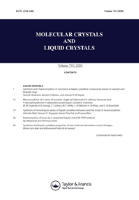
MOLECULAR CRYSTALS AND LIQUID CRYSTALS
metrics 2024
Exploring the Intricacies of Molecular Structures
Introduction
MOLECULAR CRYSTALS AND LIQUID CRYSTALS is a distinguished journal published by Taylor & Francis Ltd, dedicated to the comprehensive examination of the structural and physical properties of molecular crystals and liquid crystals, with applications spanning fields such as chemistry, materials science, and condensed matter physics. Established in 1972, this journal has carved out a niche in the academic landscape despite facing recent challenges, as reflected in its current quartile rankings of Q4 across multiple categories in 2023. The journal not only serves as a platform for groundbreaking research but also invites contributions that further explore the intricate relationships between molecular organization and material properties, thereby advancing our understanding of these fascinating substances. With a commitment to fostering scientific dialogue, MOLECULAR CRYSTALS AND LIQUID CRYSTALS aims to reach a broad audience of researchers, professionals, and students, providing insights that are pivotal in driving innovation in materials research.
Metrics 2024
 0.190.700.7057
Metrics History
Rank 2024
Scopus
IF (Web Of Science)
JCI (Web Of Science)
Quartile History
Similar Journals
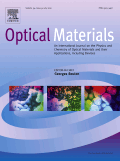
OPTICAL MATERIALS
Pioneering Research in Optical PropertiesOPTICAL MATERIALS is a peer-reviewed journal published by Elsevier, focusing on the intricate field of optical materials within various scientific domains including atomic and molecular physics, electronic engineering, and chemistry. With an impact factor indicative of its relevance, it ranks in the Q2 category across multiple areas such as Electrical and Electronic Engineering, and Inorganic Chemistry, highlighting its critical position in advancing research and innovation. Established in 1992 and continuing its contribution until 2024, this journal serves as a vital resource for researchers and professionals aiming to disseminate significant findings in material sciences, particularly those related to optical properties and applications. While it does not offer open access, the journal remains essential for academia and industry alike, ensuring the continued exchange of valuable knowledge in this rapidly evolving field.

GIANT
Shaping the Future of Chemistry with Open Access Insights.GIANT is a pioneering open-access journal published by Elsevier that has rapidly established itself as a cornerstone in the fields of Chemistry, Materials Chemistry, Polymers and Plastics, and Surfaces, Coatings and Films. Since its inception in 2020, GIANT has been committed to disseminating cutting-edge research and facilitating scholarly communication in these dynamic areas. With a remarkable Q1 ranking across multiple categories, the journal reflects an impressive impact factor within the academic community, evidenced by its standing in the top 82nd percentile in several Scopus classifications. Based in the Netherlands at Radarweg 29, Amsterdam, GIANT embraces a global audience through its open-access model, ensuring that groundbreaking discoveries are accessible to researchers, professionals, and students alike. Fostering innovation, the journal strives to shape the future of materials science and chemistry, making significant contributions in an era characterized by rapid scientific advancement.
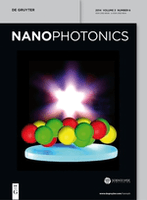
Nanophotonics
Transforming Ideas into Optical RealitiesNanophotonics, published by WALTER DE GRUYTER GMBH, is a premier open access journal dedicated to advancing the field of nanophotonics, encompassing cutting-edge research in atomic and molecular physics, optics, biotechnology, and electronic engineering. With a significant impact factor and a notable presence in the top quartile rankings (Q1) across multiple categories, including electrical and electronic engineering, this journal serves as a critical resource for researchers and professionals aiming to explore the latest developments in the manipulation of light at the nanoscale. Since its inception in 2012, Nanophotonics has been an influential platform for disseminating innovative ideas and breakthroughs, offering unrestricted access to its content, thus fostering a collaborative environment conducive to scientific discovery. Located in Berlin, Germany, and with a commitment to promoting the highest standard of scholarly excellence, Nanophotonics continues to shape the future of optical materials and technology, inviting contributions from both established experts and emerging scholars.

ACTA PHYSICA POLONICA A
Connecting Scholars with Cutting-Edge DiscoveriesACTA PHYSICA POLONICA A is a distinguished peer-reviewed journal published by the Polish Academy of Sciences Institute of Physics, offering a platform for disseminating cutting-edge research in the field of physics and astronomy. With an ISSN of 0587-4246 and an E-ISSN of 1898-794X, this journal has been a staple for scholars since its inception, converging its publication years from 1996 to 2024. Despite its current Q4 classification in the Physics and Astronomy (miscellaneous) category, ACTA PHYSICA POLONICA A provides valuable insights and breakthroughs addressing various aspects of general physics. Researchers, professionals, and students will find a wealth of knowledge within its pages, even as it operates in an evolving academic landscape. While subscription options exist, the journal aims to foster collaboration and knowledge exchange in the physics community, making it a vital resource for those seeking to stay at the forefront of research advancements.
Advances in Condensed Matter Physics
Exploring the Frontiers of Condensed Matter PhysicsAdvances in Condensed Matter Physics is a distinguished journal published by HINDAWI LTD, dedicated to the rapid dissemination of high-quality research in the field of condensed matter physics. Since its inception in 2008, this Open Access journal has facilitated wide accessibility to cutting-edge findings and theoretical advancements, with aims to foster collaboration and innovation within the scientific community. With an ISSN of 1687-8108 and an E-ISSN of 1687-8124, the journal covers an extensive range of topics, from quantum materials to nanotechnology, ensuring relevance and engagement across various sub-disciplines. As a testament to its impact in the field, it is ranked in the Q3 category for 2023 within Scopus and holds a position in the 34th percentile for physics and astronomy. The journal's continuous commitment to publishing significant exploratory research until 2024 makes it a pivotal resource for researchers, professionals, and students eager to stay on the leading edge of condensed matter physics advancements.

Soft Matter
Exploring the Fluid Frontier of ScienceSoft Matter, published by the Royal Society of Chemistry, stands as a premier journal in the interdisciplinary field of soft matter science, encompassing studies in materials that are neither entirely solid nor liquid, such as polymers, colloids, and biological materials. With an impressive impact factor indicative of its relevance and citation frequency, Soft Matter has secured a notable position in the academic community, achieving Q1 status in both Chemistry (miscellaneous) and Condensed Matter Physics in 2023. It ranks #102 out of 434 in Condensed Matter Physics and #114 out of 408 in General Chemistry, placing it firmly in the 76th and 72nd percentiles respectively. Since its inception in 2005, the journal has dedicated itself to advancing the understanding of soft materials through high-quality research articles, reviews, and technical notes. Its comprehensive scope invites contributions from both fundamental and applied perspectives, making it an essential resource for researchers, professionals, and students alike. Access to cutting-edge findings and innovative methodologies in this rapidly evolving field is critical for fostering new discoveries and applications, underscoring the journal's vital role in the academic discourse.
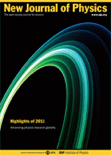
NEW JOURNAL OF PHYSICS
Fostering innovation in the realm of physics and astronomy.NEW JOURNAL OF PHYSICS, published by IOP Publishing Ltd, is a prestigious open-access journal that has been at the forefront of the physics community since its inception in 1998. With an impact factor that places it in the Q1 category of Physics and Astronomy (miscellaneous) and a commendable ranking of #49 out of 243 in the general physics and astronomy category according to Scopus, this journal is recognized for its significant contribution to advancing research in the field. The journal caters to a broad scope of topics, providing a platform for the dissemination of cutting-edge research findings and innovative theoretical explorations. Operating from the United Kingdom, it offers a truly international perspective, making its contents accessible and impactful to a global audience. With robust open-access options, the NEW JOURNAL OF PHYSICS ensures that research findings are freely available, promoting collaboration and knowledge sharing among researchers, professionals, and students alike. This commitment to accessibility, combined with its high-quality content, makes it an essential resource for anyone engaged in the physics community.
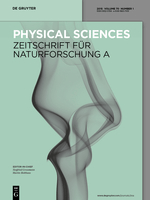
ZEITSCHRIFT FUR NATURFORSCHUNG SECTION A-A JOURNAL OF PHYSICAL SCIENCES
Unveiling the Mysteries of Matter and EnergyZEITSCHRIFT FUR NATURFORSCHUNG SECTION A - A JOURNAL OF PHYSICAL SCIENCES is a distinguished journal published by Walter de Gruyter GmbH, based in Germany, that serves as a vital platform for research in the realms of mathematical physics, physical and theoretical chemistry, and broader disciplines within physics and astronomy. Established in 1946, this journal has been a cornerstone for scientists and researchers, providing rigorous peer-reviewed articles that push the boundaries of knowledge in physical sciences. With a notable 2023 Scopus ranking reflecting its respected position in the field—Q3 in mathematical physics, physical and theoretical chemistry, and miscellaneous physics and astronomy—this journal not only emphasizes high-quality research but also enhances the visibility and impact of contributions within these areas. Although it does not currently offer open access, the insights shared in its pages are invaluable for advancing academic inquiry and sparking interdisciplinary collaborations. As it looks ahead to 2024, ZEITSCHRIFT FUR NATURFORSCHUNG SECTION A continues to invite contributions that align with its mission to foster an understanding of complex physical phenomena, making it an essential resource for academics, professionals, and students alike.
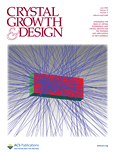
CRYSTAL GROWTH & DESIGN
Advancing Knowledge in Material InnovationCRYSTAL GROWTH & DESIGN, published by the American Chemical Society, is a premier journal dedicated to the interdisciplinary study of materials science, condensed matter physics, and miscellaneous chemistry. With an ISSN of 1528-7483 and E-ISSN of 1528-7505, this journal provides a vital platform for the dissemination of innovative research findings from 2001 through 2024, reflecting the dynamic advancements in crystal growth and design methodologies. It is recognized for its impact in the field, earning a distinguished placement in the Q2 quartile across categories of Chemistry, Condensed Matter Physics, and Materials Science for 2023. Researchers engaging with CRYSTAL GROWTH & DESIGN will find a wealth of peer-reviewed articles encompassing cutting-edge experimental techniques, theoretical frameworks, and application-oriented studies. Although not an open-access journal, it remains a critical resource for academics, professionals, and students aiming to enhance their understanding of crystal growth processes and material functionality, with Scopus rankings reflecting its reputable authority within the scientific community.

Quantum Beam Science
Transforming Understanding of Quantum Mechanics through CollaborationQuantum Beam Science, published by MDPI since 2017, is an esteemed open-access journal that occupies a pivotal role in the fields of atomic and molecular physics as well as nuclear and high-energy physics. Based in Switzerland, this journal embraces a global community of researchers dedicated to advancing our understanding of quantum phenomena through innovative experimental and theoretical approaches. With an impactful presence reflected in its category quartiles—ranking Q3 in both the Atomic and Molecular Physics, and Nuclear and High Energy Physics categories—the journal aims to bridge the gap between foundational research and practical applications of quantum technology. Since adopting an open-access model, Quantum Beam Science has fostered greater accessibility to groundbreaking studies, facilitating knowledge dissemination among researchers and professionals alike. This commitment to open science empowers the next generation of physicists to contribute to a rapidly evolving discipline, ensuring that critical advancements reach a diverse audience. Stay informed on the latest developments in quantum research as the journal covers a wide range of topics, making it an essential resource for students, academics, and professionals in the field.