MOLECULAR DIVERSITY
metrics 2024
Catalyzing Discoveries in Drug Development and Beyond
Introduction
MOLECULAR DIVERSITY, published by Springer, stands as a pivotal platform within the fields of chemistry, biology, and pharmacology since its inception in 1995. This esteemed journal aims to foster interdisciplinary research and innovation, particularly in areas such as catalysis, drug discovery, inorganic and organic chemistry, and molecular biology. With a diverse scope that reflects contemporary scientific challenges, it has been recognized for its significant contributions, boasting commendable Scopus rankings and an impact factor that underscores its relevance in critical fields. Although not an open access journal, MOLECULAR DIVERSITY continues to influence and engage researchers, professionals, and students alike by providing a forum for high-quality peer-reviewed articles and cutting-edge research findings. As it converges years of scientific dynamism from 1995 to 2024, this journal remains vital for those advancing the frontiers of molecular science and engineering.
Metrics 2024
 0.583.903.5063
Metrics History
Rank 2024
Scopus
IF (Web Of Science)
JCI (Web Of Science)
Quartile History
Similar Journals
JOURNAL OF MOLECULAR MODELING
Connecting Researchers in the World of Molecular ScienceJOURNAL OF MOLECULAR MODELING, published by Springer, is a pivotal resource for researchers and professionals in the fields of chemistry, computer science, and molecular sciences. The journal's ISSN is 1610-2940, with an E-ISSN of 0948-5023, reflecting its commitment to disseminating cutting-edge research from 1996 to 2024. Although the journal does not operate under an Open Access model, it remains an invaluable platform for the publication of innovative studies related to computational methods, theoretical chemistry, and molecular simulations. With a notable categorization across multiple quartiles—including Q4 in Catalysis and Q3 in Computational Theory and Mathematics—the journal holds a distinct rank in Scopus, highlighting its influence and contribution to the discipline. The importance of this journal lies in its ability to bridge the gap between theoretical understanding and practical applications, making it essential reading for students and scholars seeking to advance their knowledge and research in molecular modeling.
Journal of Saudi Chemical Society
Advancing Chemistry Knowledge, One Article at a Time.The Journal of Saudi Chemical Society, published by ELSEVIER, stands as a premier platform for advancing knowledge in the field of chemistry. Since its inception in 2009, this Open Access journal has garnered significant attention, securing a prestigious Q1 ranking in the Chemistry (miscellaneous) category for 2023, reflecting its position among the top journals in the discipline. With an impressive Scopus ranking of #66 out of 408 in General Chemistry, this journal boasts a commendable 83rd percentile, underscoring its impact and relevance in the global research community. The journal aims to disseminate high-quality research articles, reviews, and case studies, fostering innovation and collaboration among chemists and allied professionals. By enabling widespread access to cutting-edge research, the Journal of Saudi Chemical Society plays a crucial role in supporting the educational and professional development of students, researchers, and practitioners alike, making it an essential resource for anyone invested in the dynamic field of chemistry.

ACS Bio & Med Chem Au
Advancing the frontiers of biochemistry and medicinal chemistry.ACS Bio & Med Chem Au, published by the esteemed American Chemical Society, stands at the forefront of interdisciplinary research within the realms of biochemistry, drug discovery, pharmaceutical sciences, and molecular biology. With an impressive Impact Factor indicative of its rigorous academic standards and significant contributions to the field, this open-access journal is committed to disseminating high-quality research that drives innovation and advancements in biosciences and medicinal chemistry. Since its inception in 2021, the journal has rapidly earned recognition, achieving a commendable Q1 ranking in multiple categories, including Biochemistry, Drug Discovery, and Pharmaceutical Science, while also making strides in Molecular Biology. Researchers, professionals, and students alike can explore pioneering studies that bridge gaps between laboratory research and clinical applications, fostering collaborative efforts towards novel therapeutic strategies. With a focus on enhancing accessibility and engagement within the scientific community, ACS Bio & Med Chem Au is poised to impact the future of biomedical research significantly.
Future Medicinal Chemistry
Transforming challenges into opportunities in drug development.Future Medicinal Chemistry is a premier journal dedicated to the rapidly evolving fields of drug discovery, pharmacology, and molecular medicine. Published by Newlands Press Ltd in the United Kingdom, this journal has garnered significant attention within the academic community, evidenced by its 2023 category rankings in Scopus, placing it in the Q2 quartile for Drug Discovery and the Q3 quartiles for both Molecular Medicine and Pharmacology. With an ISSN of 1756-8919 and an E-ISSN of 1756-8927, Future Medicinal Chemistry has been a cornerstone of scholarly discourse since its inception in 2009, continuously contributing to the advancement of knowledge and discussion in medicinal chemistry. The journal is committed to publishing high-quality, peer-reviewed research that addresses the challenges and innovations in drug development and therapeutic strategies, making it an essential resource for researchers, professionals, and students seeking to stay at the forefront of these critical fields. Engage with the latest findings and methodologies that shape the future of medicine by exploring the wealth of information offered within Future Medicinal Chemistry.

INDIAN JOURNAL OF HETEROCYCLIC CHEMISTRY
Advancing Knowledge in Heterocyclic ChemistryINDIAN JOURNAL OF HETEROCYCLIC CHEMISTRY, published by CONNECT JOURNALS, is a vital resource in the fields of organic chemistry and biochemistry, aiming to advance research and promote innovation within the realm of heterocyclic compounds. Established in 1996, this journal has successfully converged into an influential publication with a commitment to disseminating high-quality, peer-reviewed research articles that enhance the understanding of heterocyclic chemistry applications. Although it currently holds a Q4 quartile ranking in both biochemistry and organic chemistry according to the 2023 categorizations, its broader contributions to the scientific community should not be underestimated, as it seeks to support the ongoing dialogue among researchers, professionals, and students. The journal operates from Ghaziabad, India, providing open access to its publications, thereby fostering a collaborative and informative environment for its international readership. With an ISSN of 0971-1627 and a special focus on contemporary challenges and developments in the field, the INDIAN JOURNAL OF HETEROCYCLIC CHEMISTRY is poised to make a significant impact as it continues to evolve through 2024 and beyond.

Frontiers in Chemistry
Pioneering Discoveries in the World of Chemistry.Frontiers in Chemistry is an esteemed and innovative Open Access journal published by FRONTIERS MEDIA SA, based in Lausanne, Switzerland. Since its inception in 2013, the journal has established itself as a leading platform for the dissemination of high-quality research across a broad spectrum of chemistry disciplines, achieving a notable Q1 classification in the miscellaneous chemistry category as of 2023. With an impressive Scopus rank, placing it at 72nd out of 408 in General Chemistry and falling within the 82nd percentile, Frontiers in Chemistry is committed to publishing significant findings that contribute to the advancement of the field. The journal's Open Access model ensures that research is freely accessible to all, fostering a greater exchange of knowledge and collaboration among researchers, professionals, and students globally. It covers a range of topics, from organic and inorganic chemistry to materials science and biochemistry, making it an essential resource for anyone seeking to stay at the forefront of chemical research.
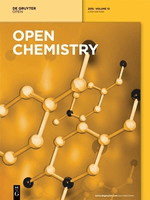
Open Chemistry
Connecting Researchers with Open Access ChemistryOpen Chemistry, published by DE GRUYTER POLAND SP Z O O, is a distinguished peer-reviewed journal that has been serving the global chemistry community since its inception. With an ISSN of 2391-5420 and an E-ISSN also of 2391-5420, this open-access journal has been accessible to researchers and practitioners alike since 2015, ensuring a wide dissemination of high-quality research findings. Located in Germany, specifically at BOGUMILA ZUGA 32A STR, 01-811 WARSAW, MAZOVIA, POLAND, Open Chemistry aims to publish innovative research across various chemical disciplines, with special attention to miscellaneous chemistry and materials chemistry. It is currently ranked in the Q3 category for both fields as of 2023, reflecting its solid standing within the academic community, with specific ranks of 187/408 in General Chemistry and 153/317 in Materials Chemistry, corresponding to respective percentiles of 54 and 51. Open Chemistry not only enhances the accessibility of cutting-edge research but also serves as a vital resource for students, professionals, and scholars seeking to advance their knowledge in the rapidly evolving landscape of chemical sciences.
SynOpen
Bridging Biomaterials and Organic ChemistrySynOpen is an esteemed open-access journal published by GEORG THIEME VERLAG KG, based in Germany, dedicated to advancing the fields of Biomaterials, Catalysis, Materials Science, and Organic Chemistry. Since its inception in 2017, the journal has established itself as a vital platform for researchers wishing to disseminate their findings in a rapidly evolving scientific landscape, earning a commendable Q2 ranking in Materials Science (miscellaneous) and Q3 in other key categories for 2023. With an increasing impact on its disciplines, SynOpen aims to foster interdisciplinary collaboration and innovation by providing unrestricted access to high-quality research, thus promoting a broader reach and visibility for authors. Scholars, professionals, and students alike can benefit from the comprehensive range of topics covered, as the journal's commitment to presenting cutting-edge studies and methodologies positions it as a crucial resource for contemporary scientific inquiry.
SYNTHESIS-STUTTGART
Connecting Ideas, Catalyzing Innovations in Chemistry.SYNTHESIS-STUTTGART
Published by the esteemed Georg Thieme Verlag KG, SYNTHESIS-STUTTGART stands as a vital resource in the field of Chemistry, specifically focusing on Organic Chemistry and Catalysis. With an impressive publication history dating back to 1970 and continuing through 2024, it serves as a platform for innovative research and developments in synthetic methodologies and their applications. The journal holds a significant impact factor, reflecting its influence within the academic community, and is recognized in the Scopus rankings as a reputable source in its categories, with a rank of #99/211 in Organic Chemistry and #43/68 in Catalysis. Researchers, professionals, and students alike can benefit greatly from its content, which upholds rigorous peer-review standards and contributes to the global discourse in these critical scientific domains.
BIOORGANIC & MEDICINAL CHEMISTRY
Transforming Therapeutics with Cutting-Edge ChemistryBIOORGANIC & MEDICINAL CHEMISTRY, published by Pergamon-Elsevier Science Ltd, is a prominent journal in the fields of biochemical research and drug discovery, with an ISSN of 0968-0896 and an E-ISSN of 1464-3391. Established in 1993, it has garnered respect and recognition, evidenced by its categorization in various quartile ranks across 2023, including Q2 in Clinical Biochemistry and Pharmaceutical Science. It holds significant Scopus rankings, placing it in the 75th percentile in Pharmaceutical Science and 74th percentile in Organic Chemistry, highlighting its influential contributions to ongoing research and developments. This journal provides a platform for disseminating advancements in bioorganic and medicinal chemistry, focusing on innovative methodologies, therapeutic advancements, and molecular pharmacology. Although it does not follow an open-access model, it remains a key resource for researchers, professionals, and students aiming to stay at the forefront of scientific discovery in the UK and beyond. The journal’s commitment to enhancing knowledge within the biomedical community makes it an essential read for those passionate about this dynamic field.