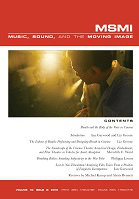
Music Sound and the Moving Image
Scope & Guideline
Exploring the Harmony of Sound and Vision
Introduction
Aims and Scopes
- Interdisciplinary Analysis of Audiovisual Media:
The journal emphasizes a cross-disciplinary approach, integrating film studies, musicology, cultural studies, and media theory, facilitating a comprehensive understanding of sound and music in visual contexts. - Historical and Cultural Perspectives:
Research often focuses on the historical evolution of sound in cinema and other media, examining how cultural contexts shape the creation and reception of audiovisual works. - Technological Innovations in Sound:
The journal explores the impact of technological advancements on sound design and music composition in film, including discussions of historical technologies and contemporary practices. - Aesthetic and Emotional Engagement:
It investigates how sound and music affect audience engagement and emotional responses, analyzing techniques that enhance narrative and thematic depth in audiovisual storytelling. - Identity, Race, and Representation:
The journal addresses themes of identity, race, and representation, particularly how music and sound intersect with cultural narratives in film and media.
Trending and Emerging
- Video Essays as a Research Medium:
The rise of video essays as a legitimate form of scholarly communication is notable, showcasing how audiovisual analysis can enhance academic discourse and engage audiences more effectively. - Exploration of Sound in Diverse Cultural Contexts:
Recent works increasingly address global perspectives on sound, including studies on Irish cinema, Eastern European music, and the role of sound in non-Western media, highlighting a broader cultural engagement. - Intersections of Technology and Sound Design:
There is a growing focus on how emerging technologies, such as virtual reality and advanced sound editing software, are reshaping sound design and viewer experiences in contemporary cinema. - Affective and Immersive Sound Experiences:
Research on the emotional and immersive aspects of sound, particularly in relation to audience experience and engagement, is gaining traction, reflecting a shift towards understanding the psychological impact of audiovisual works. - Critical Perspectives on Representation:
Emerging themes critically examine issues of identity, race, and representation in music and sound, reflecting societal conversations and the journal's commitment to addressing contemporary cultural challenges.
Declining or Waning
- Traditional Film Scoring Practices:
Research addressing conventional film scoring methods and practices has decreased, possibly due to the evolving landscape of sound design that now incorporates a wider array of influences and technologies. - Historical Case Studies of Classic Films:
There has been a noticeable decline in papers focusing solely on classic films and their soundtracks, as newer research tends to emphasize contemporary works or broader trends in audiovisual media. - Static Theoretical Approaches to Sound Analysis:
The journal has moved away from rigid theoretical frameworks that do not adapt to the evolving nature of sound and music in media, favoring more dynamic and interdisciplinary methodologies. - Narrow Studies on Specific Genres:
Interest in narrowly focused studies on specific genres, such as traditional musicals or sound in specific film movements, appears to be waning, reflecting a broader shift towards more integrative and cross-genre analyses.
Similar Journals
New Review of Film and Television Studies
Exploring the Intersection of Media and SocietyNew Review of Film and Television Studies, published by Routledge Journals, Taylor & Francis Ltd, stands as a vital platform for scholars and practitioners engaged in the dynamic fields of film and television studies within the United Kingdom. This journal, which has been in circulation since 2010 and will continue through 2024, provides a rigorous academic forum for contemporary research, critical analysis, and innovative discourse surrounding visual storytelling. With an impressive Scopus rank placing it in the 66th percentile for Visual Arts and Performing Arts, and a respectable Q2 categorization, the journal fosters an interdisciplinary approach, bridging communication and cultural studies. While the journal does not currently operate under an open access model, it remains an invaluable resource for researchers, students, and professionals aiming to understand and influence the evolving landscape of film and television in our digital age. As it navigates the intersection of media and society, New Review of Film and Television Studies is essential reading for those looking to advance their knowledge and contribute to the ongoing scholarly conversation.
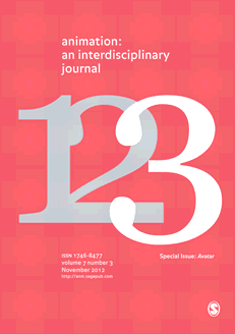
Animation-An Interdisciplinary Journal
Unveiling the Future of Animation in Contemporary SocietyAnimation: An Interdisciplinary Journal is a distinguished publication that explores the dynamic intersections of animation within the spheres of visual arts and performing arts. Published by SAGE Publications Inc in the United Kingdom, this journal has established itself as a significant platform for scholarly discourse, boasting a 2023 Scopus ranking that places it in the 79th percentile among a competitive cohort of arts and humanities journals. With a Q2 ranking in both Visual Arts and Performing Arts, the journal publishes innovative research that spans theoretical frameworks, technical advances, and cultural impacts of animation, fostering interdisciplinary collaboration and dialogue. Researchers, professionals, and students alike will find Animation an invaluable resource for understanding the evolving role of animation in contemporary society. Its comprehensive approach ensures that every edition contributes to the ongoing narrative of animation as a critical art form, making it essential reading for anyone invested in the future of animated media.

CINEJ Cinema Journal
Transforming Perspectives on Cinema and Society.CINEJ Cinema Journal, published by the University of Pittsburgh Library System, stands as a pivotal platform for scholarly discourse in the dynamic field of cinema studies. With an ISSN of 2159-2411 and an E-ISSN of 2158-8724, this Open Access journal has been dedicated to disseminating high-quality research since its inception in 2011. CINEJ provides an essential resource for researchers, practitioners, and students alike, exploring varied dimensions of cinema, including its cultural, historical, and technological implications. The journal is committed to fostering interdisciplinary dialogue, making it a vital asset for those seeking to deepen their understanding of cinema as an art form and social phenomenon. By engaging with contemporary issues and trends in the cinematic landscape, CINEJ encourages contributions that illuminate the intersection of film and social inquiry, ensuring its relevance in today’s academic ecosystem.
Organised Sound
Pioneering the Future of Music and Sound TechnologiesOrganised Sound, published by Cambridge University Press, stands as a pivotal journal in the fields of Music and Computer Science Applications, reflecting its commitment to advancing interdisciplinary research related to sound and music technologies. Established in 1996, this biannual journal encourages the exploration of new forms of composition, performance, and listening practices using contemporary technological advancements. With an impressive Q1 ranking in Music and a notable place within the top 79th percentile of its category according to Scopus, Organised Sound provides a unique platform for researchers, practitioners, and artists to share innovative ideas and collaborate across disciplines. The journal's rigorous peer-review process ensures high-quality contributions that are informed by the latest theoretical and practical developments. Although currently not an open-access journal, it remains highly regarded for its scholarly depth and relevance in today’s rapidly evolving soundscape.

World of Music-New Series
Fostering scholarly dialogue in the evolving world of music.World of Music-New Series, an esteemed journal published by VWB-VERLAG WISSENSCHAFT & BILDUNG, serves as a pivotal platform for scholarly discourse in the field of music studies. With an ISSN of 0043-8774 and a significant presence in the academic community, this journal has demonstrated its commitment to advancing knowledge in music through rigorous peer-reviewed research. Since its inception in 2002, the journal has undergone several converged years, culminating in its current iteration which continues to publish innovative work as of 2023. Recognized for its contributions, World of Music-New Series holds a Q3 category ranking in the Music category and is positioned within the 52nd percentile among its peers, reflecting its growing impact in the arts and humanities domain. Although currently not an open access journal, it remains an essential resource for researchers, professionals, and students seeking to deepen their understanding of music theory, history, and cultural implications. Located in Germany at URBANSTRASSE 71, D-10967 BERLIN, this journal is committed to promoting diverse voices and perspectives within the music scholarship landscape.
Projections-The Journal for Movies and Mind
Investigating the Cultural Reflections of CinemaProjections: The Journal for Movies and Mind is a leading scholarly publication dedicated to exploring the intricate relationship between cinema, cognition, and culture. Published by BERGHAHN JOURNALS, this journal has made significant strides since its inception in 2015, achieving impressive rankings in its fields, including a Q1 classification in both Cultural Studies and Visual Arts and Performing Arts for 2023. With an ISSN of 1934-9688 and an E-ISSN of 1934-9696, Projections engages the academic community by delivering innovative research that scrutinizes how films influence and reflect human thought processes and societal structures. While it operates outside the Open Access model, the journal offers critical insights and diverse perspectives that are essential for researchers, professionals, and students alike. With its remarkable impact factor and solid reputation in the arts and humanities domain, Projections serves as an indispensable resource for those dedicated to understanding the psychological and cultural implications of cinematic narratives.
JOURNAL OF AMERICAN CULTURE
Advancing Scholarship in American Cultural StudiesJOURNAL OF AMERICAN CULTURE is a distinguished academic journal published by Wiley, focusing on the rich tapestry of American culture through various lenses including history, literature, visual arts, and cultural studies. Established in 1996 and continuing its scholarly contributions through 2024, the journal serves as a vital platform for researchers, professionals, and students to disseminate their work and engage with critical discussions surrounding American cultural narratives. With an impressive impact reflected in its 2023 quartile rankings — Q2 in Literature and Literary Theory and Q3 in Cultural Studies, History, and Visual Arts and Performing Arts — the journal enhances scholarly dialogue across diverse disciplines. Although it does not offer Open Access options, its rigorous peer-review process ensures high-quality research dissemination. It is a go-to resource for those aiming to explore the evolving dynamics of American culture within a global context.
Acta Universitatis Sapientiae-Film and Media Studies
Nurturing Critical Perspectives in Film and Media StudiesActa Universitatis Sapientiae-Film and Media Studies is a distinguished journal dedicated to the exploration of film and media within the broader context of cultural studies. Published by SCIENDO, this journal has been an essential resource for researchers, professionals, and students since it adopted an Open Access model in 2013, facilitating worldwide accessibility to cutting-edge scholarship. With its ISSN 2065-5924 and E-ISSN 2066-7779, Acta Universitatis Sapientiae aims to publish high-quality, peer-reviewed articles that promote innovative research and critical discourse in film and media studies. Located in Warsaw, Poland, and contributing to the international academic community, this journal provides a platform for interdisciplinary dialogue and the examination of emerging trends in media practices, theories, and technologies. By encouraging diverse perspectives, it not only enriches the academic landscape but also nurtures the next generation of scholars in this dynamic field.
Moving Image
Decoding the Language of Visual ArtsMoving Image is a distinguished academic journal published by University of Minnesota Press, dedicated to the exploration and critical analysis of visual culture. With an ISSN of 1532-3978 and an E-ISSN of 1542-4235, this journal plays a vital role in advancing scholarship in the fields of Conservation, Visual Arts, and Performing Arts, offering insights from its notable publication history from 2013 to 2019 and again from 2021 to 2022. While it currently does not offer open access options, the journal is recognized as a crucial platform for disseminating research, reflected in its rankings—#442/667 in Visual Arts and Performing Arts and #87/103 in Conservation according to Scopus. Despite its placement in the Q4 quartile for both fields, Moving Image remains a key resource for scholars, students, and practitioners interested in the intricate dynamics of moving images in contemporary culture. Its commitment to fostering dialogue and innovation in visual studies ensures its relevance and influence within the academic community.

Miranda
Fostering inclusive discourse in the humanities.Miranda (ISSN: 2108-6559, E-ISSN: 2108-6559) is a distinguished open access journal published by UNIV TOULOUSE II-JEAN JAURES, dedicated to advancing knowledge across various fields of the humanities and social sciences. Since its establishment in 2010 as an open access platform, Miranda has aimed to foster inclusive academic discourse by providing unrestricted access to high-quality research. With its commitment to accessibility and scholarly excellence, this journal serves as an essential resource for researchers, professionals, and students seeking to enrich their understanding and engage with contemporary issues within their disciplines. The journal prides itself on its rigorous peer-review process and aims to publish original research, reviews, and interdisciplinary studies that contribute to the evolving landscape of humanities and social science research. Located in Toulouse, France, Miranda is poised to make a significant impact in its field and invites contributions that reflect diverse perspectives and innovative research methodologies.