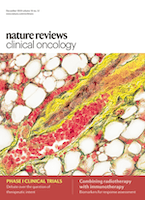
Nature Reviews Clinical Oncology
Scope & Guideline
Shaping the Future of Oncology with Evidence
Introduction
Aims and Scopes
- Translational Oncology:
The journal aims to bridge the gap between laboratory research and clinical practice, highlighting studies that translate basic scientific discoveries into innovative cancer therapies. - Multidisciplinary Approaches:
Nature Reviews Clinical Oncology encompasses a wide range of disciplines, including medical oncology, surgical oncology, radiation oncology, and palliative care, fostering integrated strategies for cancer treatment. - Patient-Centered Care:
The journal promotes research that prioritizes patient outcomes, quality of life, and the importance of personalized treatment plans tailored to individual patient needs. - Emerging Therapeutics:
A key focus is on the development and evaluation of novel therapeutic agents, including immunotherapies, targeted therapies, and combination strategies that enhance treatment efficacy. - Biomarkers and Precision Medicine:
The journal emphasizes the role of biomarkers in predicting treatment responses and guiding personalized medicine approaches in oncology. - Clinical Trials and Evidence-Based Practice:
Nature Reviews Clinical Oncology publishes insights on clinical trial findings, offering evidence-based recommendations for current and future cancer treatment protocols.
Trending and Emerging
- Immunotherapy Advances:
Immunotherapy continues to be a major focus, with increasing publications on novel immune checkpoint inhibitors, CAR T-cell therapies, and combination strategies that enhance immune responses against tumors. - Precision Oncology:
There is a growing emphasis on precision oncology, utilizing genomic profiling to tailor treatments to individual patients based on their unique tumor characteristics. - Artificial Intelligence and Machine Learning:
The integration of AI and machine learning in oncology is emerging as a significant trend, with research exploring their applications in diagnostics, treatment planning, and predicting patient outcomes. - Microbiome Research in Cancer:
Studies investigating the role of the microbiome in cancer development and treatment response are gaining traction, highlighting its potential impact on immunotherapy efficacy. - Patient-Centered Research:
There is a notable increase in research focusing on patient-centered outcomes, quality of life, and the psychosocial aspects of cancer care, reflecting a holistic approach to oncology.
Declining or Waning
- Traditional Chemotherapy:
There has been a noticeable decrease in the emphasis on traditional chemotherapy regimens, as newer targeted therapies and immunotherapies gain prominence in clinical practice. - Single-Agent Therapies:
Research into single-agent therapies is becoming less frequent, with a greater focus on combination therapies that leverage multiple mechanisms of action to improve patient outcomes. - Generalized Treatment Protocols:
The trend is moving away from one-size-fits-all treatment approaches, with less emphasis on generalized protocols in favor of personalized treatment plans tailored to specific patient profiles.
Similar Journals

Tumori Journal
Transforming Cancer Research into Clinical Practice.Tumori Journal is a distinguished publication in the field of oncology, dedicated to advancing the understanding and treatment of cancer since its inception in 1946. Published by SAGE Publications Ltd, this Italian journal serves as a pivotal platform for researchers, clinicians, and academicians to disseminate cutting-edge findings in cancer research and related areas of medicine. With an impressive record of contributions spanning multiple decades, Tumori Journal aims to foster collaboration and dialogue among professionals in the oncology community. Although classified in the Q4 category for Cancer Research and the Q3 category for both Medicine (miscellaneous) and Oncology as of 2023, the journal continues to draw interest with its rigorous peer-review process and commitment to quality. Researchers are encouraged to explore innovative methodologies and share impactful clinical insights through the journal, which also ranks within the top tiers of Scopus metrics for oncology and cancer research domains. With a growing emphasis on accessible research, Tumori Journal remains an essential resource in the continuous fight against cancer.
Translational Lung Cancer Research
Elevating the standards of translational oncology research.Translational Lung Cancer Research is a leading journal dedicated to advancing the field of oncology, particularly focusing on groundbreaking discoveries in lung cancer treatment and management. Published by AME Publishing Company, this journal boasts an impressive Q1 classification in the 2023 Oncology category, reflecting its significant contribution to the scientific community, with an outstanding Scopus rank of #92 out of 404 in Medicine _ Oncology, placing it in the 77th percentile. With its commitment to open access, the journal fosters international collaboration and accessibility, making cutting-edge research available to a wide audience. The scope of Translational Lung Cancer Research encompasses clinical trials, experimental studies, and translational research that bridge the gap between laboratory findings and clinical applications. Researchers, professionals, and students seeking to keep abreast of the latest developments in lung cancer research will find invaluable insights within its pages. For further information, please contact at FLAT-RM C 16F, KINGS WING PLAZA 1, NO 3 KWAN ST, SHATIN, HONG KONG.
CHEMOTHERAPY
Exploring Breakthroughs in Drug Discovery and OncologyCHEMOTHERAPY, published by KARGER, is a premier academic journal established in 1960, dedicated to disseminating cutting-edge research and advancements in the fields of drug discovery, infectious diseases, oncology, and pharmacology. With an impressive Scopus ranking placing it in the Q2 category for major disciplines such as Drug Discovery and Infectious Diseases, this journal provides an invaluable platform for researchers and professionals aiming to explore new therapeutic approaches and methodologies. Located in the heart of Switzerland, its publications are a key resource for anyone looking to stay informed about the latest developments and trends in the pharmacological sciences. Researchers can benefit from its diverse scope while contributing to a growing body of knowledge that emphasizes the importance of effective chemotherapeutic strategies in modern medicine. Despite not being an Open Access journal, CHEMOTHERAPY remains committed to maintaining a rigorous peer-review process, ensuring the highest quality of published work.

ESMO Open
Empowering oncology through open access innovation.ESMO Open is a premier open-access journal published by Elsevier, dedicated to advancing research in the fields of cancer and oncology. Since its inception in 2016, the journal has established itself as a vital resource for researchers, clinicians, and healthcare professionals, providing a platform for disseminating high-quality, peer-reviewed research. With an impressive Q1 ranking in both Cancer Research and Oncology based on the 2023 category quartiles, ESMO Open ranks within the top tier of its field, showcasing its commitment to excellence and innovation. The journal’s inclusion in Scopus rankings further emphasizes its significant impact, with remarkable placements in the 88th and 83rd percentiles for Oncology and Cancer Research, respectively. Operating under an open access model, ESMO Open ensures that cutting-edge findings and insights are readily available to the global academic community, fostering collaboration and knowledge-sharing to further enhance the understanding and treatment of cancer.

Translational Oncology
Empowering Researchers to Impact Oncology OutcomesTranslational Oncology is a premier open access journal published by Elsevier Science Inc, dedicated to the rapidly evolving field of cancer research and oncology. Since its inception in 2008, the journal has been a vital platform for the dissemination of innovative research and findings that bridge the gap between laboratory discoveries and clinical applications. With an impressive impact factor and ranked Q2 in Cancer Research and Q1 in Oncology, it occupies a prominent position in the academic landscape, helping to shape the future of cancer therapeutics and patient care. The journal offers valuable insights across a diverse array of topics, including molecular biology, genetic factors in cancer, and innovative treatment strategies, ensuring relevance and engagement for its readership. As it converges toward 2024, Translational Oncology continues to attract a global audience of researchers, healthcare professionals, and students committed to advancing our understanding of cancer and enhancing clinical outcomes.

JOURNAL OF CLINICAL ONCOLOGY
Transforming patient outcomes through evidence-based findings.Journal of Clinical Oncology is a premier academic journal published by Lippincott Williams & Wilkins, dedicated to the field of oncology and cancer research. Since its inception in 1983, this influential journal has consistently ranked in the Q1 category across multiple disciplines, including cancer research, medicine, and oncology, reflecting its critical role in shaping the future of cancer therapeutics and patient care. With a Scopus ranking of #9 in Medicine - Oncology and #6 in Biochemistry, Genetics and Molecular Biology - Cancer Research, Journal of Clinical Oncology publishes cutting-edge original research, reviews, and clinical updates that are essential for professionals, researchers, and students alike. Although it does not currently offer open access options, it provides invaluable insights and evidence-based findings that are crucial for advancing oncological knowledge and improving patient outcomes globally. The journal’s continued commitment to excellence ensures its place as a vital resource in the oncological community.

Oncology in Clinical Practice
Bridging Clinical Insights and Cancer ResearchOncology in Clinical Practice is a vital resource in the field of oncology, published by VIA MEDICA in Poland. This peer-reviewed journal, with ISSN 2450-1654 and E-ISSN 2450-6478, aims to bridge the gap between clinical practice and cancer research, providing a platform for the dissemination of original research, reviews, and case studies. Since its inception in 2019, the journal has featured significant contributions to the understanding of cancer treatment and patient care, although it currently holds a Q4 ranking in Oncology with a Scopus rank of #313/404 and a 22nd percentile in the Medicine _ Oncology category. Though it is not an open-access journal, its content is invaluable for oncologists, researchers, and students, offering critical insights and advancements in clinical approaches to cancer management. With a commitment to enhancing patient outcomes through clinical evidence, Oncology in Clinical Practice serves as an essential reference for those dedicated to the fight against cancer.
JNCI-Journal of the National Cancer Institute
Transforming cancer treatment with trusted knowledge.JNCI-Journal of the National Cancer Institute, published by Oxford University Press Inc. in the United Kingdom, is a premier journal dedicated to advancing the field of cancer research and oncology. With a distinguished history dating back to 1940, this journal has consistently maintained a strong reputation within the academic community, achieving a remarkable Q1 ranking in both Cancer Research and Oncology as of 2023. Researchers and practitioners rely on the JNCI for original research articles, review papers, and cutting-edge findings that impact clinical practices and therapeutic strategies. Although it does not currently offer open access, the journal remains a vital resource for academicians and healthcare professionals seeking to enhance their understanding of cancer mechanisms and treatment innovations. Its rigorous peer-review process ensures the publication of high-quality, credible research that meets the evolving challenges of cancer treatment and prevention through to 2024.

CURRENT TREATMENT OPTIONS IN ONCOLOGY
Exploring the Latest in Cancer Therapies and TreatmentsCURRENT TREATMENT OPTIONS IN ONCOLOGY, published by Springer, is a premier academic journal dedicated to disseminating cutting-edge research and advancements in the field of oncology and pharmacology. With a commendable impact factor and ranked in the Q1 category in both oncology and pharmacology for 2023, this journal positions itself as a leading resource for researchers, healthcare professionals, and students alike, offering insightful reviews and original articles that critically evaluate treatment methodologies and clinical practices. Covering a wide scope of topics from early detection to innovative therapies, it fosters the translation of research findings into clinical applications. With its convergence years spanning from 2000 to 2024, CURRENT TREATMENT OPTIONS IN ONCOLOGY continues to be at the forefront of oncological research, providing a platform for scholars to explore the latest therapeutic options and improve patient outcomes. Highly regarded in the academic community, this journal is essential for anyone looking to stay informed about the dynamic landscape of cancer treatment.
CANCER TREATMENT REVIEWS
Bridging research and practice for better patient outcomes.Cancer Treatment Reviews, published by Elsevier Science Ltd, is a leading international journal dedicated to the exploration and advancement of therapeutic strategies in oncology. With an impressive impact factor that reflects its status in the field, this journal is classified within Q1 quartile rankings in Medicine (Miscellaneous), Oncology, and Radiology, Nuclear Medicine and Imaging, as of 2023. The journal has a rich lineage, having been established in 1974 and consistently evolving to encompass the latest breakthroughs and methodologies in cancer treatment. A vital resource for researchers, clinicians, and students alike, it aims to promote understanding and application of effective interventions, thereby contributing to improvements in patient outcomes. By prioritizing high-quality reviews, Cancer Treatment Reviews plays an essential role in bridging the gap between current research and clinical practice, making it an indispensable asset in the continuous fight against cancer.