NEOHELICON
Scope & Guideline
Shaping Critical Dialogues in Humanities and Law
Introduction
Aims and Scopes
- Comparative Literature Studies:
The journal places a strong emphasis on the comparative analysis of literary works across different cultures and time periods, examining how texts interact and influence one another. - Cultural Critique and Theory:
NEOHELICON engages with contemporary cultural theories, exploring themes such as nationalism, identity, and the politics of representation in literature. - Interdisciplinary Approaches:
The journal encourages interdisciplinary research that incorporates insights from fields such as history, philosophy, and sociology to enrich literary analysis. - Focus on Underrepresented Voices:
NEOHELICON highlights works from marginalized and underrepresented literary traditions, contributing to a more inclusive understanding of global literature. - Emerging Themes in Literature:
The journal regularly publishes articles that explore new and relevant themes in literature, such as ecological criticism, digital narratives, and the impact of technology on storytelling.
Trending and Emerging
- Ecocriticism and Environmental Literature:
A growing trend is the exploration of ecocriticism and its implications in literature, as authors increasingly address themes of climate change and environmental justice through literary analysis. - Digital Humanities and Literature:
The intersection of digital technology and literature has become a prominent theme, with discussions on digital narratives, virtual museums, and the impact of technology on literary forms gaining traction. - Globalization and Transnationalism:
Emerging studies on globalization and transnationalism are increasingly prevalent, highlighting the interconnectedness of literary traditions and the impact of cultural exchange in a globalized world. - Gender and Queer Studies:
There is a notable increase in research focusing on gender and queer studies, examining how these identities are represented and constructed within various literary contexts. - Cultural Memory and Trauma Studies:
Themes related to cultural memory, trauma, and post-colonial narratives are gaining importance, reflecting a growing interest in how literature addresses historical injustices and collective memory.
Declining or Waning
- Traditional Historical Narratives:
There has been a noticeable decline in studies centered around traditional historical narratives, particularly those that do not engage with contemporary theoretical frameworks or interdisciplinary perspectives. - Canonical Western Literature:
The journal has shifted its focus away from solely canonical Western texts, reflecting a broader trend towards inclusivity and a more global perspective in literary studies. - Static Literary Criticism:
There seems to be a waning interest in static literary criticism that does not incorporate evolving theoretical frameworks or contemporary cultural contexts.
Similar Journals
Critical Survey
Illuminating Contemporary Cultural DebatesCritical Survey, published by BERGHAHN JOURNALS, is a distinguished academic journal that focuses on the dynamic intersections of Cultural Studies and Literature and Literary Theory within the arts and humanities landscape. With an ISSN of 0011-1570 and E-ISSN 1752-2293, this journal serves as a crucial platform for scholars, offering original research and critical essays that delve into contemporary cultural and literary debates. Based in the United Kingdom, it enjoys a solid reputation as evidenced by its 2023 Scopus rankings, placing it in the Q3 category for Cultural Studies and Q2 for Literature and Literary Theory. While it does not currently offer open access options, the journal is committed to maintaining high academic standards and fostering intellectual exchange through its published content, inclusive of articles that span a range of topics relevant to critical survey methodologies. As it continues to converge from 2012 to 2024, Critical Survey remains an invaluable resource for researchers, professionals, and students engaged in the evolving discourse of cultural and literary analysis.
INTERNATIONALES ARCHIV FUR SOZIALGESCHICHTE DER DEUTSCHEN LITERATUR
Documenting the Rich Social History of German LettersINTERNATIONALES ARCHIV FÜR SOZIALGESCHICHTE DER DEUTSCHEN LITERATUR is a distinguished academic journal published by Walter de Gruyter GmbH in Germany, dedicated to the exploration of the social history of German literature. With an ISSN of 0340-4528 and an E-ISSN of 1865-9128, the journal has been a valuable resource since its inception in 1976. The journal aims to provide a platform for scholarly discourse, offering insights into the historical contexts that shape literary production and theory. Despite its current quartile rankings of Q4 in both History and Literature and Literary Theory, the journal remains committed to fostering rigorous academic discussion and attracting contributions that stimulate critical engagement within the field. While not currently available as an Open Access publication, it serves as an essential repository of research for historians, literary scholars, and students interested in the nuanced intersection of social history and literature. Located at Genthiner Strasse 13, D-10785 Berlin, Germany, this journal is an indispensable source for anyone seeking to broaden their understanding of German literary scholarship.

452 F-Revista de Teoria de la Literatura y Literatura Comparada
Connecting emerging voices with established literary scholarship.452 F-Revista de Teoria de la Literatura y Literatura Comparada is a prestigious academic journal published by the Universitat de Barcelona, Faculty of Philology, dedicated to advancing the field of literature and literary theory. With an E-ISSN of 2013-3294, this Open Access journal has been freely accessible since 2009, ensuring widespread dissemination of knowledge across the global literary community. Recognized for its scholarly contributions, it attained a Q2 ranking in the Literature and Literary Theory category as of 2023, placing it in the top tier of publications in its field. The journal covers a broad spectrum of topics within literary theory and comparative literature, inviting submissions from emerging and established scholars alike. Based in Barcelona, Spain, the journal bridges cultural and academic dialogues, positioning itself as an essential resource for researchers, professionals, and students aiming to deepen their understanding of contemporary literary dynamics.
Yearbook of Comparative Literature
Bridging Cultures, Illuminating LiteratureThe Yearbook of Comparative Literature, published by University of Toronto Press Inc., stands as a vital resource for scholars within the interdisciplinary field of comparative literature. With a focus on fostering rigorous academic discourse, this journal delves into the dynamic interplay of literary traditions, cultural contexts, and critical theories across diverse languages and epochs. Though it has discontinued its coverage in Scopus since 2012, the Yearbook continues to be an important platform for innovative research and interpretation, appealing to a broad range of researchers, professionals, and students alike. By bridging gaps between cultures and highlighting neglected voices in literature, the Yearbook of Comparative Literature holds significant relevance in enhancing our understanding of global literary landscapes.
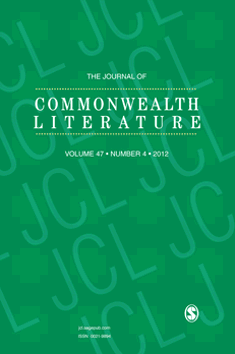
JOURNAL OF COMMONWEALTH LITERATURE
Celebrating the Global Voices of Commonwealth LiteratureJOURNAL OF COMMONWEALTH LITERATURE, published by SAGE Publications Ltd, serves as a premier platform for scholarly discourse in the field of Literature and Literary Theory. Established in 1966, this esteemed journal has built a robust reputation, as evidenced by its impressive Q1 ranking in the 2023 category of Literature and Literary Theory and its placement in the impressive 91st percentile among its peers in the Scopus rankings. With an ISSN of 0021-9894 and an E-ISSN of 1741-6442, the journal provides valuable insights into the rich tapestry of Commonwealth literature, exploring diverse works and critical theories that shape our understanding of literature outside the conventional Western canon. While currently not designated as an Open Access journal, it continues to attract a global readership seeking to advance knowledge in this vital area of scholarship. Researchers, professionals, and students alike will find in its pages a rich resource for innovative ideas and critical discussions that reflect the evolving landscape of literary studies.
CULTURAL CRITIQUE
Navigating the Complexities of Cultural NarrativesCULTURAL CRITIQUE is a premier academic journal published by University of Minnesota Press, dedicated to the interdisciplinary exploration of cultural phenomena through the lenses of anthropology, cultural studies, literature and literary theory, philosophy, and sociology. With its ISSN 0882-4371 and E-ISSN 1460-2458, the journal serves as a vital forum for scholars to engage, debate, and disseminate innovative ideas and methodologies that redefine cultural narratives and critiques. Spanning a publication timeline from 2002 to 2024, CULTURAL CRITIQUE holds significance in various academic categories, achieving Q4 rankings in anthropology and sociology and as high as Q2 in literature and literary theory. Its Scopus rankings further reinforce its value, placing it in the 82nd percentile among literature-related journals. Although it currently does not offer open access, this journal is key for researchers, professionals, and students aiming to deepen their understanding of culturally driven debates in the contemporary landscape.

RIVISTA DI LETTERATURE MODERNE E COMPARATE
Advancing Scholarship in Modern and Comparative LiteratureRIVISTA DI LETTERATURE MODERNE E COMPARATE is a distinguished academic journal published by PACINI EDITORE in Italy, dedicated to the exploration of modern and comparative literature. With an ISSN of 0391-2108, this journal serves as an essential resource for scholars and practitioners engaged in the ever-evolving fields of literature and literary theory. Although the journal currently falls into the Q4 quartile category for 2023, it aims to foster a rich dialogue among researchers, practitioners, and students by publishing innovative and diverse perspectives on contemporary literary issues. The journal is indexed in Scopus, ranking #1045 out of 1106 in the subject area, indicating a niche, yet critical contribution to the literature landscape. Covering converged years from 2002 to 2013 and 2017 to 2024, RIVISTA DI LETTERATURE MODERNE E COMPARATE is vital for those looking to delve deeper into literary analytic methodology and comparative studies, providing an avenue for both new research and established discourse.
MODERN LANGUAGE QUARTERLY
Elevating Critical Discourse in Modern Literature.MODERN LANGUAGE QUARTERLY, published by DUKE UNIVERSITY PRESS, stands as a premier journal in the field of Literature and Literary Theory, recognized for its intellectual rigor and scholarly contributions. With an impressive Scopus ranking of #156 out of 1106 in its category, the journal showcases an 85th percentile standing, indicating its significant impact within the academic community. The journal, with ISSN 0026-7929, focuses on critical analysis, literary theory, and the intersection of language and culture, making it an essential resource for researchers, professionals, and graduate students alike. As it converges from 1996 to 2024, MODERN LANGUAGE QUARTERLY continues to uphold its tradition of excellence in literary scholarship, contributing to the advancement of knowledge and fostering a deeper understanding of literature's role in society. With its Q1 ranking in 2023, this journal represents the forefront of literary studies, providing a vibrant forum for the exchange of ideas and innovative research in the humanities.

JOURNAL OF MODERN LITERATURE
Navigating the Complexities of Contemporary Literary ThoughtJOURNAL OF MODERN LITERATURE, published by Indiana University Press, is a distinguished peer-reviewed journal that delves into critical examinations of modern literary texts and theories. Since its inception, the journal has served as a vital platform for scholars dedicated to the exploration of contemporary literature, making significant contributions to the discourse within the field. With an impressive ranking of Q2 in the Literature and Literary Theory category as of 2023, it positions itself among the top-tier journals in its domain, reflecting its strong impact within academic circles. This journal not only fosters scholarly dialogue but also embraces innovative approaches to literary criticism, ensuring relevance in today’s dynamic cultural landscape. Researchers, professionals, and students will find a rich repository of articles that engage with various modern literary paradigms, enhancing their understanding and appreciation of the intricate relationships between literature and broader socio-cultural contexts. Though it does not operate under an open access model, the journal's extensive reach through its digital ISSN (1529-1464) and print ISSN (0022-281X) allows for valuable insights to be disseminated to the appropriate audiences.
Comparatist
Cultivating Intellectual Exchange in Comparative StudiesComparatist is a distinguished journal published by the University of North Carolina Press, focusing on the interdisciplinary exploration of comparative literature, culture, and critical theory. With its ISSN 0195-7678 and E-ISSN 1559-0887, this journal serves as an essential platform for scholars and practitioners to engage with diverse literary traditions and foster dialogues across cultural boundaries. Targeted at researchers, professionals, and students, Comparatist publishes original research articles, critical essays, and theoretical perspectives that contribute significantly to the understanding of comparative studies in literature. The journal is committed to advancing the field by offering fresh insights and fostering intellectual exchange among a global audience. Although it currently does not offer Open Access options, Comparatist maintains a robust reputation within its discipline, making it an invaluable resource for those seeking to deepen their understanding of comparative methodologies and literary discourse.