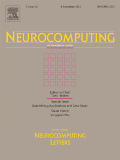
NEUROCOMPUTING
metrics 2024
Pioneering Research in Neural and Computational Frontiers
Introduction
NEUROCOMPUTING is a premier academic journal published by ELSEVIER, specializing in the interdisciplinary fields of Artificial Intelligence, Cognitive Neuroscience, and Computer Science Applications. With an impressive impact factor and a Q1 ranking in its relevant categories for 2023, NEUROCOMPUTING is recognized as a leader in fostering innovative research and providing a platform for ground-breaking studies. The journal’s scope covers the convergence of neural computation and artificial intelligence, making it essential reading for researchers and professionals seeking to explore the latest advancements and applications in these dynamic fields. For those interested in the cutting-edge intersection of neuroscience and computational techniques, NEUROCOMPUTING offers a wealth of knowledge that significantly contributes to both theoretical and practical advancements. The journal is dedicated to publishing high-quality, peer-reviewed articles and is an invaluable resource for students and established scholars alike, looking to stay at the forefront of research trends.
Metrics 2024
 1.815.505.50196
Metrics History
Rank 2024
Scopus
IF (Web Of Science)
JCI (Web Of Science)
Quartile History
Similar Journals

International Journal of Intelligent Engineering Informatics
Exploring Innovations in AI and Human-Computer Interaction.International Journal of Intelligent Engineering Informatics, published by INDERSCIENCE ENTERPRISES LTD, stands at the forefront of research in the interdisciplinary domains of computer science, artificial intelligence, and human-computer interaction. With an ISSN of 1758-8715 and E-ISSN of 1758-8723, this journal serves as a vital resource for researchers and professionals seeking to explore the latest advancements in intelligent engineering and informatics techniques crucial for the evolution of modern technologies. Although currently not an open-access publication, it provides a necessary platform for disseminating high-quality research; its impact factor continues to grow, attracting a diverse readership interested in signal processing, software development, and computer vision. Covering innovative topics from 2022 to 2024, the journal is committed to fostering scholarly dialogue that paves the way for emerging trends and applications in the field, ensuring its relevance and significance in today's rapidly advancing technological landscape.
Applied Computational Intelligence and Soft Computing
Transforming Ideas into Intelligent SolutionsApplied Computational Intelligence and Soft Computing, published by HINDAWI LTD, is a premier open access journal that has been disseminating critical research since 2009, focusing on the intersection of artificial intelligence and soft computing. With an impressive array of quartile rankings in 2023, including Q2 in Civil and Structural Engineering and Computational Mechanics, this journal has established itself as a significant contributor to the fields of computer science and engineering. Based in Egypt, it plays a vital role in advancing knowledge by providing researchers, professionals, and students with easy access to high-quality studies. The journal’s rigorous peer-review process ensures that only the most impactful research is highlighted, making it an essential resource for those looking to stay abreast of the latest innovations and methodological advancements in applied computational intelligence. Its Scopus rankings further affirm its influence and reputation within the academic community, exemplifying its commitment to facilitating collaboration and fostering intellectual discourse in various scientific domains.

International Journal of Semantic Computing
Elevating Research Standards in Semantic ComputingThe International Journal of Semantic Computing is a premier scholarly publication focused on the intersection of artificial intelligence, computer networks, and linguistics, published by World Scientific Publishing Co PTE Ltd. Since its inception in 2007, this journal has strived to advance the field of semantic computing by promoting innovative research and interdisciplinary collaboration among professionals and academics. With a diverse scope that spans across various categories including Artificial Intelligence, Information Systems, and Linguistics, it boasts commendable rankings, particularly in the fields of Linguistics (77th Percentile) and Linguistics and Language (Rank #259/1167). The journal caters to a broad audience by offering critical insights and cutting-edge studies, thereby contributing significantly to knowledge enhancement in semantic technologies and computational linguistics. Although it does not offer open access options, its rigorous peer-review process ensures the publication of high-quality research that is invaluable for both researchers and students seeking to deepen their understanding in these rapidly evolving areas.

JOURNAL OF INFORMATION SCIENCE AND ENGINEERING
Bridging Disciplines in Information Science and Engineering.JOURNAL OF INFORMATION SCIENCE AND ENGINEERING, published by the Institute of Information Science in Taiwan, is a pivotal platform for the dissemination of innovative research in the multidisciplinary fields of information science and engineering. Established in 1993, the journal primarily focuses on areas such as library and information sciences, human-computer interaction, hardware and architecture, as well as computational theory and software development. Despite holding a current Q4 ranking in several categories, the journal demonstrates significant potential for growth, particularly in computation and software systems, as evidenced by its Scopus rankings and percentiles. Researchers, professionals, and students will find this journal to be an invaluable resource to stay abreast of evolving theories and technologies in information science. The journal is accessible through traditional subscription models, fostering a broad academic outreach. It serves to enhance knowledge-sharing and collaboration within this dynamic and ever-evolving field.
NEURAL COMPUTING & APPLICATIONS
Advancing the Frontiers of AI and Software EngineeringNEURAL COMPUTING & APPLICATIONS is a premier journal dedicated to the burgeoning fields of Artificial Intelligence and Software Engineering, published by Springer London Ltd. Established in 1993, the journal serves as a pivotal platform for disseminating cutting-edge research and innovative applications in neural computing, covering a broad range of topics from algorithm development to real-world applications. With its impressive categorization in the 2023 Journal Quartiles—ranging Q2 in Artificial Intelligence and Q1 in Software—it stands out in its discipline, ranking 42nd out of 407 in Computer Science Software and 50th out of 350 in Computer Science Artificial Intelligence, reflecting its significant impact in the academic community. Although not an open access journal, it provides vital access to significant findings and methodologies that drive advancements in technology. Researchers, professionals, and students looking to stay abreast of the most relevant and impactful developments in these fields will find NEURAL COMPUTING & APPLICATIONS an indispensable resource.

Cognitive Computation and Systems
Bridging Cognitive Science and Computational Excellence.Cognitive Computation and Systems is an innovative open-access journal published by Wiley, dedicated to advancing the fields of Artificial Intelligence, Cognitive Neuroscience, and Computer Science Applications. Based in the United Kingdom, this journal has established itself as a key resource for researchers, students, and professionals alike since its inception in 2019. With a focus on the convergence of cognitive theories and computational methodologies, Cognitive Computation and Systems aims to publish high-quality research that bridges holistic cognitive processing with algorithmic design. Although the journal is currently categorized in the lower quartiles of its fields, it provides a unique platform for disseminating pioneering ideas that can drive the vital intersection of computer vision, pattern recognition, and psychology. Scholars can take advantage of its open-access model, ensuring that research findings are freely available, thus promoting wider knowledge sharing and collaboration within these rapidly evolving domains. With its ambitious scope and commitment to quality, this journal is poised to make a significant impact in its respective fields.

Journal of Advanced Computational Intelligence and Intelligent Informatics
Innovating Insights in AI and InformaticsThe Journal of Advanced Computational Intelligence and Intelligent Informatics, published by FUJI TECHNOLOGY PRESS LTD, stands as a pivotal platform in the fields of Artificial Intelligence, Computer Vision, and Human-Computer Interaction. Established in 1997, this Open Access journal has been providing accessible insights into the latest advancements in computational intelligence and informatics since 2007. With its ISSN 1343-0130 and E-ISSN 1883-8014, this journal invites a diverse readership, including researchers, professionals, and students eager to explore innovative methodologies and applications. Despite its current Q4 ranking in the relevant categories, the journal remains committed to contributing valuable knowledge to the academic community and enhancing the global discourse in computational technologies. With its focus on fostering communication and collaboration among scholars, the journal plays an essential role in driving forward the understanding of intelligent systems and their applications in various domains.

International Journal of Advanced Computer Science and Applications
Pioneering Research for a Digital Tomorrow.International Journal of Advanced Computer Science and Applications, published by SCIENCE & INFORMATION SAI ORGANIZATION LTD, stands as a significant platform in the ever-evolving field of computer science. With its ISSN 2158-107X and E-ISSN 2156-5570, the journal aims to disseminate high-quality research and innovations from diverse areas within computer science, embracing cutting-edge technologies and methodologies. As of 2023, it holds a commendable Q3 ranking in the field, placing it among a competitive cohort of journals while showcasing its commitment to scholarly excellence. The journal operates under an open access model, ensuring that its content is widely accessible to researchers, professionals, and students alike, thereby fostering a collaborative environment for knowledge-sharing and advancing the discipline. With a history of converged contributions from 2017 to 2024, the International Journal of Advanced Computer Science and Applications serves as a vital resource for those seeking to stay at the forefront of computer science research and applications.
PROGRAMMING AND COMPUTER SOFTWARE
Exploring the Frontiers of Software Engineering ExcellencePROGRAMMING AND COMPUTER SOFTWARE is a distinguished journal committed to advancing the field of software development and programming methodologies. Published by PLEIADES PUBLISHING INC, this journal has been a valuable resource since its inception in 1978, reaching out to researchers, professionals, and students alike. With an emphasis on rigorous peer-reviewed articles, the journal holds a Q3 ranking in the realm of Software according to the latest 2023 Category Quartiles. Though it does not offer open access, the journal ensures that high-quality research is disseminated to its audience, providing insights into evolving programming techniques, software engineering challenges, and innovative solutions. With its convergence of years extending to 2024, PROGRAMMING AND COMPUTER SOFTWARE remains a pivotal publication, fostering a deeper understanding of the complexities in computer programming while supporting the broader software community.
International Journal of Neural Systems
Driving Excellence in Interdisciplinary Neural Systems StudiesThe International Journal of Neural Systems, published by World Scientific Publishing Co Pte Ltd, is a prestigious peer-reviewed journal dedicated to the dynamic field of neural systems research. With an ISSN of 0129-0657 and an E-ISSN of 1793-6462, this journal serves as a vital resource for researchers, professionals, and students interested in the intersections of computer science, neural networks, and communications. Noteworthy for its impact, the journal has achieved impressive rankings in 2023, positioned in the Q1 quartile for both Computer Networks and Communications as well as in the miscellaneous category of Medicine, highlighting its interdisciplinary significance and broad relevance. The journal's Scopus rank places it at #33 out of 395 in its category, reflecting its influence and reach within the academic community. While the journal is not open access, its contributions to advancing the understanding of neural systems are invaluable, offering a platform for disseminating cutting-edge research and fostering collaboration among scholars. Since its inception, the International Journal of Neural Systems remains committed to excellence and innovation in its published content, making it an essential subscription for everyone involved in this exciting and rapidly evolving field.